
Home Renovation Checklist for Nagpur Homeowners: Plan Every Phase Before the First Wall Is Touched.
Renovation is exciting at the start. The idea of a transformed home, a kitchen that finally works, wardrobes that solve the storage problem, a living room that you are proud to bring guests into — these are genuinely motivating thoughts. The excitement fades quickly when the reality of an unplanned renovation sets in. Costs that escalate beyond what was agreed. A timeline that started as “six weeks” and became six months. Contractors who disappeared mid-project. Tiles selected in a hurry because the contractor was waiting and then regretted permanently. Waterproofing skipped because it was not in the original quote and adding it now would delay everything.
The families in Nagpur who navigate renovation successfully — who come out the other side on time, on budget, and genuinely happy with what they have built — are almost always the ones who planned thoroughly before the first wall was broken. Not planning for the sake of it, but planning as a genuine exercise in thinking through every phase, every decision, and every potential problem before it has a chance to become an expensive surprise.
This checklist is drawn from more than a decade of renovation management across Nagpur — from 2BHK flat fresheners to full bungalow overhauls. It is the document we wish every family had at the start of every project.
Home Renovation Checklist for Nagpur
Phase 1: Before Any Work Begins — The Critical Decisions
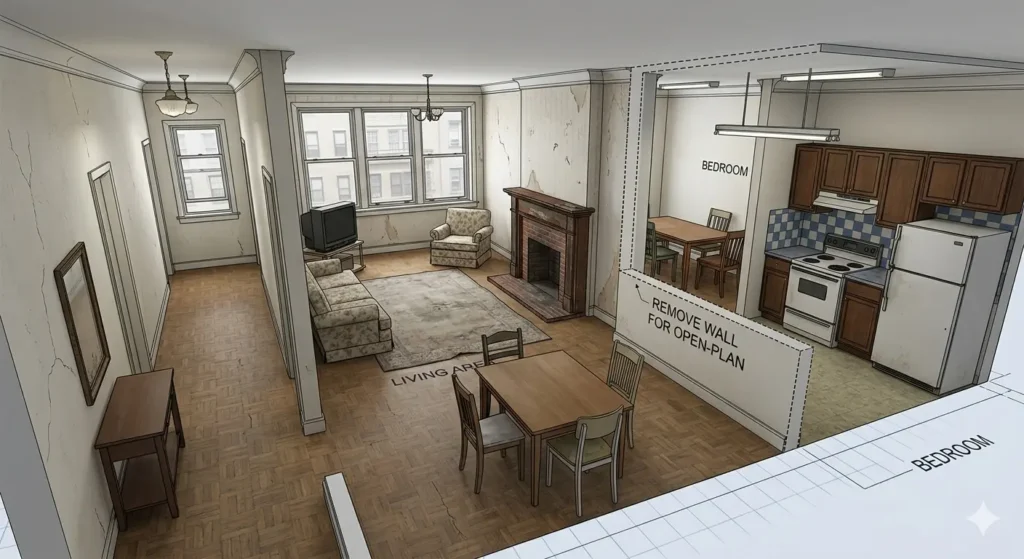
Define the scope clearly and in writing. This is the most important single item on this entire checklist, and it is the most commonly skipped. “We want the house renovated” is not a scope. “We want the modular kitchen replaced, the master bedroom wardrobe rebuilt, false ceilings in the living room and bedrooms, and the entire flat repainted, with the second bathroom’s waterproofing addressed but no tile replacement” — that is a scope. The more specific the scope, the more accurate the estimate, the clearer the contractor’s brief, and the lower the risk of surprise additions.
Scope creep — the gradual addition of items during the renovation that were not in the original plan — is the single most common cause of renovation budgets going over. Every time you stand in the middle of the renovation and think “while we are doing this, we might as well also do that,” add 15 to 30 percent to the bill. Not because the additions are wrong, but because they were not planned and must be done in a hurry at a premium.
Set a realistic budget with contingency. For residential renovation in Nagpur, add 15 to 20 percent to your planned spend as a contingency. This is not pessimism — it is realistic planning based on the actual patterns of renovation work in this city. Walls that reveal hidden moisture when opened. An electrical layout that needs more intervention than anticipated. A material that is out of stock and requires upgrading to the next grade. These are normal occurrences, not worst-case scenarios. The contingency means you can handle them without panic or compromised decisions.
Get a 3D design done before any work starts. This is the item on the checklist that most often separates smooth renovations from difficult ones. A 3D visualisation from QC Interiors shows the finished result before any demolition begins. It allows you to make all the design decisions — layout, materials, colours, furniture positions — in the 3D environment where changes are free, rather than on the construction site where changes are expensive. Families who do this consistently avoid the most costly renovation regrets.
Check society NOC and municipal permissions. Many housing societies in Nagpur require written NOC (No Objection Certificate) for renovation work that involves structural changes: wall demolitions, bathroom plumbing changes, or modifications to the building exterior. Some societies also require advance notice even for non-structural work that creates dust and noise. Check your society’s requirements and get the necessary paperwork before work starts. A stop-work notice from the society mid-renovation is a genuinely painful situation to be in.
Phase 2: Structural and Civil Work — Foundation of Everything That Follows
Any structural work — wall breaking or modification, new openings for doors or windows, changes to bathroom or kitchen layout that affect the plumbing — happens first. This is non-negotiable in renovation sequencing. Civil work creates debris, dust, and structural conditions that will undo any finish work done before it. A beautifully painted wall that then gets dusty during wall demolition on the other side of the room has been painted for nothing.
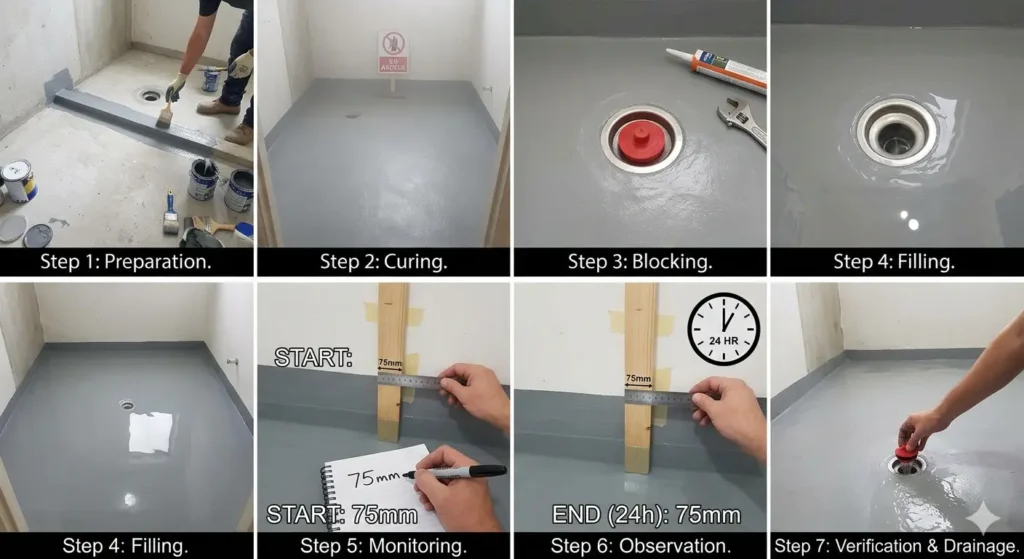
Waterproofing in bathrooms and kitchens is a non-negotiable that must be done as part of the civil work phase. Before any new tiles are laid in wet areas — bathrooms, kitchen wet areas, balcony floors — the waterproofing membrane must be applied and tested. The standard test: after applying waterproofing and allowing it to cure, fill the area with water to a height of 2 to 3 inches and leave it for 24 to 48 hours. Check the ceiling of the floor below and the adjacent rooms for any seepage. If seepage is found, the waterproofing must be redone before tiling proceeds.
In Nagpur, where construction from the rapid development period of the 2010s frequently has compromised waterproofing, this step is not a precaution — it is almost certainly a necessity. We consistently find moisture issues when opening bathroom walls in buildings of this vintage. Address it now; it does not get cheaper or easier later.
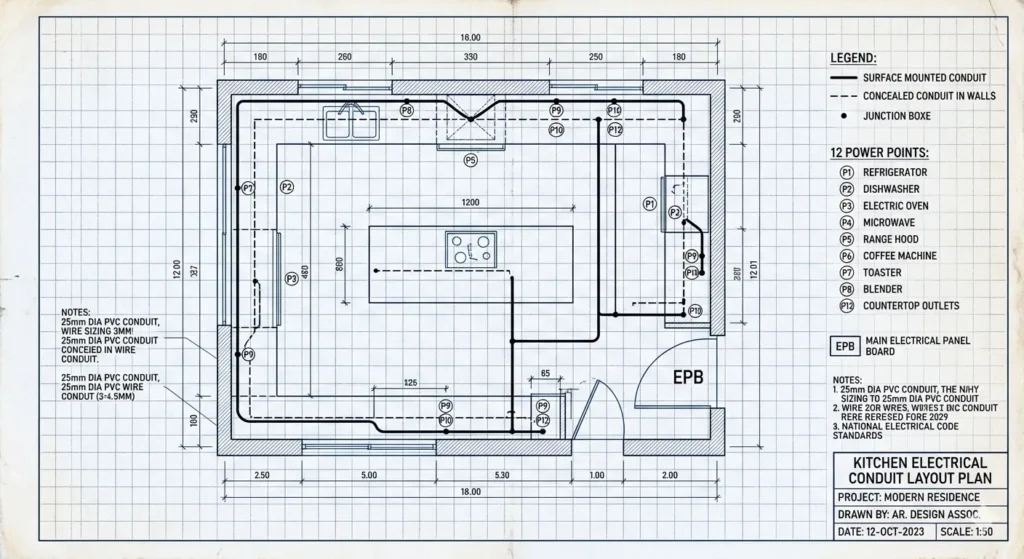
Electrical layout review is the civil phase item most likely to be underestimated. Before the walls are plastered and closed, walk through the electrical layout with your electrician and confirm the position and quantity of all: plug points in the kitchen (minimum eight, ideally ten), AC mounting points in each room (confirm the position relative to the room layout so the AC is not blowing directly onto the sleeping area), TV and entertainment points in the living room and bedrooms, switch boards (confirm heights — switch boards in India are typically at 48 inches from floor, but some families prefer 42 inches for children’s rooms), and lighting points based on the final lighting plan.
Making changes to the electrical layout after walls are plastered and painted requires cutting channels, replastering, and repainting. Each such change adds cost and time. The electrical walk-through before plastering is thirty minutes well spent.
Phase 3: Flooring and Wall Finishes — Sequence Is Everything
Flooring is laid after all civil and rough plumbing work is complete, but before carpentry and final finishes. The sequence for a typical Nagpur renovation: civil and structural work → rough plumbing and electrical → screeding and floor levelling → floor tile laying → wall plastering → wall putty and painting → false ceiling installation → carpentry (kitchen, wardrobes, TV unit) → final electrical fixtures, switches, and light fittings → CP fittings and sanitary fixtures → final cleaning and handover.
Deviations from this sequence cause problems. A kitchen installed before the flooring leads to tile cuts around the base of the cabinet that are difficult to do cleanly. A false ceiling installed before the painting leads to paint drips on the ceiling or masking that is difficult to remove cleanly. Follow the sequence.
For flooring in Nagpur specifically: light-toned vitrified or ceramic tiles for living areas and bedrooms. Anti-skid textured tiles for kitchens and bathrooms. If using engineered wood or laminate in bedrooms, ensure the floor is level, the moisture barrier is installed, and the material has been acclimatised to the room temperature for at least 48 hours before installation.
Wall putty and painting sequence: after all civil and electrical work is complete, walls are plastered and levelled, then putty is applied in two coats with sanding between, then primer, then two topcoats of paint. Do not skip the putty stage — this is what gives Nagpur walls a smooth, long-lasting finish. In this climate’s humidity cycles, walls without putty show paint failure within two to three years.
Phase 4: Carpentry and Kitchen — The Most Visible Investments
False ceilings are typically installed in parallel with or just after the painting phase — the exact timing depends on the contractor coordination, but the lighting plan must be finalised before the false ceiling goes up. Confirm every light position, fan position, and downlight location on a written marked-up floor plan before the gypsum board is mounted. Changes after the ceiling is closed are expensive and leave visible repair marks.
Modular kitchen installation happens after all civil work, flooring, and painting in the kitchen area are complete. The kitchen installation is a precision job — the cabinets are measured and manufactured offsite, then installed in one or two days. The surface they are installed on must be perfectly level and dry. All appliances — chimney, hob, built-in oven, dishwasher if applicable — must be procured before the kitchen is installed so the cabinetry is designed and cut around the exact dimensions of those appliances.
Wardrobe installation in bedrooms follows the same sequence. Confirm that all electrical points in the bedroom — including the AC provision and the lights — are in place. Confirm that all painting in the bedroom is complete and dry. Confirm that the floor is laid. Then measure for the wardrobe. Wardrobes must be measured from the actual finished floor, not from an estimated floor level — even a few millimetres of discrepancy can affect how the wardrobe sits and whether the doors clear the floor cleanly.
Phase 5: Finishing and Handover — The Systematic Quality Check
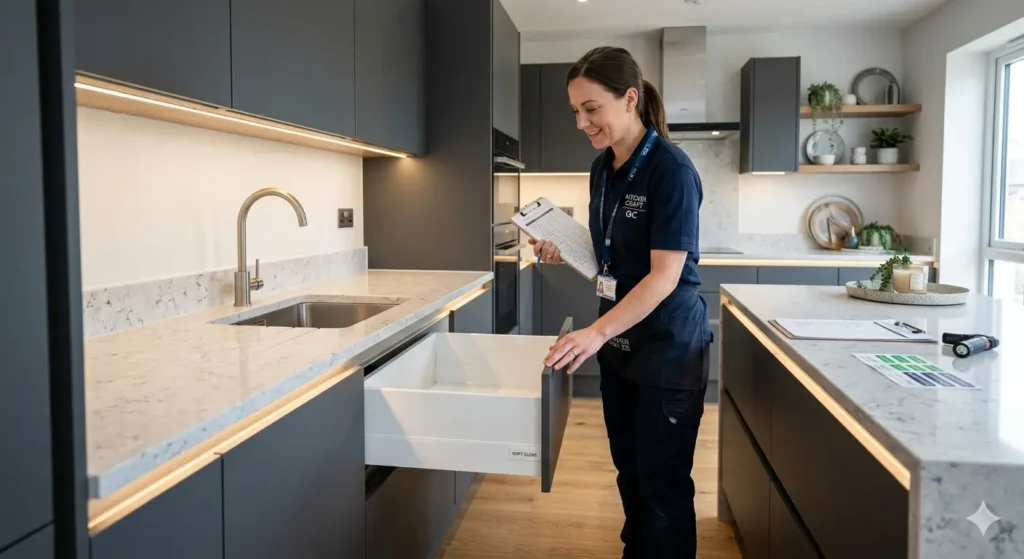
Before the contractor considers the work handed over, conduct a systematic room-by-room quality check. This should be done with adequate time — do not accept handover on a Friday afternoon with the contractor standing there waiting to leave.
Doors and windows: open and close every door and window in the home. They should swing freely without binding, catching, or scraping. Doors should close fully against the frame without needing force. Window handles and locks should operate smoothly.
Electrical: test every switch, every plug point, and every fixture. Turn on each light and confirm it is the correct fixture in the correct position. Test all AC points by running the AC units (if already installed). Test every USB point and data point if applicable.
Tiles: walk across the tiled floors and tap them systematically with a small object — a coin or a knuckle is sufficient. A hollow sound indicates a tile that has not bonded fully to the screed below. These tiles need to be addressed before they crack under load — once they crack, they must be removed and relaid regardless.
Kitchen: open and close every cabinet door and every drawer. They should operate smoothly with the soft-close mechanism engaging correctly. Check that the countertop has no chips or unsupported sections at the edges. Run the chimney through all speed settings. Test the sink drainage.
Bathrooms: run water in every fixture — shower, basin, health faucet, bathtub if applicable. Check that all drainage flows freely and without odour. Check that the basin tap and commode cistern controls work correctly. Run the exhaust fan.
Walls and ceilings: check for any paint drips, uneven patches, or masking residue. Check that the false ceiling is level and that all recessed light covers are flush and aligned.
Photograph every room before furniture is moved in. These photographs document the condition of the finished renovation and are essential reference if any issues arise with paint, plaster, or materials during the first monsoon season.
Your Renovation Partner in Nagpur
QC Interiors manages renovation projects end-to-end across Nagpur — from the initial 3D design and scope definition through to the final quality check and handover. If you are planning a renovation and want an experienced team managing the entire process for you, start with a free site visit.
Bring this checklist. We will add to it based on what we see in your specific home, your specific building, and your specific renovation scope. The goal is a renovation that goes smoothly, finishes on time, stays within budget, and produces a home that your family will love for the next twenty years.
