
Top Home Architects in Pandharkawada — Finding the Right Design Mind for Your Family’s Most Important Investment
Pandharkawada doesn’t announce itself loudly. It is not on the radar of people who write about Maharashtra’s fast-growing towns. But spend a few days here and the story becomes clear enough — a steady town in Yavatmal district with deep roots in the cotton economy, a merchant community that has been building seriously for generations, and a newer generation of families with higher incomes and considerably higher expectations for how their homes should look and feel.
The pace of residential construction in Pandharkawada has picked up noticeably in recent years. New layouts on the periphery of town have absorbed plots that were empty a decade ago. The type of homes being built has shifted — not just in size, but in the kind of thinking families want behind the design. There is a growing recognition that a contractor with a set of standard drawings is not the same thing as an architect who has actually thought about how the home will serve the specific family that will live in it for the next thirty years.
This recognition is worth acting on, and acting on it carefully.
Top Home Architects in Pandharkawada
What a Home Architect Actually Does in Pandharkawada
The confusion between a draftsman, a contractor, and a qualified architect is not unique to Pandharkawada — it exists across Vidarbha’s smaller towns and has existed for decades. The practical result is that many families in this region have built homes using drawings prepared by a draftsman working under a contractor arrangement, with a licensed architect’s signature on the approval documents but none of an architect’s design thinking behind them. The house gets built. It passes municipal approval. And it serves the family adequately for thirty years while never quite feeling like it was designed for them.
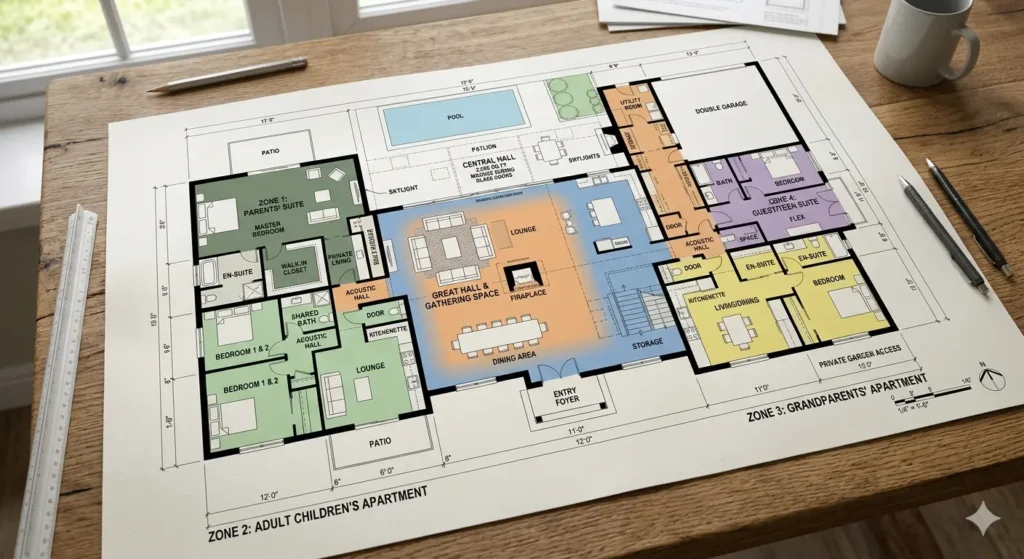
A proper home architect begins their work before the first drawing is made. They begin by understanding the family — the number of people, the age groups, the way different generations share and divide the daily domestic space, the rituals and activities that need specific spatial support. A household in Pandharkawada where an elderly couple, a married son, and young grandchildren all live together has fundamentally different spatial needs from a young nuclear family. An architect who doesn’t understand this before putting pen to paper will produce a plan that solves neither family’s problems particularly well.
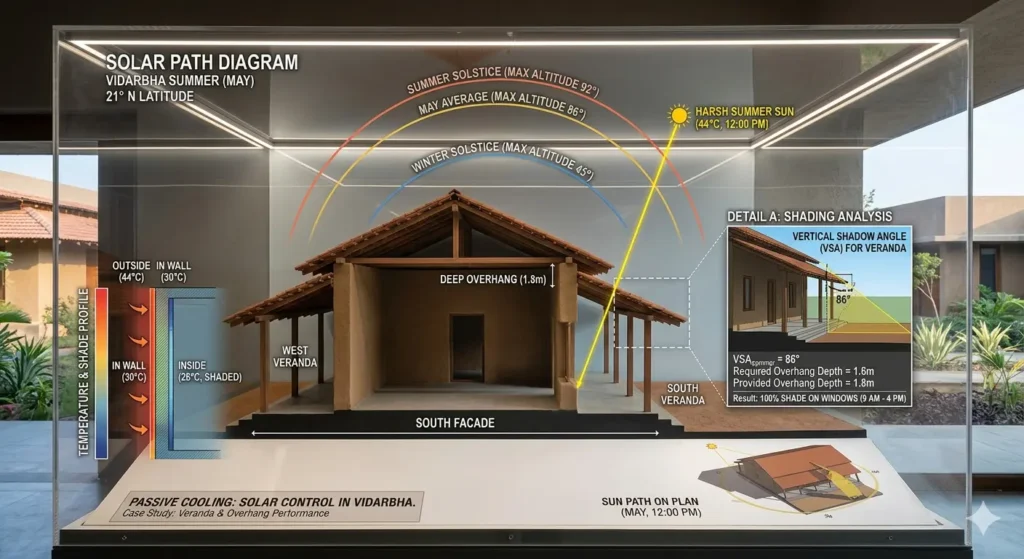
They also understand the climate, and Pandharkawada’s climate is not mild. The summers here push past 44 degrees regularly. April and May are months when the quality of a building’s design — its orientation, the depth of its roof overhangs, the placement and size of its windows, the materials used in its walls and floors — is felt directly and daily by everyone inside. A home designed without climate awareness is a home that will require mechanical cooling to remain habitable during the hottest months, and even then will never be as comfortable as a well-oriented, well-designed building with proper shading and natural ventilation.
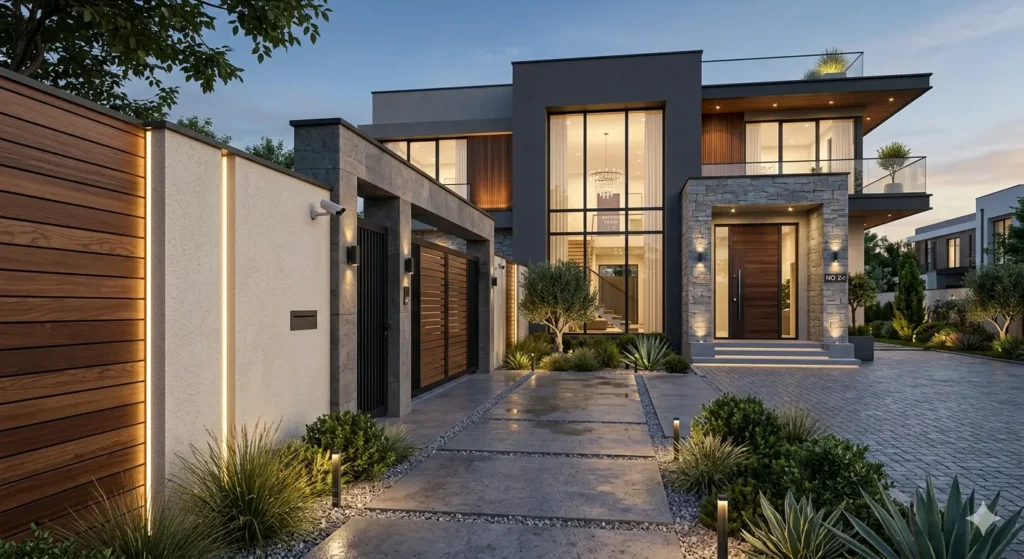
What makes Pandharkawada specific is also its social fabric. Homes here carry social meaning in ways that urban apartment living simply doesn’t. The way a house presents itself from the street — the gate, the entry, the veranda, the facade — communicates something about the family that lives there. The capacity to receive guests properly, in a space that is generous and dignified, matters. A good architect designing in this context understands that the home is not just shelter. It is social infrastructure.
How to Evaluate Architects for Your Home Project
The evaluation of any architect — in Pandharkawada or anywhere else — begins with visiting completed work. Not photographs. Photographs can be composed to flatter any interior. Visit a home the architect has designed and walk through it. Notice whether the rooms feel right-sized for their purposes, whether the kitchen layout makes sense for the way cooking actually happens in a Vidarbha household, whether the movement through the house feels logical or whether you keep finding yourself in awkward corners and dead-end corridors. Notice the light — how it enters the main rooms, whether the bedrooms are shaded from the afternoon sun, whether the veranda provides the shading it should.
Ask the architect to describe their design process. The answer will tell you most of what you need to know. An architect who describes a process that begins with the family’s brief — with questions about how you live, how the extended family is structured, what activities need specific spaces, what your aspirations for the home are — is an architect with the right orientation. An architect who immediately begins discussing elevation styles and floor plan options is an architect whose process starts with the building rather than the family. This is a meaningful difference.
Ask about their familiarity with Pandharkawada’s local approval process. The Nagar Parishad has specific documentation requirements, and an architect who knows these requirements thoroughly — who can prepare a complete and accurate first submission — will save you time and frustration compared to one who is learning the process alongside you.
Key Design Elements That Matter in a Pandharkawada Home
The veranda is not optional. In this climate and this cultural context, a covered veranda on the appropriate face of the house — typically south or east — is one of the highest-value design elements in a residential building. It shades the main living spaces from direct sun during the hottest months. It provides a transitional semi-outdoor space that is genuinely pleasant to use for seven or eight months of the year. And it creates the spatial sequence between the public street and the private interior that good domestic architecture has always required.
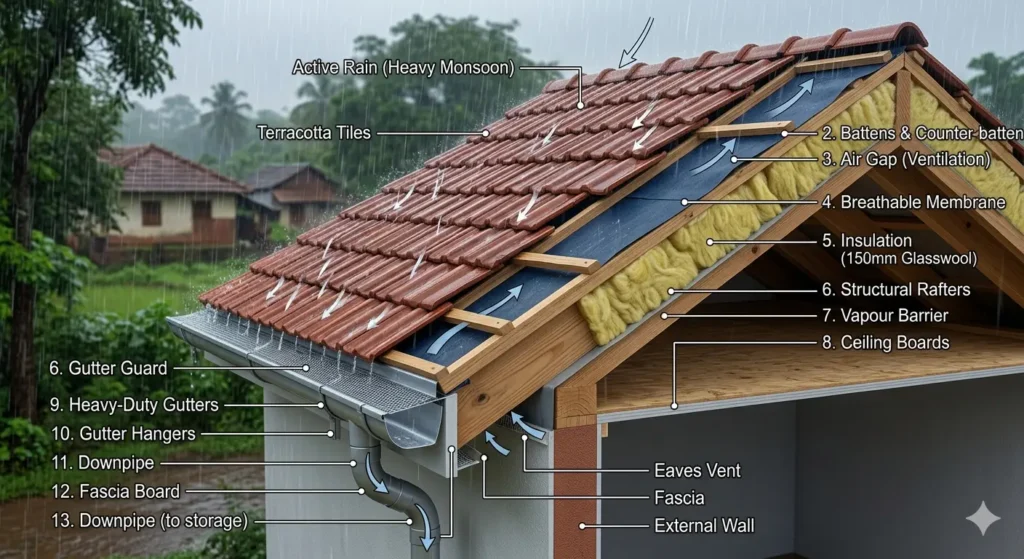
The roof design matters more in Pandharkawada than in many other climates. A sloped roof with adequate pitch and overhang performs significantly better than a flat roof in both summer heat and monsoon rainfall conditions. Vidarbha’s monsoon is intense, and flat roofs require exceptional waterproofing execution to perform reliably over years. A sloped roof with adequate fall, proper overhang, and good drainage is the right answer for this climate almost without exception.
Room orientation should be deliberate. Main living areas facing south or east receive good natural light during the cooler months and can be shaded from high summer sun by an adequate overhang. Bedrooms facing east get pleasant morning light. Kitchens placed to receive cross-ventilation — and not on the west face where afternoon heat accumulates most severely — function better through the summer months. These decisions cost nothing in construction terms and make an enormous difference to daily livability.
What Home Architecture Costs in Pandharkawada
Architectural fees in Pandharkawada typically run between five and ten percent of the total construction cost. For a home of 2,200 square feet at a construction cost of approximately ₹2,000 to ₹2,500 per square foot, the architectural fee would typically be in the range of ₹2.5 to ₹5.5 lakhs. This covers the complete design service — floor plans, elevations, structural drawings in coordination with a structural engineer, working drawings for construction, and site supervision at key stages.
The construction cost is the large number. The architectural fee is a small fraction of it. But the architectural fee is what determines whether the construction cost is spent building a home that was genuinely designed for your family, or a building that merely houses them. Over thirty years of daily life, the difference between these two outcomes is felt constantly.
FAQs
Q1. Is a licensed architect legally required for home construction in Pandharkawada?
Yes. Under Maharashtra’s building bylaws, any residential construction within a Nagar Parishad area requires drawings prepared and signed by a Council of Architecture-registered architect for plan sanction. Proceeding without approved plans creates legal complications that affect registration and resale.
Q2. How long does plan approval take in Pandharkawada?
For straightforward proposals complying with applicable regulations, the approval process through the local body typically runs four to eight weeks. An architect experienced with the local process and who submits complete documentation on first application will move through this timeline more reliably than one who is navigating it for the first time.
Q3. Should I engage an architect from Yavatmal or Nagpur rather than someone local?
The most important criterion is design quality and relevant experience, not geography. Some excellent architects based in Yavatmal or Nagpur have extensive experience with Vidarbha’s residential typologies and climate. Whether they are based in Pandharkawada itself or elsewhere matters less than whether they have completed projects you can visit, a process that begins with your brief, and reliable site supervision during construction.
Constructing a residence in Pandharkawada is not merely a process of building; it involves forming an environment that endures extreme summers and torrential monsoons. We take smart design, durability and elegance and marry it with deep local expertise to protect your investment for decades at QC Interiors.
Skip the compromise—develop perfectly precise and quality your family should have.
QC Interiors
Serving: Pandharkawada, Yavatmal
Specialisation: Comprehensive Home Interior Design | Architectural Planning | Turnkey Renovations
📞 (+91) 7798153303
Book your consultation now and walk through with our 3D walkthrough of your home before a hammer is lifted!
