
Stunning Modern Interior Renovation Nagpur that blends contemporary aesthetics with functional design to transform your living space into a masterpiece.
There is a version of modern interior renovation in Nagpur that looks impressive in photographs for about eighteen months and then starts to quietly fall apart. The feature wall with the 3D panel cladding begins to peel at the corners when the monsoon humidity climbs. The dark laminate kitchen that looked sharp in the showroom display shows every fingerprint and every scratch by the second year. The recessed LED strip lighting that ran along the false ceiling perimeter flickers when the summer heat gets into the wiring joints. And the family that invested in all of this sits in their expensively renovated home wondering why it doesn’t quite feel the way it did in the pictures.
This is the version of modern renovation that Nagpur has seen too much of over the last decade — renovation that prioritises the visual grammar of modernity without understanding the material intelligence and design discipline that make modern interiors actually work. The sleek lines, the minimal surfaces, the clean geometry of a well-executed modern interior are not achieved by choosing contemporary-looking materials and arranging them dramatically. They are achieved by making every decision with precision and restraint, and by selecting materials that perform correctly in Nagpur’s specific climate rather than materials that perform correctly in the studio photography that inspired the project.
Getting modern interior renovation genuinely right in Nagpur — in areas like Dharampeth, Civil Lines, Ramdaspeth, Bajaj Nagar, Pratap Nagar, Ambazari, Manish Nagar, Wardha Road, and the newer residential developments spreading outward across the city — requires both design confidence and technical honesty. The two things are not in tension. They are the same project.
Stunning Modern Interior Renovation Nagpur
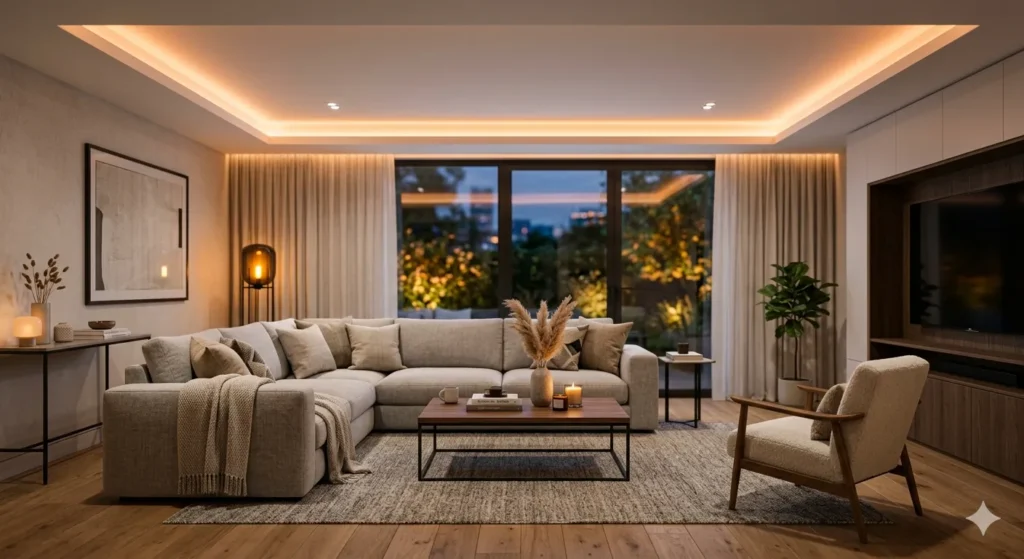
What Modern Interior Design Actually Means in a Nagpur Context
The word modern gets applied so widely in renovation conversations that it has almost lost its specific meaning. In catalogue language, modern means anything with a straight line and a neutral colour. In the context of genuine design, modern means something more specific: a spatial and material approach that achieves its effect through proportion, material quality, and careful detail rather than through applied ornamentation.
A truly modern interior in Nagpur is not austere. It is not cold. It does not strip every surface to bare concrete and call the result minimalism. It is a home that feels calm and considered — where the ceiling height and the floor material and the proportions of the kitchen cabinetry and the placement of the lighting all work together to create a sense of coherence and ease that the occupants feel every day without quite being able to name what is producing it. This is the effect that genuine modern design creates, and it is very different from the effect produced by stacking together a collection of products that are each individually described as modern.
In a Nagpur home, achieving this effect requires climate intelligence alongside design intelligence. Nagpur summers are serious — temperatures above 42 degrees Celsius for weeks at a stretch, with a radiant heat load that makes poorly insulated surfaces genuinely uncomfortable to occupy. The modern interior that works here uses materials that stay cool in summer, finishes that handle the humidity swings of monsoon without deteriorating, and a window treatment approach that manages heat and light without making the home feel closed off. These are not aesthetic constraints. They are the design brief. A renovation designer who doesn’t begin from them is not designing for Nagpur.
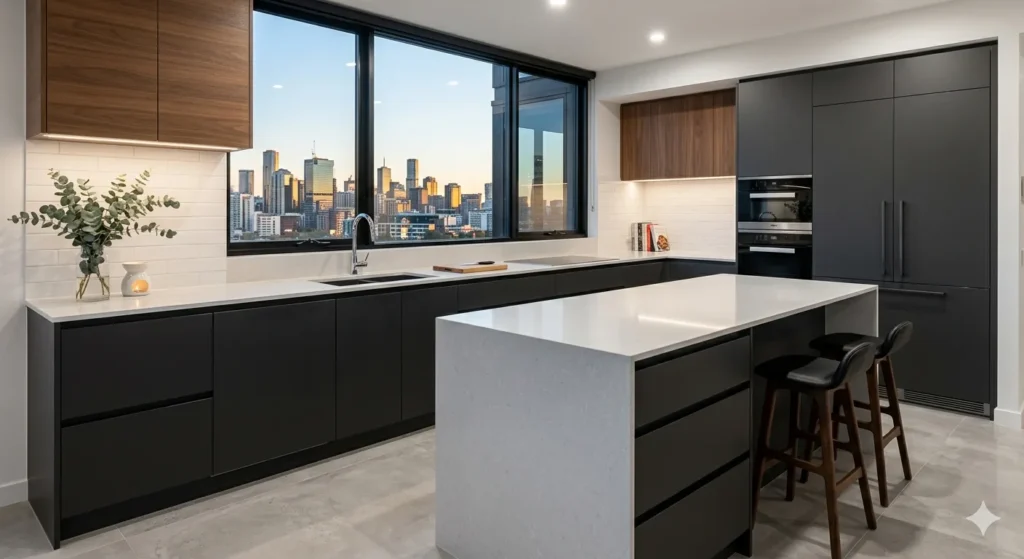
Material Choices That Define Genuine Modern Renovation
The most consequential decisions in a modern interior renovation are the material decisions, and in Nagpur’s climate these decisions need to pass two tests simultaneously: the design test (does this material read as calm, considered, and contemporary?) and the performance test (does this material handle Nagpur’s heat, humidity, and maintenance requirements over a long lifespan?).
For flooring, the answer in principal living spaces for a serious modern renovation is almost always large-format natural stone or oversized vitrified porcelain tiles. Large-format flooring — slabs of 800mm by 1600mm or larger — produces the sense of visual calm and spatial expansion that is central to how modern interiors feel. The fewer grout lines, the more the floor reads as a continuous surface, which is exactly the spatial quality that modern design pursues. In stone, Indian marble and quality granite in large format are the right choices for Nagpur; they stay cooler than vitrified tile in summer and they age in a way that becomes more beautiful rather than less. If budget favours porcelain over stone, specify large-format rectified tiles with minimal grout joints — the effect is considerably better than standard-sized tiles and the cost premium is modest.
For kitchen cabinetry, the modern renovation in Nagpur should specify flush-face cabinetry without visible handles where possible — the push-to-open or recessed groove hardware that gives the kitchen its clean, uninterrupted surface quality. The finish should be acrylic or high-gloss lacquer rather than standard laminate for a genuinely premium result, but it needs to be applied to a properly prepared marine ply substrate and finished with edge treatment that will survive the monsoon’s humidity changes without lifting. The countertop in a modern kitchen should be consistent with the floor — either a complementary stone or a surface-consistent engineered stone like Corian or a quality composite that can be produced without visible joints.
For walls, the modern renovation resists the temptation to cover every surface with texture panels, wallpaper, or tile cladding. The approach that ages best — the one that will still look right fifteen years from now — is a precisely applied smooth plaster finish in a single carefully chosen tone, with a quality paint system that holds its colour through repeated cleaning. The colour selection is the critical decision: a warm white is not the same as a cool white is not the same as a pale stone tone, and the right choice depends entirely on the quality and direction of the natural light the room receives through the day.
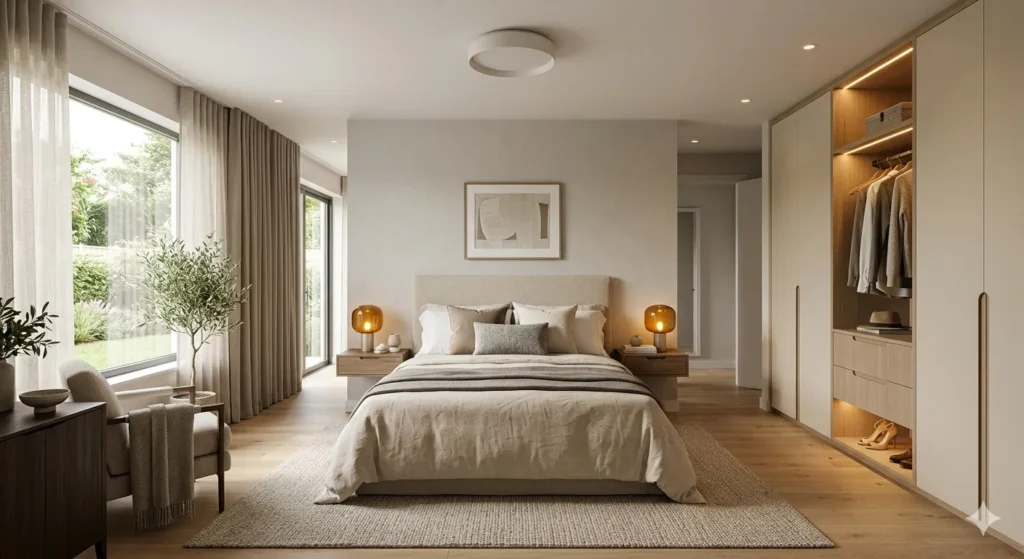
Lighting as the Defining Element of Modern Interior Design
Nothing separates a genuinely well-designed modern interior from a collection of contemporary materials like lighting. Light — its quality, its direction, its colour temperature, its ability to be adjusted for different times of day and different activities — is the element that makes everything else work. In Nagpur homes that have been renovated without proper lighting design, you see all the right materials and feel something is missing. The lighting is what was missing.
Modern interior lighting in Nagpur should be designed as a layered system. The ambient layer — general illumination that allows the household to function safely and comfortably throughout the home — comes from recessed downlights or cove lighting that spreads light evenly without harsh shadows. The task layer — directed light to the specific locations where activities happen: the kitchen preparation area, the study desk, the reading chair — supplements the ambient layer with precise, bright illumination where it is needed. The accent layer — low-level, directed light that highlights a piece of art, a plant, a bookshelf, a textural element of the interior — creates depth and visual interest in the room’s evening character.
The colour temperature of the light sources matters enormously. Warm white light — around 2700 to 3000 Kelvin — creates the evening atmosphere that makes a living room feel inviting and restful. Cool white light — 4000 Kelvin and above — is appropriate for kitchens and bathrooms where clarity is more important than atmosphere. Mixing these temperatures randomly in a home produces an incoherent result regardless of how well the materials are specified. A modern renovation designer will design the lighting temperature zone by zone.
The False Ceiling: Where Modern Renovation Most Often Goes Wrong in Nagpur
The false ceiling is the element of modern interior renovation in Nagpur where the most mistakes are made, because it is the element where contractors have the strongest tendency to suggest complexity. A multi-level false ceiling with coves, steps, and pop details applied to every room in the home was the Nagpur renovation aesthetic of the mid-2010s. It has aged badly. The homes that received this treatment look cluttered and dated now, and the families who live in them are among the keenest to renovate again.
The modern false ceiling is not complex. It is a single level, well-proportioned relative to the original structural ceiling height, with a continuous cove or tray that accommodates the indirect ambient lighting system cleanly. In rooms with genuinely good ceiling heights — 11 feet or above — the false ceiling can drop to 9.5 or 10 feet, creating a comfortable proportion while leaving enough height that the room doesn’t feel compressed. In rooms with lower existing ceilings, the false ceiling should be minimal — only enough to accommodate the lighting and any required air conditioning ducting — and the complexity should be resisted entirely.
The finish on the false ceiling in a modern renovation is smooth, white or near-white, and as close to seamless as plasterboard construction allows. Texture, colour, and applied detail on the ceiling are almost always mistakes in a genuinely modern interior. The ceiling is the surface that visually expands the room. Interrupting it reduces the room’s apparent size and undermines the spatial quality that modern renovation is trying to achieve.
Where Modern Renovation Is Happening in Nagpur Right Now
The most active modern interior renovation market in Nagpur is concentrated in the established residential neighbourhoods where families have owned their homes long enough to be ready for the first serious update. In Dharampeth, homes from the 1990s that were built to good structural standards and furnished modestly are now receiving the comprehensive modern renovation that brings them to where they should be. In Bajaj Nagar and Ramdaspeth, similarly, the comfortable independent homes and larger flats of that era are being reworked with the design ambition that the original owners didn’t have the reference points to specify. Along Wardha Road and in Manish Nagar, newer construction is being renovated from builder specification to designed interior within the first few years of occupation. In the MHADA colonies and housing board developments of areas like Jaitala, Nari, and Bhandewadi, smaller homes are receiving smart, efficient modern renovations that make the most of modest footprints through intelligent planning and good material selection.
The common thread across all of these locations is a Nagpur homeowner who has spent enough time in well-designed interiors — through travel, through the design media, through visiting friends and family in other cities — to know that their own home can be better, and who is now prepared to invest the thought and the budget to make it so.
The Veranda and Outdoor Spaces in a Modern Nagpur Renovation
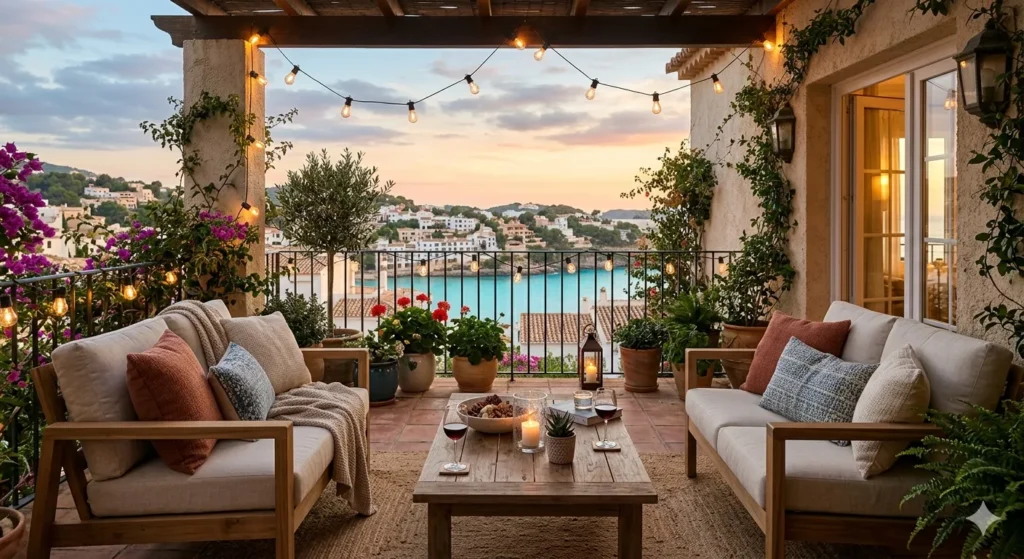
Modern renovation in Nagpur often focuses entirely on the interior, which is a missed opportunity of real consequence. Nagpur’s climate gives the household six months of genuinely usable outdoor weather — from late September through March the evenings are cool enough to want to be outside and warm enough that a covered outdoor space is entirely comfortable. A modern renovation that ignores the veranda, the sit-out, or the covered terrace is leaving the most climate-appropriate space in the home unaddressed.
Modern outdoor spaces in Nagpur renovation are not complicated to achieve well. Materials need to be chosen for exterior durability — stone, outdoor-rated porcelain tile, concrete in a clean finish — rather than the softer interior options. The ceiling of the covered area benefits from a clean, well-maintained soffit finish rather than anything that will weather or require constant attention. Ceiling fans are essential for the warmer shoulder months. Good evening lighting makes the space genuinely usable after dark. Furniture should be outdoor-rated — teak, powder-coated aluminium, or quality synthetic rattan — rather than interior pieces moved outside, which will deteriorate quickly in the humidity swings between summer and monsoon.
The result of properly attending to outdoor spaces is a home that gains an additional living room of considerable quality during the city’s finest months. Guests are received on the veranda before being brought inside. The family has tea there in the morning before the day begins. The October-to-February evenings are spent outside rather than in. This is not a design gesture. It is the reclamation of the climate’s greatest gift to Nagpur residential life, and a modern renovation that achieves it is more complete than one that doesn’t.
Setting a Realistic Budget for Modern Interior Renovation in Nagpur
Modern interior renovation in Nagpur covers a meaningful budget range depending on scope, specification level, and home size. For a mid-specification modern renovation of a 1,500 to 2,000 square foot home — covering false ceiling with cove lighting in principal areas, large-format vitrified tile flooring throughout, flush-face modular kitchen with acrylic shutters and a stone countertop, two fully renovated bathrooms, and complete repainting — expect a total project cost of ₹15 to ₹28 lakhs.
For a higher specification covering the same scope with natural stone flooring, high-gloss lacquer cabinetry, Indian or Italian marble countertops, premium bathroom fixtures, and a designed loose furniture package, the range moves to ₹28 to ₹50 lakhs for the same home size. Larger homes at high specification can reach significantly beyond this, particularly when outdoor spaces are included.
The most important budget principle for a modern renovation in Nagpur is to resist the temptation to achieve the look of modern design on an inadequate budget through material substitution. Modern interiors are unforgiving of shortcuts because their effect depends on surfaces being exactly right. A smaller scope executed at the correct quality level produces a better result than a larger scope executed on compromised materials. Define the scope clearly, price it honestly, and execute it completely rather than stretching the budget thin across a more ambitious scope.
Work With QC Interiors
QC Interiors delivers stunning modern interior renovation across Nagpur — from Civil Lines and Dharampeth to Bajaj Nagar, Wardha Road, Manish Nagar, and the residential localities spreading across the city. Their approach combines contemporary design confidence with the material intelligence and climate knowledge that makes modern renovation actually work in Nagpur rather than just look good at handover.
Ready to begin your modern renovation? Book a site visit with QC Interiors. A site visit fee of ₹2,500 is charged, which is fully adjustable against your project booking amount — making the consultation risk-free if you choose to proceed. Contact QC Interiors today to schedule.
Frequently Asked Questions
Q1. How do I know if what a contractor is calling “modern” is actually good design? Ask them to show you completed projects that are at least two years old and are still occupied. Modern design that is genuinely well executed looks better at two years than it did at handover. If the work looks dated or shows material deterioration within two years, it was not well designed or well specified.
Q2. Is modern interior renovation more expensive than traditional approaches in Nagpur? Not necessarily. Modern design achieves its effect through proportion and material quality, not through the quantity of materials and decorative elements. A modern renovation that uses fewer, better materials is often comparable in cost to a traditionally ornamented renovation that uses more materials of lower quality.
Q3. Which rooms benefit most from a modern renovation approach in a Nagpur home? The kitchen and the master bedroom are where modern design thinking delivers the most daily improvement. Clean, efficient kitchen design improves the experience of cooking every single day. A master bedroom designed with careful attention to light, storage, and material quality transforms the quality of rest the room provides.
Q4. How important is the furniture selection in completing a modern renovation? Extremely important. Modern interior design requires furniture that is scaled correctly to the room and designed in a language consistent with the interior. Arriving at a well-designed modern renovation and filling it with oversized ornate furniture destroys the coherence that the renovation created. The furniture selection should be part of the design process, not a separate afterthought.
Q5. What is the biggest mistake Nagpur families make in modern interior renovation? Over-specifying the false ceiling. Complex multi-level ceilings with excessive cove lighting and pop details are the single element that most quickly makes a renovation look dated and cluttered. A simple, well-proportioned false ceiling with clean indirect light is almost always the better choice.
