
Since 2020, the home study has become a real room in Nagpur homes — not a desk in the corner of the
bedroom, but a space specifically designed for sustained focused work or serious studying. Families that
treated the third bedroom as a storage room with a spare mattress are now asking whether it can be
converted into a functional home office. Parents with school-age children in Class 9 and above are
recognising that the kitchen table is not a study environment.
Study Room Design in Nagpur: A Complete Guide and Costs
The design brief for a study room is different from every other room in the house. It has to support focus
and concentration, which means lighting, acoustics, storage, and ergonomics all matter in ways they do not
in a bedroom or living room.
Study Room Design in Nagpur
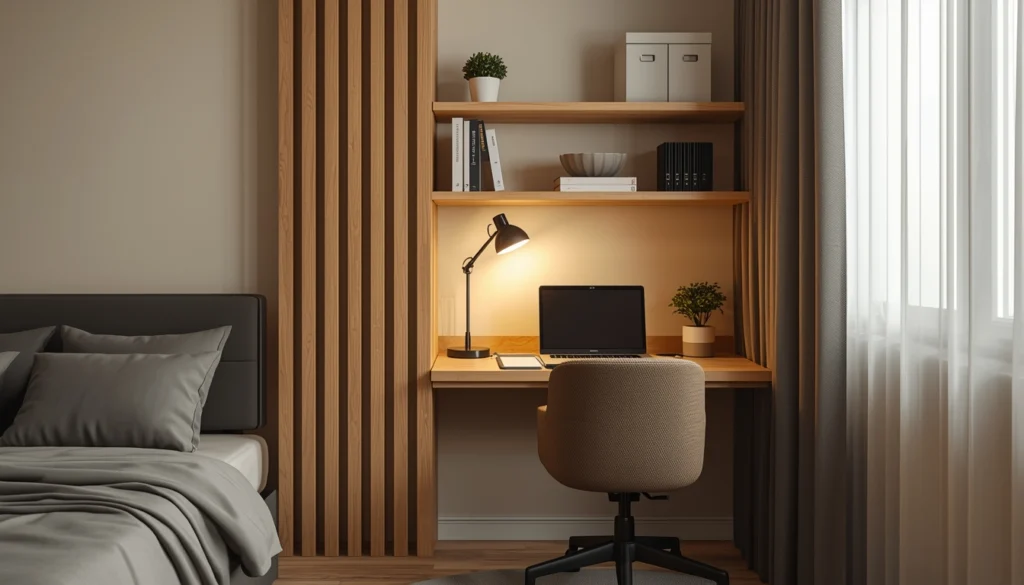
Dedicated Room vs Bedroom Study Nook
Not every Nagpur home has a spare room available for a study. But many homes have usable study space
in places that are currently wasted — an underused corner of a master bedroom, a section of a second
bedroom that is not earning its floor area, or a converted loft space in independent houses.
A dedicated study room gives you acoustic separation from the rest of the house. This matters more than
most people expect before they try to take a work call from a bedroom while children are watching
television two rooms away. A closed door between the study and the living areas changes the working
experience significantly. If a dedicated room is possible in your Nagpur flat, it is worth planning for.
A bedroom study nook is a legitimate alternative for apartments where a dedicated room is not possible.
The key is designing it as a proper zone — a desk that is sized for actual work (minimum 48 by 24 inches,
ideally 60 by 24), a task light separate from the bedroom ambient lighting, dedicated storage for work or
study materials, and ideally some visual separation from the bed. A desk crammed into a corner with the
bedroom overhead light as the only illumination is not a study nook, it is a filing cabinet with seating.
The Desk and Storage: Non-Negotiable Minimums
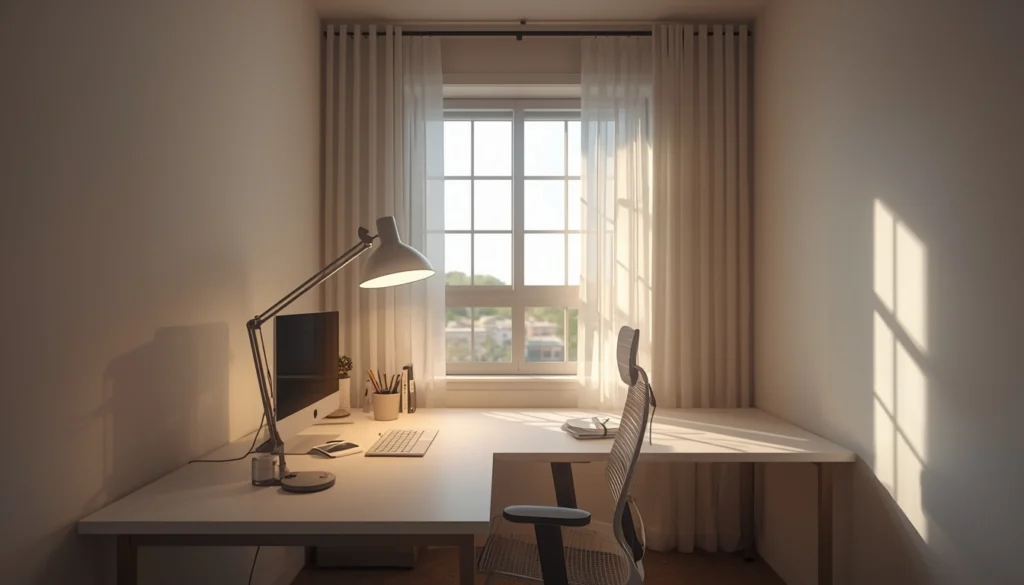
The desk is the most important element in a study room and the most consistently underspecified. A
standard writing desk at 30 by 20 inches accommodates a laptop and a notebook simultaneously and
nothing else. Anyone who works with external monitors, reference materials, or physical documents needs
a minimum 48 by 24 inch surface and preferably 60 by 24. The depth of 24 inches is not generous — it is
the minimum to have a monitor at the right distance from the eyes.
A built-in desk in a Nagpur study room versus a purchased desk: a built-in desk can be designed to exactly
fit the available wall width, integrate storage above and below, and look like part of the room rather than
furniture placed against a wall. For a 10-foot wall width, a built-in desk with overhead shelving and
under-desk drawers currently runs Rs. 18,000 to Rs. 45,000 depending on material and storage complexity.
A quality purchased desk at the right dimensions: Rs. 12,000 to Rs. 35,000.
Above-desk storage — open shelves at reachable height for current reference materials and frequently
used items. Two shelves above the desk surface, starting at eye height when seated, provides meaningful
working storage without requiring you to stand up to retrieve things.
Under-desk storage — two or three drawers on a pedestal unit is the most useful under-desk
configuration. Deeper cabinets with doors below are good for less-frequently accessed files and
equipment. A loft section above the full-height shelving handles archival material and seldom-used
items.
Lighting for Focus: The Most Overlooked Design Element
The lighting brief for a study room is different from every other room. You need task lighting — directed,
sufficient illumination on the work surface without glare on the screen. You need ambient light at a level
that prevents strong contrast between the bright screen and the dark room (which causes eye fatigue). And
in Nagpur’s context, you need to think about daylight management.
Study rooms with good natural light are valuable. But Nagpur afternoon sun in a west-facing room from
March through June is not compatible with screen work — the glare is too strong. A room with east-facing
light works beautifully in the morning. Sheer curtains that diffuse rather than block daylight are the right
solution for study rooms that receive useful but manageable natural light.
For artificial lighting: a dedicated task lamp on the desk surface (warm to neutral white, 3000K to 4000K,
adjustable arm) is the workhorse light. The room ambient light — ceiling fixture or cove — should be at a
lower intensity than the task lamp and at the same colour temperature. A cool-white ambient light behind a
warm-white task lamp is visually fatiguing. Match the temperatures.
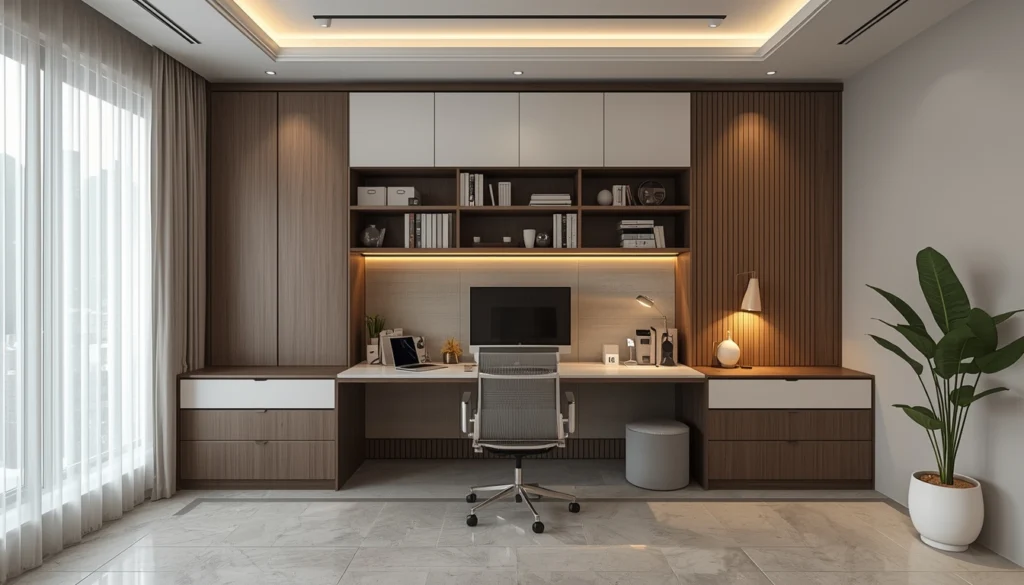
The Nagpur Home Office Consideration
Work-from-home professionals in Nagpur need study rooms that handle video calls decently — which
means backgrounds matter, acoustic treatment matters, and internet cable routing matters. A wall of
bookshelves and a solid neutral-colour wall behind the desk are the two backgrounds that consistently read
as professional in video calls. A bedroom with visible clothing, an open wardrobe, or a TV in the
background reads as improvised regardless of how good the furniture is.
If the study room is used for frequent calls: a simple acoustic panel on the wall behind you (fabric-covered
acoustic foam, which runs Rs. 300 to Rs. 600 per square foot for a basic version) makes a measurable
difference to how your audio sounds to the other person. Fully reflective walls cause noticeable echo on
calls.
What Does a Study Room Design Cost in Nagpur?
A complete built-in study room — desk with overhead shelving and under-desk storage, bookcase wall,
false ceiling with task and ambient lighting, paint — at mid-range quality: Rs. 60,000 to Rs. 1.2 lakh
depending on room size and storage complexity. A simple desk-and-shelving conversion of a bedroom
corner: Rs. 20,000 to Rs. 45,000. At QC Interiors, we have designed study rooms across Nagpur for
students, professionals, and families. Reach out if you would like to see what is possible in your specific
space.
Nagpur in Summer: The Home Study Temperature Challenge
Nagpur’s extreme summer heat creates a specific challenge for home study spaces that no generic guide
addresses. A home office or study room in Nagpur from March through June that is not air-conditioned is
not usable for focused work during afternoon hours. The combination of high ambient temperature and the
heat generated by computers and monitors makes sustained concentration difficult and genuinely
unhealthy above 36 degrees.
If the study room is in a portion of the flat that does not have dedicated air conditioning, design the space
to be tolerable without it for morning work hours and plan to use it primarily in the cooler parts of the day
during summer. A ceiling fan with a light kit, a single window AC unit if a split AC is not in the plan, and
light-coloured walls that do not absorb heat are the practical interventions. For a room used primarily for
studying in the afternoon during exam season — which for most Nagpur students falls in April and May —
air conditioning is not optional.
The orientation of the study room matters more in Nagpur than the design. A north-facing study room in
Nagpur is naturally the coolest room in the flat throughout the year. East-facing is acceptable — morning
sun, cool afternoons. West-facing is the most challenging — hot from 1pm through sunset in summer. If
you have a choice in a room allocation decision, give the west-facing room a different purpose and allocate
north or east to the study.
