
Residential Interior Designers in Pandharkawada— Understanding What the Right Design Professional Can Do for Your Home
The phrase residential designer gets used loosely in Pandharkawada to describe a range of people offering a range of services. A contractor who can prepare floor plans and show you elevation options is sometimes called a designer. A furniture supplier with a showroom and an eye for arrangement sometimes uses the term. A draftsman who produces drawings for approval purposes may present as a designer. And then there are qualified professionals — architects, interior designers, or design-build practitioners — who provide genuine design services in the proper sense of the word.
Understanding which of these you are talking to, and what each can and cannot deliver, is the starting point for making a good decision about who to engage for your home.
Residential Interior Designers in Pandharkawada
The Different Types of Design Professionals
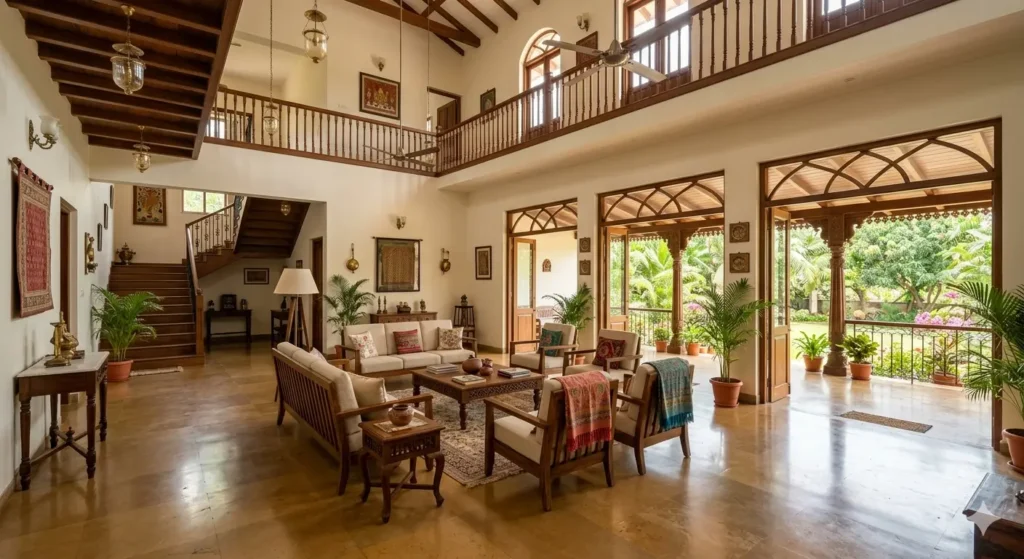
A qualified architect registered with the Council of Architecture is a professional trained in spatial design — the design of buildings and their relationship to their plots, their climate, and the people who live in them. An architect working on a residential project in Pandharkawada provides building design: the layout, the orientation, the structural coordination, the exterior architecture, and the construction documents from which the building is built. The interior design of the finished spaces may or may not be part of an architect’s scope, depending on the practice and the project.
A qualified interior designer’s work begins where the building structure ends. They design the interior environment — the spatial layout of furniture and built elements within each room, the material palette, the lighting design, the joinery for kitchens and storage, and the selection of furniture, textiles, and accessories that complete the interior. Some interior designers also work at the architectural scale, influencing ceiling designs, partition placement, and opening sizes in coordination with the architect.
A design-build residential professional — sometimes called a turnkey designer or contractor-designer — provides both design and construction services through a single engagement. This model has both advantages and risks. The advantage is simplicity: one firm is responsible for the complete outcome and there is no coordination gap between designer and contractor. The risk is that the design function can become subordinate to the construction function — decisions about materials and systems are made on the basis of what the contractor has available and at what margin, rather than what the design actually requires.
What Residential Design Delivers
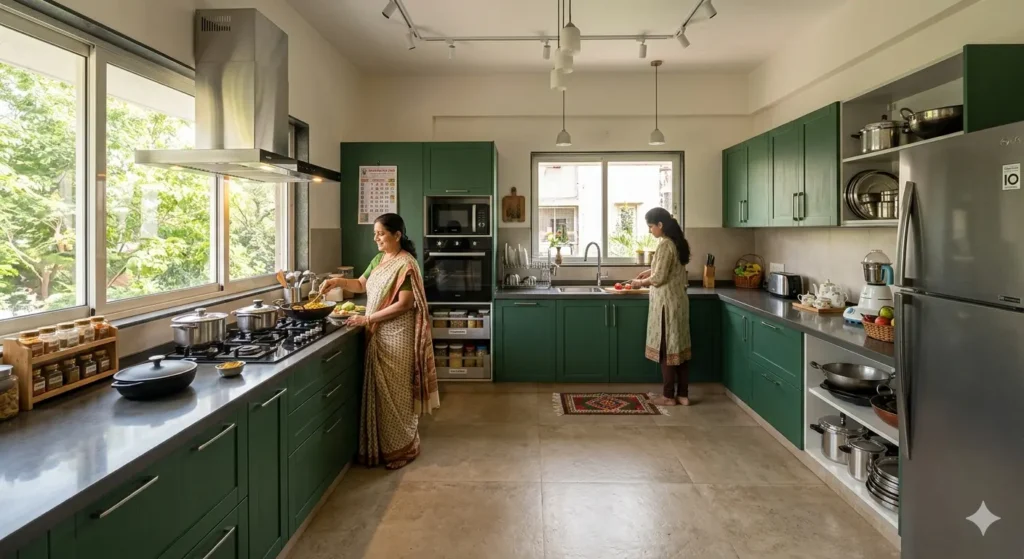
The value of engaging a genuine residential designer — whether an architect, an interior designer, or both — is not simply a better-looking home. It is a more functional one. A home designed properly for the specific family that will live in it performs better in every practical dimension: the kitchen works more efficiently for the way cooking actually happens in that household, the storage provisions match the family’s actual storage needs rather than a generic assumption about them, the movement through the house during a normal day requires fewer compromises and dead-end trips to reach frequently needed spaces.
In Pandharkawada’s climate, the functional value of good design extends to thermal performance. A home that has been oriented correctly — with the main living spaces on the right face, with adequate roof overhangs shading the walls and windows from the summer sun, with cross-ventilation paths that allow the evening breeze to cool the interior without mechanical assistance — is genuinely more comfortable during the months that matter most. This comfort doesn’t diminish over time. It is structural, built into the building, and it is present every day of the home’s life.
The social dimension of a well-designed Pandharkawada home is also real. In this town’s social fabric, a home’s ability to receive guests properly — to provide a generous and dignified space for formal occasions as well as an easy, comfortable space for everyday family life — communicates something about the family. A home that has been designed to do this well is doing something that an undesigned building cannot.
What to Look for When Engaging a Residential Designer
Ask to see completed work, and see it in person. This has been said throughout this series of articles and it bears repeating because it is the most reliable evaluation method available. A designer’s portfolio shows what they are capable of. A visit to a completed project shows what they actually deliver — the quality of the construction detailing, whether the design decisions that were made on paper translated successfully into built form, and how the spaces feel to inhabit rather than to photograph.
Ask how they handle the gap between design and construction. In Pandharkawada’s residential market, the quality of the construction outcome depends heavily on the quality of the working drawings and on the consistency of site supervision. A designer who provides detailed construction documentation — drawings specific enough that the contractor can build accurately from them without constant clarification — and who visits the site at the critical construction stages is the one most likely to deliver a finished building that reflects the design intent. A designer who hands over a set of approval drawings and leaves the rest to the contractor is not managing the outcome at this stage.
Ask about their fee structure and what it covers. Design services in Pandharkawada are priced variably — percentage of construction cost, flat fees, per-square-foot rates — and the scope of services covered by the fee varies equally. Understanding what is included — design drawings only, or procurement support, or construction supervision — before work begins avoids misunderstandings that affect both the project and the relationship.
Typical Costs and What They Cover
For a complete residential design engagement in Pandharkawada — architectural design including approval drawings and working documents, coordinated structural design, interior design of the main spaces, and construction supervision — expect fees in the combined range of ten to fifteen percent of the construction cost on a well-scoped project. This is not a small number in absolute terms on a ₹60 to ₹80 lakh construction project. It is, however, a proportionately small number relative to the difference in outcome it enables.
FAQs
Q1. Should I engage an architect and an interior designer separately, or look for someone who provides both?
Both approaches work. An architect who also provides interior design services can deliver a more seamlessly integrated outcome — the interior and exterior design share a design language from the beginning. Engaging a specialist interior designer alongside the architect allows each professional to focus on what they do best, but requires coordination between them that adds management complexity. The right answer depends on the professionals available and the specific project.
Q2. What questions should I ask a residential designer at the first meeting?
Three are most revealing: What was the hardest design problem you solved on a recent project, and how did you solve it? Can I visit two or three completed projects? And how does your design process begin — what do you need to understand about my family before you start drawing? The answers to these three questions tell you more about a designer’s capabilities and orientation than any portfolio presentation.
Q3. How involved do I need to be in the design process?
Actively involved in the brief-making phase — the earlier discussions about how your family lives, what you want the home to do, what your priorities and constraints are. Less involved in the technical design phases, where the designer’s expertise should be leading. Actively involved again in decision points about materials and major design choices. A good designer will structure the engagement so your involvement is focused where it adds value rather than requiring constant detailed decisions throughout.
Designing a residence in Pandharkawada is not merely a process of building; it involves forming an environment that endures extreme summers and torrential monsoons. We take smart design, durability and elegance and marry it with deep local expertise to protect your investment for decades at QC Interiors.
Skip the compromise—develop perfectly precise and quality your family should have.
QC Interiors
Serving: Pandharkawada, Yavatmal
Specialisation: Comprehensive Home Interior Design | Architectural Planning | Turnkey Renovations
📞 (+91) 7798153303
Book your consultation now and walk through with our 3D walkthrough of your home before a hammer is lifted!
