
Best Renovation Services in Gandhibagh Nagpur — Renovating in the Heart of Nagpur’s Commercial and Cultural Core
Gandhibagh occupies a specific and significant position in Nagpur’s urban geography. Named for the public garden that has been a part of Nagpur’s civic life for generations, this area sits in the city’s commercial core in a way that makes it genuinely central — proximate to the city’s main commercial streets, to its institutional fabric, and to the residential localities that have grown alongside the commercial activity that has always characterised this part of the city.
The residential stock in Gandhibagh and the immediately surrounding areas — Mahal, Gokulpeth (adjacent residential zone), Lakadganj, Budhwarpeth, and the residential lanes running off the main commercial arteries — is predominantly composed of older properties: the upper floors of commercial buildings converted to residential use, older independent houses tucked into the residential pockets that persist within the commercial fabric, and apartment buildings of various ages that represent the residential investment of families who have chosen to stay in the city’s centre despite the availability of newer developments further out.
The renovation conversation in Gandhibagh therefore carries a specific character. These are families who value urban centrality — the ability to walk to the market, to reach everything without the car journey that peripheral living requires — and who are willing to invest in bringing their homes to the standard that their urban convenience trade-off deserves.
Renovation Services in Gandhibagh Nagpur
What Renovation in Gandhibagh Actually Involves
Home renovation in Gandhibagh is shaped by the specific conditions of dense urban residential living — conditions that are different from the more spacious residential contexts of Civil Lines or Dhantoli and that require specific design responses.
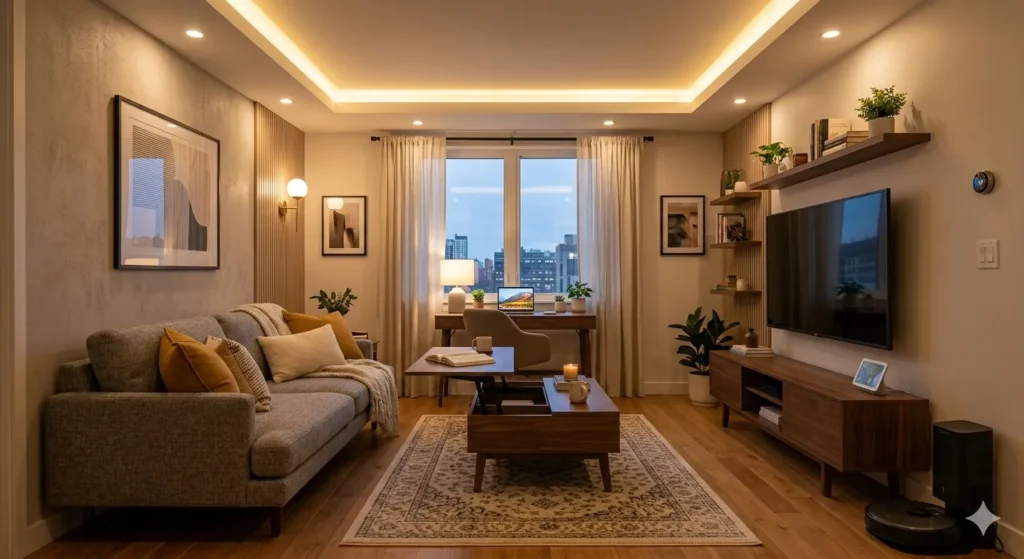
Space constraints and intelligent design. Many residential properties in Gandhibagh’s commercial-core context are smaller in floor area than the independent houses of Nagpur’s more spread-out residential localities. The renovation that serves these homes best is one that maximises the functional quality of every square metre through intelligent storage design, space-efficient furniture choices, and design decisions that create the impression of spaciousness — high-LRV paint colours, mirrors used strategically, furniture arranged to maximise circulation space.
Natural light management in dense urban settings. Homes in Gandhibagh’s dense urban fabric may have constrained natural light — lower floors with adjacent buildings at close proximity, or rooms that face internal courtyards or narrow lanes rather than open streets. The renovation palette for these rooms needs to account for diffused and constrained light conditions rather than the direct sun that more open residential settings receive. Warm whites with high LRV that stay bright in ambient diffused light. Layered artificial lighting — cove ambient, task lighting, accent lighting — that creates warmth and quality in the evening when natural light is absent.
Noise and urban environment management. Gandhibagh’s urban density creates a noise environment — commercial activity, traffic, the general sound of a busy city centre — that residential spaces in this context need to manage. The renovation that takes acoustic quality seriously — secondary glazing on street-facing windows, adequate door sealing, soft furnishing provision that absorbs internal reverberance — creates a quality of domestic quiet that makes these urban homes genuinely restorative.
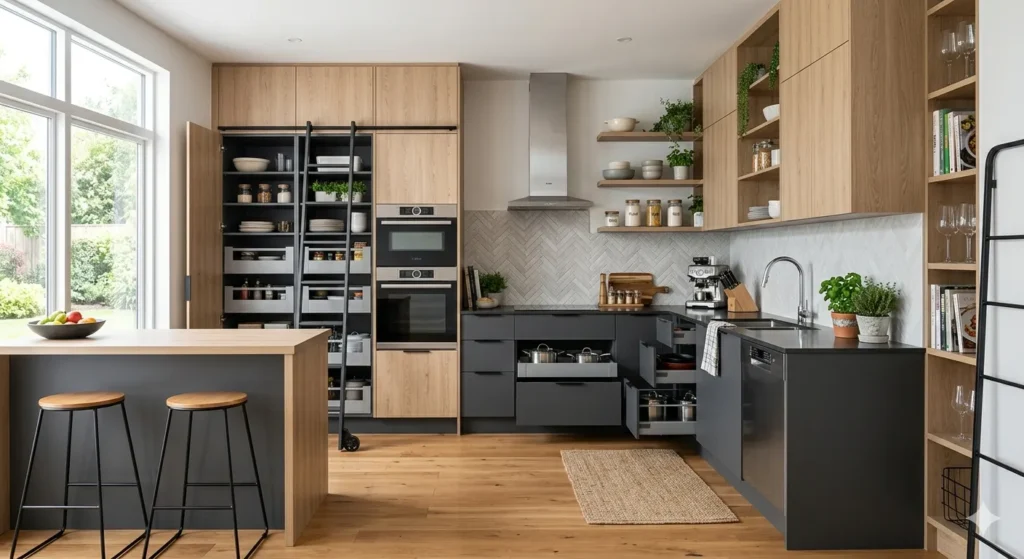
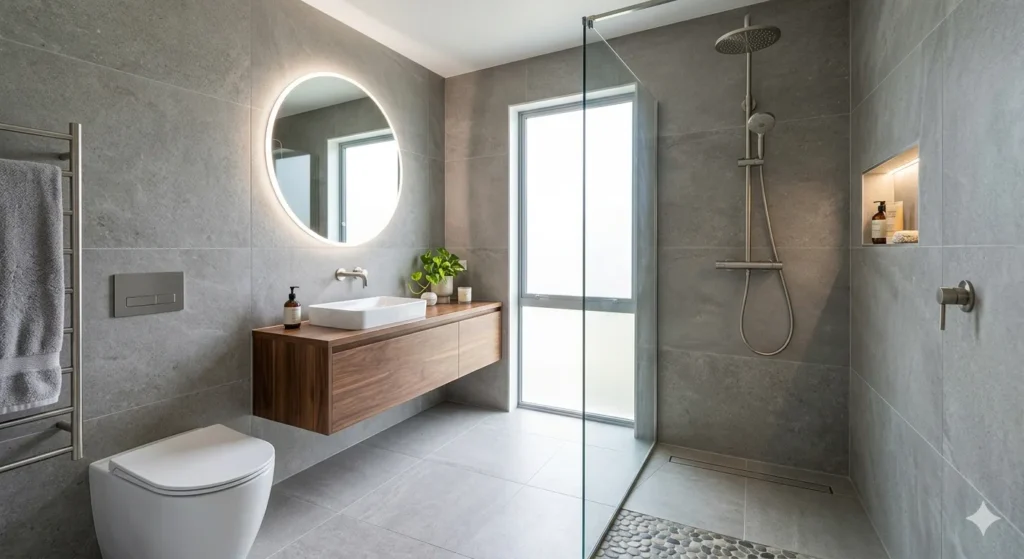
Kitchen and bathroom quality in smaller spaces. The compact kitchens in Gandhibagh’s denser residential properties need modular planning that extracts maximum functional value from limited floor area. Every centimetre of counter space is designed for. Storage is organised vertically as well as horizontally. The chimney is specified for the actual cooking load in a space where inadequate ventilation creates immediate and persistent discomfort. Bathroom renovations in compact spaces reward the quality investment of large-format tiles — which make small bathrooms feel more spacious — and wall-hung sanitaryware that frees the floor and simplifies the visual impression.
The Key Renovation Investments in Gandhibagh Homes
Drawing room renovation. Even in a compact Gandhibagh residence, the drawing room renovation — false ceiling with cove LED and positioned downlights, focal wall treatment in warm materials, fresh palette — transforms the social quality of the home in a way that the family experiences with every significant visitor. The design in compact rooms should amplify the sense of space: warm high-LRV whites on primary walls, a single strong accent element rather than multiple competing features, furniture scaled correctly to the room’s actual dimensions. Cost: ₹2.5 to ₹5 lakhs.
Kitchen renovation. The modular kitchen renovation in a Gandhibagh home: marine-grade plywood carcasses, quality hardware, quartz countertops, proper chimney specification, and storage design that extracts maximum organisation from the available volume. In compact kitchens, vertical storage — tall units, pull-out pantry towers — significantly increases usable storage volume within a small footprint. Cost: ₹2 to ₹4.5 lakhs.
Bathroom renovation. The investment that transforms daily comfort most directly. Large-format tiles that make the space feel larger. Wall-hung sanitaryware that frees the floor. Proper shower provision. Vanity storage. Side-lit mirror. Cost: ₹1.8 to ₹4 lakhs.
Electrical upgrade. In older Gandhibagh properties — particularly those in older commercial buildings with residential upper floors — the electrical infrastructure is a priority investment before any cosmetic renovation. Adequate circuit capacity for contemporary loads, proper earthing, MCB protection. Cost: ₹1.5 to ₹3.5 lakhs.
Surrounding Area Renovation Context
Families in Mahal, Lakadganj, Budhwarpeth, Ganesh Peth, and Kotwali area regularly search alongside Gandhibagh residents for renovation services that understand the dense urban residential context. Common search terms include: “home renovation Gandhibagh Nagpur,” “interior designer near Mahal Nagpur,” “kitchen renovation Lakadganj Nagpur,” “false ceiling contractor Budhwarpeth Nagpur,” “bathroom renovation near Nagpur central,” “modular kitchen Gandhibagh,” “house renovation interior design old Nagpur area.” Renovation services that understand the specific context of Nagpur’s commercial core — the construction typology, the space constraints, the urban density — serve all of these areas effectively.
Complete Renovation Investment for Gandhibagh Homes
2BHK apartment or residential flat, comprehensive renovation: ₹12 to ₹20 lakhs.
Older upper-floor residence, comprehensive renovation including electrical upgrade, kitchen, bathrooms, painting: ₹16 to ₹28 lakhs.
Targeted kitchen and bathroom renovation in a compact Gandhibagh flat: ₹8 to ₹15 lakhs.
QC Interiors: Renovation Services for Gandhibagh and Central Nagpur
QC Interiors brings professional design and renovation expertise to Gandhibagh and Nagpur’s central residential areas — understanding the specific challenges of dense urban residential renovation and designing solutions that create genuine quality within the constraints of these spaces.
We offer an initial site visit and consultation for ₹2,500, fully adjustable against your project booking when you proceed with us.
Central Nagpur homes deserve design quality that matches their location advantage. Let’s create it. Contact QC Interiors to book your site visit today.
FAQs: Best Renovation Services in Gandhibagh Nagpur
Q1. How do I make a small Gandhibagh apartment feel more spacious through renovation?
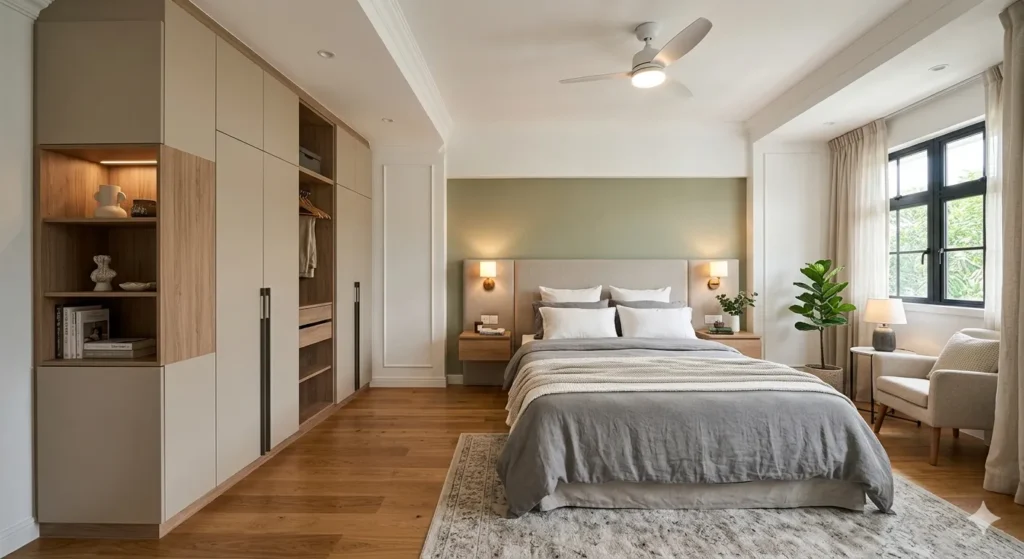
Warm whites with high LRV (74 to 84) on all primary wall surfaces — these reflect light maximally and visually expand the room. Large-format floor tiles — 600x600mm minimum — which reduce the number of grout lines and make the floor read as a single expansive surface. Full-height wardrobes that draw the eye upward and use the vertical dimension. Furniture scaled to the actual room — the most common mistake in compact spaces is furniture that’s too large. Mirrors on internal walls that reflect natural light into darker zones.
Q2. What is the best chimney specification for a compact Gandhibagh kitchen?
A minimum 900mm wide filterless auto-clean chimney with at least 1000 m³/hour extraction capacity for Indian cooking at family scale. In a compact kitchen where the cooking happens in close proximity to the living areas, adequate extraction is not optional — it determines whether the home smells of cooking throughout or whether the kitchen odours are contained within the kitchen zone.
Q3. How do I address sound from the street during a Gandhibagh renovation?
Secondary glazing on all street-facing windows — an additional glass panel installed inside the existing window frame — is the most effective and least invasive acoustic intervention. Combined with adequate door sealing and soft furnishing in the main living areas (rugs, upholstered furniture, curtains), this reduces external noise to a level that allows genuine domestic quiet. Cost for secondary glazing: ₹30,000 to ₹1.2 lakhs depending on the number of windows.
Q4. Is full home renovation worth the investment for a Gandhibagh rental property?
Yes for kitchens and bathrooms specifically — the quality of these two spaces determines rental premium in the central Nagpur market, and the renovation investment typically recovers within three to four years of improved rental income. For structural or cosmetic elements beyond kitchen and bathrooms, assess the specific condition — renovation that addresses genuine deterioration adds value; renovation that improves adequate finishes for aesthetics alone has lower return.
Q5. What renovation approach works best for an older Gandhibagh property above a commercial ground floor?
Structural assessment first — paying specific attention to the floor slab condition (commercial use below creates different load patterns than residential use), the electrical separation from the commercial infrastructure below, and the plumbing independence of the residential portion. These properties often have plumbing and electrical infrastructure that was designed for the building as a whole rather than for the residential portion specifically, and addressing this before cosmetic renovation prevents problems that are expensive to fix after the surfaces are closed.
