
High End Residential Renovation in Yavatmal — What It Takes to Renovate a Home Properly, and Why Half Measures Cost More in the Long Run
The families in Yavatmal who’ve been through a renovation project that didn’t go the way they imagined tend to describe the experience with a specific combination of feelings: the initial excitement of beginning the project, the gradual frustration as decisions that should have been made in the design phase get made reactively during execution, the quiet disappointment at handover when the result is better than before but not what they were picturing, and the daily awareness — sometimes lasting years — of the specific things that would have been different if the project had been done properly.
This experience is not inevitable. It’s the product of a specific set of process failures — projects begun without a complete design, contractors executing from verbal instructions, materials substituted without the client’s knowledge, stages completed and sealed before they’ve been inspected — that are entirely preventable when the renovation is managed with the right professional rigour.
High end residential renovation in Yavatmal is not defined by the budget. It’s defined by the process. A high end renovation is one where the design is complete before work begins, the materials are specified in writing, the execution is inspected at every critical stage, and the result matches what was designed. This is achievable at various budget levels. What it requires, consistently and without exception, is professional management at a standard that most contractor-led renovations don’t apply.
High End Residential Renovation in Yavatmal
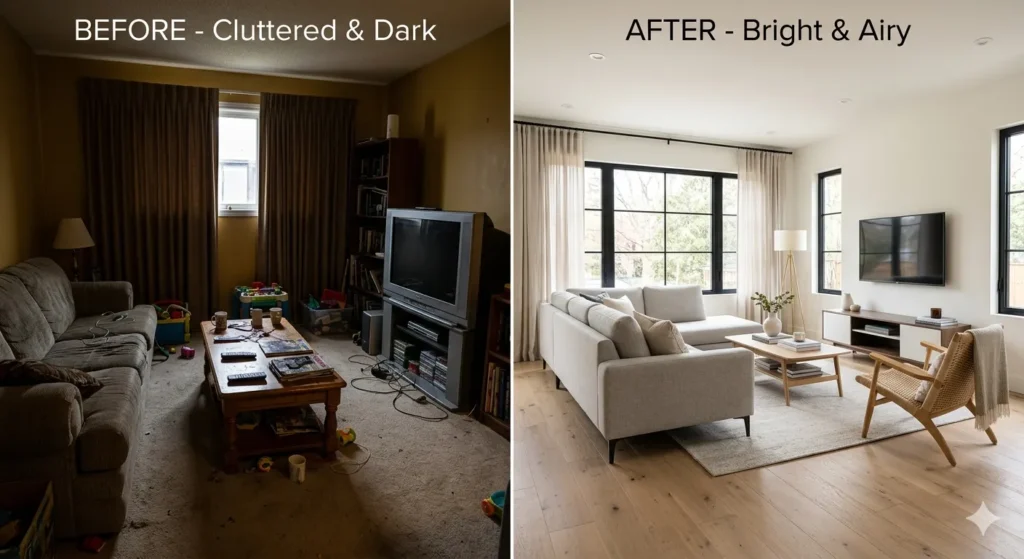
Why Yavatmal Homes Need High End Renovation Thinking Specifically
Yavatmal’s climate creates renovation challenges that are specific to this region and that a renovation process designed for a more temperate city doesn’t address adequately.
The humidity cycling between the monsoon months — June through September, when ambient humidity is high and moisture is present in walls and floors — and the dry season — March through May, when the air is dessicating and materials contract — creates dimensional movement in construction materials that reveals the quality of specification and installation within the first two or three years. Cabinetry carcasses in particleboard swell and delaminate. Laminate countertops at seams lift and trap moisture. Floor tile grout that wasn’t properly sealed admits monsoon moisture and develops black discolouration. Paint over inadequate preparation peels in patches after the first heavy rain season.
These failures are not random. They’re predictable consequences of under-specification, and they’re entirely avoidable with the correct material choices and installation practices. Marine-grade plywood carcasses rather than particleboard. Quartz countertops rather than laminate. Properly sealed tile grout in bathrooms and kitchens. Wall putty and primer before emulsion on every painted surface. These are not luxury specifications — they’re correct specifications for Yavatmal’s climate, and they’re the foundation of high end renovation done properly.
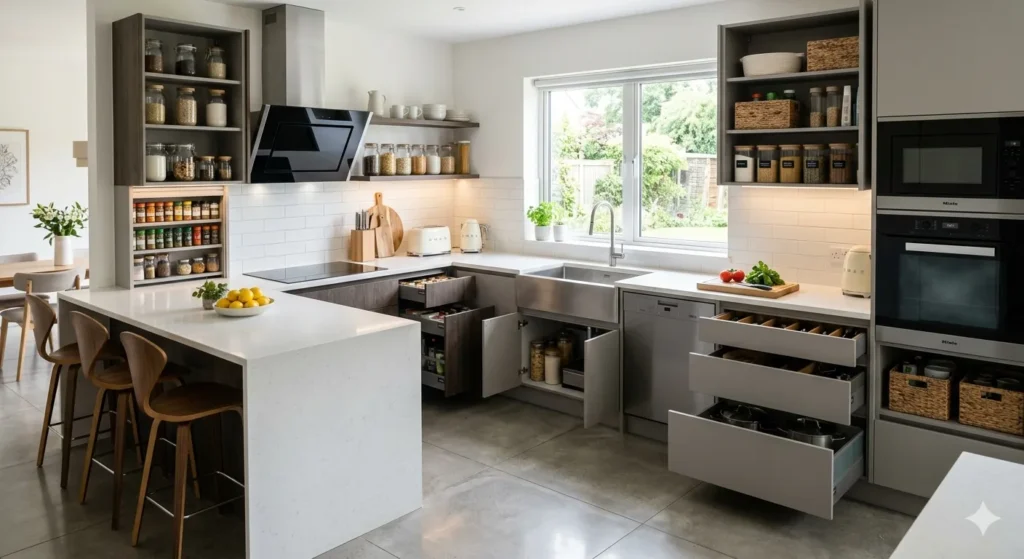
The High End Renovation Process: Stage by Stage
A high end residential renovation in Yavatmal follows a specific process that distinguishes it from a contractor-led renovation, and understanding this process helps families know what to expect and what to insist on.
Pre-renovation assessment: Before the design begins, an assessment of the home’s existing conditions — structural fabric, electrical system condition and capacity, plumbing supply and drainage condition, roof waterproofing integrity. This assessment identifies the conditions the renovation needs to address before any finishing work, preventing the discovery of foundational problems after the surfaces have been closed. Cost: ₹20,000 to ₹50,000 depending on property size.
Design phase: Four to eight weeks of professional design work before any contractor begins. A complete design proposal — floor plans, ceiling designs, colour palette, material specifications, kitchen and wardrobe design, bathroom design — documented in sufficient detail that every contractor can build accurately from the drawings without requiring on-site design decisions. Every material specified by brand and product code.
Demolition and substrate preparation: Controlled demolition of elements being replaced. Electrical rough-in — new wiring installed before walls are closed. Plumbing rough-in and any plumbing remediation required. Waterproofing applied in bathrooms, kitchen splash zones, and any areas with known moisture exposure before tile work begins. Surface preparation — hacking and re-plastering where needed, ensuring all surfaces that will receive tile or paint are sound.
Primary finishes: Flooring installation — natural stone or quality large-format tile in public areas, engineered wood in bedrooms. Tile work in bathrooms and kitchen. False ceiling structure and board installation — the stage where the designer’s site inspection is most critical, because the structure must be correct before it’s sealed with board.
Secondary finishes: Kitchen cabinetry installation. Wardrobe installation. Electrical finishing — light fittings, switches, sockets. Plumbing finishing — sanitaryware, shower fittings, tap ware. Painting after all other trades have finished their work — this sequence is important, as painting before the plumbing and electrical finishing creates damage that requires touching up.
Snagging and handover: A systematic identification of every element that doesn’t match the specification, documented and corrected before the family occupies the renovated home. A high end renovation is not complete at the contractor’s convenience. It’s complete when every element has been verified against the design.
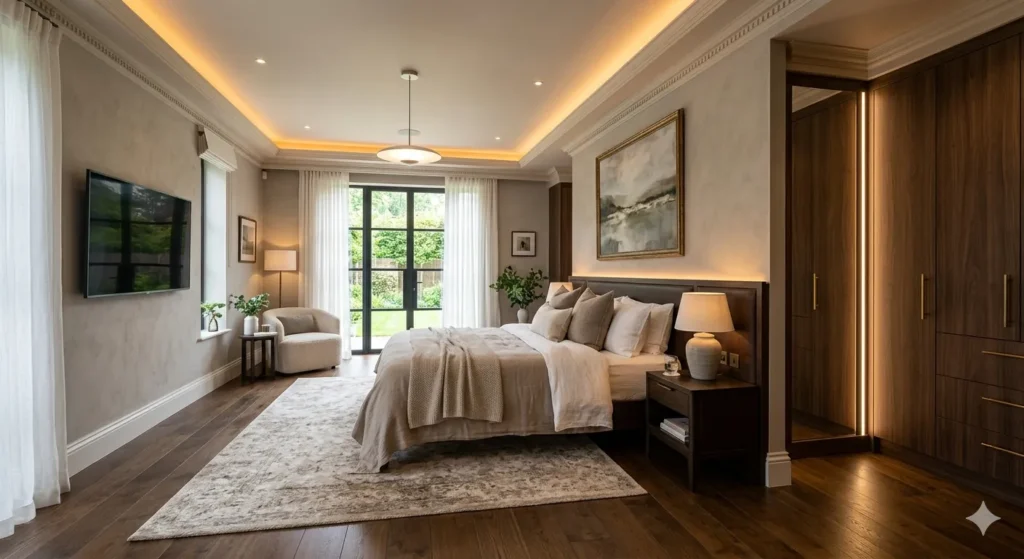
The High End Kitchen Renovation: Getting It Right the First Time
The kitchen renovation is the element of a high end Yavatmal residential renovation that most directly changes daily life quality, and it deserves the most thorough design investment of any room in the home.
The brief for a high end Yavatmal kitchen renovation starts from a genuine audit — not from a catalogue consultation. What does this kitchen contain, specifically? What are the vessel sizes — the largest kadai, the pressure cooker dimensions — that determine storage opening sizes? What is the primary cook’s working height, which determines the counter height specification? Where does the morning cooking happen versus the festival cooking preparation, which determines the workflow the layout serves? How many people typically work in the kitchen simultaneously, which determines whether a second access path to the main counter is needed?
These questions produce a kitchen layout and storage specification that serves this family’s actual cooking rather than a standardised version of Indian household cooking. The kitchen that results from this specificity of brief is the kitchen that the family is still satisfied with in year seven of daily use, rather than the kitchen that was adequate at handover and increasingly frustrating thereafter.
For the material specification at high end level: marine-grade plywood carcasses throughout. Blum soft-close hardware on every hinge and drawer runner — mechanisms that communicate quality every single time the kitchen is used. Quartz countertops in a warm neutral — the specification that handles Indian cooking’s temperature demands without the sealing requirements of natural stone. Integrated chimney within the cabinet composition at adequate extraction capacity for real cooking loads. Under-cabinet LED task lighting that illuminates the preparation surface properly for the actual work of cooking.
The visual language of the high end Yavatmal kitchen should connect to the home’s overall design direction rather than importing a vocabulary that belongs in a different type of home. Warm teak veneer shutters in a natural finish. Warm-metal hardware details. These choices create a kitchen that looks and feels like it belongs in this specific home rather than in a generic premium apartment anywhere in India.
High end modular kitchen renovation for a Yavatmal home: ₹5 to ₹12 lakhs. With island configuration and premium integrated appliances: ₹10 to ₹18 lakhs.
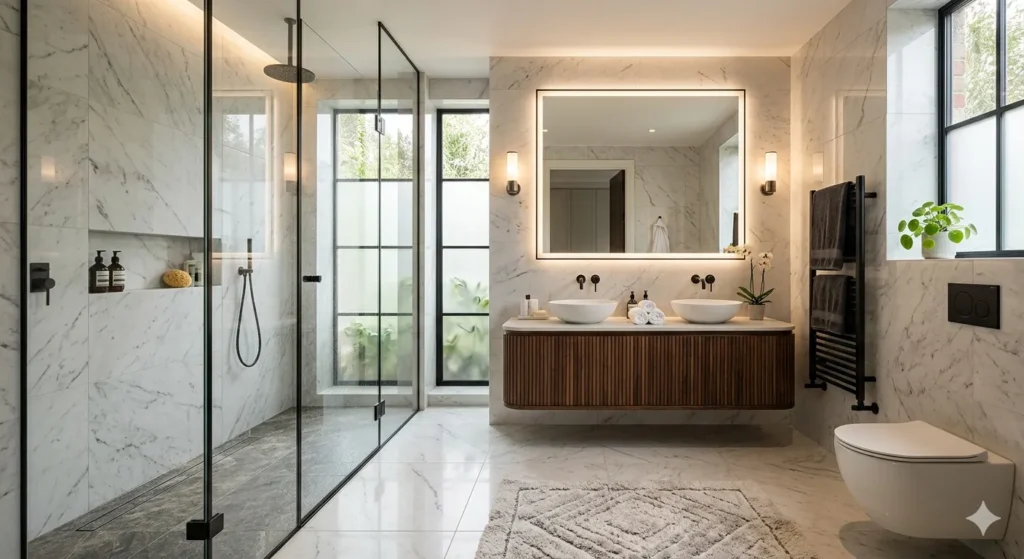
High End Bathroom Renovation: The Daily Quality Improvement
The bathroom renovation in a high end Yavatmal residential project is the investment that produces the most consistent daily quality improvement relative to its cost, because the bathroom is used with intimacy and frequency by every member of the household every day.
The high end bathroom specification for Yavatmal: large-format floor and wall tiles — 600x1200mm or larger — in a warm coordinated palette that makes the space feel generous and coherent rather than busy with competing elements. Proper waterproofing behind the tile layer — not skipped, not approximated, but applied fully with a waterproofing membrane that genuinely seals the substrate from moisture. Wall-hung WC and basin that free the floor, make cleaning simple, and communicate a quality of finish that floor-mounted sanitaryware doesn’t. A frameless or semi-frameless shower enclosure with a thermostatic fitting that allows temperature setting rather than requiring daily calibration. A custom vanity unit with storage organised for what this bathroom actually contains.
Mirror lighting: the specific detail that most Yavatmal bathroom renovations get wrong by default. Overhead downlights positioned above a bathroom mirror create shadows under the eyes and chin that make the mirror both unflattering and functionally inadequate for grooming. A backlit mirror with even perimeter LED illumination, or wall-mounted lights flanking the mirror at face height, creates the lighting quality that makes the bathroom work properly for its primary function. This detail costs very little extra relative to the bathroom’s total renovation cost, and the daily experience improvement is immediate and consistent.
High end bathroom renovation: ₹2.5 to ₹5.5 lakhs per bathroom.
The Master Bedroom Suite: Renovation’s Most Personal Investment
The master bedroom suite renovation at high end level should produce the home’s most private and most considered space — a room that the couple who occupies it finds genuinely restorative, genuinely beautiful, and genuinely functional in the daily-life sense of a wardrobe that works and a bathroom that is a pleasure to use.
The walk-in dressing room, where the floor plan allows it, is the element with the highest daily-life-improvement return of any single renovation decision in the master suite. A dedicated space of 80 to 120 square feet with full-perimeter wardrobe storage designed for the specific clothing types this couple stores, a central island with drawers for accessories where space allows, a dressing table with mirror and task lighting at the correct colour temperature, and door provision that fully separates the dressing activity from the sleeping zone — this space changes every morning for everyone who lives in it. Families who have invested in a proper dressing room describe it consistently as the renovation decision they most value in daily life.
The master bedroom itself: architectural ceiling with cove LED at warm evening intensity. Engineered wood flooring for the warmth and softness underfoot that a sleeping room benefits from. Bedhead wall treatment in a warm, quiet accent tone. Wall-mounted bedside reading lights at the correct height. These elements together create a room that is genuinely restful — designed for its purpose rather than just finished adequately.
Master suite renovation at high end specification — dressing room, bedroom ceiling and bedhead, attached bathroom: ₹6 to ₹14 lakhs.
Complete High End Renovation Investment for Yavatmal Homes
3BHK independent house, high end specification, comprehensive renovation — kitchen, master suite, all other bedrooms, all bathrooms, drawing room ceiling and focal wall, flooring upgrade, electrical work, painting: ₹35 to ₹60 lakhs.
4BHK or larger bungalow at same specification level: ₹55 to ₹90 lakhs.
Targeted high end renovation — kitchen, bathrooms, and drawing room only in a 3BHK home: ₹18 to ₹32 lakhs.
QC Interiors: High End Residential Renovation in Yavatmal
QC Interiors is a Yavatmal-based interior design firm specialising in high end residential renovation for families who want their homes done properly — once, completely, and to a standard that holds its quality for years. We bring together professional design expertise, rigorous material specification knowledge, and execution management that ensures the built result matches the designed intention at every stage. Our knowledge of Yavatmal’s specific climate conditions and residential culture shapes every renovation we manage.
We offer an initial site visit and assessment consultation for ₹2,500, which is fully adjustable against your project booking amount when you proceed with us.
High end renovation is a decision you make once and live with for fifteen years. Make it properly.
Contact QC Interiors today to book your site visit — call us, WhatsApp us, or reach us through our website.
FAQs: High End Residential Renovation in Yavatmal
Q1. How do I assess whether my Yavatmal home needs structural work before cosmetic renovation?
Commission a structural engineer’s pre-renovation assessment before any design is finalised. Particular attention to the roof — its waterproofing condition and any existing leakage paths — and to the wall plaster condition, which reveals underlying moisture issues. Addressing structural and waterproofing issues before interior renovation prevents the interior work from failing through moisture ingress.
Q2. What is the most important plumbing decision to make before beginning a high end bathroom renovation?
Whether to replace the existing supply pipes and drainage connections within the walls while they’re already open, or to work with the existing infrastructure. In older Yavatmal homes, replacing the supply pipes and drainage connections during a bathroom renovation — when the walls are already open — costs relatively little and prevents the need to open completed tile work to address plumbing failures later. In newer homes with good existing plumbing condition, this may not be necessary.
Q3. How do I prevent the high end renovation I invest in from looking dated within five years?
Choose materials and design decisions that derive their appeal from inherent material quality rather than from current trend — natural stone, warm wood tones, handcrafted textures, quality hardware. These elements improve with time and use rather than dating. Avoid heavily trend-driven pattern choices, specific colour combinations that are fashionable now, and decorative elements that are identifiable as belonging to a specific design moment. The home that looks as good in year ten as in year one is designed around enduring quality.
Q4. What budget contingency is appropriate for a high end renovation in an older Yavatmal home?
15 to 20 percent above the quoted cost. Older construction reveals unexpected conditions once work begins — concealed plumbing issues, electrical wiring in worse condition than visible inspection suggested, structural conditions in walls that affect the planned work scope. A realistic contingency prevents these discoveries from disrupting the project or requiring quality compromises.
Q5. Is it worth commissioning an independent project manager to oversee a high end Yavatmal renovation if the designer also offers management services?
The most effective arrangement is a designer who is also the project manager — someone with both the design authority to specify correctly and the site presence to ensure execution matches the specification. A separate project manager without design authority can enforce timeline and cost but cannot make the design-judgment calls that on-site conditions sometimes require. A designer who visits the site regularly and has genuine authority over the contractor is the single most effective quality assurance arrangement.
