
Expert Residential Architect in Pusad
Before we get into what expert residential architecture looks like in Pusad, it’s worth spending a moment on what it doesn’t look like — because the gap between the two is where most families end up losing money and living in houses that don’t quite work.
What it doesn’t look like: the contractor who offers to “take care of everything including drawings.” The draftsman who has done fifty houses in the colony and knows exactly what GHMC wants. The relative who works in civil engineering and will do the plans as a favour. None of these are architectural service and none of them produce designed homes. They produce documentation of arrangements — rooms placed in positions that satisfy regulatory requirements and the client’s basic room list, drawn up efficiently, submitted, approved, built. The house that results may be perfectly solid. It may have all the rooms that were asked for. But it will have been built without anyone asking the harder questions that produce genuinely good residential architecture.
Expert residential architecture in Pusad starts from a different place entirely. It starts from the recognition that the family commissioning the house is going to live in it for a very long time — possibly for the rest of their lives and into the lives of their children — and that the design decisions made in the weeks before construction begins will shape the quality of that occupation for every one of those years.
Expert Residential Architect in Pusad
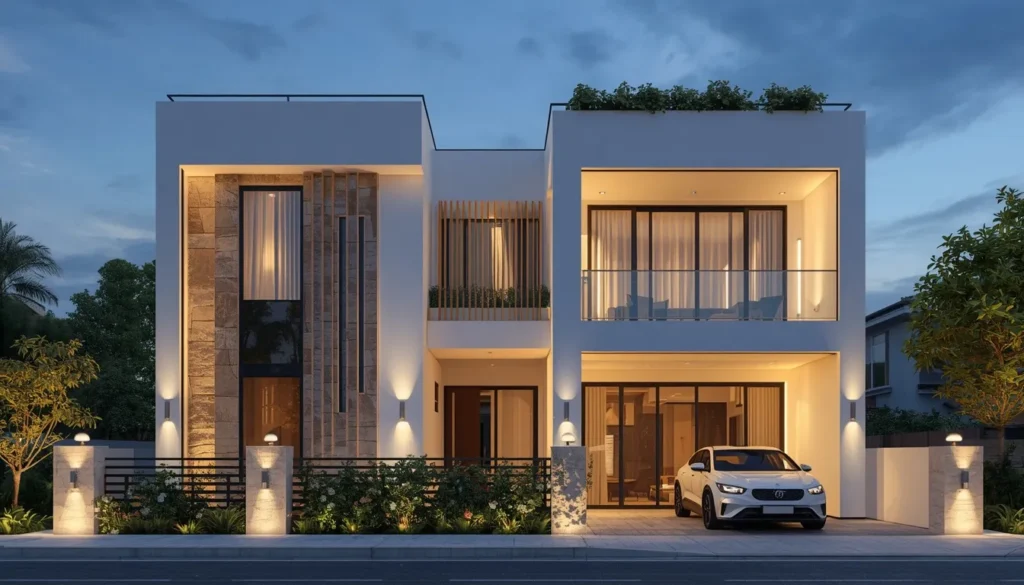
What the Expert Residential Process Looks Like, Step by Step
Meeting one is about listening, not designing. An expert residential architect in Pusad will spend the first substantial conversation asking questions rather than showing samples and talking about their work. How does the family cook? Who lives here — nuclear family now, extended family sometimes, parents eventually? Do the children have their own spaces or do they share? What’s the household’s relationship to outdoor space — is the garden a priority or is it just the space between the house and the compound wall? Are there Vastu requirements, and if so, what are the non-negotiables versus the preferences? What has the family lived in before, and what did they like or dislike about it?
This conversation takes an hour. Sometimes two. It’s the hour that determines whether the resulting design serves the actual family or a generic idea of a family. And it’s the hour that most draftsman-led processes completely skip, moving directly from “what rooms do you need” to “here are the drawings.”
From this conversation comes a written brief — a document that the architect and the family both agree on before any design begins. Room sizes, adjacency requirements, orientation preferences, Vastu considerations, budget parameters. This brief is the checkpoint that the design can be evaluated against. Does the floor plan serve the brief? Are the rooms the right sizes? Is the kitchen in the relationship to the dining area that the family asked for? Does the master bedroom have the separation from the rest of the house that the parents wanted?
Then comes the design work. Not one plan, but typically two or three initial options that explore different ways of organising the brief on the specific plot. Each option has strengths and weaknesses relative to the brief and relative to the site conditions. The architect explains these tradeoffs. The family engages with them. A design direction is chosen and developed further.
This process takes three to five weeks for a typical Pusad residential project. It’s not slow — it’s the amount of thinking that a house deserves before anyone picks up a trowel.
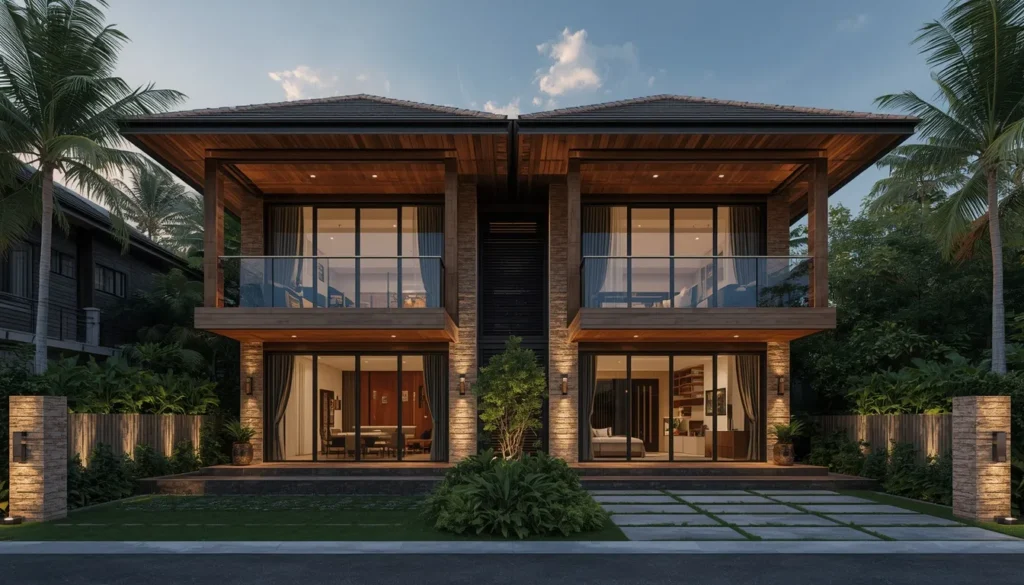
The Climate Expertise That Makes Residential Architecture Relevant in Pusad
Pusad’s climate is not incidental to residential design. It is the central problem that residential design in this town needs to solve, and it needs to solve it passively — through building geometry, orientation, materials, and the placement of openings — rather than through mechanical systems that consume electricity and require maintenance.
April and May in Pusad are genuinely demanding. Temperatures between 40 and 45 degrees Celsius, low humidity, and high solar radiation intensity make rooms that face west or have unshaded south-facing windows uncomfortable to occupy in the afternoon hours. This isn’t a matter of preference — it’s a physical reality of thermal comfort that the design either addresses or doesn’t.
An expert residential architect addresses it through a consistent set of decisions. The principal living spaces — drawing room, dining area, daily family room — are oriented north or east wherever the plot allows, receiving morning light and protection from the afternoon sun. The master bedroom, similarly, avoids the western face. The west-facing positions in the plan are assigned to spaces where occupancy is brief: bathrooms, storage, the stairwell. Openings on the west face are minimal or protected by adequate overhangs that prevent direct sun from entering while allowing diffused light.
Cross-ventilation — the organisation of openings on opposite faces of the building so that prevailing wind can move air through the room — reduces the felt temperature in a Pusad room by a meaningful amount even when the thermometer reading is unchanged. This requires knowing the prevailing wind direction in Pusad (predominantly from the northwest through southwest in summer, shifting southeast during monsoon onset) and designing the openings to exploit it. It’s specific, local knowledge that makes a difference you can feel on a May afternoon.
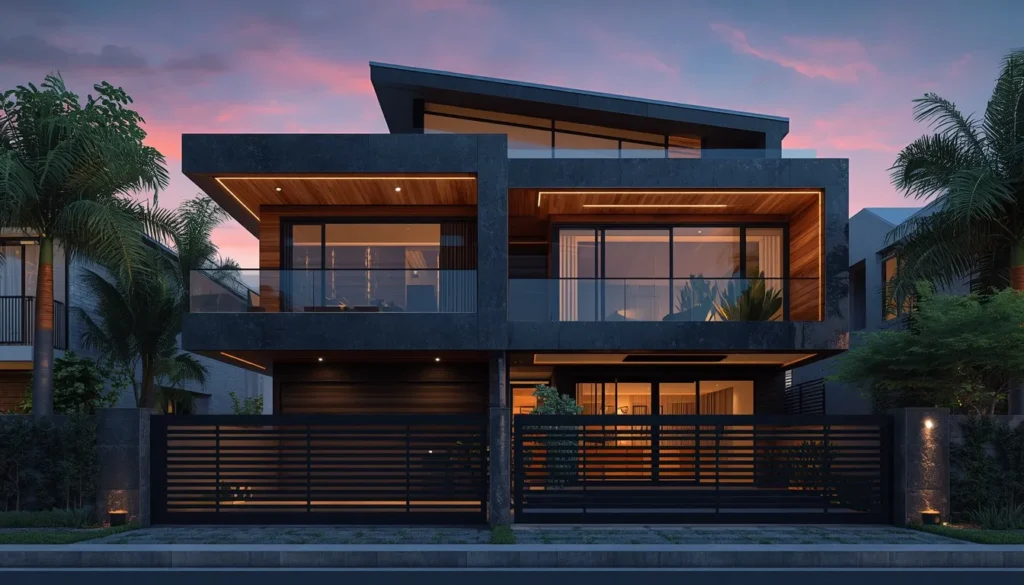
What the Drawings Actually Look Like in a Good Residential Project
One of the clearest markers of professional architectural quality in Pusad is the drawing set that the architect produces. Not for its aesthetic presentation but for its completeness and its specificity.
A basic sanction drawing set — the minimum required for plan approval — includes floor plans, elevations, and a section. This is sufficient for regulatory submission. It is not sufficient to guide construction. A contractor building from a basic sanction drawing set makes dozens of decisions daily that should be design decisions: where exactly does this window sill fall, what is the threshold detail at the front entrance, how does the bathroom waterproofing turn up at the wall, what is the false ceiling height in the dining area, where do the electrical conduit chases run?
Every one of those decisions made on site by the contractor is a decision made without the design thinking that the architect would have brought to it. Some are inconsequential. Some aren’t. The accumulated effect of a hundred site decisions made by the contractor rather than by the architect is a building that is progressively further from the design intent, and the family lives in those gaps.
A comprehensive working drawing set — the drawing standard that a genuinely expert residential practice produces — covers all of these decisions in advance. Floor finish details. Ceiling details. Door and window schedules with all dimensions and hardware. Bathroom tile setting out plans. Kitchen cabinetry dimensions. Staircase balustrading details. These drawings take significantly longer to produce than a basic sanction set. They’re also the thing that separates a well-built Pusad house from an approximately-built one.
Fees and What You Should Expect to Pay in Pusad
Professional fees for expert residential architectural services in Pusad run on a per-square-foot basis:
Basic sanction package — concept design, floor plans at each level, four elevations, section, site plan formatted for local authority submission: ₹3 to ₹5 per sq ft. For a 1,800 sq ft house: ₹54,000 to ₹90,000.
With 3D exterior elevation renders — adds two to three photorealistic rendered views of the finished building’s exterior: ₹5 to ₹7 per sq ft. For a 1,800 sq ft house: ₹90,000 to ₹1.26 lakhs. This is the range where most families in Pusad building for the first time should be engaging.
Comprehensive service — full working drawings, structural drawing coordination, interior space planning, periodic site supervision: ₹7 to ₹10 per sq ft. For a 1,800 sq ft house: ₹1.26 to ₹1.8 lakhs.
Construction costs in Pusad for an independent residential house at standard to good specification run ₹1,800 to ₹2,500 per sq ft. For a 1,800 sq ft house, that’s ₹32.4 to ₹45 lakhs in construction cost. The comprehensive architectural fee at ₹1.8 lakhs is under 5% of the construction cost and is the investment that determines how the construction cost is spent.
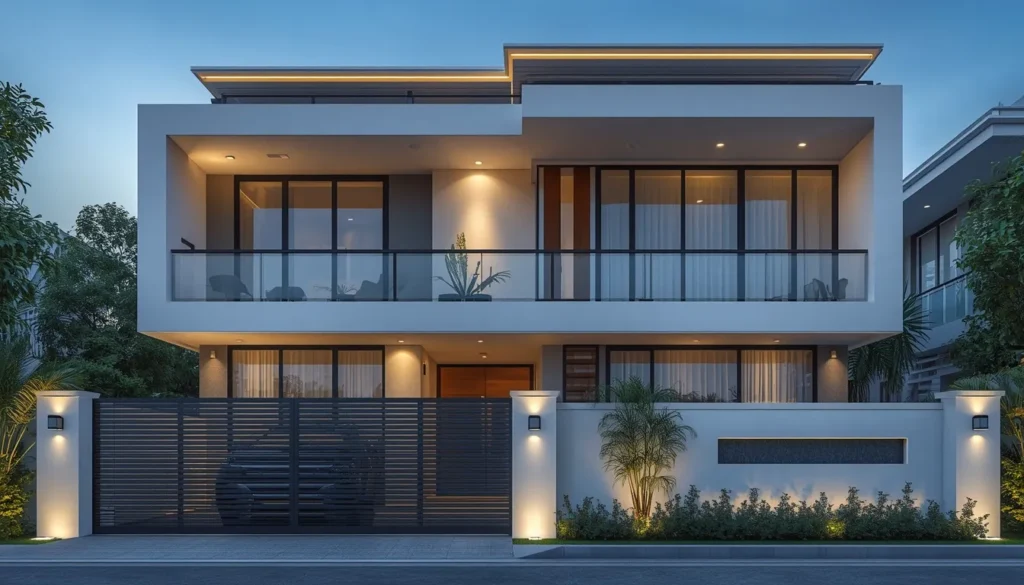
Pusad’s Broader Regional Context and Why It Matters
Expert residential architectural practice in Pusad doesn’t serve only Pusad. The town functions as a professional services centre for a significant surrounding area — Umarkhed 35 km southeast, Mahagaon, Darwha 45 km north, Digras, and the belt of agricultural villages between them. Families from this entire zone come to Pusad for professional services they can’t find closer to home, and the residential architecture market here reflects this regional reach.
The housing typologies in this broader zone are consistent enough — independent houses on full plots, typically G+1 or G+2, built for permanent family occupation — that an expert practice in Pusad can serve the full region with the same design intelligence applied to each project’s specific site and family brief.
Frequently Asked Questions
Q1. How do I tell a genuinely experienced residential architect in Pusad from someone using the title loosely?
Ask to visit two completed projects that are at least two years old and have been lived in through two monsoon seasons. Not photographs — actual buildings you can walk through. The condition of the details at two years — whether the tile joints are clean, whether the paint has any damp staining, whether the joinery is still tight — tells you more than any presentation. An experienced professional welcomes these visits. Someone without the track record steers you toward photographs.
Q2. What should I expect from the first meeting with an architect in Pusad?
Questions, mostly. A good architect is learning the brief at the first meeting, not selling the service. If the first meeting is primarily a portfolio presentation without substantive questions about how your family lives, that’s a signal about how the design process will go.
Q3. How detailed should my brief be before the first meeting?
A rough room list and some reference images you like is enough to start. The architect develops the brief with you through the early conversations. Don’t hold back the meeting until you have a fully formed idea of what you want — part of the value of the professional is helping you figure out what you want before it gets drawn.
Q4. Is the structural engineer appointment separate from the architectural engagement in Pusad?
Typically yes — the structural engineer is a separate professional with a separate fee. In some practices the architect coordinates both and presents a single project fee; in others they’re engaged separately. Either arrangement works as long as the two are genuinely coordinating rather than working independently from each other.
Q5. Can I get approval for a plot in a gram panchayat area outside Pusad town with the same architect?
Yes. Many residential projects in the villages and peri-urban areas around Pusad fall under gram panchayat jurisdiction rather than the municipal council. The approval requirements differ from the municipal process but an architect with experience in rural Maharashtra residential approvals will know the specific documentation and authority requirements. Ask explicitly whether the architect has done panchayat-area approvals, not just municipal ones.
Why Choose QC Interiors for Residential Architecture in Pusad:
Firm: QC Interiors Yavatmal
Expertise: Residential Architecture, Climate-Responsive Planning, Working Drawings
Technology: 2D Planning, 3D Elevations & Walkthroughs
Service Areas: Pusad, Umarkhed, Darwha, Digras & Nearby Regions
Design a home that stays functional, comfortable, and visually timeless with expert architectural planning.
