
The Best Residential Architects in Pusad — And What to Actually Look For Before You Hire One
Pusad has been changing. Anyone who has driven through the town in the last five years and then driven through it again recently will tell you the same thing — the skyline looks different, the new layouts on the outskirts have filled in faster than most people expected, and the standard of construction that families are demanding for their homes has risen in a way that would have seemed optimistic a decade ago.
This is a town with real economic life. The cotton and soybean trading that has made Yavatmal district one of Maharashtra’s more commercially active agricultural regions has put money into Pusad’s economy in cycles, and some of that money has consistently found its way into residential construction. Families here build seriously. A home in Pusad isn’t a transient investment — it’s where generations live, where daughters get married from, where the family’s social standing is quietly communicated to everyone who visits. The weight that a well-built, well-designed home carries in Pusad’s social fabric is real and understood.
Which is why the architect question matters more here than in cities where residential construction is more anonymous and transactional. In Pusad, you’re not building a unit in a developer complex. You’re building your family’s home. Getting the architect right is the most important single decision in that entire process, and it deserves far more thought than most families give it.
Best Residential Architects in Pusad
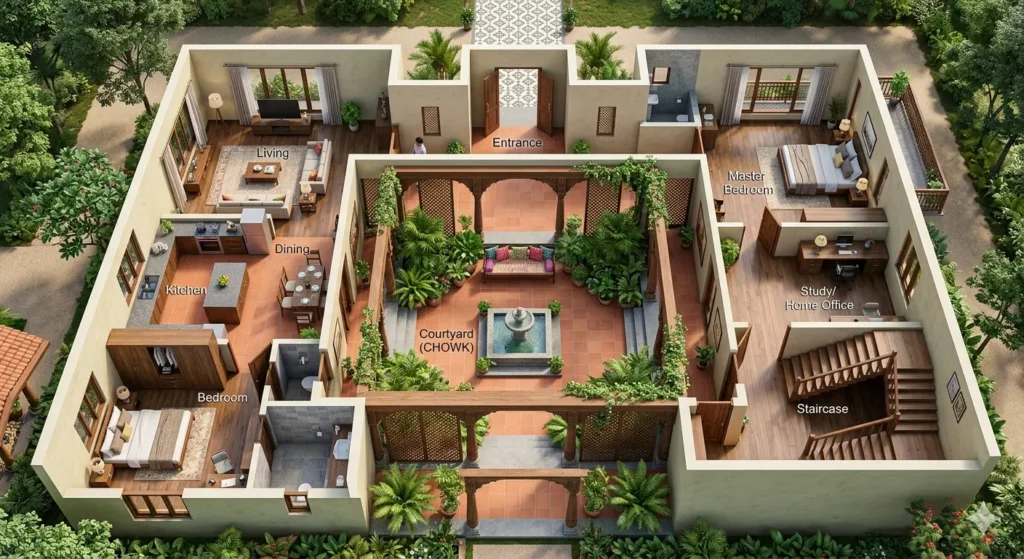
What a Residential Architect in Pusad Actually Does — And What Many People Think They Do
The confusion between an architect and a civil contractor is genuine and widespread in smaller Maharashtra towns, and Pusad is no exception. Many families engage a contractor to build their home and assume that the planning and design work — the drawings, the layout, the elevation — is something the contractor handles as part of the package. Sometimes it is. Sometimes it’s done by a draftsman working for the contractor rather than a qualified architect. And sometimes the “drawings” are a rough sketch that bears a qualified architect’s name for approval purposes but reflects none of the design thinking that makes a house a genuinely good home to live in.
A proper residential architect in Pusad is someone whose primary skill is spatial thinking — understanding how rooms relate to each other, how movement happens through a house, how the building’s orientation affects the quality of light and ventilation in every room, and how the home’s external appearance communicates the character of the family that lives in it. This thinking is what separates a house that’s been planned from a house that’s been designed, and the difference in daily livability over twenty or thirty years of occupancy is enormous.
What a good architect does that a contractor-and-draftsman combination typically doesn’t:
They think about your family’s specific life before drawing a single line. How many family members? Which age groups? Do grandparents need ground-floor access? Are there home-based business requirements? How much cooking happens, and does the kitchen need to support multiple people working simultaneously? Does the family receive guests frequently and formally, or more casually? These questions produce a brief that the design responds to specifically rather than generically.
They think about Pusad’s climate and how the building needs to perform in it. Pusad’s summers are not gentle — temperatures regularly reach 44 to 46 degrees through April and May, and a house that hasn’t been designed with this in mind becomes uncomfortable in ways that no amount of air conditioning fully compensates for. Building orientation, window placement, roof design, and the relationship between covered and open outdoor spaces are all climate-responsive decisions that a good architect makes deliberately.
They think about the building’s relationship to its plot — the setbacks, the approach, the landscape — in a way that creates a home with presence and character rather than a building that merely fills a plot.
What Makes Pusad’s Residential Architecture Specific
Pusad sits in Vidarbha in a way that gives its residential architecture a specific character that’s distinct from coastal Maharashtra or the Deccan plateau towns further west. The vernacular building traditions here — the use of local stone, the emphasis on covered verandas that extend the usable space of the house into the outdoors for most of the year, the spatial logic of homes designed around courtyard-related layouts that manage heat and create private outdoor space simultaneously — reflect generations of practical wisdom about how to build for this climate and this culture.
The best residential architects working in Pusad today bring both contemporary design competence and an understanding of this local tradition. They know which aspects of the vernacular are worth retaining — the veranda, the orientation logic, the thick wall construction that moderates temperature — and which can be updated with contemporary materials and systems without losing the essential character.
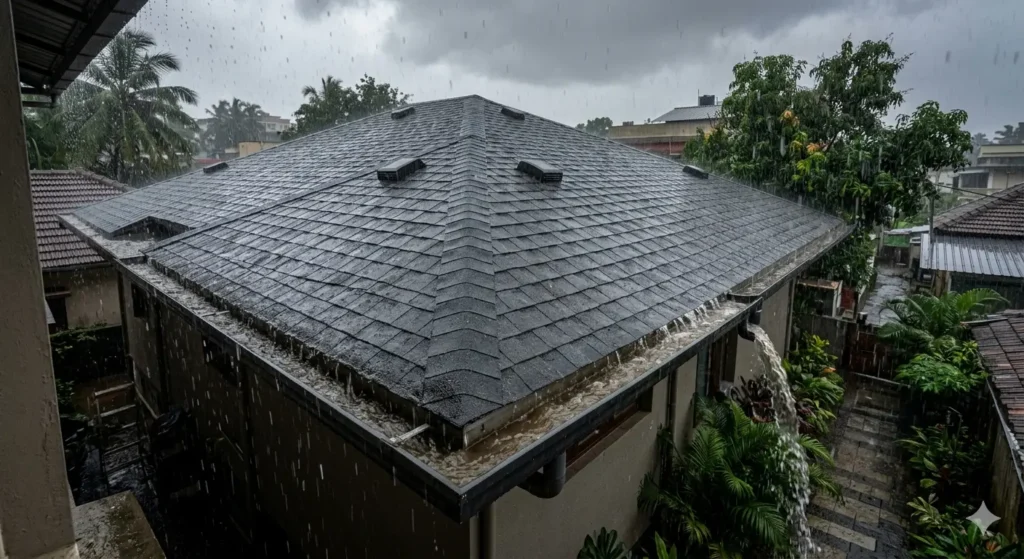
The worst outcome in Pusad residential design is the wholesale import of a design vocabulary from a different context — glass facades that increase solar heat gain, flat roofs without adequate waterproofing for Vidarbha’s monsoon intensity, interior layouts borrowed from Mumbai apartments that don’t serve a Pusad family’s actual domestic life. A good local architect prevents this by designing for where the building actually is.
How to Evaluate Residential Architects in Pusad
The evaluation process for a residential architect in Pusad is more limited than in a large city — there are fewer practices to choose from, and the market is smaller. But the principles of good evaluation are the same.
Visit completed projects if you can. Not in photographs — in person. Walk through a home the architect has designed and pay attention to how it feels to move through the spaces, how the light enters the main rooms, whether the kitchen layout makes sense for cooking, whether the master bedroom has a quality of privacy and quiet that a bedroom needs. These experiential qualities are what photographs don’t capture and what tell you whether the architect thinks about how spaces are lived in rather than just how they look.
Ask specifically about the design process. A good architect will describe a process that begins with understanding your family’s life and ends with a design that responds to that specific brief. An architect who jumps immediately to showing you elevation options and floor plan templates is showing you their process — and their process starts with the building rather than with the family.
Check their familiarity with Pusad’s municipal approval process. The NAGAR PARISHAD / local body approval requirements in Pusad have their own specific documentation requirements and timeline realities, and an architect who knows this process well is going to save you significant time and frustration compared to one who’s figuring it out as they go.
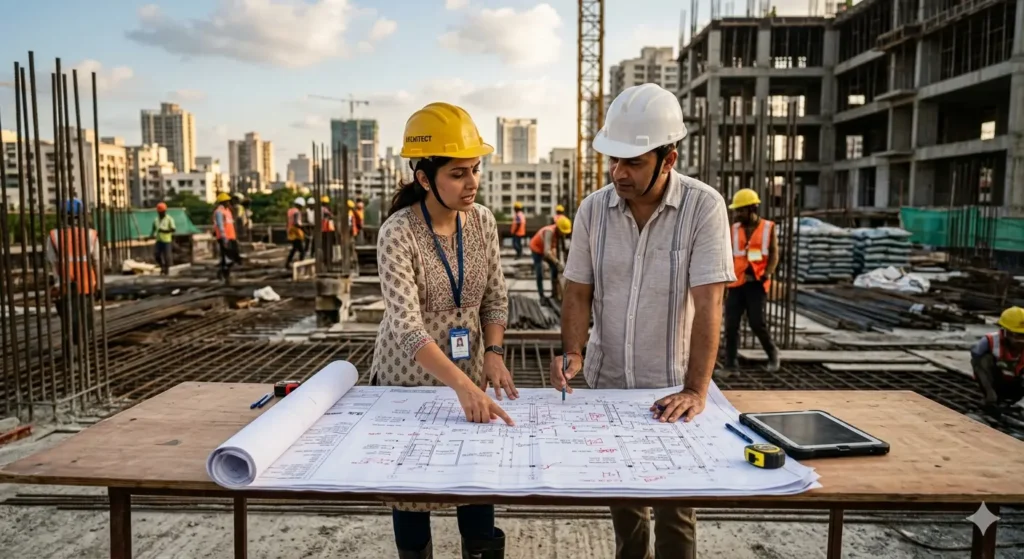
Ask about their working relationship with contractors in the region. In Pusad, the pool of quality construction contractors is not unlimited, and an architect who has established working relationships with reliable local contractors — and whose construction documents are detailed enough that the contractors can build accurately from them — is going to deliver better built results than one whose documentation is generic or unclear.
The Design Elements That Matter Most in a Pusad Home
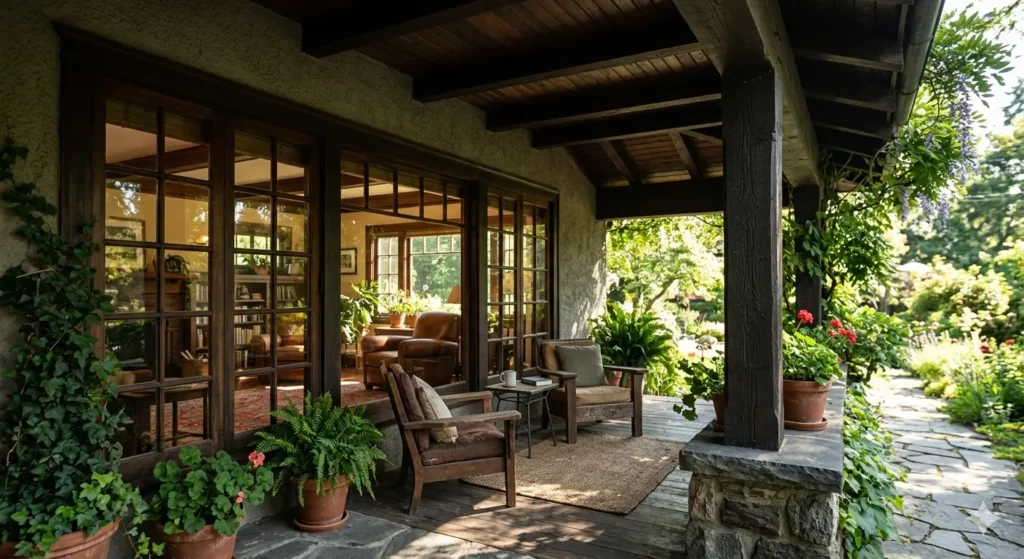
The veranda. In Pusad’s climate, a covered veranda that runs along the south or west face of the house is not a luxury — it’s a functional element that shades the main rooms from direct afternoon sun, extends the usable area of the home into a semi-outdoor space that’s pleasant for six to seven months of the year, and creates the transitional zone between the public road and the private interior that good residential design always benefits from. An architect who doesn’t include this element in a Pusad home design without a specific reason to omit it is missing something fundamental.
The roof. Pusad receives significant rainfall during the monsoon, and the roof design — its pitch, its waterproofing specification, its drainage provisions — has consequences that show up quickly and lastingly if it’s wrong. A sloped roof with adequate pitch and proper overhang is significantly more appropriate for Pusad’s rainfall conditions than a flat roof, which requires exceptional waterproofing execution to perform reliably over years.
Room orientation. In a well-designed Pusad home, the main living areas face south or east — the directions that receive the most useful natural light during the cooler months and that can be shaded from the high summer sun by an adequate roof overhang. Bedrooms face east for morning light. The kitchen faces a direction that receives good ventilation and doesn’t accumulate the afternoon heat that a west-facing kitchen in Pusad’s summer becomes.
The entry sequence. How you arrive at a Pusad home — the gate, the approach, the entry court or veranda, the transition from the outside into the interior — sets the register for the entire home. A well-designed entry sequence creates a sense of arrival that a direct door-from-street entry doesn’t have, and this quality matters for a family home in Pusad where the home’s presentation to visitors is part of what it communicates.
What Residential Architecture in Pusad Costs
The architect’s fee for residential design in Pusad typically falls between 5 and 10 percent of the construction cost, depending on the scope of services, the size of the project, and the architect’s experience level. For a home of 2,500 square feet at ₹2,500 per square foot construction cost — a total construction cost of ₹62.5 lakhs — the architectural fee would be in the range of ₹3 to ₹6 lakhs.
This fee covers the design work — the floor plans, the elevations, the structural drawings in coordination with a structural engineer, the working drawings from which the contractor builds — and typically includes site supervision visits at key construction stages.
It is one of the smallest percentage costs in the total project budget and one of the most consequential. A home built from good architectural drawings, with a good construction contractor, to a well-considered design brief, will serve a Pusad family for thirty to forty years. The alternative — a home built from contractor templates without genuine design thinking — will also last thirty to forty years, and will remind the family of what was compromised every day of those decades.
FAQs: Residential Architects in Pusad
Q1. Is it compulsory to hire a licensed architect for home construction in Pusad?
Yes. Under Maharashtra’s building bylaws, any residential construction in a Municipal Council or Nagar Parishad area requires architectural drawings prepared and signed by a licensed architect registered with the Council of Architecture. In Pusad, the local body approval process requires these drawings for plan sanction. Proceeding with construction without approved plans creates legal complications that affect property registration and resale.
Q2. How long does the plan approval process typically take in Pusad?
The approval timeline through Pusad’s local municipal body typically runs between four and eight weeks for straightforward residential proposals that comply with the applicable building regulations. Projects in areas with specific zoning requirements or those needing multiple clearances may take longer. Working with an architect who knows the local approval process well — and who prepares documentation that is complete and accurate the first time — significantly reduces delays.
Q3. Can I build a home in Pusad without an architect and just use a civil contractor?
Technically, you need a licensed architect for the approval drawings. Some families in Pusad engage a draftsman to prepare drawings under an architect’s name for approval purposes while leaving all design decisions to the contractor. This is legally marginal and practically risky — the drawings prepared this way are often inadequate for proper construction, and the absence of design thinking in the layout shows up in daily life for as long as the family occupies the home.
Q4. What is the typical cost of constructing a new home in Pusad in 2025-26?
Construction costs in Pusad in 2025-26 typically range from ₹1,800 to ₹2,800 per square foot depending on the material specification, the complexity of the design, and the contractor’s quality level. A basic specification — standard vitrified tile flooring, standard sanitary fittings, painted walls — sits toward the lower end. A premium specification — natural stone flooring in main areas, premium bathroom fittings, high-quality kitchen, exterior cladding — approaches or exceeds the upper end. These figures cover construction costs only and exclude architectural fees, interior design, furniture, and landscaping.
Q5. Are there local architects based in Pusad, or do families typically engage architects from Nagpur or Yavatmal?
There are a small number of architectural practices based in Pusad itself, as well as draftsmen and designers who handle local residential work. Families with more ambitious design requirements often engage architects from Yavatmal or Nagpur who have experience with Vidarbha’s residential typologies and climate. The key criterion is not geography but the architect’s proven track record of designing homes that perform well in this region’s conditions — ask for completed projects you can visit regardless of where the practice is based.
Constructing a residence in Pusad is not merely a process of building; it involves forming an environment that endures extreme summers and torrential monsoons. We take smart design, durability and elegance and marry it with deep local expertise to protect your investment for decades at QC Interiors.
Skip the compromise—develop perfectly precise and quality your family should have.
QC Interiors
Serving: Pusad, Yavatmal
Specialisation: Comprehensive Home Interior Design | Architectural Planning | Turnkey Renovations
📞 (+91) 7798153303
Sign up for your consultation now and walk through with our 3D walkthrough of your home before a hammer is lifted!
