
Dining Room Interior Design in Nagpur: Full Design and Cost Guide
The dining room is the most underdesigned space in most Nagpur homes. In the majority of 2BHK and
3BHK flats in Nagpur, the dining area is not a separate room at all — it is the space between the living
room and the kitchen, defined by where the dining table happens to sit. No dedicated lighting. No storage
for crockery and serving pieces that are actually used. No visual definition that says this is a considered
part of the home.
This is entirely fixable within a normal renovation budget, and the result — a dining area that feels
designed rather than incidental — has a disproportionately positive effect on how the home feels for daily
meals and for guests.
Dining Room Interior Design in Nagpur
Defining the Dining Zone in an Open-Plan Nagpur Flat
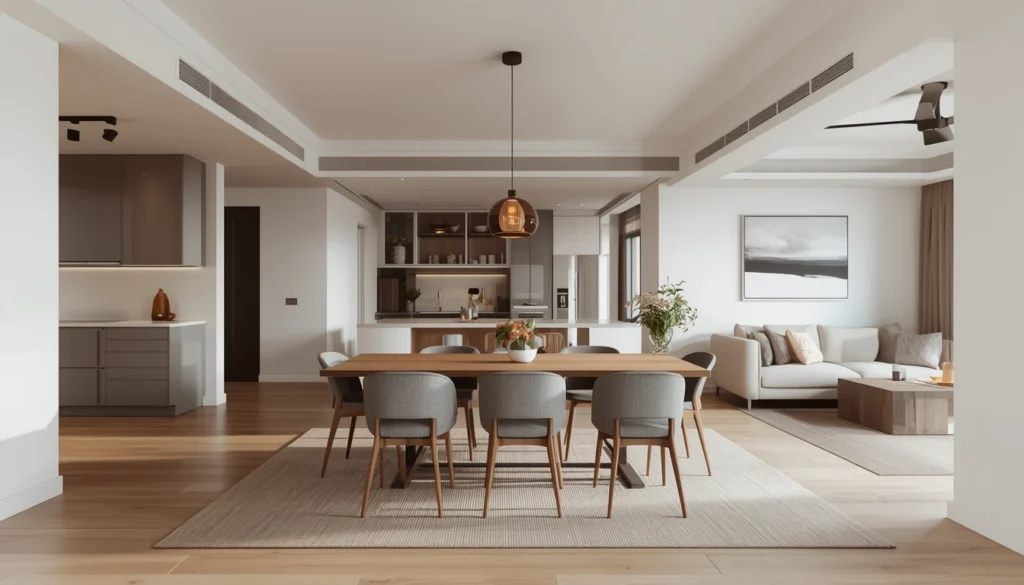
In most Nagpur 2BHK and 3BHK flats, the living and dining areas share a single combined space. The
design challenge is creating two zones that feel distinct and purposeful without physical separation. Three
things accomplish this: a pendant light directly above the dining table, a rug under the dining table that
defines the zone, and furniture scale that is appropriate to the dining area rather than defaulting to
whatever fits.
The pendant above the dining table is the most effective single intervention in any Nagpur combined
living-dining space. It marks the dining zone architecturally, provides the best possible functional light for
meals (direct, warm, positioned at the right height to illuminate the table surface without shining into
diners’ eyes — typically hung so the bottom of the fixture is 28 to 34 inches above the table top), and looks
intentional in a way that a ceiling fan or a recessed spot cannot replicate.
For Nagpur’s climate: the pendant in the dining area should not interfere with the ceiling fan if the
living-dining space has a single fan covering both areas. This is a real layout consideration in our climate
— the dining table position in relation to the fan position determines whether meals are comfortable in
summer or a constant struggle with papers blowing off the table.
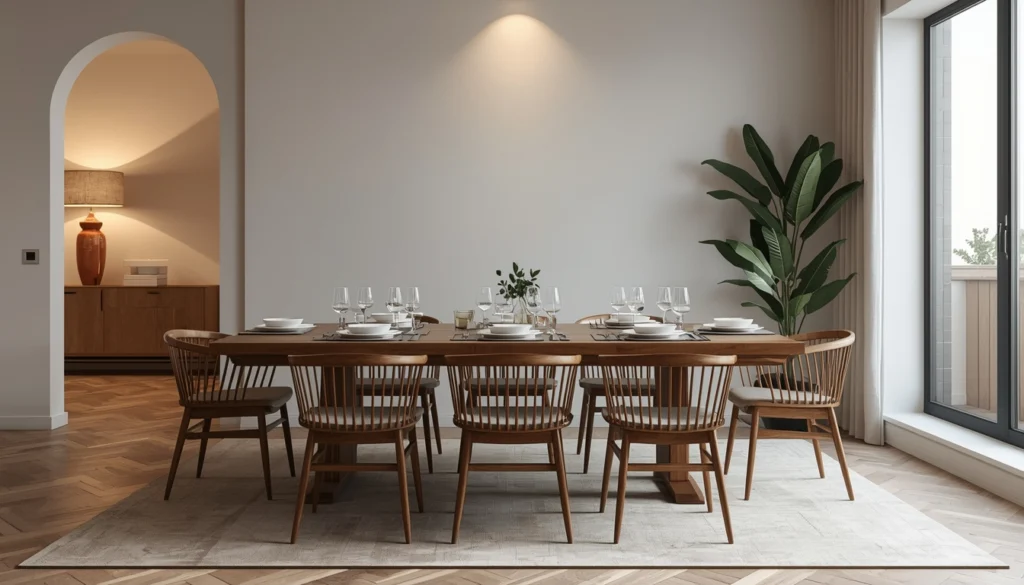
Table Sizing: The Most Common Mistake
Dining tables in Nagpur homes are consistently undersized for the families that use them. A family of four
buys a four-seater table, fills the four seats at daily meals, and then has no space for the fifth person when
family visits — which in a Nagpur extended-family culture is a frequent occurrence. A table that
comfortably serves four daily and six with some crowding is the right practical specification for most
Nagpur families.
Standard sizes: a 4-seater table is 48 by 30 inches minimum. A 6-seater is 72 by 36 inches. A 6-seater that
can extend to 8 — extendable dining tables — is the smartest choice for Nagpur families who host
regularly but do not have daily space for eight chairs. Quality extendable dining tables with solid wood or
engineered wood tops: Rs. 18,000 to Rs. 55,000 depending on material and mechanism quality.
The Crockery Unit: Storage That Should Be in Every Nagpur Dining Room
The crockery unit — a tall storage cabinet along one wall of the dining area — is one of the most
consistently useful additions to any Nagpur home interior project and one of the most often omitted. Most
Nagpur homes have a significant quantity of crockery, serving dishes, and dining accessories with
nowhere specific to live. These items end up spread across kitchen cabinets (which are needed for cooking
essentials), in cardboard boxes, or stacked in places they do not belong.
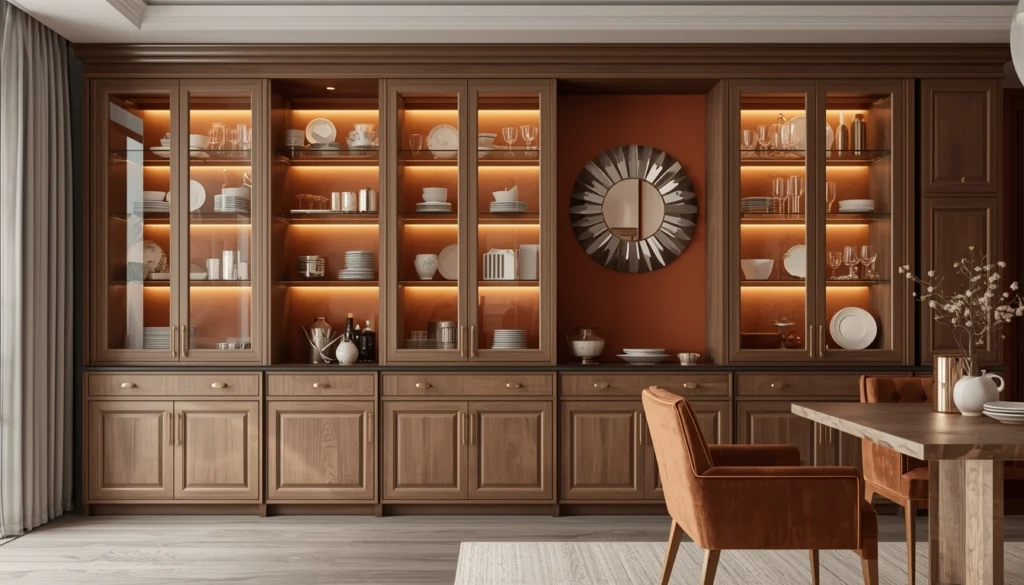
A well-designed crockery unit in a Nagpur dining room: 18 to 24 inches deep at the base for plate and
bowl storage, upper section with glazed or open display for glasses and display pieces, and at least one
section of closed storage at mid-height for items you use regularly but do not want permanently visible.
Size for the full available wall rather than a small standalone piece — a narrow crockery cabinet in a large
dining wall looks like it was placed there by accident.
Material consideration for Nagpur specifically: crockery units near the dining area are in close proximity
to the kitchen and pick up cooking moisture during meal preparation. BWP plywood is the right
specification for the carcass. MR-grade is adequate if the unit is well away from the cooking zone and the
flat is consistently air-conditioned.
Wall Treatment and Colour in the Dining Area
The dining area wall treatment that works best in most Nagpur homes is the simplest one: a single accent
wall behind the crockery unit or behind where the table sits, in a warm tone that is slightly deeper than the
living room walls. This visual anchoring of the dining zone within the combined space does not require
complex materials — a deep warm terracotta, a dusty olive, or a warm charcoal on one wall with the rest
of the space in a lighter tone creates the separation effectively.
For homes with a separate dining room: this is one of the spaces in a Nagpur home where richer, more
atmospheric colour can work well. The dining room is used for shorter periods than the bedroom or living
room, and a more dramatic palette — deep walls, warm lighting, rich upholstery on the chairs — creates
an experience that feels genuinely special rather than merely decorative.
What Does a Dining Room Interior Cost in Nagpur?
A dining area upgrade — pendant light installation, crockery unit, accent wall paint, and a rug — currently
runs Rs. 35,000 to Rs. 85,000 at mid-range quality in Nagpur depending on the size and complexity of the
crockery unit. A full separate dining room with built-in crockery unit, feature wall treatment, false ceiling
detail, and considered lighting: Rs. 75,000 to Rs. 1.8 lakh. At QC Interiors, we design dining spaces that
serve daily life and special occasions equally well. Reach out for a free consultation. If you are based in Vidarbha, our best interior designers in Yavatmal offer the same quality of dining and full-home design.
Dining Table Chairs in Nagpur: Comfort and Durability
Dining chairs in Nagpur are exposed to more rigorous daily use than in most other Indian cities simply
because the dining table in most Nagpur homes is one of the primary work and activity surfaces —
homework, craft projects, and morning routines all happen here. This puts more daily stress on chair joints
and upholstery than they are typically designed for.
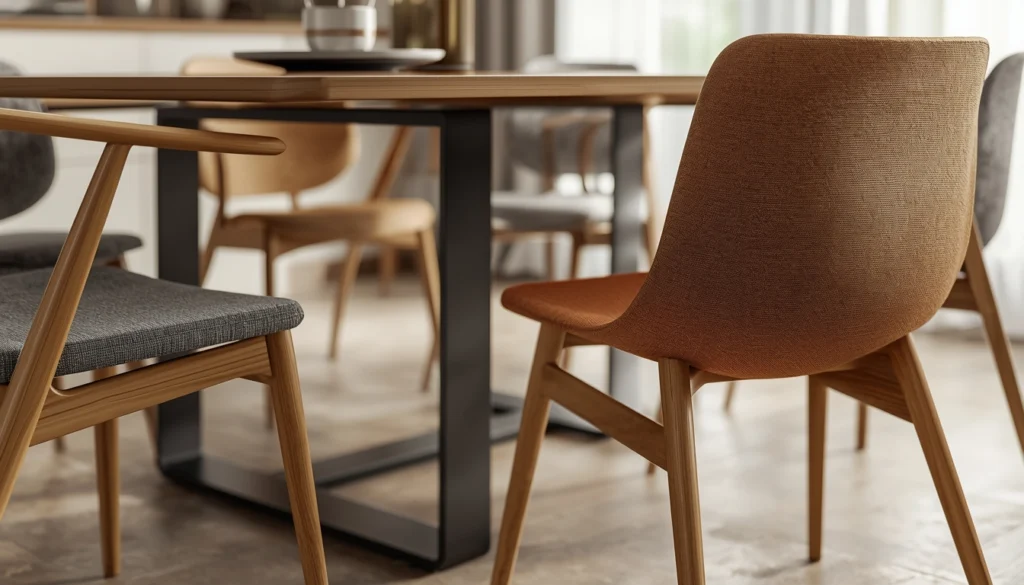
For Nagpur dining chairs: fabric upholstery on seat pads is practical but requires specific selection.
Leatherette cleans more easily and holds up to spills and children, but becomes genuinely uncomfortable
in Nagpur summer months — the material heats up and becomes sticky against skin. Natural cotton or
linen upholstery is more comfortable in our climate but requires more maintenance. Solid wood or metal
frame dining chairs without upholstered seats avoid the fabric issue entirely and are the most durable
choice in a high-use Nagpur dining area.
For chair height in relation to table height: standard dining table height is 28 to 30 inches, standard dining
chair seat height is 17 to 19 inches, giving a comfortable 10 to 13 inch table-to-seat differential. Buying
chairs before confirming they work with your specific table height is one of the most common and most
easily avoided dining room mistakes.
