
Best Residential Architect in Besa Nagpur — Designing Homes in the Corridor That Changed Everything
Besa changed the conversation about where Nagpur families should live. Five years ago, recommending Besa to a family considering their residential options required some explanation — the distance from the old city centre, the roads that were still developing, the social infrastructure that was partially there but not fully formed. Today, Besa recommends itself. The infrastructure has caught up with the aspiration, and the result is one of those rare situations in urban development where a locality has delivered what the early buyers believed it would.
Property appreciation in Besa has been among the most consistent in Nagpur’s residential market — 10 to 15 percent annually in good years, with a trajectory that reflects genuine end-user demand rather than speculative accumulation. The families who bought here early have been validated. The families buying now are paying more but getting a neighbourhood that is more fully formed — better roads, better schools, better medical infrastructure, better social fabric.
The residential construction happening in Besa in 2025-26 reflects this maturity. The developer apartment complexes have been joined by a growing wave of independent residential construction on plotted layouts — families who’ve purchased plots in Besa’s various residential layouts and who are building homes rather than buying apartments. This is the context where residential architectural quality has the most direct impact, and where the choice of architect matters most.
Best Residential Architect in Besa Nagpur
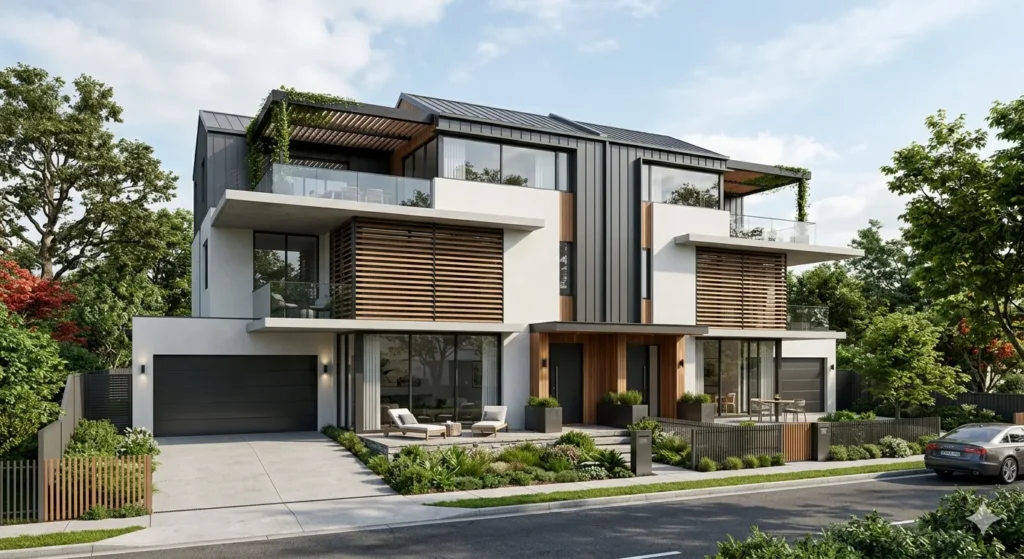
What Besa’s Residential Landscape Looks Like
Besa’s residential development happens across several distinct sub-areas that have developed at different rates and with different characters.
The older, more established parts of Besa — the layouts that were developed first, where the roads are older and the trees have had time to grow — have a settled residential quality that the newer layouts are still developing. Homes built here five to eight years ago are now surrounded by neighbours, by functional roads, by the social infrastructure that makes daily life comfortable. The design context for new construction in these areas is one where the neighbourhood standard has been established and where a new home needs to meet or exceed that standard to fit in well.
The newer Besa layouts — particularly those further south toward the Besa-Beltarodi Road corridor and the layouts developing toward MIHAN — are in earlier stages of neighbourhood formation. New construction here has more freedom in terms of design vocabulary, but also more responsibility to establish the quality standard that the neighbourhood will carry forward.
Both contexts require a residential architect who understands Besa specifically — who knows the regulatory framework (primarily NMRDA in the outer layouts, NMC in some of the older areas), who has worked with Besa’s specific soil and groundwater conditions in the foundation design context, and who has completed projects in the area that can be visited and assessed.
The Climate and Orientation Challenges in Besa
Besa’s location in the southern Nagpur metropolitan region means it shares the broader Nagpur climate profile with some specific localised characteristics. The area receives good summer breezes from certain directions — a natural ventilation asset that a well-designed Besa home captures through orientation and window placement. The summer heat is the same demanding Nagpur heat that it is across the city — 44 to 45 degrees in April and May — requiring the same climate-responsive design responses.
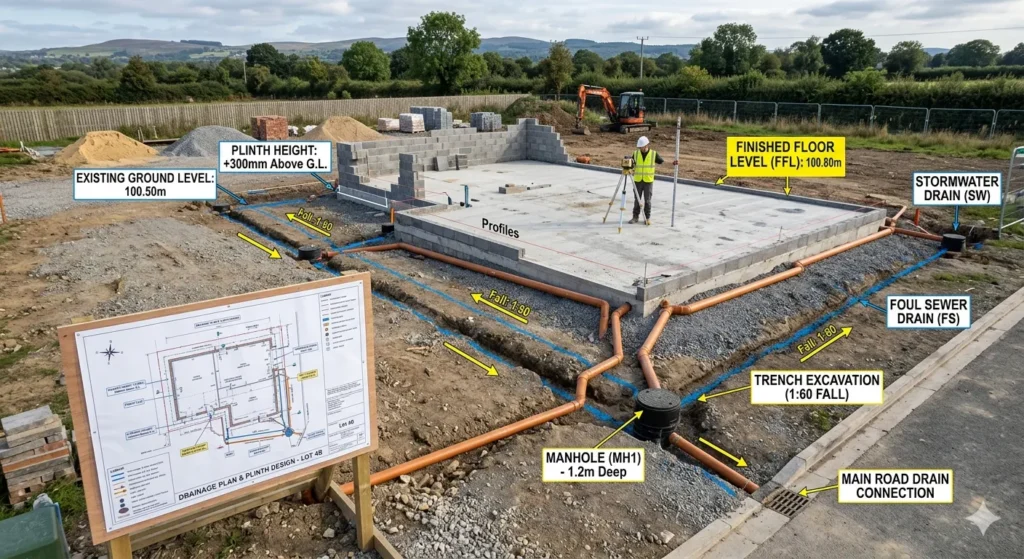
One specific consideration for Besa’s newer layouts: many are developed on land that was previously agricultural, with the flat topography that agricultural land typically has. This means that natural drainage from plot to plot and from plots to the road network requires careful attention in the design. A home built without adequate plinth height and site drainage design on a flat Besa plot can experience water ingress in a heavy monsoon even if the building itself is structurally sound. This is a detail that an experienced Besa residential architect addresses as a matter of course and that an inexperienced one misses.
The west-facing orientation issue that affects a significant proportion of Besa’s plotted layouts — where road alignment creates west-facing main frontages — requires the same architectural response as on Wardha Road: adequate shading on the west face, room layout that minimises intensive use of west-facing rooms in the afternoon, landscape screening that reduces direct western sun exposure.
The Besa Premium Villa Market
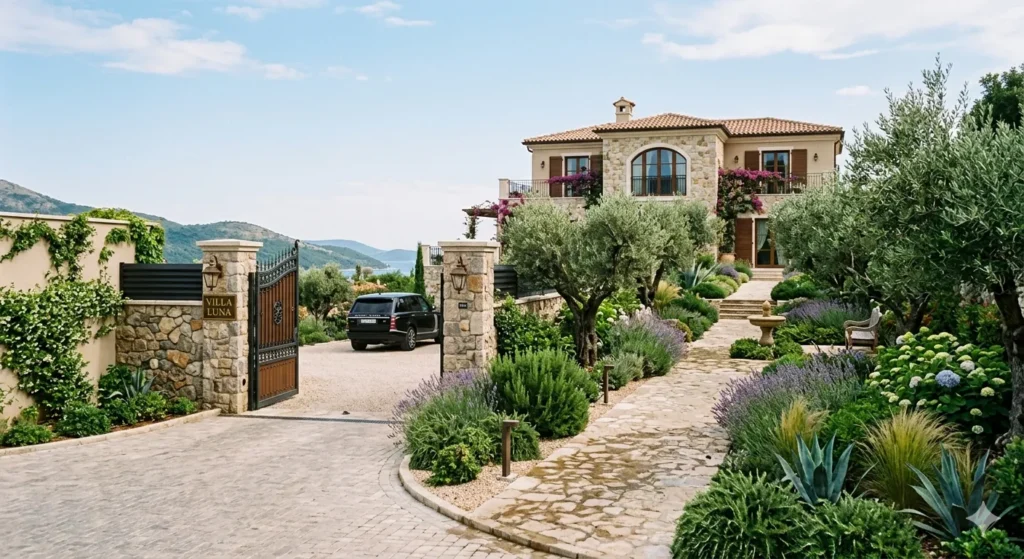
A specific subset of Besa’s residential market deserves particular attention because it represents the most design-forward and highest-investment category of residential construction happening here: the premium villa and bungalow segment.
Several premium plotted villa developments in and around Besa are selling plots of 200 to 500 square metres to buyers who intend to build independent homes at a quality level that competes with the best residential construction in Nagpur. The buyers in these projects are typically high-income professionals, business families, and NRI returnees — the same demographic that drives demand for high-quality residential design in Mumbai’s premium suburbs.
The residential architect serving this segment in Besa needs to bring design quality that matches these buyers’ aspirations and international reference points. The homes being designed and built in Besa’s premium villa plots in 2025-26 will become the visual standard for this neighbourhood over the next decade, and the architects who are working here now are setting a precedent that the neighbourhood will carry.
What Good Architectural Practice in Besa Produces
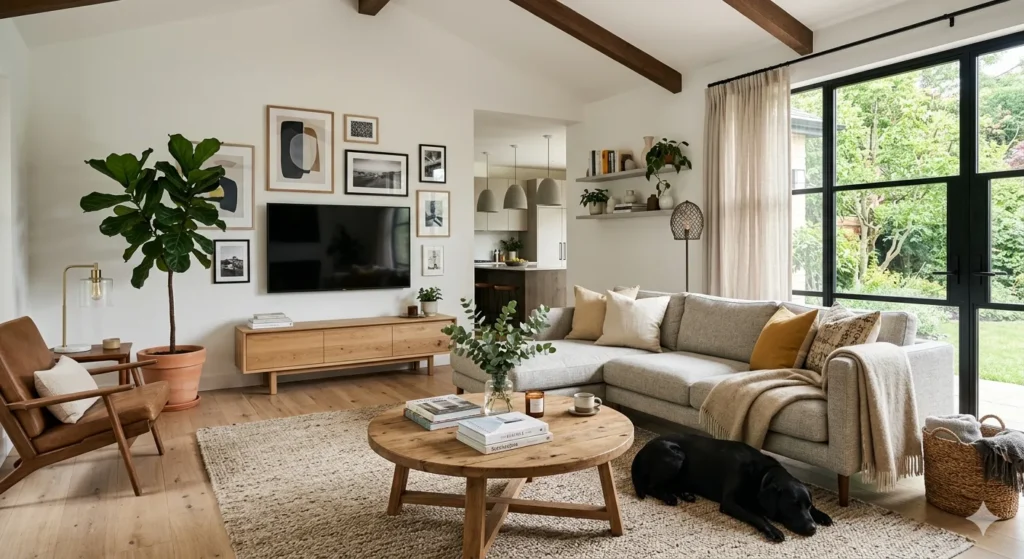
A well-designed independent home in Besa has several qualities that distinguish it from a contractor-built home in the same location.
It addresses the plot’s specific orientation with deliberate design decisions — not accepting adverse orientations passively but designing around them actively. It manages the relationship between the building, the compound, and the landscape as a coherent whole rather than treating the building as the only designed element on the plot. It creates an entry sequence from the gate to the main door that communicates quality before the interior is experienced. And it designs the interior of the home for the specific family’s life — the room organisation, the proportions, the natural light entry — rather than applying a standard floor plan that could belong to any family anywhere.
Construction costs in Besa: ₹2,100 to ₹3,200 per square foot. Architectural fees: 6 to 10 percent of construction cost. For premium villa plots with higher design aspiration: toward the higher end of both ranges.
FAQs: Best Residential Architect in Besa Nagpur
Q1. Is Besa under NMC or NMRDA jurisdiction for building approvals?
Besa has a mixed jurisdictional situation — some plots and layouts are under NMC jurisdiction while others fall under NMRDA. The specific authority depends on the exact location of your plot within Besa. Your architect needs to determine this before preparing drawings, as the FSI, setback, and approval process requirements differ significantly between the two authorities.
Q2. What soil conditions should I be aware of when building in Besa? Parts of Besa have black cotton soil characteristics — expansive soil that shrinks and swells significantly with seasonal moisture changes. This affects foundation design, requiring adequate foundation depth and design appropriate for the soil conditions. Your architect should ensure a soil investigation is conducted before structural design begins.
Q3. Is Besa well-served by water supply for residential construction and occupation?
Water supply in Besa is improving but variable depending on the specific area and the age of the water supply infrastructure. Most newer residential complexes and layouts have water storage provision — underground or overhead tanks with adequate capacity — designed in. For independent homes, your architect should ensure adequate on-site water storage as a standard design element.
Q4. What is the design vocabulary that best suits a premium home in Besa?
The premium homes being built in Besa’s newer villa layouts tend toward a warm contemporary vocabulary — clean contemporary lines, natural material warmth in stone and wood, generous glazing on the better-oriented faces with adequate shading, and an emphasis on the relationship between indoor and outdoor spaces that Besa’s relatively open setting makes possible. This vocabulary suits the demographic building here and ages better than more fashion-driven alternatives.
Q5. How has the Nagpur Metro affected Besa’s residential design context?
The metro connectivity has brought Besa into a more practical relationship with Nagpur’s central areas and is a factor in how families think about the daily commute trade-off of living this far from the old city centre. From a residential design perspective, the metro’s presence doesn’t change the architectural requirements significantly, but it changes the demographic willing to build here — expanding it toward families who previously wouldn’t have considered living this far south.
Where Vision Meets Practical Design.
A well-designed home in Besa, Nagpur starts with architecture that understands both environment and lifestyle.
QC Interiors crafts residential plans that are functional, efficient, and future-ready.
Serving: Besa, Nagpur
