
Best Paint Colours for Nagpur Summer Homes. Paint colour in Nagpur is never just about aesthetics. If you’ve lived here long enough — through at least one proper summer in a room that was painted the wrong shade — you already know this. A bright white that bounces the 2 PM sun straight into your eyes. A cool grey that feels clinical and miserable even when the morning is at its most pleasant. A dark accent wall that turns your bedroom into something resembling a tandoor by late April. These aren’t hypothetical complaints. They’re what happens when people pick colours without thinking about where they actually live.
Nagpur’s light doesn’t forgive mistakes the way a gentler climate does. In summer, it’s intense, high-contrast, and brutally revealing of undertones you’d never notice in a showroom or on a paint chip. A colour that looked warm and rich under the diffused lighting of a display centre can look completely alien on your wall at 11 AM in May when it’s 46 degrees outside and the sun is doing exactly what it always does here — hitting everything hard and flat and unrelenting.
The good news is that choosing the right colours for Nagpur isn’t complicated. It just requires thinking about your city’s actual conditions rather than borrowing a palette that was designed for London or Bengaluru or somewhere with cloud cover.
Best Paint Colours for Nagpur Summer Homes
Why Nagpur’s Light Does What It Does to Colour
Here’s the thing most people don’t quite realise: paint colour isn’t a fixed property of a wall. It’s what you see when light bounces off that surface and reaches your eye. Change the light — its direction, its intensity, its colour temperature — and the same paint looks like a different colour entirely.
Nagpur’s summer sunlight sits between 5,500 and 6,500 Kelvin on the colour temperature scale. That’s a cool, blue-shifted light — meaningfully different from the warm glow of an overcast day or the golden tone of evening. Under that cool, high-intensity midday sun, the warm undertones in paint colours get partially bleached out. The inviting cream that looked like it belonged in a Rajasthani haveli at sunset? It looks vaguely yellowish and washed out at noon. The cool white that seemed so crisp and clean on a cloudy October morning? Under peak summer sun, it looks cold enough to be uncomfortable.
The practical upshot of all this is straightforward: colours in Nagpur need to carry slightly more warmth built into them than they would in a cooler or less intensely lit city. And before you commit to anything, you need to see the colour in the actual room — in the morning, in the afternoon, and in the evening under your artificial lights. A paint chip on a card tells you almost nothing useful on its own.
The Palette That Actually Works: Warm Whites and Soft Neutrals
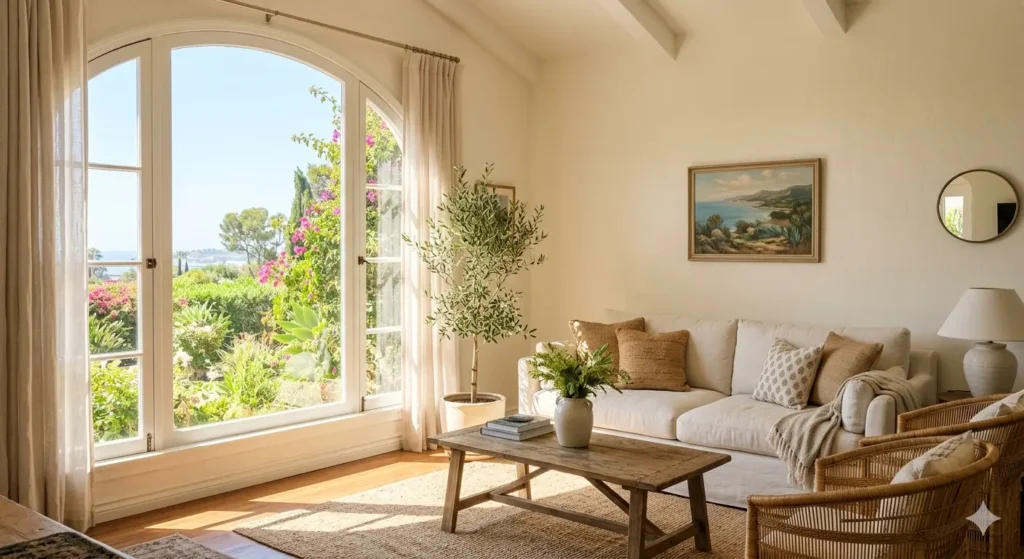
For the main walls of your living areas and bedrooms — the surfaces that set the fundamental tone of a room — the palette that performs most reliably in Nagpur is warm whites and soft neutral creams. This isn’t a boring choice. It’s a smart one, and there’s a real reason why it keeps working across decade after decade of changing trends.
What you’re looking for specifically: whites with an LRV (Light Reflectance Value) of around 75 to 85, with a warm undertone that leans toward yellow or cream rather than toward blue or green. On Asian Paints — which is what most Nagpur homes end up using — the Off White family and the Magnolia range consistently hit this mark. On Berger and Dulux, you’re looking at the warm-toned options in their Brilliant White families, the ones described as cream or biscuit rather than pure or cool.
What a warm white actually does in a Nagpur room: it reflects intense summer light without turning your walls into a glare source. In an air-conditioned room with the curtains partly drawn, it creates an even, pleasant brightness that doesn’t feel harsh. In the evening under warm LED lighting, it picks up warmth and atmosphere in a way that cool whites simply don’t. And it gives your furniture, your soft furnishings, your art — the things that are supposed to carry the personality of the room — the chance to be seen clearly, without the wall competing with them.
What it doesn’t do: it doesn’t make a room feel smaller, because the high LRV keeps things bright. It doesn’t date quickly — warm whites have outlasted more interior design trends than any other palette in history. And it doesn’t look cheap when it’s done properly, over good putty and primer, in a quality emulsion.
Accent Walls: Where the Character of a Nagpur Home Actually Lives
The accent wall — one wall in a room that’s painted differently from the other three — is how you bring character and depth into a Nagpur interior without committing to covering the whole room in a stronger tone. Done right, it transforms a room. Done wrong (usually by choosing a colour that fights the light), it’s a feature you end up painting over within two years.
The colours that consistently work best as accent walls in Nagpur homes come from what I’d call the Indian earth palette. These are the tones that craftsmen and builders on the subcontinent have been reaching for, in this exact climate, for hundreds of years. There’s a reason they stuck around.
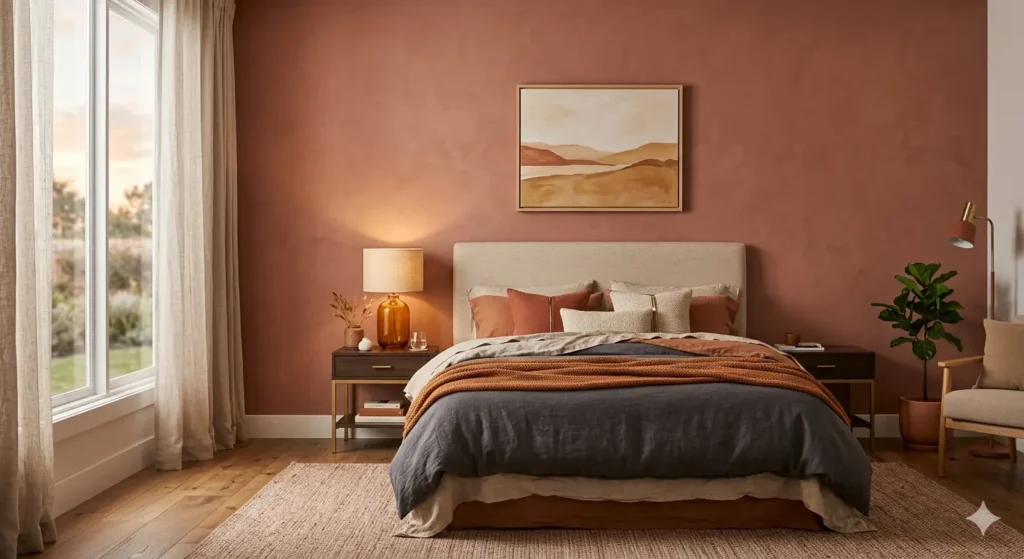
Warm terracotta — the orange-red of fired clay — is the Nagpur accent wall colour with the strongest roots and the most reliable contemporary performance. Not a saturated, screaming orange — but a dusty, warm red-brown with a little grey pulled into it, so it reads as sophisticated rather than rustic. This colour handles Nagpur’s brutal summer light without going garish, and in the evening under warm artificial lighting, it does something that almost no other colour can: it generates real warmth, the kind that makes a room feel like it was designed for living in rather than photographed for a catalogue.
Soft ochre and honey yellow — the mid-range between cream and terracotta — work particularly well in south-facing rooms where the light runs warm through most of the day. On the wall behind a sofa group, or the wall opposite the door as you walk into a bedroom, a soft ochre creates a sense of depth and welcome that the room’s light amplifies rather than fights.
Dusty sage and muted olive — greens with a meaningful amount of grey and brown mixed in, which dials down their saturation to a tone that reads as natural rather than vivid — are well-suited to east-facing rooms that receive morning light. They carry enough warmth to avoid feeling cold, and enough of a connection to natural materials that they ground the room rather than floating oddly in it.
Now, the colours worth approaching with real caution in Nagpur:
Cool greys can look genuinely cold and clinical in east-facing rooms under morning light, particularly in rooms that don’t receive strong direct sun. Pure cool whites — the ones with blue or green in them rather than yellow — glare uncomfortably under the summer sun. Deep blues and deep greens on primary walls in smaller rooms absorb too much light, and in a city where heat is already a psychological weight for several months of the year, making a room feel both dark and hot is not something you want to do.
Room by Room: What to Put Where
The drawing room. Warm white or soft cream on three walls. Accent on the TV wall or the wall behind your main sofa in warm terracotta, muted sage, or dusty ochre — whichever one works with your flooring and furniture. Ceiling in the same white as the primary walls, or a shade lighter. Never exactly the same as the walls — a very slightly lighter ceiling creates the visual separation that makes the room feel properly proportioned rather than like a box.
The master bedroom. This room needs to support rest, and the palette should reflect that. Warm white on the primary walls, with the accent behind the bedhead in something warmer and softer — a pale blush, a soft lavender with warm rather than cool undertones, or a very muted warm sage. If your bedroom’s windows face east and receive strong morning sun, avoid cool light tones on those walls. They’ll look beautiful in the evening and harsh the moment the sun finds them.
Children’s bedrooms. The instinct to go bright and saturated in a child’s room is completely understandable, but Nagpur’s summer light has a way of making fully saturated yellows, oranges, and reds visually aggressive for the four or five hours a day when the sun is at full intensity. A warm peach instead of a saturated orange. A soft butter yellow instead of a sharp lemon. You get all the warmth and playfulness of colour without the visual fatigue — and without a room that feels like it’s shouting at you every afternoon.
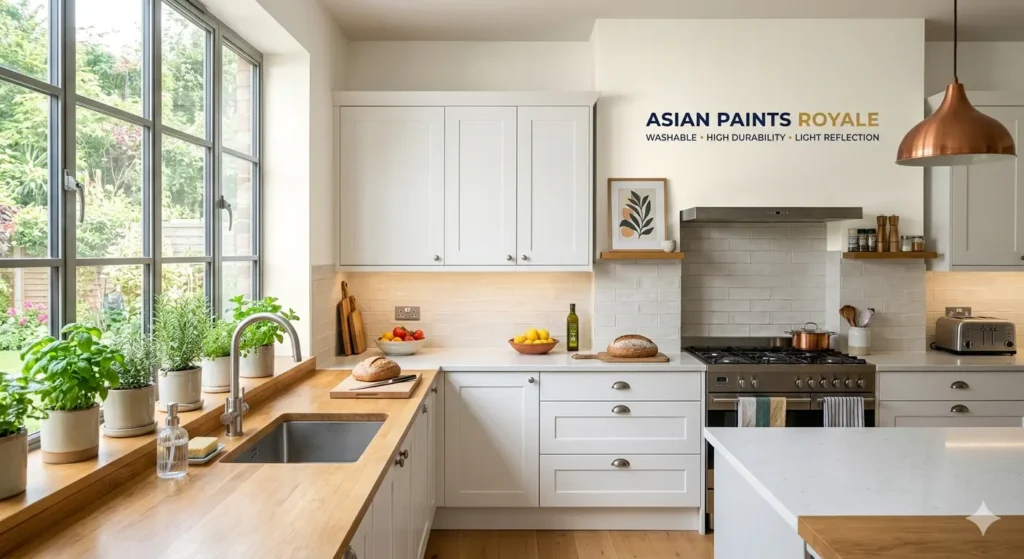
The kitchen. Light, clean, and practical. White or near-white with a warm undertone, in a premium washable emulsion. Kitchen walls get wiped down regularly — sometimes daily — and a quality product like Asian Paints Royale or Berger Silk in a washable formulation holds up to repeated cleaning without the surface starting to look patchy and worn. Avoid dark colours in the kitchen. They absorb the light you need to work properly, and a dark kitchen in a Nagpur summer afternoon is genuinely unpleasant to cook in.
Bathrooms. Light and neutral. White or a very light neutral above the tile line. One specific caution: avoid anything with a green undertone in bathrooms. Greenish whites under standard bathroom lighting create a cast that manages to be both clinical and unflattering at the same time — not what you want when you’re getting ready in the morning.

The Quality Decision: More Important Than Most People Realise
Your colour choice and your paint quality are not two separate decisions you can make independently. The best palette in the world, applied over inadequate surface preparation or in a basic economy emulsion, will look right for a year and a half and then start to show exactly what it is — patchy fading in sun-exposed spots, surface chalking, blistering on walls where any moisture movement is happening at all.
At QC Interiors, the specification we follow on every project is this: wall putty across all surfaces (not negotiable — putty is what gives you the smooth, level surface on which colour reads as it’s supposed to and on which emulsion actually adheres), a primer coat, and two coats of premium interior emulsion from Asian Paints, Berger, or Dulux. For rooms on sun-facing walls with significant exposure, we recommend a premium emulsion with enhanced UV resistance.
Against a standard painting budget for a 2BHK using economy emulsion over basic primer, this specification adds roughly ₹8,000 to ₹15,000. Spread that over the realistic life of the finish — five to seven years before the room genuinely needs repainting — and you’re talking about ₹130 to ₹250 a month. For walls that look right, hold their colour, and don’t quietly deteriorate while you’re living with them. It’s the right decision, and the premium is smaller than most people expect when they see it laid out this way.
Getting a Palette That’s Actually Designed for Your Home
A colour palette that’s right for a flat in Trimurti Nagar that faces west and gets afternoon sun from April through October is not the same palette that’s right for a bungalow in Civil Lines with north-facing drawing room windows and mature trees providing external shade. These are different light environments, and they need different colour thinking.
At QC Interiors, a colour consultation is part of every project brief. We look at which rooms face which direction, what time of day each room gets direct sunlight, what flooring and ceiling treatments are already in place, and what furniture is staying — and we build a colour scheme that actually performs in those conditions, throughout the day, throughout the year.
If you’d like to get started, book your free consultation today.
