
Modern Residential Renovation Guide for Pusad — Everything a Family Needs to Know Before Starting a Home Renovation
Renovation is in many ways a harder problem than building from scratch. When you build a new home, you start with an empty plot and make every decision fresh. When you renovate, you start with a building that exists, that has its own configuration, its own material history, its own set of things that work and things that have never worked — and you have to make decisions about what to keep, what to change, and what to replace, all while potentially continuing to live in the space. The management of this is more complicated than it sounds, and in Pusad’s residential market, the quality of guidance available to families navigating renovation decisions varies enormously.
This guide is for Pusad families who are either currently planning a renovation or are beginning to think about one. It covers what different scales of renovation involve, what the right professionals for each scale look like, how to think about budget and scope, and what the most common mistakes in residential renovation in this market are — so you can avoid them.
Modern Residential Renovation Guide for Pusad
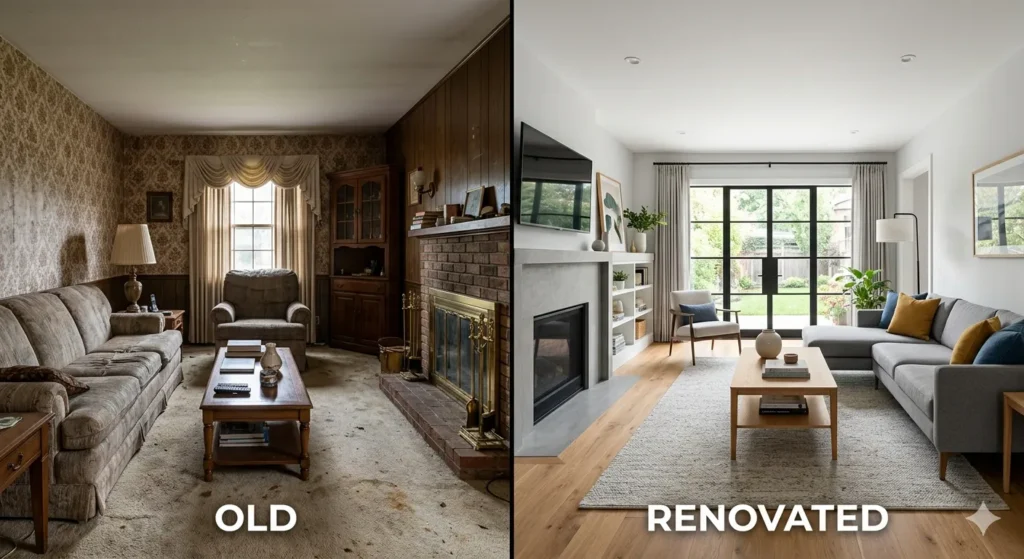
Understanding the Scale of Your Renovation
The first and most important step in any renovation is being honest about the scale of what you actually want to achieve. Pusad’s renovation market sees families commit to projects whose scope is poorly defined at the outset, leading to cost overruns, timeline extensions, and the particular frustration of finishing a project only to realise that the constraints of the original scope prevented the real problem from being solved.
Renovation in residential contexts falls along a spectrum. At one end is cosmetic renovation — repainting, replacing floor tiles in a specific room, updating fixtures, changing curtains and soft furnishings. This is work that can be managed directly with tradespeople, requires minimal professional coordination, and delivers meaningful visual improvement without structural change. Costs at this level in Pusad are modest — ₹3 to ₹8 lakhs for a thorough cosmetic refresh of a 2,000 square foot home.
In the middle of the spectrum is partial renovation — work that goes beyond cosmetics into the joinery and built elements of the home. A complete kitchen renovation that replaces the existing cabinetry and counters, a bathroom renovation that demolishes and rebuilds the wet area, a bedroom renovation that replaces the wardrobe and updates the ceiling and lighting — these are partial renovation projects that require coordination between multiple trades and a design professional who can specify the outcome correctly before work begins.
At the far end is complete home renovation — gut renovation of a home that is either very old, has significant structural deterioration, or whose spatial organisation has become fundamentally inadequate for the family’s current needs. This is the scale of work that approaches new construction in its complexity and requires the same quality of professional engagement: a qualified architect to address any spatial changes, a structural engineer if walls are being removed or structures modified, and an interior designer or design-build firm to coordinate the complete fitout.
Knowing which of these describes your project, honestly, before you engage anyone is the foundation of a well-run renovation.
The Climate Renovation Opportunity in Pusad
One of the most underused reasons to renovate a home in Pusad is climate performance. Many of Pusad’s older homes — built twenty or twenty-five years ago, before climate-responsive design thinking was as widely understood as it is now — were built with flat roofs, west-facing main rooms, and minimal veranda provisions. The occupants of these homes live with the consequences every summer: upper floors that are uncomfortably hot from April through June, west-facing living rooms that accumulate afternoon heat despite running air conditioning continuously, kitchens that feel like furnaces in May.
A renovation that addresses these conditions — adding or expanding a veranda on the south or east face, improving roof insulation or adding a ventilated roof cavity, replacing west-facing windows with smaller openings fitted with external sun shading, or creating cross-ventilation paths through the house that allow the evening breeze to cool the interior naturally — changes the home’s fundamental comfort level for every summer of the remaining building life. This is not glamorous renovation. It doesn’t photograph as dramatically as a new kitchen. But it is the renovation change that affects daily quality of life most directly and most permanently.
An architect or design professional engaged for a Pusad renovation who doesn’t consider climate performance as part of the scope is missing one of the most valuable improvements the renovation can make.
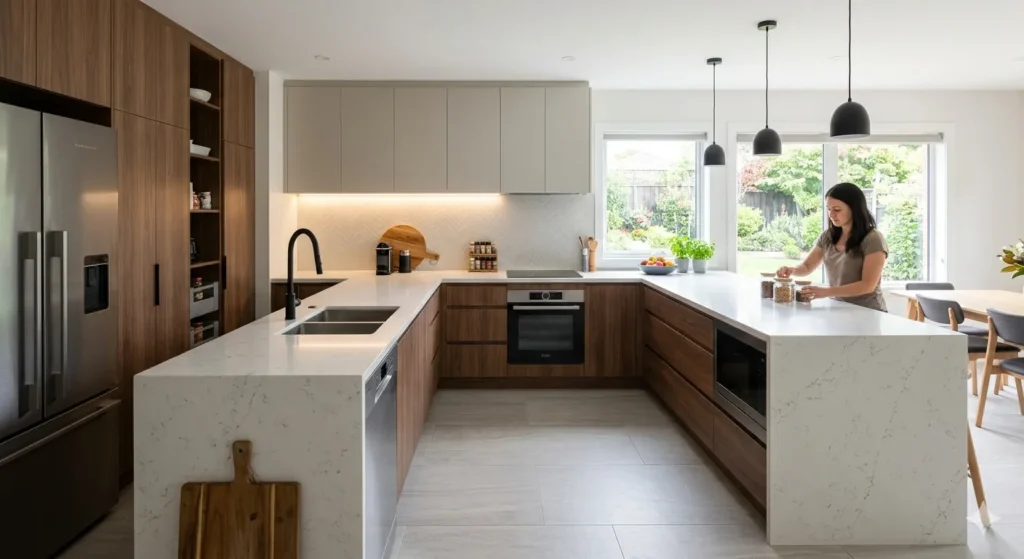
The Kitchen Renovation in Pusad
The kitchen is the room most frequently targeted for renovation in Pusad’s residential market, and the one where the gap between good renovation design and poor renovation design is most immediately felt. A kitchen renovation that simply replaces the old cabinetry with a new modular kitchen of similar layout, without questioning whether that layout serves the household’s actual cooking life, has made a cosmetic improvement. A kitchen renovation that begins by analysing how cooking actually happens in this household — the number of people who cook simultaneously, the vessel sizes in regular use, the storage requirements of the household’s provisioning habits, the relationship between the cooking area and the rest of the home during large family gatherings — and then designs from those realities, has made a functional improvement.
The difference is felt every day. And the cost difference between the two approaches — cosmetic replacement versus design-led renovation — is smaller than most families expect. The cabinetry and counter materials cost the same whether they are designed well or not. The design thinking is the additional ingredient, and the fee for it is a modest fraction of the total kitchen renovation cost.
In Pusad, where kitchen renovation budgets for a family home typically run ₹5 to ₹12 lakhs depending on specification, the differential between an undesigned and a designed kitchen renovation is perhaps ₹30,000 to ₹50,000 in design fees. That incremental investment produces a kitchen that will work correctly for the next fifteen years rather than one that looks new but still frustrates its users.
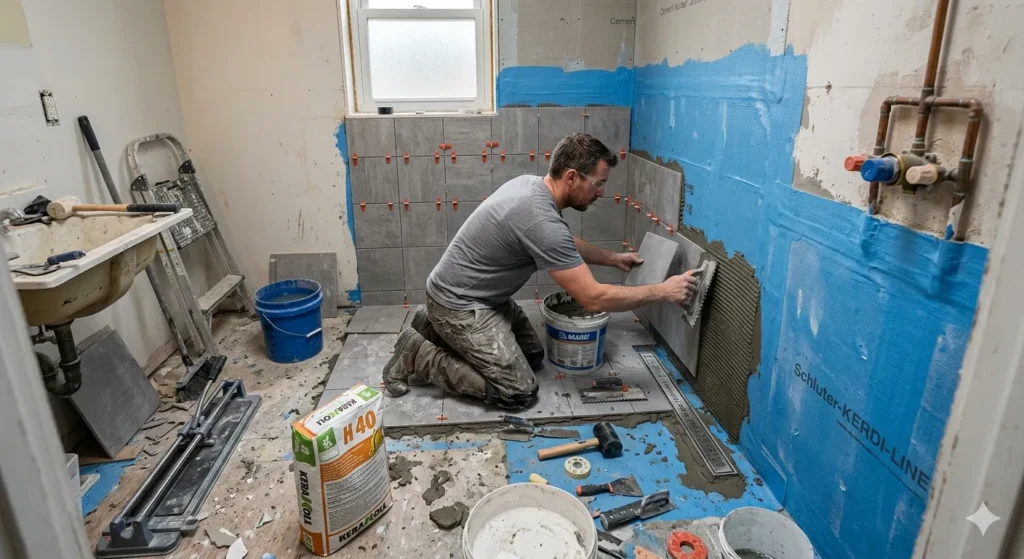
Bathroom Renovation in Pusad’s Climate
Bathroom renovation requires specific attention in Pusad’s climate. The wet area in a home that has been in use for fifteen or more years has typically accumulated waterproofing failures that may not be visually obvious from the interior. Damp patches on adjacent walls, staining on the ceiling below an upper-floor bathroom, and the gradual darkening of grout lines are all indicators of waterproofing deterioration that, if left unaddressed during a bathroom renovation, will simply recur despite the new finishes on top.
A proper bathroom renovation in Pusad begins with full demolition to the substrate and the application of a new waterproofing membrane before any tiles are laid. This adds cost and time relative to simply tiling over the existing surface, but it is the only approach that reliably produces a bathroom renovation that performs well through Vidarbha’s monsoon season for the next ten or fifteen years. A contractor who proposes tiling over existing tiles without demolition is proposing a shortcut that will reveal itself within a few monsoon cycles.
Managing a Renovation in Pusad
The project management of a renovation in Pusad requires specific attention to a few things that cause most projects to overrun in budget or time.
The first is scope creep. Renovations have a well-documented tendency to expand as they proceed — once the walls are open, a family sees opportunities they hadn’t anticipated, and additions get layered onto the original scope week by week. This is not inherently bad: sometimes the discovered conditions make additional work necessary. But scope changes during execution are expensive relative to the same changes made during the design phase, because they require demobilising work in progress, revising specifications, and reordering materials. Every scope change after construction begins should be evaluated against the cost of making that decision in the design phase, which is essentially zero.
The second is contractor coordination. A renovation involving multiple trades — carpentry, painting, electrical, plumbing, tiling — requires someone to sequence and coordinate these trades so that they do not create conflicts (the painter finishing a wall before the electrician has run the conduit, for example), that the site is handed between trades cleanly, and that delays in one trade’s work are managed before they cascade into delays across the whole project. This coordination function is either provided by a project manager employed by the renovation firm, or it falls to the homeowner. In Pusad, where most renovation firms do not have dedicated project managers, the homeowner who doesn’t plan for this coordination role will find themselves managing it by default.
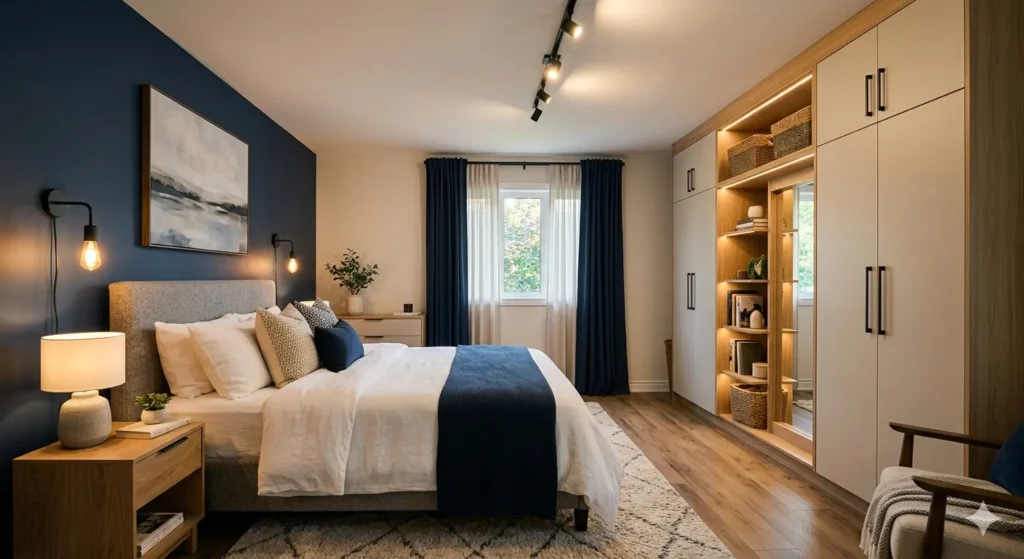
What Renovation Costs in Pusad
Kitchen renovation in Pusad: ₹5 to ₹12 lakhs for complete replacement including design, cabinetry, counter, and appliance provisions. Bathroom renovation per bathroom: ₹2.5 to ₹6 lakhs for complete demolition and rebuild with quality fittings. Bedroom renovation including wardrobe replacement and ceiling and lighting update: ₹2 to ₹5 lakhs per bedroom. Complete home cosmetic renovation of a 2,500 square foot home: ₹8 to ₹18 lakhs depending on specification. These figures are 2025-26 Pusad market estimates and will vary with specification choices and contractor quality.
FAQs
Q1. Do I need an architect for a renovation project in Pusad?
For structural changes — removing or adding walls, modifying door or window openings in load-bearing elements, adding a room or a floor — yes, a licensed architect is required for the structural engineering coordination and the revised approval documentation. For interior renovation without structural change, an interior designer or design-build firm without separate architectural registration can handle the project.
Q2. Is it possible to live in the home during a full renovation in Pusad?
For cosmetic renovation, yes, with some inconvenience. For a complete kitchen or bathroom renovation, typically not without alternative arrangements for those specific functions. For a complete home renovation, not advisably — the dust, disruption, and construction access requirements make living in a fully active renovation site genuinely difficult and can slow the work.
Q3. How do I protect myself from cost overruns in a Pusad renovation?
A fixed-scope, fixed-price contract for the agreed scope of work. A contingency of ten to fifteen percent of the project budget held by the client for discovered conditions and client-initiated changes. Clear approval protocols for any scope changes — nothing proceeds without written client approval and a price change order. These three practices prevent the majority of renovation cost overrun disputes.
Q4. What is the most common renovation mistake families make in Pusad?
Beginning construction before the design is finalised. When a contractor starts demolition or installation before the design is complete, changes to the design after construction has begun are expensive and sometimes impossible without undoing completed work. Finalise the design, select all materials, and approve the drawings completely before any work begins on site.
Q5. How much should I budget for a renovation contingency in Pusad?
Ten percent of the project budget is the standard recommendation for well-defined renovation scopes in buildings of known condition. Fifteen percent for older buildings where wall and structural conditions are uncertain until demolition reveals them. Twenty percent for buildings older than thirty years where significant discovered conditions are likely.
About QC Interiors
QC Interiors is a full-service interior design and renovation firm with deep roots in the Yavatmal district and a proven track record across Vidarbha’s residential market. The firm works on complete home interiors, renovation projects, and new construction fit-outs — handling everything from initial design brief to final handover. Every project QC Interiors takes on is assigned a dedicated design lead who stays with the project from first conversation to completion, ensuring that the design intent is preserved through every stage of execution.
To get started, QC Interiors offers an in-home site visit for ₹2,500 — a working session at your home or project site where the design team assesses the space, discusses your family’s brief, and outlines a design approach specific to your project. This site visit fee is fully adjustable against the project booking amount when you proceed. If you’re building or renovating in Pusad and want a home that was genuinely designed for your family, reach out to QC Interiors to schedule your site visit.
Why Choose QC Interiors for Renovation in Pusad:
Firm: QC Interiors (Quality Construction & Interiors)
Expertise: Home Renovation, Interior Design, Execution Management
Special Focus: Functional Layouts, Climate-Responsive Upgrades, Durable Materials
Technology: 3D Designs (₹6,000 per room) & Walkthroughs (₹12,000)
Service Areas: Pusad & Yavatmal District
Start your renovation with expert planning and avoid costly mistakes with a clear design approach.
