
The Best Residential Designers in Pusad — What Separates Good from Great, and How to Find Who You Need
Every family in Pusad who builds or renovates a home has to make the same essential decision at the beginning of the process: who is going to design this? It’s a decision that most people approach with less research and less rigour than they apply to buying a car or choosing a school for their children, despite the fact that its consequences are longer-lasting and more intimate than either of those choices.
The residential designer — whether an architect designing a new home from scratch or an interior designer refitting and redesigning an existing one — determines more about the quality of your daily life than almost any other professional you’ll ever engage. The layout they design shapes how you move through your home every morning. The materials they specify determine how your home looks in year ten versus year one. The kitchen they plan is the kitchen you cook in for the next fifteen years. The bedroom they design is where you begin and end every day of your life in this house.
That weight of consequence is what makes choosing the right residential designer in Pusad such an important decision — and what makes the casualness with which most families approach it so costly in the long run.
This article is an attempt to give Pusad families the framework to make this decision well.
Best Residential Designers in Pusad
What “Residential Designer” Actually Covers in Pusad’s Context
The term residential designer covers a range of practitioners in Pusad, and the distinctions between them matter.
At one end is the licensed architect — a professional registered with the Council of Architecture, trained to design buildings from structural concept to finished construction documentation, and legally required to sign off on drawings submitted for municipal approval. An architect’s primary skill is spatial and structural thinking — how the building is organised, how it performs climatically, how its structure is designed, how the exterior presents to its context.
At the other end is the interior designer — a practitioner whose work begins where the architect’s typically ends, at the level of the interior surfaces, the fit-out elements (kitchen, wardrobes, ceilings, lighting), the colour and material palette, and the furniture and decorative layers. Interior designers in Pusad range from qualified professionals who’ve studied interior design formally to skilled contractors who’ve developed design competence through years of execution-focused practice.
In the middle is a category of practitioners who work across both areas to varying degrees — architect-designers who remain involved in a project through the interior phase, or interior designers who’ve developed enough architectural knowledge to handle modest new construction projects.
For families building new homes in Pusad, the right engagement typically involves a licensed architect for the building design and approval phase, followed by (or in some cases overlapping with) an interior designer for the fit-out phase. For families renovating existing homes, an interior designer who understands construction is usually the right starting point.
Why the Design Process in Pusad Is Different From Larger Cities
Interior designers and architects who work in Pusad navigate a set of practical constraints that are specific to a smaller Maharashtra town, and understanding these constraints helps families set realistic expectations and make better decisions.
The material ecosystem in Pusad is more limited than in Nagpur or Amravati. The range of tiles, stone, hardware, sanitary ware, and joinery materials available locally is narrower than in a larger city, and premium specifications often require procurement from Nagpur or further. This extends project timelines and requires a designer with good supplier relationships in larger centres who can manage material procurement reliably.
The contractor pool is smaller. In Nagpur, a designer who wants a specialist false ceiling contractor, a dedicated modular kitchen installer, and a separate flooring specialist can draw from a meaningful pool of options. In Pusad, these specialisations sometimes overlap in a single contractor, or the best specialist option requires bringing someone from outside the town. A good Pusad designer has mapped this ecosystem and knows where quality execution is reliably available.
The approval process has its own local characteristics. Pusad’s municipal body has specific documentation requirements and processing timelines that an experienced local practitioner navigates more efficiently than one approaching it for the first time.
None of these constraints make good residential design in Pusad impossible — they make the choice of an experienced local practitioner more valuable, because they’ve already navigated these realities in completed projects.
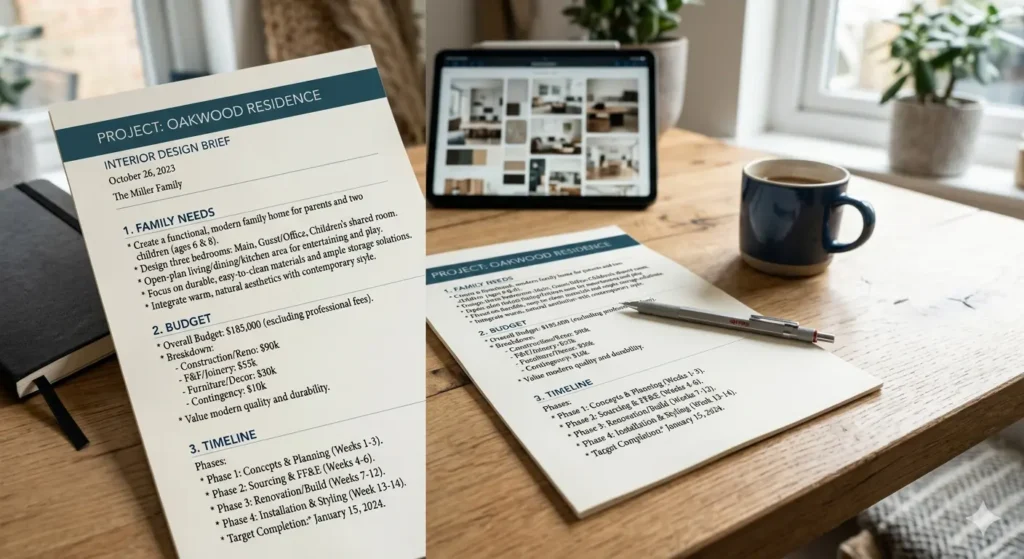
The Brief: The Most Important Document in Any Pusad Residential Project
The residential design brief is the document — formal or informal, written or verbal, but always clear and complete — that tells the designer what the family needs from the home. It is the foundation on which everything else is built, and its quality determines more about the outcome of the project than any subsequent design decision.
A good brief for a Pusad residential project covers:
The family’s composition now and anticipated in the next ten to fifteen years. How many people. Which generations. Any specific requirements — elderly family members who need ground-floor access, young children whose safety requirements shape specific design decisions, home-based work that requires a dedicated space.
How the family lives. The cooking patterns and what the kitchen needs to support. The social and hospitality patterns and what the drawing room and dining area need to accommodate. The specific rooms that are most important to get right for this family’s daily life.
The design aesthetic the family is drawn to — communicated through images, through visits to reference homes, through any language the family can use to describe what they find beautiful and what they don’t.
The budget — honestly stated, including contingencies. The designer who is told a budget that’s 30 percent lower than the family’s actual ceiling in an attempt to “keep the designer honest” will design to the stated budget and produce a proposal that the family then has to re-scope, wasting time and creating design compromises that the actual budget could have avoided.
The timeline — driven by real constraints, not optimism.
A residential designer who doesn’t ask for all of this information before beginning design work is not a designer who can serve a Pusad family well. The questions the designer asks at the beginning tell you a great deal about the quality of thinking that will follow.
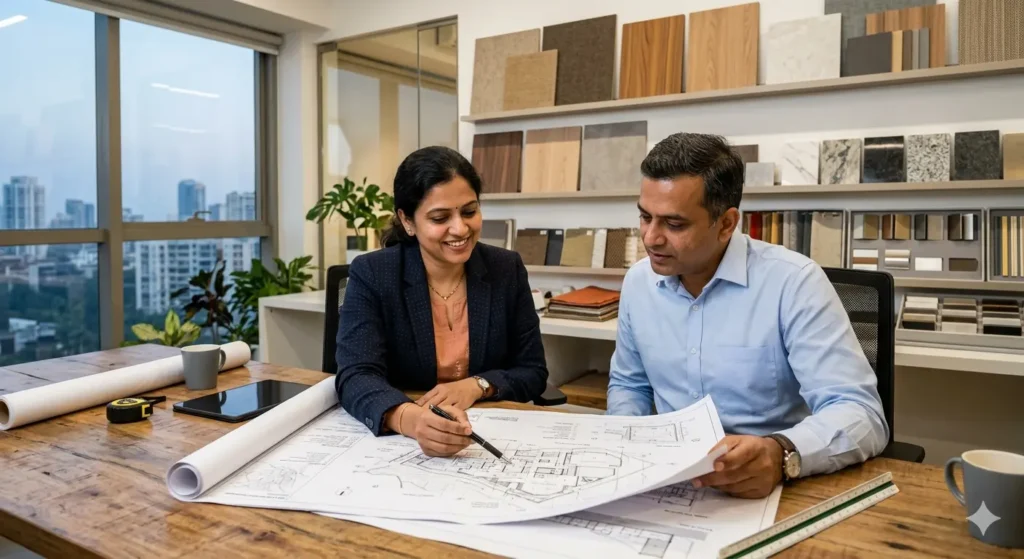
Evaluating Residential Designers in Pusad: The Practical Process
The evaluation process for a residential designer in Pusad begins with word of mouth — the single most reliable source of designer quality information in a town where the market is small enough that completed work is visible and family networks are strong enough that honest assessments circulate.
Ask families who’ve recently completed residential projects in Pusad — new construction or major renovation — who they used. Ask specifically whether they’d use the same designer again, which is a more diagnostic question than “was the work good?” because it accounts for the full experience including communication, timeline management, budget management, and contractor quality, not just the visual outcome.
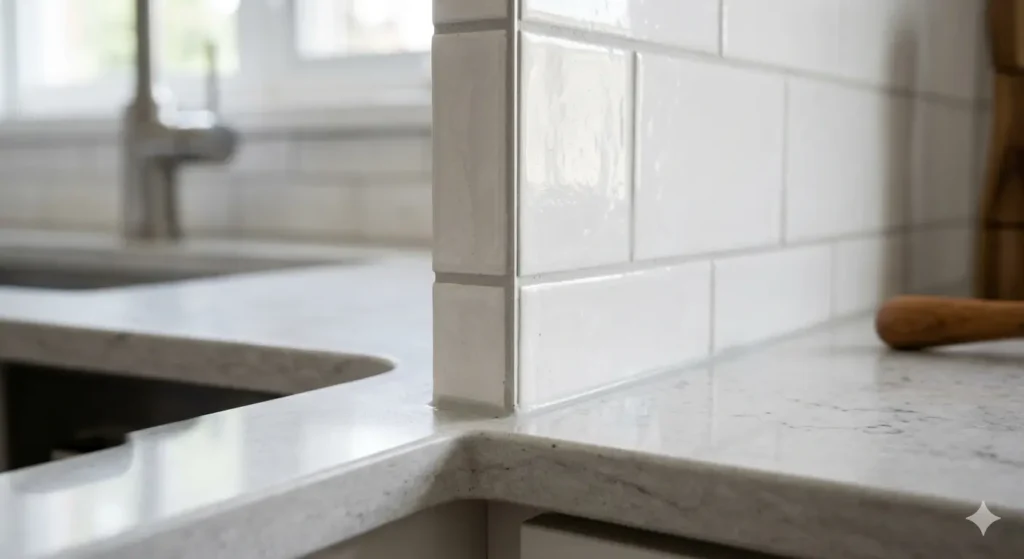
Visit completed projects in person. This is non-negotiable for any significant investment. Walk through the home with the homeowner if they’re willing. Open the wardrobes. Look at the quality of the false ceiling joints at the wall junctions. Run your hand along the kitchen countertop. Look at how the bathroom tile work was executed at the corners and edges. These details tell the story of execution quality that photographs always conceal.
Assess the designer’s communication quality in the initial meeting. Do they listen before they speak? Do their questions indicate that they’re trying to understand your specific family’s life, or do they seem to be working through a standard process? Do they explain design decisions in terms of how they serve the family, or in terms of what looks good or what’s fashionable? The quality of the initial conversation is a reliable predictor of the quality of the ongoing working relationship.
What Residential Design Actually Costs in Pusad — Honest Benchmarks
Architectural fees for new residential construction in Pusad: 5 to 10 percent of construction cost, depending on scope of services and the architect’s experience level.
Interior design fees for a comprehensive whole-home interior project in Pusad: typically 8 to 15 percent of the interior fit-out cost, or sometimes structured as a fixed fee for defined scope. For a complete interior renovation of a 2,500 square foot home at ₹12 lakh fit-out cost, the design fee would be approximately ₹1 to ₹1.8 lakhs.
Complete interior fit-out for a 3BHK independent home in Pusad at mid-range specification: ₹10 to ₹18 lakhs.
Complete interior fit-out at premium specification including flooring upgrade, luxury kitchen, all bathroom renovations: ₹20 to ₹38 lakhs.
New construction of a complete independent home including architecture, structure, finishes, and interior fit-out: ₹55 to ₹120 lakhs depending on plot size, built area, and specification level.
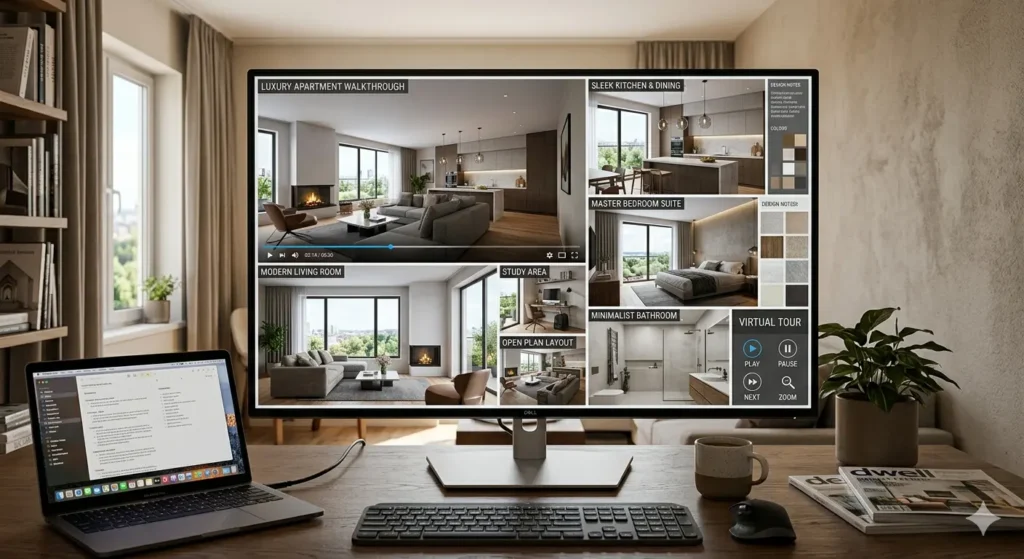
The Specific Design Priorities That Matter Most in Pusad
Based on the specific conditions of Pusad — its climate, its building traditions, its social character, and the way its families actually live — the design priorities that matter most in a Pusad residential project are these:
Climate performance of the building. The orientation, the roof design, the veranda provision, and the window and wall design are all climate-responsive decisions that affect daily comfort for every day of the home’s life. A designer who doesn’t address these is ignoring the most important contextual factor in Pusad residential design.
Kitchen quality. In a town where domestic life centres on home cooking and where the kitchen is genuinely one of the most used rooms in the house, a kitchen that works well is not a luxury — it’s a fundamental. The investment in a properly designed and properly specified kitchen is always justified in Pusad.
Material durability. Pusad’s climate is demanding — the temperature cycling between winter and summer, the monsoon moisture load, the thermal expansion and contraction of materials across forty-degree seasonal ranges — and materials need to be specified for durability in these conditions rather than for visual appeal in controlled-light display conditions.
The drawing room’s hospitality function. In Pusad’s social culture, the drawing room is more than a room — it’s a statement. Investing in its design quality — the ceiling, the wall treatments, the lighting, the furniture — is an investment in the family’s social life that pays returns in a different but genuine way.
FAQs: Best Residential Designers in Pusad
Q1. How do I know if a residential designer in Pusad is actually qualified, or just experienced?
For architects, check Council of Architecture registration — this is mandatory for licensed practice in India and verifiable. For interior designers, formal qualification is less regulated, but you can ask about their educational background and professional training. More diagnostically, visit completed work in person. The quality of completed projects tells you more about a designer’s competence than their qualifications — though ideally you want both formal training and strong completed work evidence.
Q2. What should I do if I get very different cost estimates from different contractors for the same design scope in Pusad?
A significant variation in cost estimates — more than 25 to 30 percent between the lowest and highest — almost always reflects a difference in what’s being quoted rather than a difference in contractor efficiency. The lowest quote is typically based on lower-quality materials, less experienced labour, or a scope that excludes elements the higher quotes include. Ask each contractor to provide a line-item breakdown of their estimate so you can compare like with like. The cheapest quote for a home that you’ll live in for thirty years is rarely the right decision.
Q3. Is it worth engaging a separate interior designer and a separate architect for a new Pusad home, or can one person do both?
For most Pusad residential projects, the architect and the interior designer are different practitioners — the skill sets and the focus of their work are genuinely distinct. A good outcome typically involves an architect who designs the building well and coordinates with a structural engineer on the structural aspects, followed by an interior designer who takes over at the fit-out phase with the brief of making the building’s interiors excellent. Some architects in Pusad and the region work across both — assessing their actual portfolio of completed interiors (not just completed buildings) will tell you whether their interior design work is at a standard you’d be happy with.
Q4. How should I handle a situation where the contractor and the designer disagree during the project?
This is a common situation in residential projects across India, and Pusad is no exception. The principle that resolves most designer-contractor disagreements is clear: the designer specifies what is to be built and how. The contractor executes that specification. Where a contractor believes the specification is technically problematic, they raise the concern with the designer before proceeding — not after. The family should not be put in the position of arbitrating technical disagreements between the designer and the contractor. If this keeps happening, it’s a signal that either the design documentation is inadequate or the contractor is not the right fit for the project.
Q5. What is the single most important question I should ask a residential designer before hiring them for my Pusad home?
Ask them to describe a project that didn’t go entirely according to plan — and how they managed it. This question reveals more about a designer’s professional character than any portfolio review or client reference. A designer who can describe a challenge, explain what went wrong, take responsibility for what was their issue, and describe how they resolved it honestly is a designer with the professional maturity to manage the inevitable complexities of a residential project. A designer who can’t identify a single project difficulty is either very inexperienced or not being honest with you.
Designing a residence in Pusad is not merely a process of building; it involves forming an environment that endures extreme summers and torrential monsoons. We take smart design, durability and elegance and marry it with deep local expertise to protect your investment for decades at QC Interiors.
Skip the compromise—develop perfectly precise and quality your family should have.
QC Interiors
Serving: Pusad, Yavatmal
Specialisation: Comprehensive Home Interior Design | Architectural Planning | Turnkey Renovations
📞 (+91) 7798153303
Sign up for your consultation now and walk through with our 3D walkthrough of your home before a hammer is lifted!
