
Best Residential Architect in MIHAN Nagpur — Designing Homes in India’s Most Ambitiously Planned Urban Zone
MIHAN is a word that carries a particular kind of weight in Nagpur’s development narrative. The Multi-modal International Cargo Hub and Airport at Nagpur has been a headline project for so long — a project that was promised, then delayed, then delivered in parts, then expanded, then promised further — that there’s a generation of Nagpur residents who know it primarily as an aspiration. But for the families who’ve been building and buying homes in MIHAN’s residential zones over the last several years, the experience is more concrete than the headlines suggest.
The infrastructure is real. The international airport is operational. The SEZ is generating employment that is pulling professionals into the area. The Outer Ring Road connectivity and the metro extension planning are bringing MIHAN’s residential zones into a more practical daily relationship with Nagpur’s commercial and institutional centre. And the planning framework that governs MIHAN’s development — the MIHAN India Limited authority that controls the SEZ and the NMRDA that governs the surrounding region — has produced a residential development environment that is more systematically planned than most of Nagpur’s other growth corridors.
For families building homes in MIHAN’s residential zones, this planning framework creates a specific architectural context that’s different from building in an older, more organically developed part of Nagpur. And the residential architect who works in this context needs to understand it specifically rather than applying a generic Nagpur residential design approach.
Best Residential Architect in MIHAN Nagpur
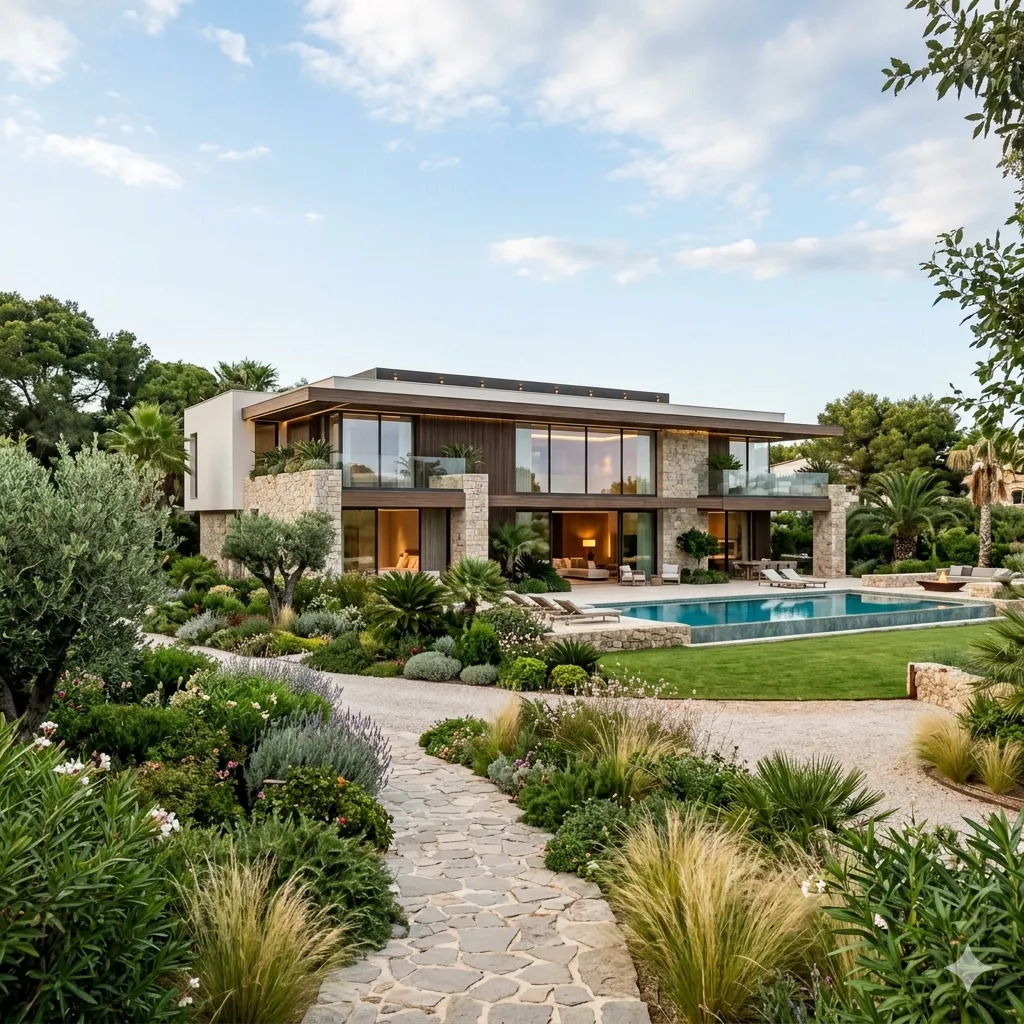
The MIHAN Residential Zone: What the Planning Framework Creates
The residential development in and immediately around MIHAN is governed by a framework that establishes specific requirements for plot sizes, setbacks, building heights, and FSI that differ from the older NMC areas of central Nagpur. NMRDA regulations apply to most of the plotted and apartment development that families are investing in around the MIHAN corridor.
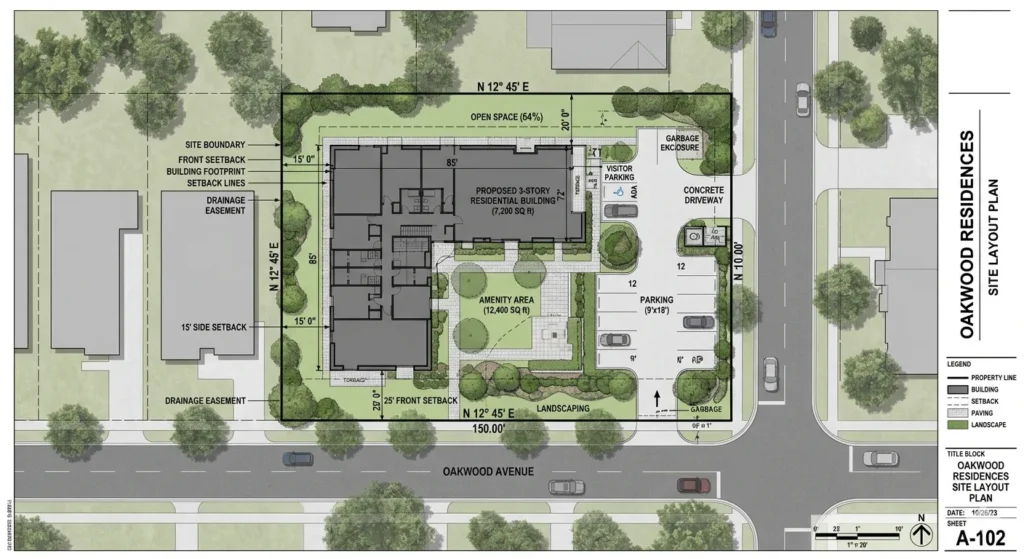
The practical implications for residential design are significant. The setback requirements in NMRDA-governed areas are typically more generous than older NMC areas — buildings are required to stand further from the plot boundaries — which creates both a design opportunity (the compound and landscape can be more significant elements of the overall project) and a constraint (the usable building footprint is reduced relative to the plot area).
The building height limitations in different zones within and around MIHAN affect what’s possible in terms of a two-floor versus single-floor configuration, which has direct implications for the duplex and villa designs that many MIHAN residential buyers are pursuing.
An architect working in this corridor who knows the NMRDA regulatory framework fluently — who can determine the specific FSI, setback, and height allowances applicable to a specific plot quickly and accurately — is doing something that genuinely saves the family time, money, and the frustration of discovering regulatory constraints after a design has been developed that doesn’t comply with them.
The Specific Design Opportunities in MIHAN’s Residential Context
MIHAN’s residential zones have a quality that’s rare in a Nagpur residential context: they were planned before they were built. The road widths, the plot configurations, the separation between residential and commercial uses, the provision of parks and open spaces — these were established in a master plan rather than accumulating organically through decades of development decisions. This planning quality creates a residential environment that is more predictable, more manageable, and frankly more pleasant to live in than many of Nagpur’s older established localities.
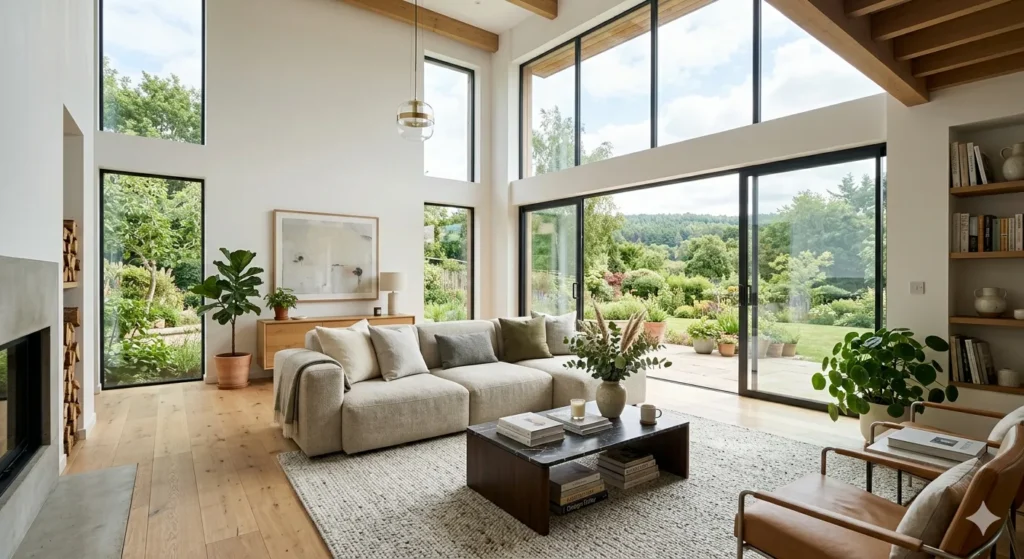
The generous open space between buildings in many MIHAN residential layouts means that homes have better access to natural light and ventilation than comparable homes in denser localities. This creates genuine design opportunities. A home in MIHAN can be oriented more freely than a home on a constrained inner-city plot — the architect has more options for placing the principal living rooms on the optimal orientation rather than accepting whatever the plot configuration dictates.
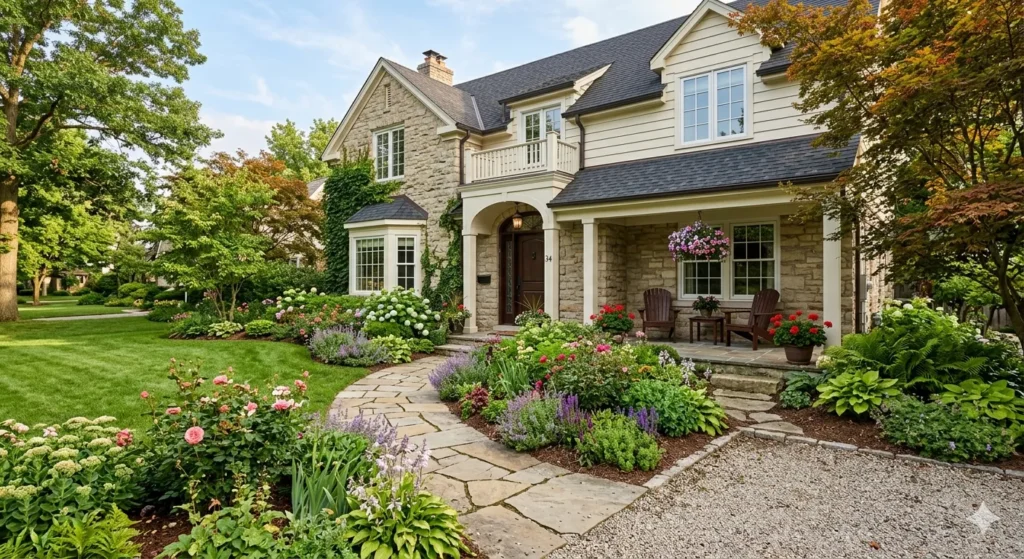
The landscaping opportunity is also more significant in MIHAN’s residential zones. With adequate setbacks and open space, the compound, the approach, and the relationship between the building and its landscape can be designed as integral parts of the home’s character rather than as afterthoughts to the building.
Designing for MIHAN’s Specific Context
The families building in MIHAN’s residential zones are a specific demographic — largely professionals employed in the SEZ and related businesses, NRI families returning to Nagpur and choosing MIHAN for its proximity to the airport and its planning quality, and business families who see the corridor’s long-term value and want to build now rather than later.
This demographic has a consistently higher design aspiration than the average Nagpur residential market. They’ve seen good homes — in other Indian cities, internationally, in the design references that are now globally accessible. They want homes that match these references in design quality and that are also genuinely suited to where they are — to Nagpur’s climate, to the MIHAN setting, to the Indian domestic life patterns that don’t disappear just because a family has international exposure.
The residential architect who serves this demographic well brings both genuine design quality and genuine local knowledge — who can produce a home that would be impressive anywhere and that works specifically here.
Construction and Approval Costs in MIHAN
Construction costs in MIHAN’s residential zones: ₹2,200 to ₹3,500 per square foot for independent residential construction depending on specification. The premium end of this range reflects the premium villa and bungalow projects that represent a significant proportion of the independent residential construction in this corridor.
Architectural fees: 7 to 11 percent of construction cost, at the higher end of the range reflecting the more complex regulatory context and the higher design aspirations of this market segment.
NMRDA plan approval — the regulatory process for construction in the MIHAN region — requires specific documentation and follows a timeline that a NMRDA-experienced architect navigates significantly more efficiently than one without this specific experience. The approval timeline is typically six to ten weeks for compliant proposals.
FAQs: Best Residential Architect in MIHAN Nagpur
Q1. Which authority governs building approvals in MIHAN’s residential zones?
Most residential development in the MIHAN corridor falls under NMRDA (Nagpur Metropolitan Region Development Authority) jurisdiction. Within the SEZ boundary itself, MIHAN India Limited governs. Your architect needs to determine the specific jurisdictional authority for your plot before preparing drawings.
Q2. What are the FSI limitations for residential construction in NMRDA-governed areas around MIHAN?
FSI in NMRDA residential zones typically ranges from 1.0 to 1.5 depending on the specific zone designation and plot size. Your architect should verify the applicable FSI for your specific plot as part of the pre-design regulatory review.
Q3. Is MIHAN a good location for families with young children — are schools and healthcare accessible?
The social infrastructure around MIHAN has improved significantly in the last five years. There are schools of reasonable quality accessible within the corridor, and Nagpur’s better hospitals are accessible via the improved road network. The infrastructure is not yet at the level of Nagpur’s most established residential localities but is developing steadily.
Q4. What design elements specifically suit a premium home in MIHAN’s planned residential environment?
MIHAN’s planned setting suits a design vocabulary that uses the generous setbacks and open space productively — homes with a significant landscape presence, well-designed approaches, and a relationship between the building and its outdoor space that the planning framework makes possible. The best MIHAN homes use the compound as a designed element rather than a residual space.
Q5. How does the international airport proximity affect the residential design brief for a MIHAN home?
The airport is close enough that aircraft noise needs to be considered in the design — specifically in window specification (acoustic glass in bedrooms and living rooms), room orientation (placing quieter rooms away from the primary flight path), and the acoustic quality of the building envelope. An experienced MIHAN residential architect will address this as a standard design input rather than a special consideration.
Precision Planning. Perfect Living.
Residential architecture isn’t just about structure—it’s about creating a home that feels right every day.
QC Interiors combines smart design, efficient space use, and modern aesthetics for homes built to last.
Serving: MIHAN, Nagpur
