
Residential Interior Designers in Amravati — A Complete Guide for Families Ready to Take Their Homes Seriously
Amravati is a city with enough interior design activity now that families approaching their first serious home renovation or fit-out project have real options to evaluate. There are dedicated interior design practices in the city, modular kitchen companies with showrooms, material suppliers covering the range from budget to premium, and a contractor pool with enough experienced tradespeople to execute design-level work when it’s properly managed.
Having real options is better than not having them. But it also means that the evaluation process — the work of distinguishing between practitioners who will produce genuinely good results and those who will produce adequate ones while calling them excellent — falls on the family. In a city of Amravati’s scale and commercial sophistication, the marketing quality of design practitioners is not a reliable indicator of their design quality. The most professionally presented portfolio doesn’t always belong to the most capable designer. The most impressive showroom doesn’t always produce the most considered interior.
This guide is for Amravati families who want to do the evaluation work properly — who want to understand what they’re buying when they hire a residential interior designer, how to assess whether what they’re being offered is what they actually need, and how to structure the engagement to get the result they’re genuinely hoping for.
Residential Interior Designers in Amravati
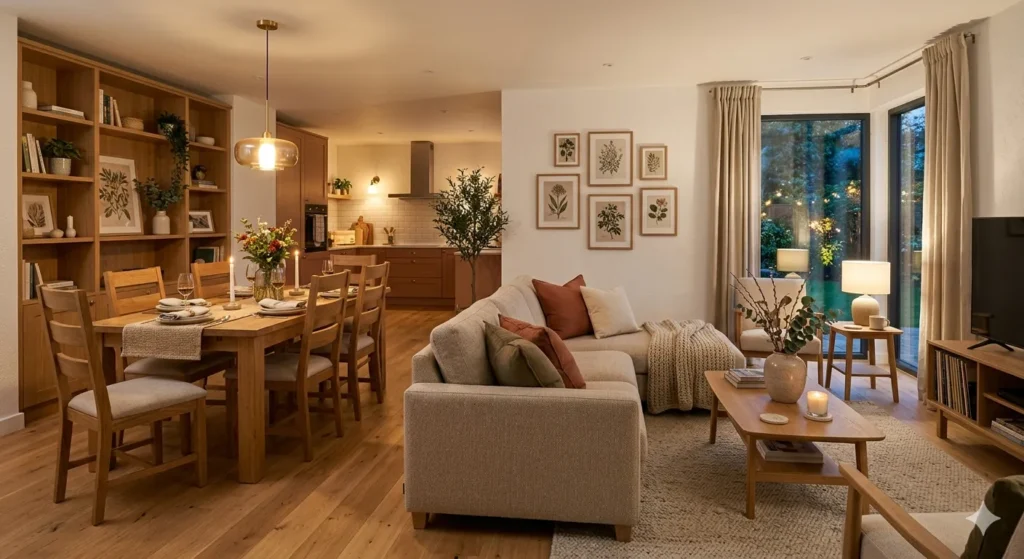
What Residential Interior Design Actually Is in Amravati
The phrase “interior design” covers a wide range of services in Amravati’s market, and understanding what you’re actually getting from different types of practitioners prevents disappointment.
At the comprehensive end: a design practice that begins with a thorough brief, develops a complete design proposal covering every room and every element before any work begins, specifies materials with precision, manages contractor selection and coordination, and inspects work at every stage with the rigour to require corrections before the next stage proceeds. This is the service that produces homes that look right and work right five years after handover, not just on the day the last contractor leaves.
In the middle: practitioners who provide good design direction and reasonable material guidance but leave more of the execution management to the family or to the contractor’s judgment. The design quality can be high, but the execution quality depends on the contractor and the family’s own involvement.
At the basic end: contractors who offer “interior design” as part of their construction or renovation package, furniture sellers who include “free design” with purchase, software-based design services that produce 3D visualisations without the material specification and execution management that turns visualisations into homes. These services have their uses at certain budget levels and project scales, but they don’t constitute interior design in the sense that produces homes families are proud of at a significant investment level.
Knowing which of these three categories a practitioner you’re considering falls into is the first evaluation task.
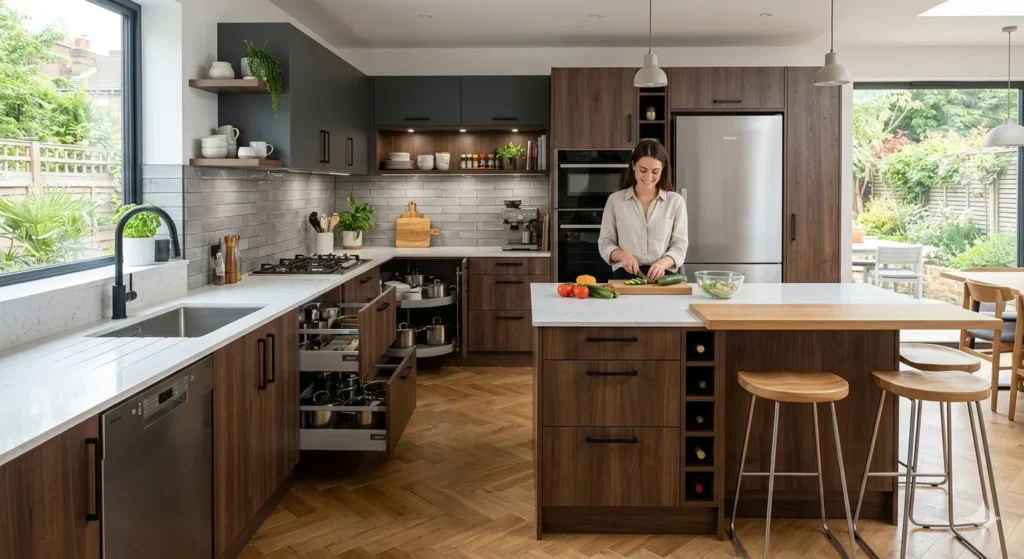
The Brief: The Most Important Conversation of the Project
Every interior design project in Amravati that goes wrong does so for a reason that, in most cases, traces back to an inadequate brief. Either the family didn’t communicate clearly what they needed, or the designer didn’t ask the right questions to understand it, or both. The result is a design that serves the designer’s aesthetic preferences or their standard approach rather than the family’s specific life and specific needs.
A good brief for an Amravati residential interior project covers several things that families sometimes underestimate the importance of.
The family’s actual daily life patterns — not the idealised version, but the real one. How the kitchen is genuinely used. Where the evening family gathering actually happens. How guests are received and at what scale. What specific things about the current home cause daily friction. These honest answers produce a design that solves real problems rather than creating beautiful rooms that don’t quite work.
The aesthetic preferences the family holds — communicated through images, through homes they’ve visited and responded to, through any language that describes what they find beautiful and what they don’t. A reference image that shows a warm wood-and-stone drawing room communicates something specific and useful. A reference image of a cool minimal all-white apartment communicates that the family is drawn to a design vocabulary that may not work in Amravati’s light and may not serve their social culture.
The budget — honestly stated, with a realistic contingency of 10 to 15 percent above the stated figure. The family who states a budget 30 percent below what they’re actually willing to spend in an attempt to manage the designer’s ambitions will get a design proposal that requires painful scope reductions later and that misses opportunities that the actual budget could have funded.
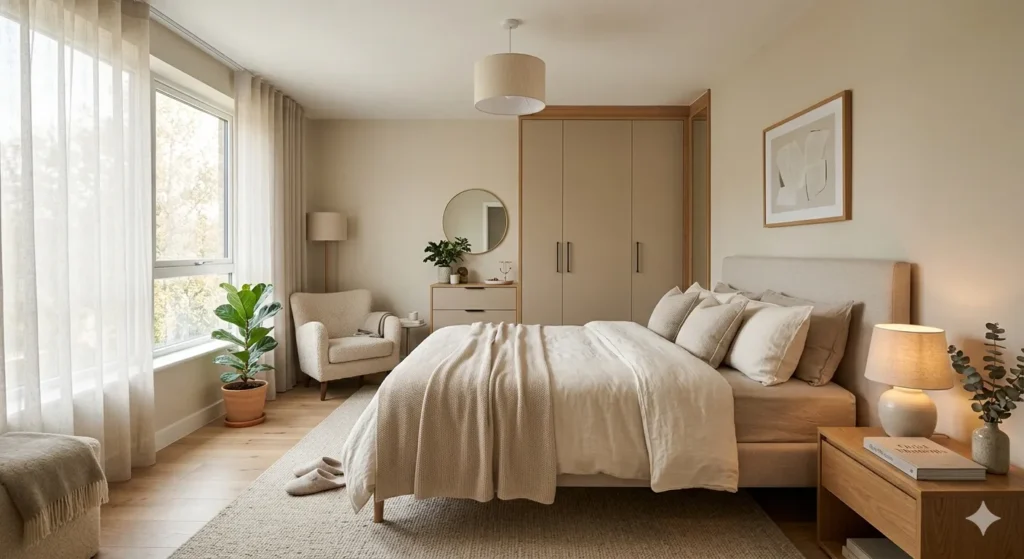
How to Evaluate Residential Interior Designers in Amravati
The word-of-mouth network in Amravati is the most reliable starting point. Ask families whose homes you’ve visited and admired who designed their interior — and ask specifically whether they would hire the same designer again without hesitation. This question reveals the full experience including communication, timeline management, budget management, and how the designer handled the problems that inevitably arise. A family who says “yes, without question” is giving you the most useful possible endorsement.
Visit completed projects in person. This is the evaluation step that most families in Amravati shortcut and that most consistently costs them quality. Photographs lie — they’re taken from the best angles, in the best light, before the dust of daily life arrives. The actual home tells the truth. Open the wardrobes and check the drawer runners. Look at the false ceiling joints where the gypsum board meets the wall — this junction reveals the quality of the installation and finishing work. Look at the tile work in the bathroom at the corners and the base junction. Run your hand along the kitchen countertop at the joint between units. These physical inspections reveal whether the execution matches the design quality.
In the first meeting with any designer you’re considering, pay attention to the balance between questions and presentations. A designer who listens carefully and asks specific questions about your family’s life before showing you anything is demonstrating a client-centred approach. A designer who shows you their portfolio and asks which elements appeal to you is proposing to produce a variation on their previous work. Both can produce good results, but the first approach is more likely to produce something specific to your family.
The Amravati Interior Design Market: Honest Assessment
Amravati’s interior design market has real quality available at the mid to premium specification levels. The city’s size supports genuine design practices, trained professionals, and the material suppliers and contractors needed to execute well. At the luxury end, some projects in Amravati bring designers in from Nagpur who have more extensive luxury residential portfolios — the Amravati market is developing but doesn’t yet have the depth of luxury residential completed work that Nagpur’s larger market provides.
For mid-range and premium specification residential projects — the majority of Amravati’s serious residential interior work — local designers with strong local portfolios and established contractor relationships are the right choice. For very large or very high specification luxury projects, a Nagpur-based designer with relevant portfolio work and a commitment to managing the Amravati project directly — not delegating it — may bring additional design capability worth the additional logistics.
Complete Investment for Amravati Residential Interiors
2BHK apartment or home, mid-range specification: ₹9 to ₹15 lakhs. 3BHK, mid-range specification: ₹13 to ₹21 lakhs. 3BHK at premium specification — flooring upgrade, all bathrooms, architectural lighting: ₹23 to ₹40 lakhs. Large independent bungalow, comprehensive renovation at premium specification: ₹38 to ₹70 lakhs. Interior design fee: 8 to 14 percent of fit-out cost.
FAQs: Residential Interior Designers in Amravati
Q1. What single question reveals most about a residential interior designer’s quality in Amravati? Ask them to describe a project that encountered a significant problem during execution and how they resolved it. A designer with genuine experience and professional maturity describes this clearly — what the problem was, what caused it, what their responsibility was, and how it was resolved. A designer who can’t identify a single execution challenge in their work history is either inexperienced or being dishonest.
Q2. How do I protect myself against material substitution by contractors during an Amravati interior project? All materials specified by brand and product code in writing before work begins. Inspection of material deliveries on site before installation — the material that arrives should match the specification exactly. If the designer is managing the project, they handle this inspection. If the family is managing directly, building this inspection into every delivery is non-negotiable.
Q3. What is the biggest quality difference between a well-specified and a budget interior in Amravati? The longevity of the hardware and carcass materials in the kitchen and wardrobes. A budget interior uses particleboard carcasses and basic hardware that degrades within three to five years in Amravati’s climate. A well-specified interior uses marine-grade plywood carcasses and quality hardware that remains sound for twelve to fifteen years. This difference is not visible at handover — it reveals itself over the years of daily use.
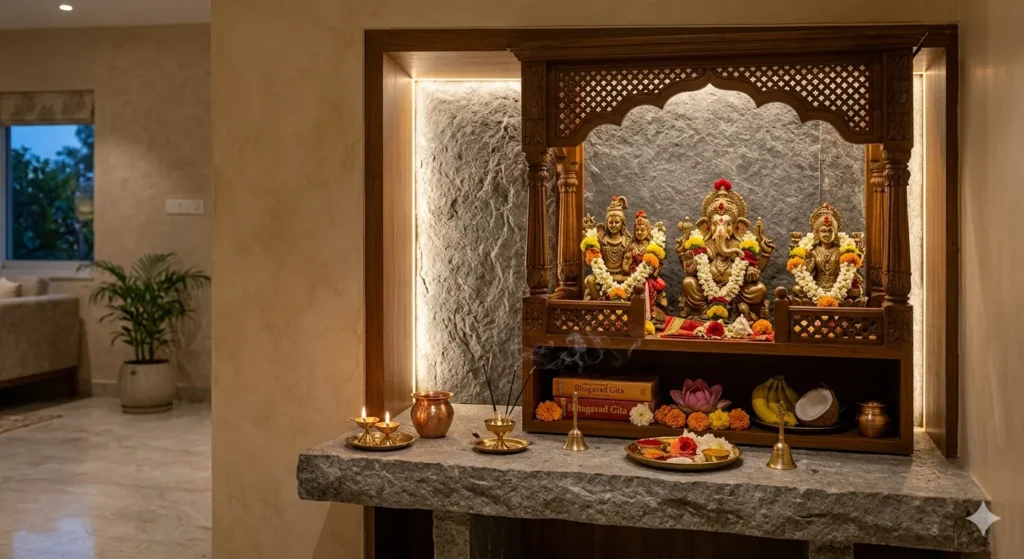
Q4. Is a separate pooja room worth including in a full interior design brief for an Amravati home? Yes, consistently. The pooja space in an Amravati family home carries significant daily importance and social meaning. A dedicated room or well-designed alcove with natural stone platform, warm soft lighting, proper storage for ritual materials, and a door treatment that allows the space to be closed appropriately is a design element that the family appreciates every day and that guests notice as a signal of the home’s character.
Q5. How do I know when an interior renovation in Amravati is complete enough to hand over? The handover inspection should include: all hardware tested for smooth operation, all surfaces inspected for finish quality in natural light, all ceiling joints checked for cracks or gaps, all tile work checked for lippage and grout consistency, all electrical fittings and switches operational, all plumbing in bathrooms and kitchen checked for leaks. Any deficiency on this inspection list should be corrected before the project is accepted and the final payment made. A designer who manages the project produces this inspection list and walks through it with the family at handover.
Where Design Meets Function.
A well-designed home in Amravati should be cool, functional, and visually appealing all year round.
QC Interiors brings together smart layouts, modern finishes, and personalized design to transform your space into a perfect living experience.
Upgrade your lifestyle with better design.
Serving: Amravati, Maharashtra 📞 +91 7798153303
