
Most people start thinking about home interior design in Nagpur more or less the same way. They
have moved into a new flat or they have lived somewhere long enough that the original finishes are
showing their age. They start collecting images on Instagram. They watch home renovation content online.
They begin forming ideas.
And then they discover that most of what inspired them was built for homes in other cities, other climates,
and often entirely different countries. The seamless open kitchen that looks spectacular in a Bangalore
apartment video is a practical problem in a Nagpur home where someone makes tadka every evening and
the chimney was not designed for it. The dark moody colour palette that photographs beautifully makes a
west-facing Nagpur room feel like a furnace from March through June.
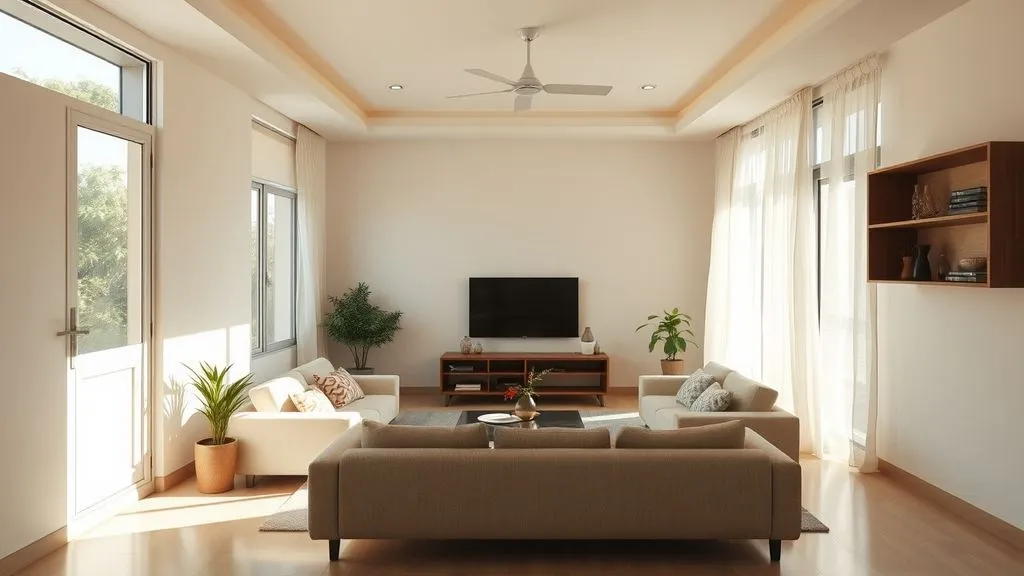
Home Interior Design in Nagpur
This guide is for Nagpur homeowners specifically. Let us start with what makes our city different.
Designing for Nagpur’s Climate
Nagpur is among the hottest cities in India. Summers mean temperatures regularly above 42 degrees
Celsius, sometimes exceeding 46. Our humidity is relatively low in summer and significantly higher
during the monsoon from June through September. This range — from dry heat to humid wet — is
demanding on both people and materials, and every design decision should account for it.
Light colours work harder here than anywhere. In intense afternoon sunlight, light-coloured wall
surfaces reflect heat rather than absorbing it. A room with warm ivory walls sits measurably cooler than
the same room in a deep charcoal shade under the same afternoon conditions. In Nagpur this is not just
aesthetics — it is passive thermal management.
Ventilation is your most important passive cooling asset. Cross-ventilation — windows on opposite
or adjacent walls allowing air to move freely through the room — is the most effective natural cooling
strategy available. Every furniture placement decision should support ventilation paths, not obstruct
them. Sofas blocking windows, wardrobes pushed against the only air-movement corridor — these are
comfort mistakes disguised as furniture choices.
Natural wood flooring needs a serious conversation. Our humidity swings between peak dry summer
and peak wet monsoon are significant enough to cause solid hardwood to expand, contract, develop
gaps, and eventually cup or buckle without very consistent climate control. SPC flooring or properly
specified engineered wood are far safer choices for most Nagpur rooms.
Material durability matters more in our climate. Materials that perform well in a controlled
showroom environment and those that survive Nagpur’s conditions for fifteen years are not always the
same. Always ask a designer or contractor how a specific material will behave over time in our specific
humidity and temperature range.
The Design Process: What a Professional Approach Looks Like

A professional design process follows a specific order. If a firm you’re talking to can’t describe their
process in concrete operational terms — actual steps, not marketing phrases — that’s worth noting.
Discovery. The first meeting should be about how you live, not about the designer’s portfolio. How does
each room get used? Who lives in the home? Are guests frequent? Does someone work from home? Is
Vastu compliance a priority? What has not worked in previous homes? A designer who skips this and
moves straight to presentations is designing for their portfolio, not for your family.
Site analysis. The designer or their team measures every room, documents existing electrical points and
plumbing, notes structural constraints, and identifies any issues — seepage, levelling, damaged surfaces
— that will require addressing before finishes go on. This analysis shapes everything that follows.
Space planning. Before any aesthetic choices, spaces need to be planned: furniture layout, traffic flow,
storage positioning, zone definition within each room. Good space planning is invisible when it
succeeds — rooms feel naturally easy to move through. Poor planning is visible every day.
Design development and 3D visualisation. Colour palette, material selections, furniture specifications,
lighting concept, ceiling design — all presented as 3D renders that show you the finished space before
anything is ordered or built. This is where you review and request changes, not during construction.
Procurement. All materials are specified, quoted, and ordered before demolition or construction begins.
Material availability on site is the primary driver of construction schedule.
Construction oversight. The physical work follows a fixed sequence: civil work, electrical and
plumbing, flooring, carpentry and false ceiling, painting, fixtures and fittings. A project manager on site
regularly ensures quality matches specification at each stage.
Snag list and handover. A thorough walkthrough with a written snag list before final payment is
released. Every identified issue gets documented and resolved. Final payment — typically the last 30
percent — only after satisfactory sign-off.
What to Budget
At mid-range quality in 2025: a complete 2BHK interior in Nagpur runs Rs. 6 lakh to Rs. 11 lakh. A
complete 3BHK runs Rs. 9 lakh to Rs. 16 lakh. These figures include modular kitchen, wardrobes, false
ceilings, lighting, painting, and TV unit. Flooring replacement, major civil work, and appliances sit on top
of these numbers.
Premium work with imported materials, custom carpentry, and high-end finishes extends these ranges
significantly. The variable that matters most is material grade, not design complexity.
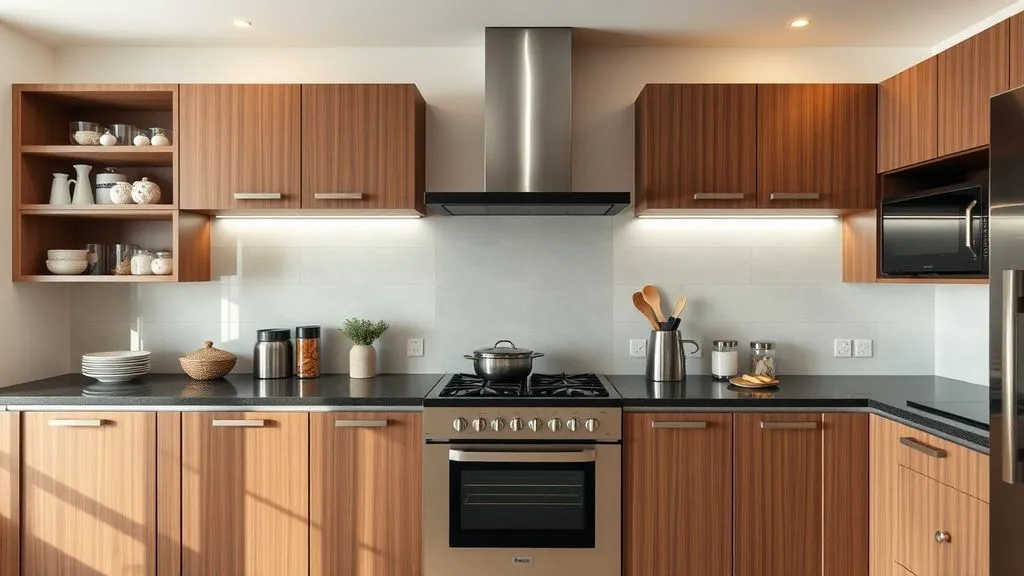
Finding the Right Firm in Nagpur
Don’t just look at the portfolio. Call the references. Visit a completed project if the designer offers it. Ask
questions that have specific answers. ‘How did you handle delays?’ should produce a real story, not a
general statement about communication. ‘How close was the final cost to the initial estimate?’ should
produce a number.
At QC Interiors, we have built our reputation in Nagpur one completed project at a time. Our first
consultation is always free. Reach out when you are ready to talk about your home.
The Vastu Question in Nagpur Homes
Vastu Shastra is a priority for a significant proportion of Nagpur families, and it deserves to be taken
seriously as a design consideration rather than addressed as an afterthought. The most effective approach
to Vastu in interior design is to integrate it from the very beginning — at the space planning stage, before
any material or furniture decisions are made.
Late-stage Vastu corrections — rearranging a designed room because the bed faces the wrong direction, or
discovering that the kitchen is in the south-west when the design is complete — are expensive and
sometimes architecturally impossible to fix. Vastu input should inform the initial space plan, not arrive
after it.
At QC Interiors, we work with clients’ Vastu requirements as part of the design brief. We do not claim
expertise in Vastu interpretation ourselves — that is the practitioner’s domain — but we are fully capable
of translating Vastu guidelines into practical design decisions: furniture orientation, colour choices by
room direction, placement of the puja area, kitchen cooking orientation. The design process accommodates
these requirements without conflict.
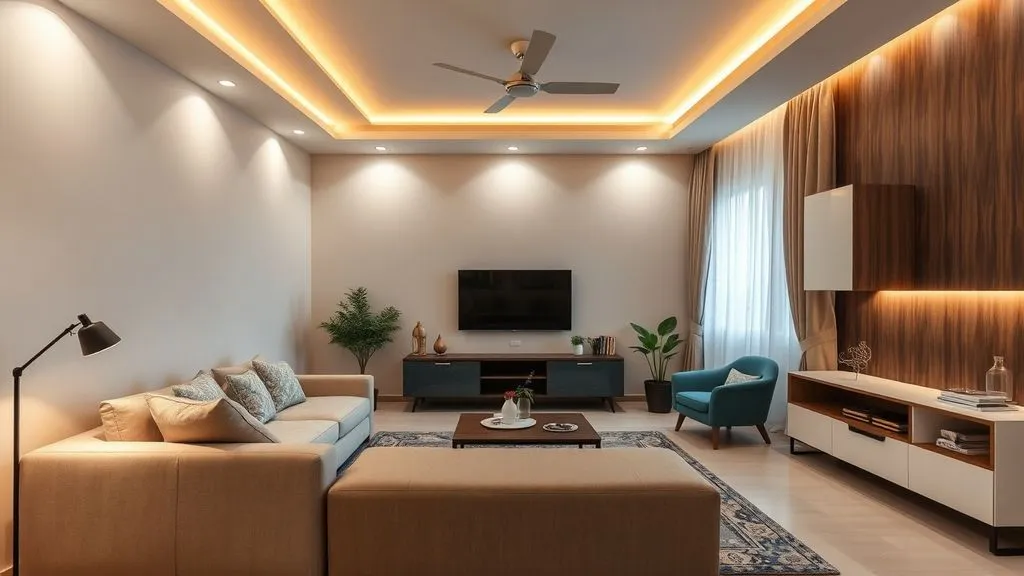
Maintaining Your Interior After the Project Ends
A well-designed interior does not maintain itself, and this is something homeowners rarely think about
during the planning phase. Certain material choices require specific care in Nagpur’s conditions. Natural
stone surfaces need periodic sealing in our hard water environment. Wooden elements — particularly any
exposed natural wood — need treatment before and after monsoon to prevent moisture damage. False
ceilings with POP profiles should be inspected annually for hairline cracks and addressed with filler before
they widen.
At QC Interiors, we provide a maintenance guide for every completed project that specifies exactly what
care each material requires, how frequently, and what products to use. This is not a complex document —
it is a practical checklist that takes thirty minutes per year to work through. The homes that look as good at
year five as they did at handover are almost always the ones where someone followed a simple
maintenance routine.
