
Vastu Residential Architects in Umarkhed — Designing Homes That Honour Both Ancient Wisdom and Your Family’s Contemporary Life
In Umarkhed, as throughout Vidarbha’s traditional family communities, Vastu Shastra is not a peripheral consideration in home design. It’s central. Most families building independent homes here want their home to be Vastu-compliant as a genuine priority — not because they’ve been told to want it, but because the spatial and directional principles of Vastu are woven into the cultural fabric of how this community thinks about the home as a place of wellbeing, prosperity, and spiritual grounding.
The challenge in Umarkhed’s residential market — as in most smaller Indian cities where the professional architectural practice is limited in scale — is finding an architect who combines genuine Vastu knowledge with genuine architectural competence. The market has both extremes: Vastu consultants who understand the directional principles but lack architectural training, and architects who are technically competent but treat Vastu as an afterthought overlay applied to a completed design. The families who get the best outcomes are those who engage a Vastu residential architect who holds both sets of knowledge simultaneously — who integrates Vastu from the brief stage, treating it as an organizing design principle rather than a constraint to work around.
Vastu Residential Architects in Umarkhed
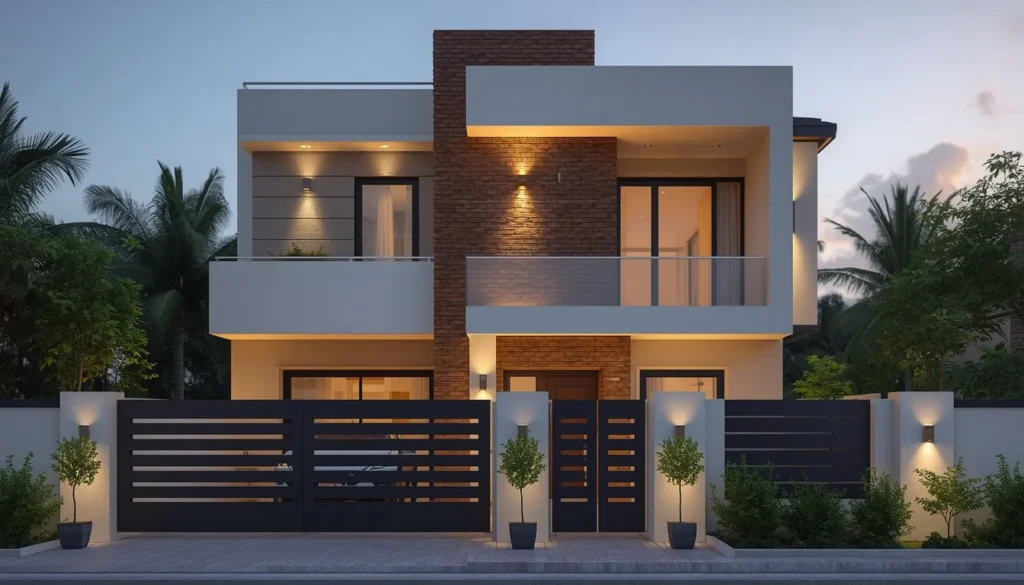
Vastu Shastra: The Practical Planning Principles for an Umarkhed Home
For Umarkhed families who want to understand what Vastu means in specific planning terms, here is a clear account of the key prescriptions and their planning implications.
The main entry direction. Vastu prescribes north-facing or east-facing main entry as auspicious. On a north-facing plot (main road to the north), the entry from the north is straightforwardly achievable. On an east-facing plot, the east-facing entry is similarly direct. For south or west-facing plots — which are common in Umarkhed’s street layouts — the Vastu residential architect uses planning strategies to satisfy the entry direction preference: positioning the main pedestrian entry in the north-east corner of a south-facing frontage (the south-east position is acceptable as Agni direction), or creating an entry path that approaches the door from the north-east even when the gate is on the west side.
The kitchen in the south-east. The fire direction — Agni — belongs in the south-east. A kitchen in the south-east of a home, with the cook facing east while working, aligns the cooking activity with both Vastu principles and practical climate logic: the south-east kitchen receives morning light from the east, which is pleasant and energising, and is positioned away from the most intense afternoon sun that makes a west-facing kitchen uncomfortable in Umarkhed’s summers.
The master bedroom in the south-west. The most stable, heaviest zone of the plan. The master bedroom belongs here — on the upper floor in a two-floor home, or in the south-west quadrant of the ground floor in a single-floor home. Vastu advice for master bedroom sleeping direction: head to south or head to east.
The puja room in the north-east. The most spiritually elevated zone. The puja room — and any indoor water feature — belongs here. The north-east zone should be kept lighter and lower than the rest of the building if possible, and overhead water tanks are specifically to be avoided in this zone.
The staircase in the south, south-west, or west. Stairs are associated with heaviness and downward movement — the opposite of the north-east’s upward energy. Staircases in the north-east are consistently avoided by Vastu-knowledgeable families.
The overhead water tank in the south-west. The south-west of the roof is the correct location for the overhead water tank — the heaviest element at the building’s highest point belonging in the most stable zone.
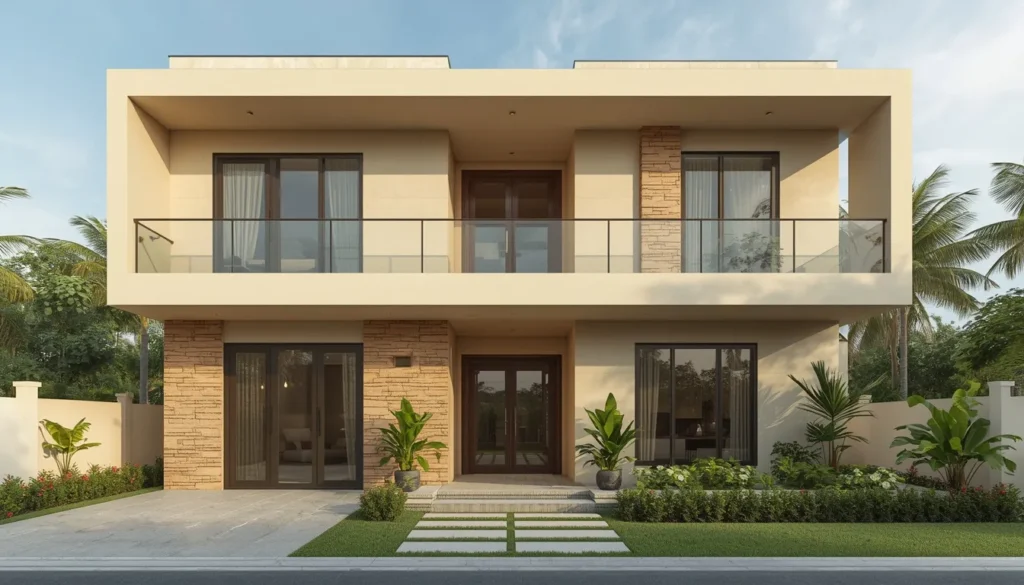
How Vastu Residential Architects Integrate These Principles With Contemporary Design
The Vastu residential architect’s specific competence is the ability to hold both the Vastu planning requirements and the contemporary design requirements in the design process simultaneously — rather than designing a contemporary home and then trying to make it Vastu-compliant, or designing a Vastu-compliant plan without design quality.
The integration approach that works best:
Start with the plot orientation. The Vastu implications of the plot’s orientation are the first planning input. A north-facing plot with a north or north-east entry is the most straightforwardly Vastu-favorable. The design develops from this orientation with the Vastu zone map applied to the plot from the beginning.
Zone the home per Vastu before placing rooms. The south-west zone is established as the master bedroom zone. The south-east zone is established as the kitchen zone. The north-east zone is reserved for the puja room and open space. The north-west zone is identified as appropriate for secondary bedrooms and the garage. These zone assignments provide the framework within which contemporary room design and sizing happens.
Develop the contemporary plan within the Vastu framework. The drawing room, sized and proportioned for the family’s social life, positioned in the north or east zone where Vastu supports active, welcoming energy. The dining area adjacent to the kitchen in the south-east zone, connecting the fire zone’s cooking to the family’s gathering. The home office — increasingly required in Umarkhed’s professional households — positioned in the north (associated with career and prosperity) or the west (associated with stability and gains).
Address conflicts honestly. Some plot orientations create genuine conflicts between the Vastu ideal and the practical design requirements. A Vastu residential architect addresses these conflicts with specific remedial strategies — not by telling the family the plot is inauspicious and that their Vastu compliance is impossible, but by finding the design solutions that satisfy the principle’s intent within the plot’s constraints.
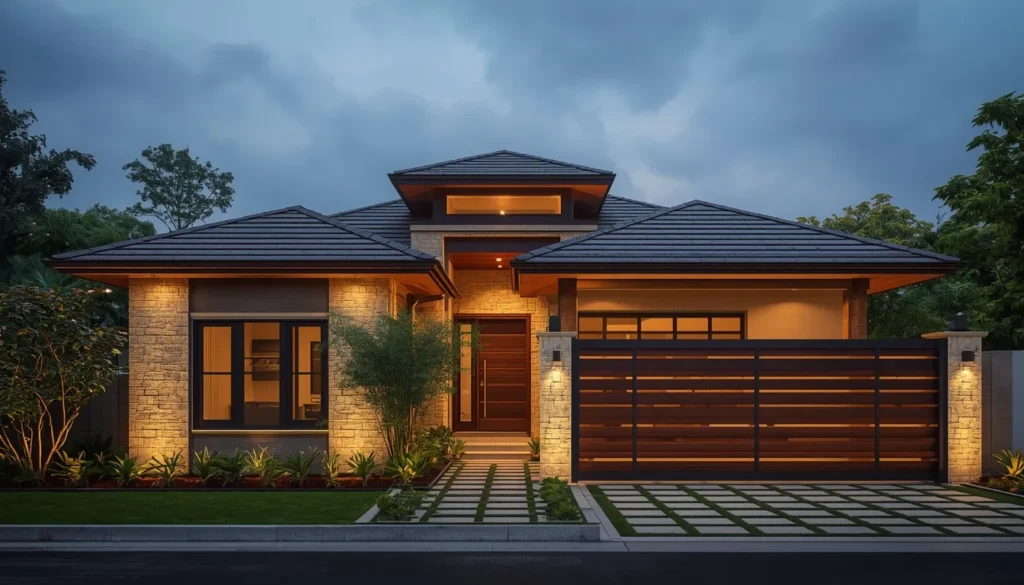
Vastu-Specific Design Elements in an Umarkhed Home
The threshold and entry sequence. In Vastu practice, the entry to the home is one of its most energetically significant elements. A properly designed Vastu entry in an Umarkhed home: the main door facing north or east, of quality proportions and material (a well-made solid teak door communicates both Vastu reverence and architectural quality), with a threshold that marks the transition from outside to inside. The entry foyer — even a modest one of 15 to 20 square metres — creates the arrival space that Vastu associates with the quality of energy that enters the home.
The brahmasthala. The geometric centre of the plot and the home should be kept open — a void rather than a closed room. In a contemporary Umarkhed home, this translates to a central courtyard if the plan allows it, or at minimum the absence of a closed room in the plan’s centre. The open staircase void in a G+1 home positioned near the plan’s centre is a design that satisfies this Vastu principle while creating the architectural space quality that the home benefits from.
The north-east zone management. The north-east corner of the plot and the home should be the lightest, lowest, most open zone. A Vastu residential architect positions the puja room here as the primary use, keeps the north-east compound area relatively open, and ensures that no heavy structural elements — columns, beams carrying heavy loads, water tanks — are concentrated in the north-east.
The south-west zone management. The opposite of the north-east — the south-west should be the heaviest, most built-up zone. The master bedroom here, the structural columns at their most robust, the overhead tank on the roof’s south-west. The compound wall on the south-west side can be taller than on the north-east side — Vastu approves of this asymmetry.
Vastu Residential Architecture Fees in Umarkhed
Vastu consultation on an existing design — review for compliance, identification of issues, recommendations for modification: ₹15,000 to ₹50,000 depending on scope.
Vastu-integrated architectural design service — floor plan design with Vastu principles integrated from the brief stage: same fee range as standard architectural design (₹3 to ₹8 per sq ft) since the Vastu integration is an approach rather than an add-on. For a 3,000 sq ft home at comprehensive service: ₹9 to ₹24 lakhs architectural fee.
Structural engineering: ₹1.5 to ₹2.5 per sq ft.
3D exterior elevation showing the Vastu-compliant entry sequence, compound design, and facade: ₹20,000 to ₹80,000. Particularly valuable for confirming that the entry direction and the home’s street presentation communicate the quality and the auspicious orientation the design intends.
Interior Vastu alignment — colour choices, furniture placement directions, material choices aligned with Vastu prescriptions for each room: included in a complete interior design service (₹3 to ₹7 per sq ft) or available as a standalone Vastu interior consultation at ₹10,000 to ₹30,000.
Complete Vastu residential architecture service — complete design, Vastu integration, 3D elevation, structure, interior: ₹22 to ₹40 lakhs for a 3,000 sq ft Umarkhed home.
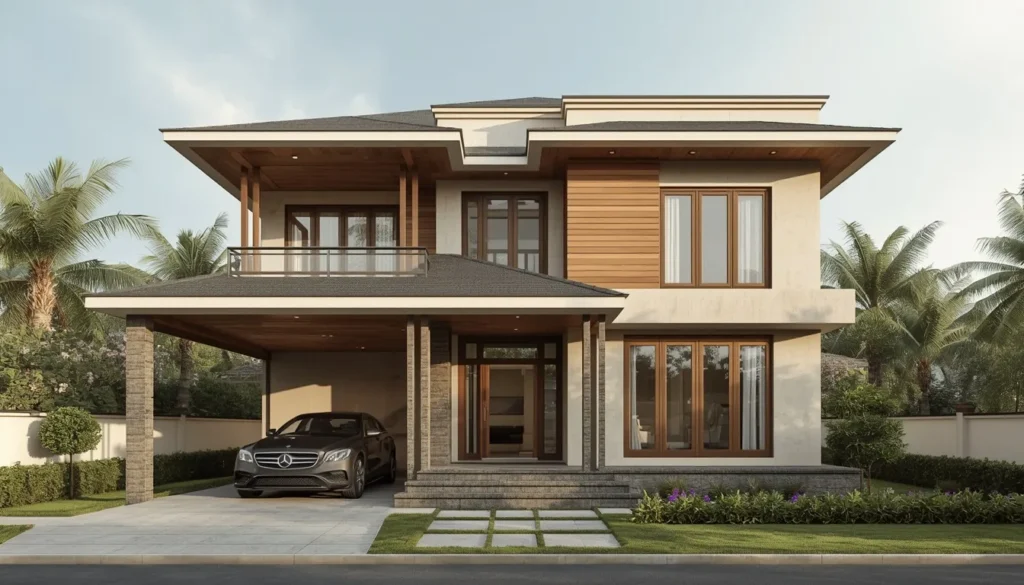
Vastu Architecture Across Umarkhed’s Region
The demand for Vastu-integrated residential architecture is consistent across the districts surrounding Umarkhed, where traditional family values and the importance of Vastu in home planning are universally shared.
Pusad: “Vastu home architect Pusad Yavatmal,” “Vastu-compliant house design near Pusad,” “best Vastu architect Pusad.”
Wani and Ghatanji: “Vastu residential architect Wani Yavatmal,” “Vastu home design Ghatanji,” “best Vastu architect south Yavatmal.”
Kinwat and Nanded border area: “Vastu home architect near Kinwat Nanded,” “Vastu-compliant house design near Nanded Yavatmal border.”
Mahagaon: “Vastu residential architect Mahagaon,” “Vastu home design near Umarkhed Mahagaon.”
The specific searches that Umarkhed families use: “Vastu residential architect Umarkhed,” “Vastu home design Umarkhed Maharashtra,” “Vastu-compliant house plan Umarkhed Yavatmal,” “best Vastu architect near Umarkhed,” “Vastu floor plan design Umarkhed,” “Vastu 3D elevation home Umarkhed.”
FAQs: Vastu Residential Architects in Umarkhed
Q1. What is the most important Vastu requirement for an Umarkhed home that cannot easily be changed after construction?
The main entry direction. All other Vastu elements can be remedied or adjusted with design interventions after construction. The main entry direction — fixed by the building’s positioning on the plot and the door’s location on the facade — cannot be practically changed after the structure is built without major structural work. Getting this right in the design phase is the single most consequential Vastu decision.
Q2. Can a Vastu-compliant home also have a contemporary modern aesthetic in Umarkhed?
Completely and consistently. Vastu compliance is about spatial organisation — room placement, entry direction, zone allocation, overhead tank position. These are planning decisions that operate at a level independent of architectural style. A home whose rooms are placed in Vastu-correct positions can be designed in a thoroughly contemporary architectural language with clean lines, modern materials, and sophisticated interiors. The two frameworks are compatible when integrated from the brief stage.
Q3. How does Vastu affect the staircase design in an Umarkhed G+1 home?
Vastu prescribes that staircases should be in the south, south-west, or west — not in the north-east. Clockwise staircase rotation (ascending from east to north) is preferred. The staircase should not be in the centre of the plan (Brahmasthala). For a Vastu residential architect designing a G+1 home in Umarkhed, the staircase is positioned in the south or south-west quadrant of the plan from the beginning, rotating clockwise, and positioned not in the plan’s geometric centre — these requirements are design inputs that shape the floor plan from the start.
Q4. What Vastu guidance applies to the colour scheme of an Umarkhed home?
General Vastu colour guidance for principal rooms: the north-facing rooms can use green or light blue tones (earth and water associations). The east-facing rooms are best in light tones that welcome morning light. The south-east kitchen in yellow, orange, or warm red tones (fire association). The south-west master bedroom in earthy, grounded tones — warm brown, deep cream, muted terracotta. The north-east puja room in white, cream, or light yellow — the purest, lightest tones. In practice, these Vastu colour prescriptions align well with the climate-responsive palette that also works in Umarkhed’s light conditions — warm tones throughout, lighter in the north and east-facing rooms, richer in the south-facing rooms.
Q5. How do I handle a south or west-facing plot in Umarkhed where achieving a north or east entry is difficult?
For a south-facing plot: the south-east corner entry (Agni position, between south and east) is an acceptable Vastu entry. Alternatively, a pathway from the south-facing gate that turns to approach the door from the east is a planning strategy that satisfies the entry direction preference. For a west-facing plot: the north-west corner entry (between north and west) is an acceptable alternative. The planning strategy of a curved or L-shaped approach path that brings the arrival direction around to face north or east before reaching the main door is used by experienced Vastu residential architects specifically for plots with challenging orientations. Your architect should be able to describe their specific strategy for your plot’s orientation before any design is committed to.
Why Choose QC Interiors for Modern Homes in Umarkhed:
Firm: QC Interiors Yavatmal
Expertise: Contemporary Residential Architecture, Duplex Planning, Climate-Responsive Design
Service Areas: Umarkhed, Mahagaon, Pusad, Wani & Nearby Vidarbha Regions
Build a contemporary home designed specifically for Vidarbha’s climate, your family’s lifestyle, and long-term comfort.
