
Top Residential Planning Tellapur Hyderabad — Why the Planning Stage Is Where Your Home Is Actually Made or Broken
Ask anyone who has built a home in Tellapur what they wish they had done differently, and the answers cluster predictably around a specific theme. Not materials. Not finishes. Not the cost of granite versus vitrified tile. What they wish they had done differently is think more carefully — before the contractor arrived, before the concrete was poured, before the decisions became irreversible — about how the house was planned. The kitchen that ended up in the wrong corner. The bedroom that gets unbearably hot from March onward because nobody asked which direction it faced. The entry that feels like an afterthought. The study that was added to the plan at the last minute and ended up borrowing air and light from the corridor. These are planning failures, and they are lived with permanently.
Tellapur’s residential construction boom — and it is a genuine boom, extending through the Nallagandla layouts, the new developments near the Outer Ring Road western stretches, the areas opening up around Mokilla and toward Kollur — has brought a large volume of new homes into existence very quickly. Some of them are excellent. Some of them are fine. And some of them will frustrate their owners for the next three decades because the planning stage was compressed, shortcuts were taken, and nobody was paid to think carefully about the things that actually determine quality of life inside a building.
This article is about what good residential planning actually involves in Tellapur. Not as theory. As practice.
Top Residential Planning Tellapur Hyderabad
What Residential Planning Is — Defined Precisely
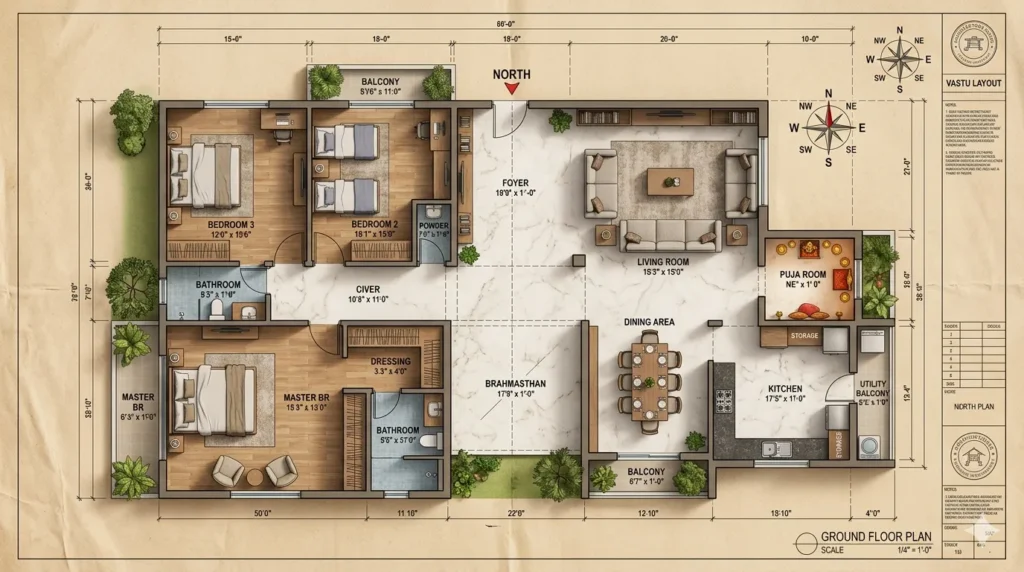
Residential planning is not the same as drawing a floor plan. A floor plan is one output of a planning process. The planning process itself is something larger: the systematic translation of a family’s specific life into the spatial organisation of a building that will serve that life well, on a specific piece of land, in a specific climate, for the next twenty to thirty years.
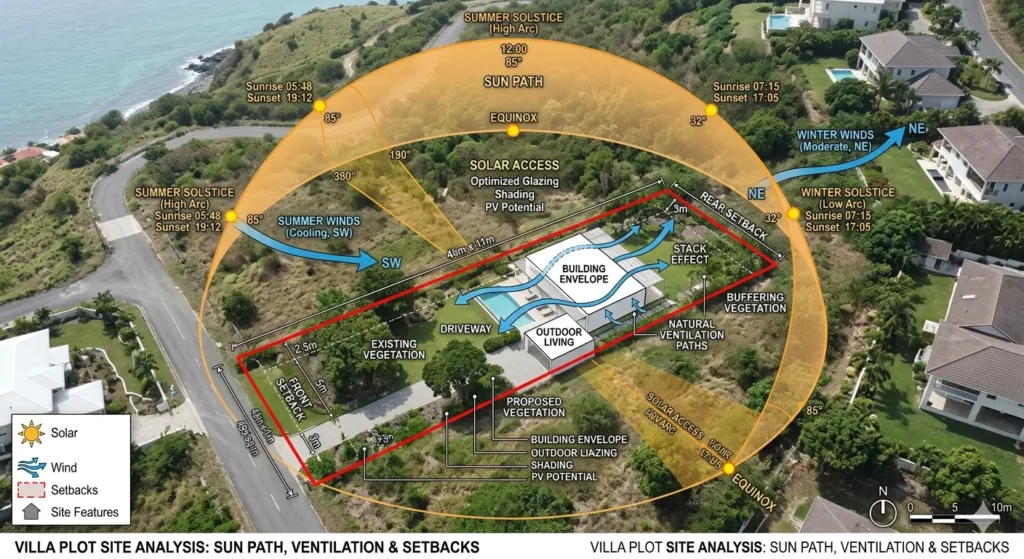
This process begins before any drawing — with site analysis. A competent residential planner visits your plot. In Tellapur, this means standing on the land in the afternoon to feel the intensity of the western sun on a clear April day. It means noting which direction the prevailing evening breeze comes from. It means looking at the neighbouring structures — how close they are, which windows face which direction, where the shadows fall at different times of year. It means understanding the topography — whether the land has any slope, which direction surface water drains in a monsoon downpour. And it means confirming the applicable building regulations — whether the plot falls under GHMC limits or DTCP jurisdiction, what the applicable FAR and setback requirements are, what the maximum permissible height is given the road width.
All of this information shapes the design. A family that builds on a east-facing plot in Tellapur with a deep west-facing setback has an opportunity — the architectural planner can orient the main rooms to the east and use the deep west setback for landscape shading. A family with a west-facing road frontage needs specific planning solutions for the main facade’s solar exposure. Neither situation is necessarily better or worse — they are different, and they require different planning responses. The residential planner who visits the site before drawing understands this. The one who draws from dimensions alone does not.
The Brief — The Raw Material That Most Projects Underinvest In
After the site analysis comes the brief development, and this is where most residential planning projects in Tellapur — frankly, in most of the country — are underinvested. The brief is the description of how the family actually lives: not the generic description (three bedrooms, two bathrooms, an open kitchen), but the specific description that produces a specific and personal house.
Here is what a thorough residential planning brief for a Tellapur home looks like in practice. How many people live in the house, and what is the generational and relationship structure? Is there an elderly parent whose bedroom needs to be on the ground floor with easy access to the bathroom without navigating stairs at night? Are there school-going children who need a dedicated study space that is quiet in the afternoon when the rest of the household is active? Is there a member of the family who works from home and needs a home office that can receive occasional clients without those clients passing through the private areas of the house?
How is the kitchen used? In many Tellapur households — and this matters for planning — the kitchen sees large-scale cooking for joint family gatherings several times a month. The vessel sizes, the number of people working simultaneously, the ventilation requirements on a day when three dishes are cooking at once on a gas range — these realities produce a kitchen that is larger, differently configured, and differently ventilated than the standard modular kitchen template sized for a nuclear family. A residential planner who asks these questions designs a kitchen that works. One who doesn’t produces a beautiful-looking kitchen that frustrates its users.
The puja room. In most homes being built in Tellapur, the puja space is not an afterthought niche — it is a room of genuine significance in the household’s daily life and cultural identity. Its orientation (east or north-facing is traditional), its relationship to the entry of the home and the main circulation, the quality of light it receives, and its ability to accommodate both daily puja practice and the larger ceremonial occasions that happen several times a year — these are planning considerations that a planner who asks about them will address and one who doesn’t will ignore.
Floor Plans, Structural Plans, 3D Elevations — What Each Costs and What Each Is
Families planning residential projects in Tellapur are often unclear about what the various design deliverables are and what they cost separately versus as part of a package. Here is the breakdown that applies in Hyderabad’s western residential market.
Floor plans — the 2D drawings showing room layout, wall positions, door and window openings, and dimensions for each floor level — are the primary design document from which everything else flows. A basic floor plan service for a residential project in Tellapur, without full architectural engagement, is available from some firms at ₹2 to ₹3.50 per square foot. For a 3,000 square foot home at ₹3 per square foot, this is ₹9,000 for floor plans alone.
Structural plans — the engineering drawings specifying the column grid, beam depths, slab thickness, foundation type and depth, and reinforcement details throughout — are prepared by a licensed structural engineer. This is a separate professional service from the architect’s design fee. In Tellapur and western Hyderabad, structural engineering fees for individual residences typically run ₹2 to ₹4 per square foot depending on the building’s structural complexity. For a straightforward two-storey home on a standard site at ₹2.50 per square foot, this is ₹7,500 for a 3,000 square foot building. This is separate from the architect’s fee and is a non-negotiable component — GHMC and DTCP both require certified structural drawings for plan approval.
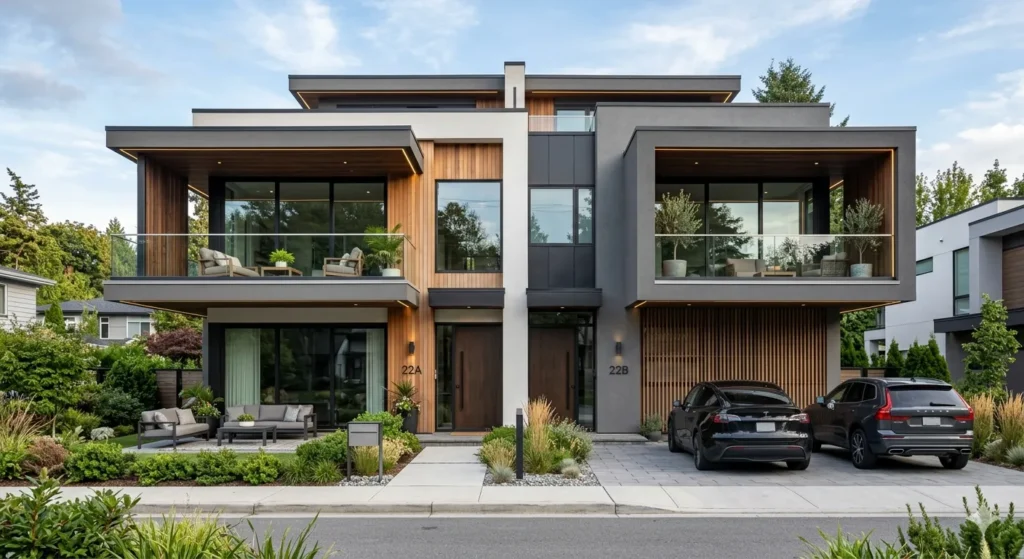
3D exterior elevation renders — the photo-realistic visualisations that show the client what the exterior of the house will look like before construction begins — are either included within a full architectural service fee or available as a standalone service. Standalone 3D exterior rendering in Hyderabad’s market ranges from ₹12,000 to ₹50,000 depending on the complexity of the building and the resolution and quality of the renders. As part of a full architectural service, they are included within the package.
The comprehensive architectural design fee — covering the brief analysis, site analysis, detailed floor plans for all floors, 3D exterior renders, approval documentation, working drawings with material specifications, structural plan coordination, and construction supervision visits — ranges from ₹5 to ₹10 per square foot in Tellapur’s residential market. At ₹6 per square foot for a 3,500 square foot home, the total architectural fee is ₹21,000. At ₹8 per square foot for a complex 5,000 square foot villa requiring sustainable design documentation and premium supervision, the fee is ₹40,000. These are not large numbers relative to the construction cost they are governing.
The Approval Process in Tellapur — GHMC vs. DTCP
One of the practical things that a residential planner working in Tellapur needs to know — and that families should ask about when evaluating planners — is the specific approval jurisdiction for their plot. Tellapur and its immediate surroundings sit in a zone where both GHMC (Greater Hyderabad Municipal Corporation) and DTCP (Directorate of Town and Country Planning, Telangana) have authority over different areas, depending on whether specific layouts and survey numbers have been brought within GHMC limits or remain under DTCP jurisdiction.
The distinction matters because the applicable building regulations, FAR provisions, setback requirements, and approval fee schedules differ between the two authorities. An architect who has worked extensively in Tellapur and the surrounding areas — Nallagandla, Kollur, Mokilla — knows which authority applies where and prepares the approval documentation accordingly. One who is not local to this market may need to establish this from scratch, which adds time.
The typical approval timeline for a straightforward residential proposal in western Hyderabad, with complete documentation on first submission, is four to eight weeks. Projects requiring special approvals — larger plots, corner properties, sites near nalas or water bodies, or projects above standard height limits — can take longer and may require additional clearances.
FAQs
Q1. How detailed should a floor plan be for GHMC or DTCP approval in Tellapur?
The approval submission requires dimensioned floor plans for all floors showing room labels, wall thickness, door and window positions, staircase design, setbacks from all plot boundaries, and the total built-up area calculation by floor. A site plan showing the building footprint on the plot with all setbacks dimensioned is also required. Your architect prepares all of this as part of the approval documentation service.
Q2. Can I change my floor plan after construction begins in Tellapur?
Minor changes that don’t affect the structural grid, overall building footprint, or total floor area can often be accommodated. Significant changes require a revised approval submission, which adds time and cost. Changes made to the structural grid after foundation work begins require demolition and re-work. The cost of changes goes up exponentially as construction advances — which is the strongest argument for investing in thorough planning before construction starts.
Q3. What is the maximum FAR available for individual residential plots in Tellapur?
FAR (Floor Area Ratio) for residential plots under GHMC regulations varies with the road width adjoining the plot — broader roads allow higher FAR. Under DTCP regulations, the applicable development order for the specific layout determines the FAR. Broadly, individual residential plots in Tellapur allow FAR of 1.5 to 2.5, depending on the applicable authority and road width. Your architect will calculate the maximum permissible built-up area for your specific plot.
Q4. What is the role of the structural engineer versus the architect in residential planning in Tellapur?
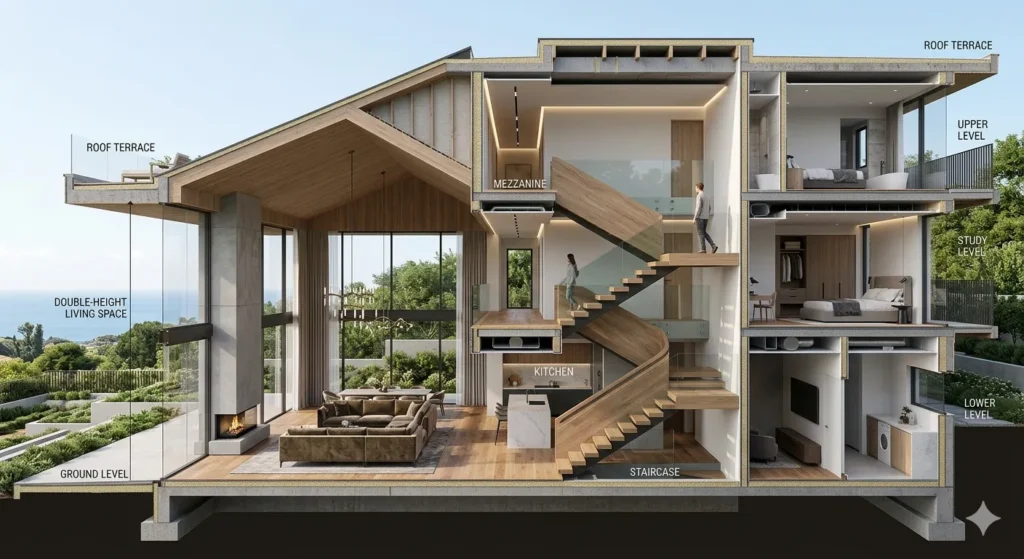
The architect is responsible for the spatial and architectural design — the organisation of rooms, the orientation and massing of the building, the exterior architecture, the interior planning, and the overall design quality. The structural engineer is responsible for the structural system — how the building stands up, the sizing of columns, beams and slabs, the foundation design for the specific soil conditions, and the reinforcement specifications. Both are required for a complete and approvable residential project, and both must be licensed professionals.
Q5. How early in the process should I engage a residential planner in Tellapur?
As soon as you have confirmed the plot purchase and have the survey documents. Engaging a planner before land purchase is even better if you want input on which available plots have the most design-friendly orientation or the most favourable regulatory conditions. The planner’s input is most valuable — and most cost-effective — before any decisions are made, not after they are partially made.
Professional Residential Planning & Home Design Services in Tellapur, Hyderabad
At QC Interiors Hyderabad, we provide complete online residential planning, architectural design, floor planning, 3D elevation design, structural coordination, and interior design services for Tellapur, Kollur, Mokilla, Nallagandla, Gachibowli, Financial District, and nearby Hyderabad areas. From smart space planning and vastu-friendly layouts to modern duplex homes, villas, and family residences — our team helps homeowners create comfortable, functional, and future-ready living spaces tailored to their lifestyle, plot conditions, and budget.
📞 Contact QC Interiors today for customized online residential planning and architectural consultation services.
