
Top Interior Designers in Yavatmal — How the City’s Families Can Finally Get the Interiors Their Homes Were Built For
Walk through a cross-section of Yavatmal’s residential neighbourhoods — the older parts of the city around the civil lines, the newer layouts on the Wardha Road, the colony areas that have grown up over the past two decades — and you’ll notice something. There are homes here that feel genuinely complete, where the rooms work the way rooms are supposed to work, where you walk into the kitchen and immediately understand why everything is where it is, where the main sitting space makes you want to sit in it. And then there are homes that feel assembled — good individual elements that don’t cohere, rooms that are adequately furnished but never quite right, kitchens that frustrate the person who uses them every day without anyone being able to say exactly why.
The difference between those two categories of homes is usually the presence or absence of interior design thinking. Not necessarily a large professional engagement — sometimes it’s as simple as one conversation with a person who understood space and function and helped the family make decisions in the right order. But that thinking, applied at the right moments, is what turns a completed construction into a home that works.
Interior design in Yavatmal has grown as a profession alongside the city’s residential ambitions. There are qualified practitioners here now — designers with formal training and real portfolios of residential work. There are also furniture showrooms that offer “interior design” as a sales service and carpenters who can execute whatever they’re asked to build. Knowing the difference, and knowing when you need which, is the starting point for any Yavatmal family thinking seriously about their interior.
Top Interior Designers in Yavatmal
What Interior Design Actually Involves in a Yavatmal Home
Interior design in a Yavatmal residential context is a broader discipline than most families initially assume. It isn’t just furniture selection — though that’s part of it. And it isn’t just a coat of paint in a trending colour — though that’s one of the more visible outcomes. It’s the discipline of making spatial, material, and furniture decisions that work together to produce rooms that function well and feel right.
In practical terms for a Yavatmal home, a comprehensive interior design engagement covers: the spatial planning of each room — how the furniture is arranged relative to windows, doors, and each other; the material palette for floors, walls, and ceilings — what gets tiled, what gets plastered and painted, what gets timber treatment; the design of fitted elements — the kitchen, the wardrobes, the storage in the study or children’s rooms; the lighting design — where the light sources go, what type of light each room needs at what intensity; and the loose furniture and soft furnishing selection — the pieces that complete each room once the fitted elements are in place.
These decisions are interdependent. The furniture arrangement determines where the electrical points need to be, which should be figured out before the finishing electrical work is done during construction. The flooring material choice determines the skirting treatment, which determines the wall finish transition. The lighting design determines the false ceiling configuration, which determines the ceiling height in different zones. Getting these in the right sequence, with each decision informed by the others, requires a process. Interior design is that process.
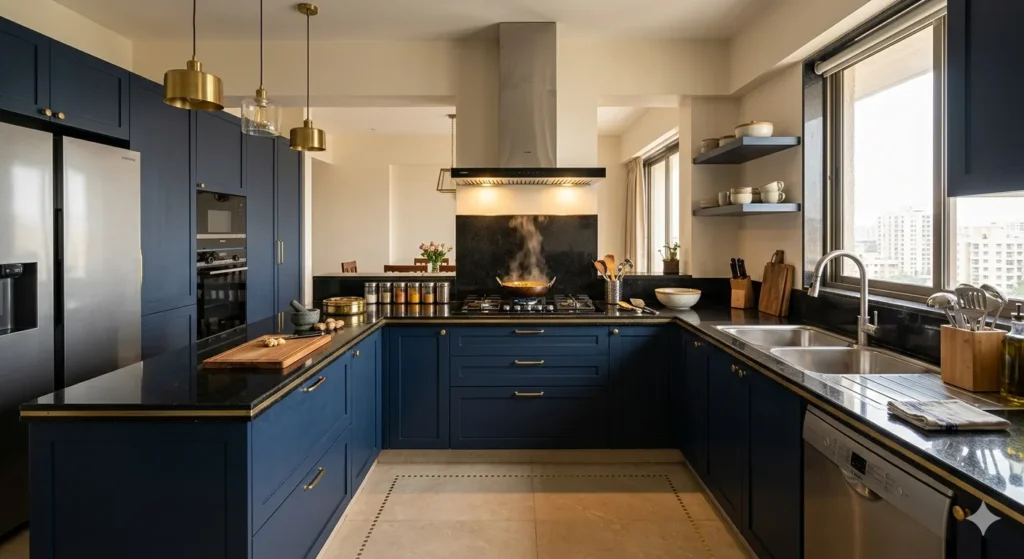
In Yavatmal’s residential culture, the kitchen and the drawing room are the two spaces that families invest in most consciously. The kitchen because it’s used every day by the people who cook, and a well-designed kitchen makes that daily use measurably easier. The drawing room because it’s the face the home presents to guests and to the community, and in a city where social standing is reflected in how you receive people, the quality of that space carries real weight.
Interior Design for Yavatmal’s Climate — Why Material Choices Here Aren’t Generic
Yavatmal’s climate places specific demands on interior materials that a designer working from a generic urban palette may not naturally address. This is one of the clearest markers of a designer who has genuinely worked in this region versus one who hasn’t.
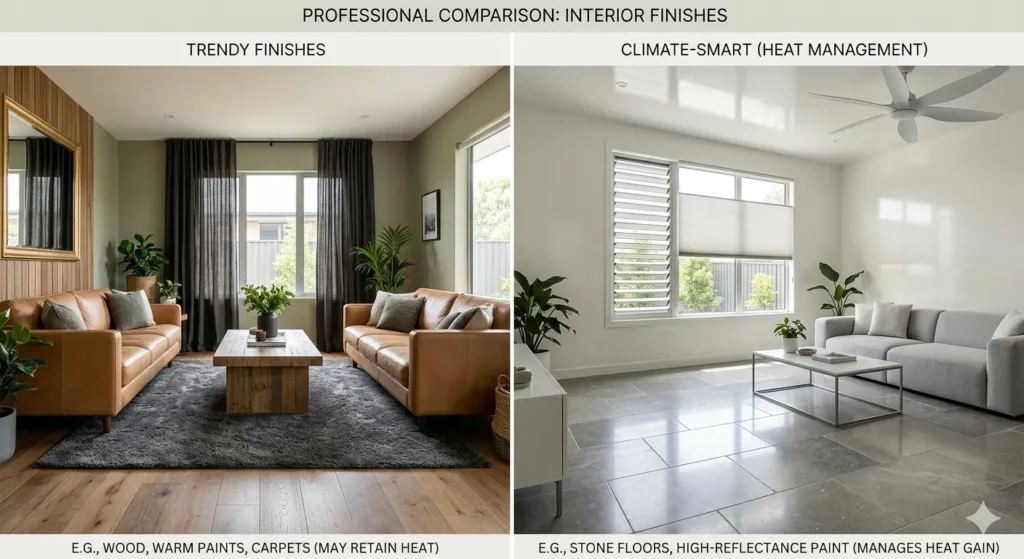
Flooring is the most consequential climate-affected interior choice. In Yavatmal’s summers, stone floors — granite, marble, quality Kadappa — remain meaningfully cooler underfoot than any alternative. This isn’t a preference; it’s a material physics reality that translates into whether the rooms feel tolerable during April and May without continuous air conditioning. Ceramic tile is a reasonable second choice. Any wood or wood-look product — luxury vinyl tile, engineered hardwood, laminate — is a poor choice for Yavatmal’s summer temperatures and humidity cycling. Designers who recommend these products without acknowledging the climate context are either unfamiliar with the region or prioritising visual trends over practical performance.
Wall finishes need to be considered in terms of both thermal performance and maintenance. Light, reflective finishes on exterior-facing walls reduce heat absorption. Washable, smooth finishes in the kitchen and family rooms reduce the cleaning burden in a climate where cooking and dust make regular wiping necessary. The fashion for textured wall finishes — popular in design content from cooler, less dusty climates — can create maintenance headaches in Yavatmal’s conditions.
Fitted furniture materials matter enormously in Yavatmal’s humidity-cycling climate. The monsoon season brings genuine humidity increases that stress any wood-based panel product through swelling and contraction cycles. Solid wood furniture handles these cycles with dignity, developing character rather than deteriorating. Particle board and MDF products are more susceptible to edge swelling, joint failure, and delamination when exposed to repeated humidity cycling over years. For a kitchen or wardrobe that will be in place for fifteen or twenty years, the material choice at installation determines the quality of the result a decade in.
The Joint Family Brief — What Yavatmal’s Interior Designers Need to Understand
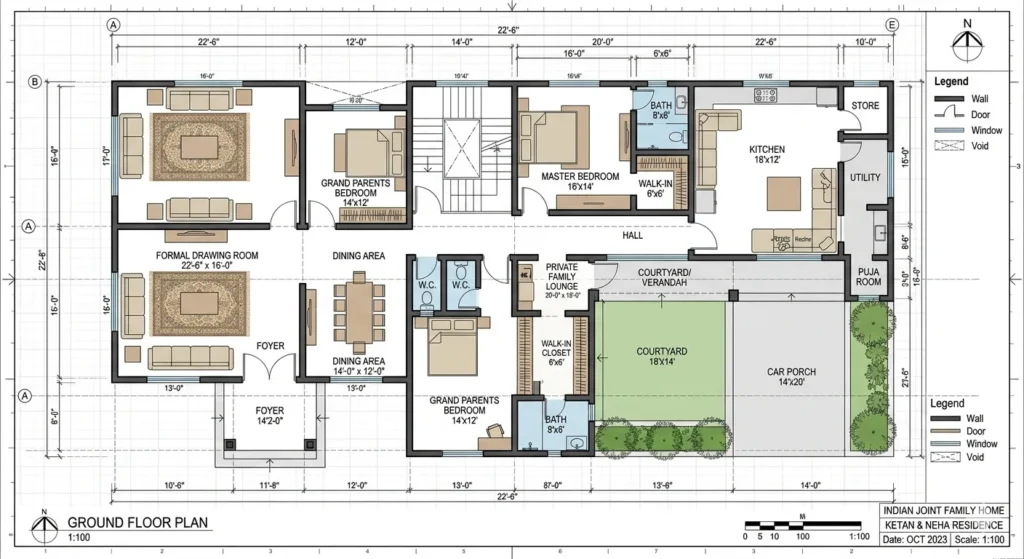
A significant proportion of Yavatmal’s residential households are multi-generational in their structure. The joint family — parents, married children, grandchildren sharing a building that needs to function for all of them simultaneously, across their different daily rhythms and different needs — is not an edge case here. It’s the dominant residential reality for a large share of the families who are investing in home construction and interior design.
Interior design that’s calibrated for this reality looks different from design for a nuclear family. The storage requirements are substantially larger — three generations of clothing, utensils, documents, ceremonial objects, children’s belongings, agricultural records — and need to be organised and distributed across the home rather than concentrated in a single space. The social spaces need to serve different age groups simultaneously without any one group dominating. The private spaces need genuine separation, not just nominal boundaries.
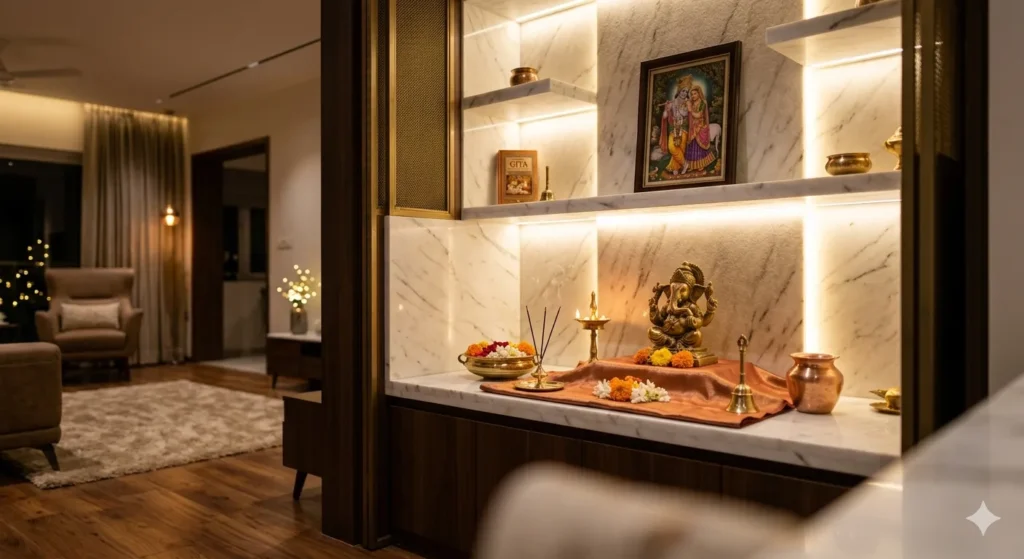
The puja room or puja space is a specific requirement in most Yavatmal joint family homes that deserves design attention rather than being tucked into a corner as an afterthought. This is a space used every morning by multiple family members, often with specific material and spatial requirements — a particular orientation, adequate shelving for idols and ritual objects, appropriate lighting, and easy cleanability of surfaces. An interior designer who has worked extensively with Yavatmal families will have a considered approach to this space. One who hasn’t may simply not think to ask about it.
The formal and informal distinction in social spaces matters deeply in Yavatmal’s residential culture. The drawing room that receives guests and the family room where daily life actually happens are different spaces with different requirements. Getting both right — a drawing room that impresses without being uncomfortable, a family room that is genuinely relaxed without looking neglected — requires a designer who understands why both exist and what each needs to do.
How to Find and Evaluate Interior Designers in Yavatmal
Yavatmal’s interior design ecosystem is more developed than the smaller towns in its district, but it still requires careful evaluation to distinguish between genuinely qualified practitioners and less rigorous ones. Here are the specific questions and assessments that matter.
Ask to see completed residential projects in person. A portfolio of photographs is not the same as a portfolio of buildings. Visit completed homes and pay attention to the execution quality: the joint tightness in the fitted kitchen, the consistency of the tile work, the finish quality at edges and transitions, the way the lighting was actually installed versus how it was designed. These physical details reveal execution quality that images simply cannot.
Ask about their design process. A serious interior designer begins with a detailed brief — a conversation about how the family lives, what each room needs to do, what the family’s aesthetic sensibilities are, what the non-negotiables are. They develop a concept that responds to this brief and the specific spaces. They produce detailed specifications for all fitted elements. They supervise execution against those specifications. Each step matters.
Ask specifically about their experience working in Yavatmal and similar Vidarbha contexts — their familiarity with the local contractor and supplier ecosystem, their approach to material choices in this climate, their experience with joint family briefs. These questions reveal regional depth rather than general design capability.
Ask about fee structure and what it includes. A fee that covers design only, without supervision, will produce drawings and specifications that may or may not be executed correctly. For any significant interior investment, design and supervision should be a single integrated engagement.
FAQs: Top Interior Designers in Yavatmal
Q1. What does interior design cost in Yavatmal?
For comprehensive residential interior design covering spatial planning, material specification, fitted furniture design, and execution supervision, fees typically range from ₹150 to ₹350 per square foot of designed area. For a 2,000 square foot home, that’s ₹3 to ₹7 lakhs in design fees, directed against a furnishing and finishing spend that is typically several times larger.
Q2. When in the construction process should I engage an interior designer?
Before the finishing electrical and plumbing work is done — ideally while the structure is still at the plastering stage. Decisions about electrical point positions, plumbing rough-in for the kitchen and bathrooms, ceiling heights, and floor transitions are all significantly cheaper to get right during construction than to modify afterward.
Q3. Can I use an interior designer for just one or two rooms?
Yes. A focused engagement — kitchen and master bedroom, for example — is entirely legitimate and often produces very strong return on investment relative to its cost. If budget is a constraint, prioritise the kitchen and the main reception space.
Q4. How do I know if an interior designer’s aesthetic will suit my family’s taste?
A good designer doesn’t impose an aesthetic — they develop one in conversation with the family. Show them examples of spaces you like and spaces you don’t. Explain what the home needs to do for your family. The brief shapes the design. A designer who shows you the same mood board for every client isn’t designing for you.
Q5. What’s the biggest mistake Yavatmal families make when approaching interior design?
Treating the modular kitchen company as the interior designer. The kitchen supplier is an excellent resource for execution — for building the kitchen to specification. But the specification — the dimensions, the storage organisation, the work zone layout, the material choices — should come from a designer who has understood the brief and the space before the supplier got involved. Reversing that sequence produces kitchens that look finished but don’t function well.
Strong Foundations. Smart Living.
Designing a dream house in Yavatmal is more than construction—it’s about creating a home that withstands harsh summers and heavy rains while staying comfortable year-round.
QC Interiors combines smart planning, durable construction, and modern design to deliver homes that last and impress.
Build with confidence. Design with QC Interiors.
Serving: Yavatmal, Yavatmal
📞 +91 7798153303
Transform your home with expert Residential Interior Yavatmal services designed for comfort, style, and functionality.
