
Top Interior Designers in Umarkhed — What Real Interior Design Looks Like and How to Find Someone Who Delivers It
The interior design market in Umarkhed has changed considerably in a short time. Five years ago, the conversation about interior design in this town was largely limited to choosing between a few tile suppliers and deciding what colour to paint the walls. Today, families building new homes or renovating existing ones are asking different questions — about spatial planning, about material quality, about how the interior of a home can be made to feel genuinely different from the standard contractor-finish interiors that look identical across a thousand houses in the region.
This shift in expectation is real and it has been driven by the same forces driving it elsewhere — wider exposure to well-designed interiors through travel and online media, rising disposable income in Yavatmal district’s agricultural economy, and a growing recognition that the interior of a home is not something to be left to the contractor’s default decisions. It is the environment in which a family lives every day, and it deserves design thinking.
Finding genuinely skilled interior designers in Umarkhed requires knowing what to look for, and knowing what to look for requires understanding what good interior design actually involves.
Top Interior Designers in Umarkhed
What Interior Design Is and What It Is Not
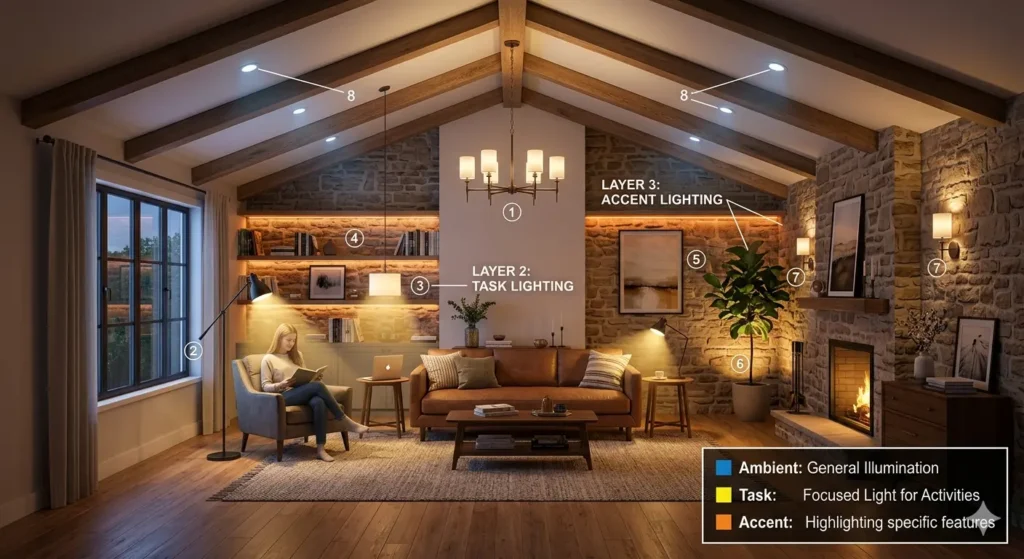
The most persistent confusion in Umarkhed’s interior design market is the conflation of furniture supply with interior design. A vendor who supplies furniture and has a small showroom, or a contractor who can install modular kitchen units and suggest a colour scheme, is not an interior designer in any meaningful professional sense. They are supplying products. They may have some taste. But they are not designing an interior.
A genuine interior designer begins their work with spatial analysis. Before any discussion of materials, colours, or furniture styles, they need to understand how the space is used and how it needs to perform. Where are the natural light sources, and at what times of day do they provide useful illumination? Which spaces are used for formal social occasions and which for relaxed daily life? How does the family move through the home, and are there circulation problems in the existing layout that interior design can address? What is the relationship between the indoor spaces and any outdoor spaces — verandas, courtyards, gardens — that the design should acknowledge?
From this spatial analysis comes a design that works at multiple scales simultaneously — the overall palette and material character of the home, the specific design of each room in relation to its use and its relationship to adjacent rooms, the selection and placement of furniture and lighting as elements of the spatial composition rather than products plugged into a finished room, and the details that give a well-designed interior its coherence and identity.
The Specific Requirements of a Umarkhed Interior
Interiors in Umarkhed have specific requirements that a designer from a coastal city or a metropolitan centre may not instinctively understand. The most obvious is thermal performance. In a town where summer temperatures regularly exceed 44 degrees, the interior design decisions that affect how hot a room feels — the material choices for floors and walls, the window treatment approach, the degree to which cross-ventilation is facilitated or blocked by furniture placement — are not aesthetic preferences. They are functional necessities.
Flooring choice is a good example of where climate awareness matters. Natural stone and ceramic tile stay cooler underfoot than polished marble, which can retain radiant heat. In spaces that receive direct afternoon sun, the floor material choice affects the room’s temperature in ways that are felt immediately and continuously. A designer who is thinking about Umarkhed’s climate will make these choices with that awareness. One who is applying a design vocabulary from a different context may not.
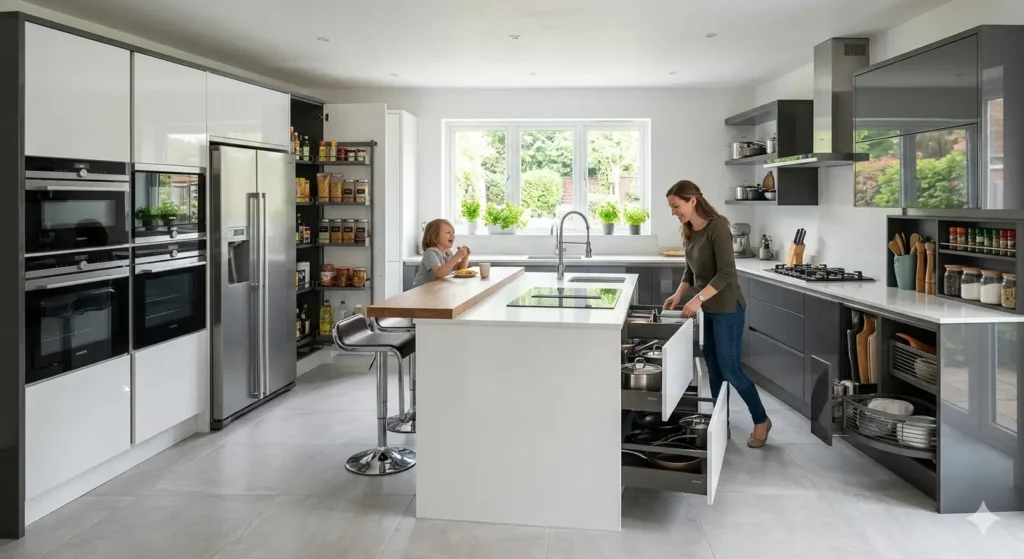
The social structure of a Umarkhed household also has spatial implications that an interior designer needs to understand. Extended family arrangements are common and the house needs to serve multiple generations simultaneously — grandparents who may need ground-floor spaces with easy access to the veranda, children whose play needs to be accommodated without colonising the formal sitting areas, a kitchen designed for the way cooking actually happens in a large Vidarbha family rather than for a nuclear couple preparing a single meal. The puja space, which in many Umarkhed homes functions as a room rather than a corner, needs to be given its own design consideration.
How to Find and Evaluate Interior Designers in Umarkhed
The interior design profession in Umarkhed is less formally structured than it is in larger cities, and the range of people offering design services spans from qualified professionals with genuine design training to furniture dealers who have rebranded themselves as designers. Navigating this requires some specific evaluation approaches.
Ask to see completed projects, not product portfolios. There is a significant difference between a designer who shows you photographs of furniture they have supplied — well-lit, staged shots of modular kitchens or television units — and one who shows you complete interiors where the spatial thinking, the material consistency, the lighting design, and the furniture selection all work together as a coherent whole. The latter is what you are looking for.
If possible, visit a completed project in person. A photograph of an interior tells you how it looks in a controlled photographic moment. A visit tells you how it feels to be inside the space at different times of day, whether the kitchen works as a kitchen rather than just as a kitchen-shaped object, whether the main bedroom has the quality of calm and privacy that a bedroom needs, and whether the design decisions that look good in photographs have created a space that is genuinely pleasant to inhabit.
Pay attention to how the designer asks questions. A good interior designer will spend significant time asking about your family’s life before beginning to show you design options. How do you use the different spaces in your home through the day? Which members of the family spend the most time in which rooms? What are the activities that need to be supported — formal dining, informal family meals, children’s homework, older members’ need for a quiet corner? Is there a home-based business? These questions are not preamble. They are the substance of the design brief that the finished interior should respond to.
What Good Interior Design Costs in Umarkhed
Interior design fees in Umarkhed vary considerably depending on the scope of the project and the designer’s level of service. A designer who provides full-service design — spatial planning, material specification, furniture selection and procurement, lighting design, supervision of installation — typically charges either a percentage of the project cost (commonly eight to twelve percent) or a fee per square foot of the designed area.
For a full home interior of 2,500 square feet with a mid-range specification — quality vitrified tiles, good-quality modular kitchen and wardrobes, a coherent lighting design, selected furniture pieces that anchor the main rooms — the total interior fitout cost in Umarkhed in 2025–26 might be in the range of ₹15 to ₹25 lakhs, with the designer’s fee representing ₹1.5 to ₹3 lakhs of that total. Premium specification — natural stone flooring, custom joinery, imported fittings, curated furniture — would add substantially to this.
The designer’s fee, viewed as a proportion of the total project cost, is small. What it buys is the difference between a home interior that has been coherently designed — where every decision relates to every other decision — and a collection of products assembled into a space. That difference is what you notice every day you live in the home, and it is what visitors notice immediately when they walk in.
The Elements of a Well-Designed Interior in Umarkhed
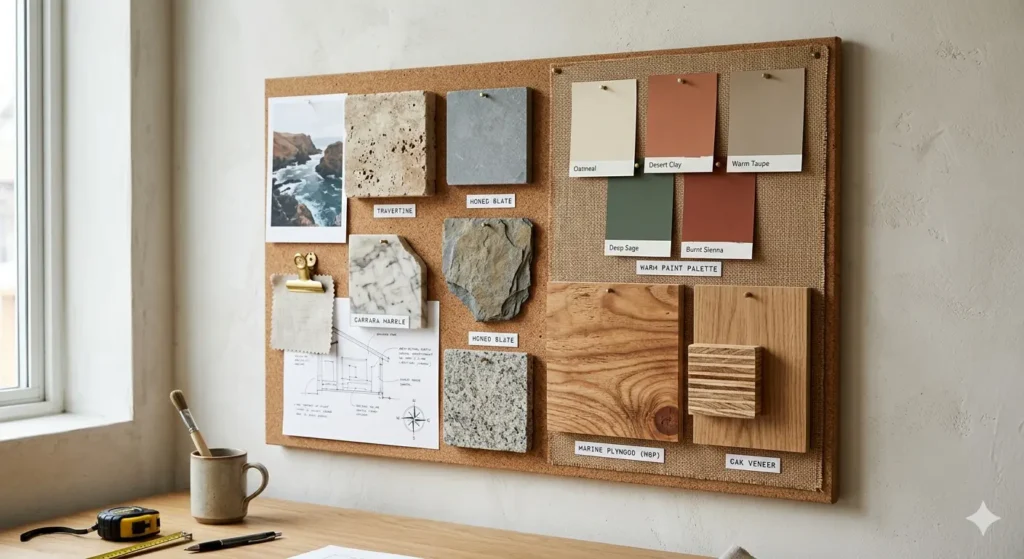
Lighting is the element that most dramatically distinguishes well-designed interiors from standard ones, and it is the element most frequently underthought in Umarkhed’s residential market. A lighting design that is considered at the planning stage — with ceiling heights, window positions, and artificial light source placement all coordinated — creates interiors that feel entirely different from those lit by standard overhead fittings. The living areas of a well-designed home have layers of light: ambient light for general use, task light for specific activities like reading or cooking, and accent light that draws attention to the spatial features that make the room interesting.
Material consistency is another marker of genuine design thinking. In a home that has been properly designed, the material choices — the flooring, the wall finishes, the joinery, the hardware — relate to each other in a coherent way that gives the interior a sense of being thought through rather than assembled. This doesn’t require expensive materials. It requires the discipline to make Interiors in Umarkhed have specific requirements that a designer from a coastal city or a metropolitan centre may not instinctively understand.
The most obvious is thermal performance. In a town where summer temperatures regularly exceed 44 degrees, the interior design decisions that affect how hot a room feels — the material choices for floors and walls, the window treatment approach, the degree to which cross-ventilation is facilitated or blocked by furniture placement — are not aesthetic preferences. They are functional necessities.
Flooring choice is a good example of where climate awareness matters. Natural stone and ceramic tile stay cooler underfoot than polished marble, which can retain radiant heat. In spaces that receive direct afternoon sun, the floor material choice affects the room’s temperature in ways that are felt immediately and continuously. A designer who is thinking about Umarkhed’s climate will make these choices with that awareness. One who is applying a design vocabulary from a different context may not.
The social structure of a Umarkhed household also has spatial implications that an interior designer needs to understand. Extended family arrangements are common and the house needs to serve multiple generations simultaneously — grandparents who may need ground-floor spaces with easy access to the veranda, children whose play needs to be accommodated without colonising the formal sitting areas, a kitchen designed for the way cooking actually happens in a large Vidarbha family rather than for a nuclear couple preparing a single meal.
The puja space, which in many Umarkhed homes functions as a room rather than a corner, needs to be given its own design consideration.
How to Find and Evaluate Interior Designers in Umarkhed
The interior design profession in Umarkhed is less formally structured than it is in larger cities, and the range of people offering design services spans from qualified professionals with genuine design training to furniture dealers who have rebranded themselves as designers. Navigating this requires some specific evaluation approaches.
Ask to see completed projects, not product portfolios. There is a significant difference between a designer who shows you photographs of furniture they have supplied — well-lit, staged shots of modular kitchens or television units — and one who shows you complete interiors where the spatial thinking, the material consistency, the lighting design, and the furniture selection all work together as a coherent whole. The latter is what you are looking for.
If possible, visit a completed project in person. A photograph of an interior tells you how it looks in a controlled photographic moment. A visit tells you how it feels to be inside the space at different times of day, whether the kitchen works as a kitchen rather than just as a kitchen-shaped object, whether the main bedroom has the quality of calm and privacy that a bedroom needs, and whether the design decisions that look good in photographs have created a space that is genuinely pleasant to inhabit.
Pay attention to how the designer asks questions. A good interior designer will spend significant time asking about your family’s life before beginning to show you design options. How do you use the different spaces in your home through the day? Which members of the family spend the most time in which rooms? What are the activities that need to be supported — formal dining, informal family meals, children’s homework, older members’ need for a quiet corner? Is there a home-based business? These questions are not preamble. They are the substance of the design brief that the finished interior should respond to.
What Good Interior Design Costs in Umarkhed
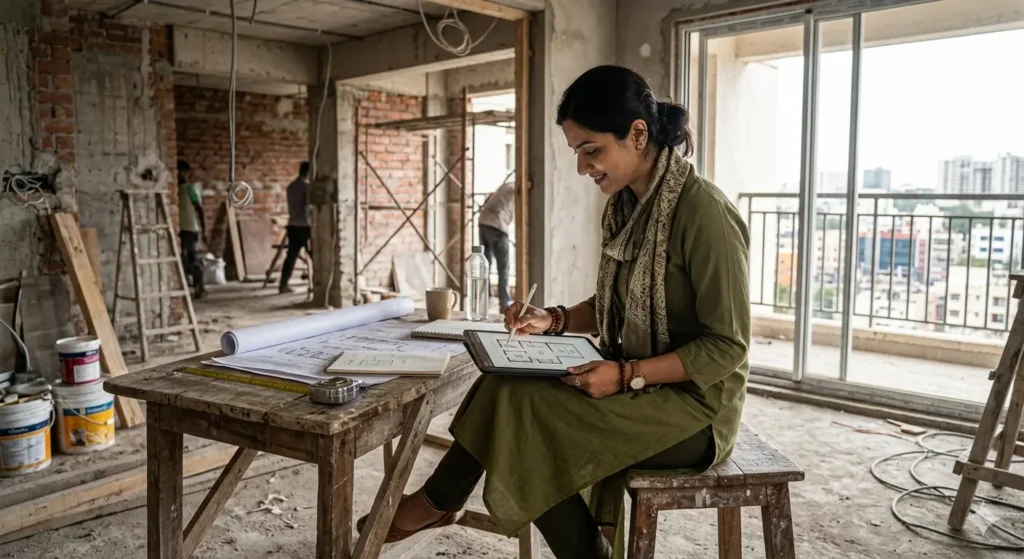
Interior design fees in Umarkhed vary considerably depending on the scope of the project and the designer’s level of service. A designer who provides full-service design — spatial planning, material specification, furniture selection and procurement, lighting design, supervision of installation — typically charges either a percentage of the project cost (commonly eight to twelve percent) or a fee per square foot of the designed area.
For a full home interior of 2,500 square feet with a mid-range specification — quality vitrified tiles, good-quality modular kitchen and wardrobes, a coherent lighting design, selected furniture pieces that anchor the main rooms — the total interior fitout cost in Umarkhed in 2025–26 might be in the range of ₹15 to ₹25 lakhs, with the designer’s fee representing ₹1.5 to ₹3 lakhs of that total. Premium specification — natural stone flooring, custom joinery, imported fittings, curated furniture — would add substantially to this.
The designer’s fee, viewed as a proportion of the total project cost, is small. What it buys is the difference between a home interior that has been coherently designed — where every decision relates to every other decision — and a collection of products assembled into a space. That difference is what you notice every day you live in the home, and it is what visitors notice immediately when they walk in.
The Elements of a Well-Designed Interior in Umarkhed
Lighting is the element that most dramatically distinguishes well-designed interiors from standard ones, and it is the element most frequently underthought in Umarkhed’s residential market. A lighting design that is considered at the planning stage — with ceiling heights, window positions, and artificial light source placement all coordinated — creates interiors that feel entirely different from those lit by standard overhead fittings. The living areas of a well-designed home have layers of light: ambient light for general use, task light for specific activities like reading or cooking, and accent light that draws attention to the spatial features that make the room interesting.
Material consistency is another marker of genuine design thinking. In a home that has been properly designed, the material choices — the flooring, the wall finishes, the joinery, the hardware — relate to each other in a coherent way that gives the interior a sense of being thought through rather than assembled. This doesn’t require expensive materials. It requires the discipline to make material decisions in relation to each other rather than room by room without reference to the whole.
The treatment of the transition between indoors and outdoors — particularly the veranda-to-living-room relationship that is fundamental to Umarkhed’s domestic architecture — is a design opportunity that many interiors fail to realise. A veranda that is treated as a genuine outdoor room, with appropriate flooring, furniture, and shade provision, and that flows naturally to and from the interior spaces it connects to, makes the home substantially more livable than one where this transition is an afterthought.
FAQs: Interior Designers in Umarkhed
Q1. How is an interior designer different from a furniture supplier or a contractor in Umarkhed?
An interior designer’s primary work is spatial — understanding how a space needs to function and creating a design that makes it function that way, with material, lighting, and furniture decisions that are all part of a coherent design logic. A furniture supplier provides products. A contractor executes construction. There is overlap in what these different professionals can do, but a qualified interior designer is providing design thinking that the other two are typically not.
Q2. When in the construction process should I engage an interior designer?
Ideally, before construction begins or at least during the shell-and-core construction phase. Interior design decisions — the placement of electrical points, the lighting circuit layout, the provision for built-in joinery, the floor preparation requirements — have construction implications that are expensive to address after the fact. Engaging a designer after the walls are plastered and the flooring is laid significantly limits what design can achieve.
Q3. Can I engage a designer from Yavatmal or Nagpur for a home in Umarkhed?
Yes, and for more demanding design briefs this is often the right decision. The key requirement is that the designer visit the site during both the design process and the execution phase, and that they have some understanding of Umarkhed’s climate requirements and material availability. Remote design work without site visits rarely produces excellent results.
Designing a residence in Umarkhed is not merely a process of building; it involves forming an environment that endures extreme summers and torrential monsoons. We take smart design, durability and elegance and marry it with deep local expertise to protect your investment for decades at QC Interiors.
Skip the compromise—develop perfectly precise and quality your family should have.
QC Interiors
Serving: Umarkhed, Yavatmal
Specialisation: Comprehensive Home Interior Design | Architectural Planning | Turnkey Renovations
📞 (+91) 7798153303
Sign up for your consultation now and walk through with our 3D walkthrough of your home before a hammer is lifted!
