
Top Home Architects in Amravati — What Families in This City Need to Know Before They Build
Amravati is a city that carries itself with a certain quiet confidence. The divisional headquarters of Vidarbha’s Amravati division, a city with real institutional weight — Amravati University, the district courts, the government offices that serve a substantial administrative region — and an economy that moves on the back of cotton, soybean, and the agricultural trade that has made this part of Maharashtra one of the more commercially active in the state. Families here build homes with the seriousness that comes from knowing a thing or two about investment and permanence. A home in Amravati isn’t a speculative purchase in a developer complex. It’s a building on land the family owns, designed for a life the family has built, intended to last through at least one more generation before anyone considers rebuilding.
That seriousness about homes — which any long-time Amravati resident recognises as a genuine cultural characteristic of the city — is exactly what makes the architect selection question so consequential here. The contractor who offers to “handle the drawings” as part of the construction package is not the same thing as a qualified architect who designs your home from a thorough understanding of your family’s life and your city’s specific conditions. The difference between these two things is felt every day for the thirty or forty years the building stands, and most families in Amravati who’ve experienced both understand this distinction viscerally even when they can’t always articulate it technically.
Amravati’s residential architecture has been evolving. The older established neighbourhoods — Rajapeth, Irwin Road, the areas around Amravati University — have housing stock that reflects the generous planning and solid construction of earlier decades. The newer developing areas — Badnera Road, Paratwada Road, the plotted layouts that have been filling in as the city expands — have a contemporary residential character that attracts families looking for newer construction with better specifications. Both contexts create specific architectural opportunities and specific design requirements, and the architect you choose should understand both.
Top Home Architects in Amravati
What Amravati’s Climate Demands of Residential Architecture
Amravati sits in Vidarbha’s climate reality — and that reality is, by any honest account, demanding. The summer months from March through June bring temperatures that regularly reach 44 to 47 degrees Celsius, making Amravati one of the consistently hotter cities in Maharashtra during this period. The monsoon arrives with intensity from June through September. The winter is genuinely pleasant but brief — December and January are Amravati at its outdoor best, and then the heat builds again from February.
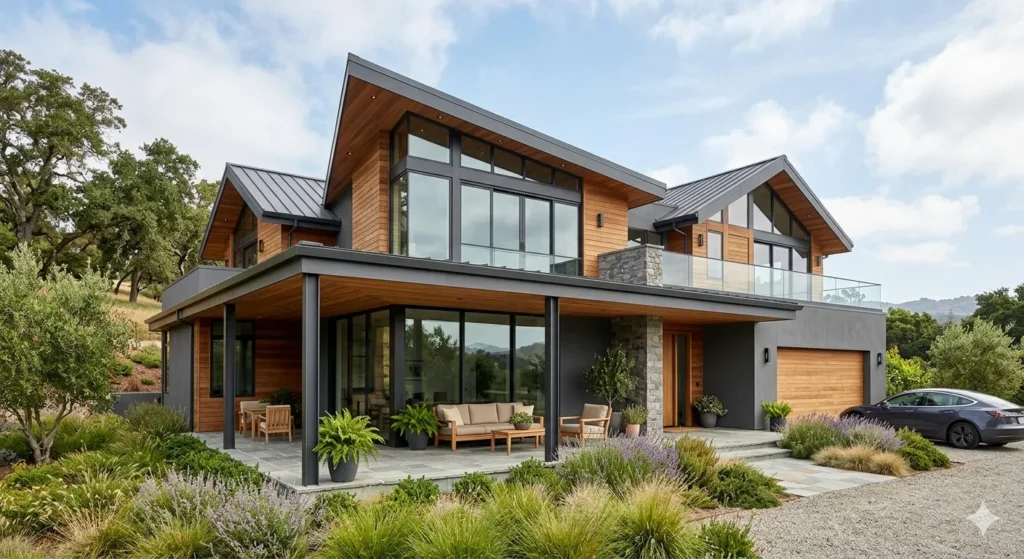
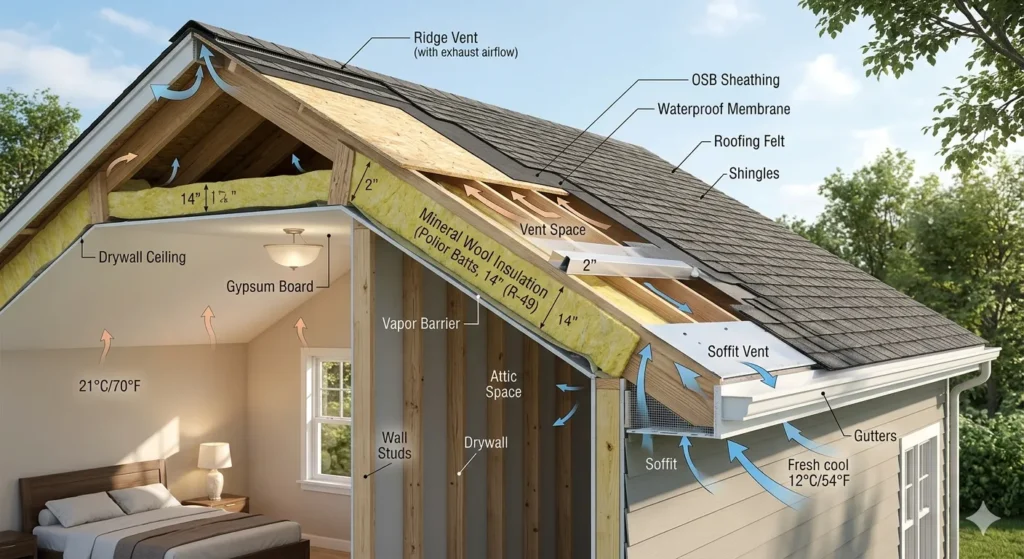
A residential architect who designs for Amravati’s conditions rather than for a generic Indian city context makes specific decisions that show up in the built result. The roof gets a proper pitch and adequate overhang — not a flat concrete surface that absorbs maximum solar radiation in June and creates waterproofing vulnerabilities in the monsoon. The principal rooms are oriented to receive the morning light that is pleasant and manageable rather than the afternoon western sun that makes rooms genuinely uncomfortable from 2 PM through 6 PM in April and May. The veranda runs along the facade that most needs shading. The wall thickness is chosen with thermal mass in mind, not just with structural requirement.
These are the decisions that separate a designed Amravati home from a built one. They cost nothing in terms of materials — they’re design decisions, not specification upgrades — but they require an architect who thinks about them rather than a draftsman who fills the plot efficiently.
The Veranda in an Amravati Home: Not Optional
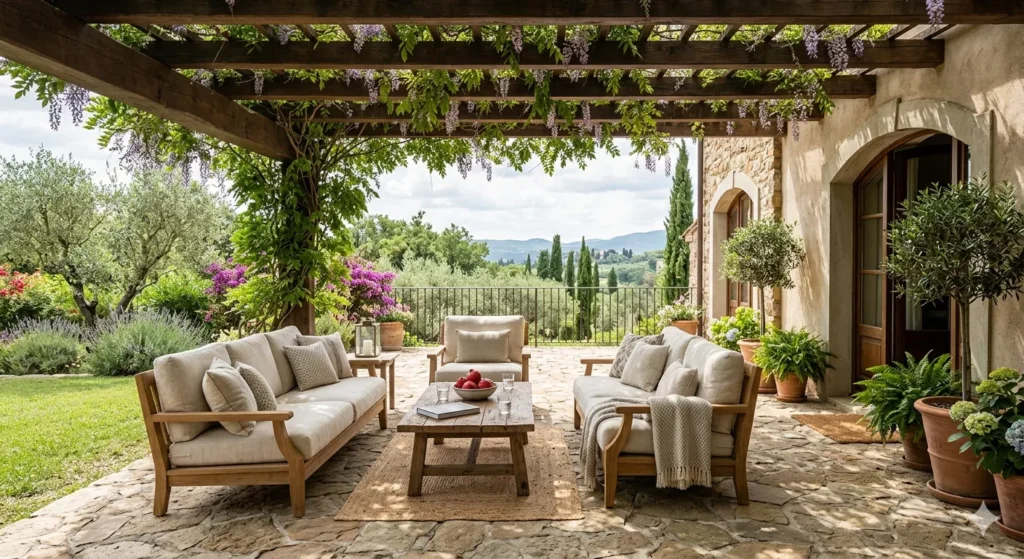
If there’s one element in an Amravati residential design that is genuinely non-negotiable from a climate-responsive standpoint, it’s the covered veranda. This isn’t a heritage affectation or a stylistic preference — it’s a practical response to the city’s conditions that the best of Amravati’s older residential architecture understood and applied consistently.
A covered veranda along the south or east face of an Amravati home does several things simultaneously. It shades the windows and walls behind it from the direct afternoon sun — reducing the heat load on the interior in a physical, measurable way that affects room temperatures for the life of the building. It creates a semi-outdoor social space that is genuinely usable for seven or eight months of the year — the October-through-February period when Amravati’s outdoor conditions are pleasant enough that sitting outside in the evening is one of the better things the city offers. And it gives the home a quality of arrival — a transition from the public street to the private interior — that direct-door-from-boundary-wall construction doesn’t have.
An architect who designs an Amravati home without a proper veranda, without a specific reason for the omission, is either not thinking about where the building is or is prioritising FSI optimisation over the family’s daily quality of life. Ask about it directly in the first meeting. The answer will tell you something about how the architect thinks.
Evaluating Residential Architects in Amravati
Amravati has a more developed architectural practice than smaller Vidarbha towns — the city’s size and institutional character supports more practitioners, and the residential market is active enough to sustain quality practices. But the range of what presents itself as architectural services in Amravati is wide, and the quality range within that presentation is wider than families sometimes expect.
Start with Council of Architecture registration. Every architect signing drawings for plan approval in Amravati’s municipal area must be COA-registered. This is the minimum credential, verifiable online in five minutes.
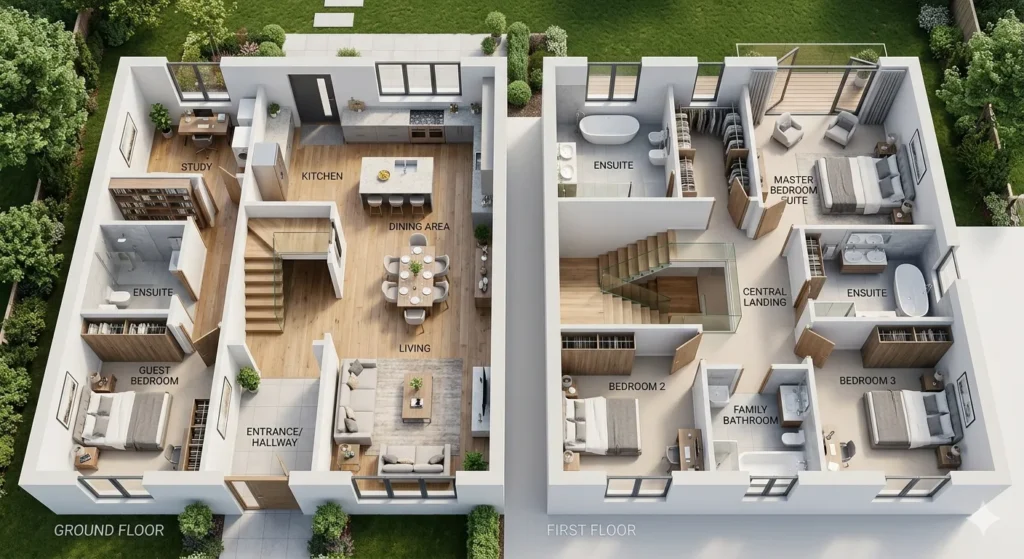
Then visit completed residential projects. Not photographs — buildings. Walk through homes the architect has designed in Amravati or nearby areas. Pay attention not to the decorative elements — those change with each client’s brief — but to the spatial quality. Are the rooms well-proportioned? Does the natural light enter in a way that makes the main rooms pleasant to be in? Does the kitchen layout make practical sense for Indian cooking? Does the entry sequence feel considered or perfunctory? Does the upper floor — if there is one — feel comfortable or was the heat management question clearly never addressed?
Ask specifically about their experience with Amravati Municipal Corporation’s plan approval process. The AMRCL documentation requirements, the sanction timeline, the specific compliance requirements for different zones — these are practical knowledge that determines whether the approval process takes two months or six.
Amravati’s Residential Construction Costs and Architectural Fees
Construction costs in Amravati span a range that reflects both the city’s scale and the variety of specification levels available. Basic to mid-range specification — standard vitrified flooring, painted walls, standard sanitary fittings — runs approximately ₹1,900 to ₹2,600 per square foot. Premium specification — natural stone flooring in principal areas, quality kitchen and bathroom specification, premium external finishes — approaches ₹2,800 to ₹3,500 per square foot.
Architectural fees for residential work in Amravati typically run 6 to 10 percent of construction cost. For a 2,800 square foot home at ₹2,300 per square foot construction cost — total ₹64.4 lakhs — the architectural fee is approximately ₹3.9 to ₹6.4 lakhs. For what this fee produces — a home that’s been genuinely designed for your family’s life and for Amravati’s specific conditions — it represents a sound return on a comparatively modest investment within the total project budget.
The New Residential Areas of Amravati Worth Knowing
The residential development in Amravati’s newer areas has been concentrated in specific corridors that families building homes today are actively choosing. Badnera Road has seen significant plotted development with improving infrastructure. The areas around the MIDC and the new township developments on the city’s periphery are attracting families who want newer construction quality and more generous plot sizes than the older city neighbourhoods offer. Chandur Road and the areas extending toward Paratwada have also seen residential development activity.
Each of these corridors has its own infrastructure maturity, connectivity character, and community development stage. A good Amravati architect will have opinions about which corridors are at the right stage for serious residential investment and what the design considerations specific to each location are — drainage, road levels relative to plot levels, utility reliability, open space provision. These contextual opinions are part of what local architectural expertise provides.
FAQs: Top Home Architects in Amravati
Q1. Is plan approval from AMC mandatory for all residential construction in Amravati?
Yes. All construction within Amravati Municipal Corporation limits requires plan sanction from the AMC before construction begins. Drawings must be prepared and signed by a COA-registered architect. Construction without approved plans creates legal complications for property registration, occupancy certification, and resale.
Q2. What is the typical plan approval timeline in Amravati?
For straightforward residential proposals that comply with Amravati’s development control regulations, plan sanction typically takes six to twelve weeks from complete documentation submission. An architect with established AMC relationships and experience with their documentation requirements moves through this process more efficiently than one navigating it for the first time.
Q3. What is the most common architectural mistake in Amravati’s newer residential construction?
Inadequate roof design for both the thermal and monsoon challenges. Flat roofs without proper insulation transfer extreme summer heat into upper floor rooms, and flat roofs without proper waterproofing systems and drainage develop the leakage problems that are persistent and expensive in Amravati’s monsoon context.
Q4. How do I distinguish a genuine architectural practice from a draftsman service in Amravati?
Ask for COA registration. Ask to visit completed projects. Ask for a description of the design process from brief to completion — a genuine architect describes a thinking process, not just a drawing process. And pay attention to whether the architect asks about your family’s life before presenting any design ideas. That initial listening is the signal of a design-oriented practice.
Q5. Should I hire an architect from Amravati specifically, or consider practitioners from Nagpur or Pune?
Amravati-based architects have the local municipal process knowledge, local contractor relationships, and local climate context familiarity that matters for a residential project here. Practitioners from larger cities may bring exposure to wider design vocabularies but lack this local knowledge. For most Amravati residential projects, local practice experience with strong design capability is the right combination to look for.
Planned Right. Built to Last.
Designing a home in Amravati starts with a strong architectural vision that responds to climate, space, and long-term living.
QC Interiors delivers practical layouts, efficient planning, and modern architectural solutions tailored for durability and comfort.
Plan smart. Build right.
Serving: Amravati, Maharashtra 📞 +91 7798153303
