
Top Architects for Homes in Arni — What Families Here Need Before They Build Anything
Arni is one of those Yavatmal district towns that carries more substance than its size suggests. The agricultural economy that drives this part of Vidarbha — cotton, soybean, the seasonal trading activity that moves through the town’s markets — has created a commercial life here that translates directly into residential investment. Families in Arni build homes with the same seriousness that they bring to everything else. A home here isn’t an apartment in a developer complex that could be anywhere. It’s a building that sits on land the family owns, that will carry the family’s name, and that three generations might live in before anyone thinks about changing something significant.
That weight of permanence is exactly why the architect question matters so much here. And yet most Arni families approach it with less rigour than the decision deserves. The contractor who offers to “handle the drawings” gets the job. The draftsman who’s done twenty similar homes in the same layout produces the twenty-first. The result is a building — solid enough, functional enough — but never quite a home in the designed sense. Never quite right in ways the family feels but can’t always name.
If you’ve ever walked into a well-designed home and felt the difference immediately — the way the light enters the living room, the way the kitchen makes sense, the way the entry feels welcoming rather than abrupt — you’ve experienced what architectural thinking produces. It’s not magic. It’s the result of someone spending serious time understanding how a family lives and translating that understanding into the organisation of a building. In Arni, that kind of thinking is available if you know where to look and what to ask for.
Top Architects for Homes in Arni
What Arni’s Climate Demands of Its Homes
Arni sits in Vidarbha in a way that makes its climate one of the primary design challenges any architect has to address. Summers here are genuinely severe — April and May temperatures that push to 44 or 45 degrees, direct sun that makes west-facing rooms difficult to occupy in the late afternoon, a heat load on the roof surface that translates directly into upper-floor room temperatures without proper insulation design.
The monsoon brings its own demands. Arni receives meaningful rainfall, and buildings that aren’t designed with drainage, waterproofing, and roof pitch as genuine priorities develop the leakage and damp problems that are expensive and disruptive to fix after construction. The winter is comparatively mild but cool enough that thermal comfort in the cold direction matters for the three months from December through February.
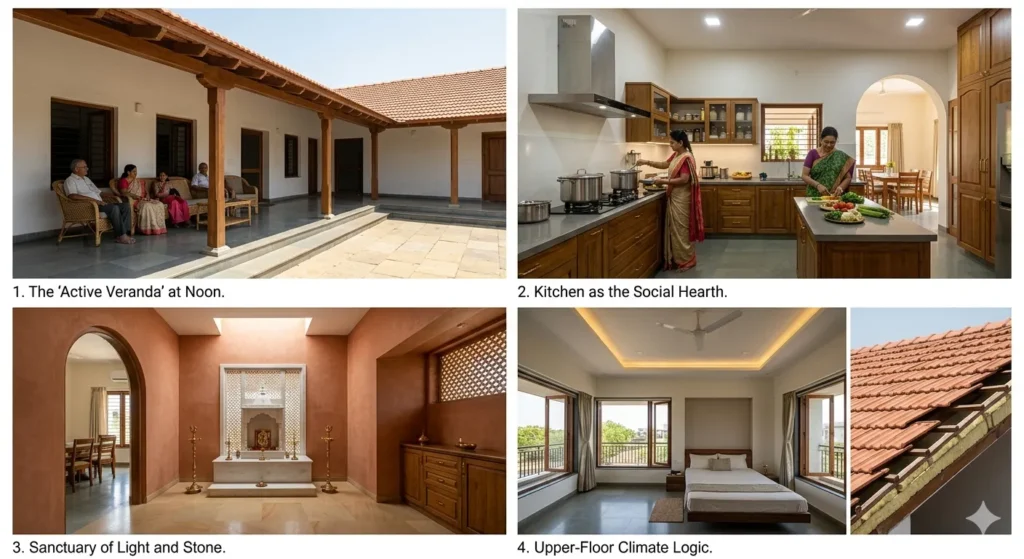
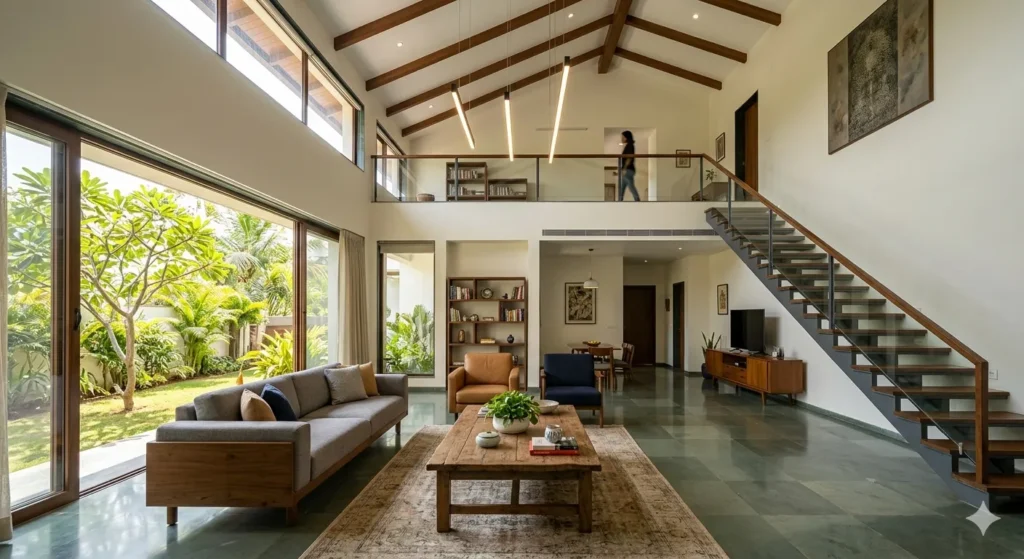
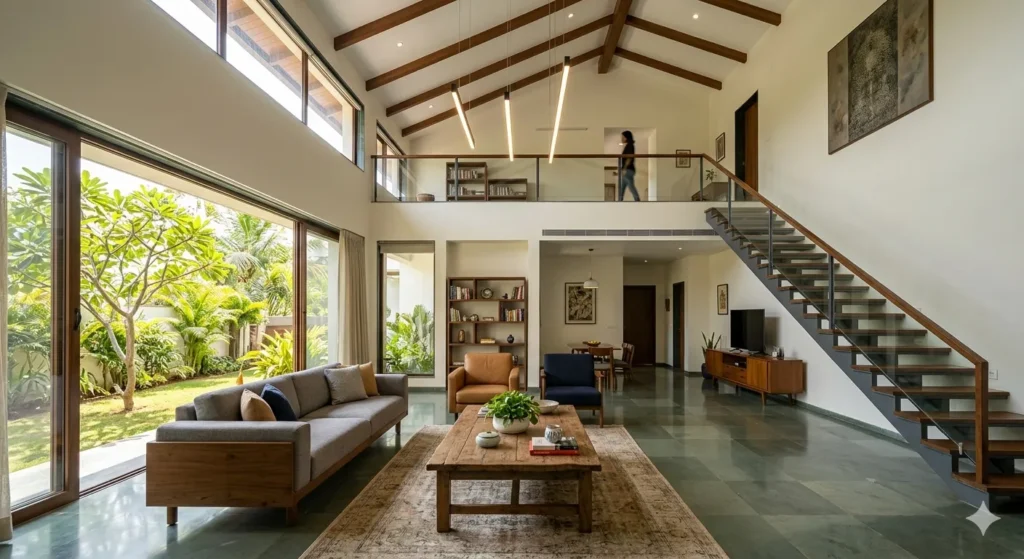
A residential architect who understands Arni’s conditions designs differently from one who works from a generic template. The roof gets a proper pitch and adequate overhang rather than a flat concrete surface that absorbs heat in summer and challenges waterproofing every monsoon. The principal rooms face orientations that receive the best light at the most useful times and can be shaded from the worst summer exposure. The veranda — the covered outdoor space that every Arni home should have — runs along the facade that needs shading most and creates the transitional social space that Vidarbha’s October-through-February evenings make so valuable.
These are not complicated principles. But they are principles that need to be applied deliberately, and a contractor-led design process doesn’t apply them — it fills the plot efficiently and accepts whatever climatic consequences follow.
The Veranda: Arni’s Most Important Residential Design Element
No single element in an Arni home design matters more than the veranda, and yet it’s the element most commonly either omitted or reduced to a token gesture in contractor-led construction. Let’s be specific about why this is a mistake.
In Arni’s climate, the covered veranda running along the south or east face of the home does several things at once that no other design element replicates. It shades the windows and walls behind it from direct summer sun — reducing the heat load on the interior by a meaningful physical amount rather than just providing visual interest. It creates a semi-outdoor space that is genuinely usable from September through March — the space where the evening gathering happens, where the morning chai gets drunk, where guests sit when the drawing room feels too formal. And it gives the home its sense of arrival — the transition from the public world outside to the private world inside that makes a home feel like a home rather than a building with a door.
An Arni home designed without a proper veranda is a home that has given away its most valuable outdoor asset. An architect who includes it as a genuine element — properly dimensioned, correctly oriented, connected to the main social rooms in a way that makes it a natural extension of the home’s daily life — is designing for where the building actually is and how its occupants actually live.
What to Actually Look For When Hiring an Architect in Arni
The licensed architectural practice in Arni and the Yavatmal district is a small ecosystem. There are qualified practitioners, draftsmen presenting themselves as architects, and contractors who offer design as part of their construction service. Distinguishing between these categories requires specific questions.
Start with Council of Architecture registration. Any architect signing drawings for municipal submission must be COA-registered. Ask for the registration number. Verify it. This takes five minutes and confirms the minimum professional standard.
Then visit completed work. Not photographs — buildings. Walk through homes the architect has designed and pay attention to how they feel from the inside. Does the living room light make you want to sit in it? Does the kitchen layout make sense for how Indian families actually cook? Does the entry sequence feel welcoming or perfunctory? Do the bedrooms have the quality of quiet and privacy a bedroom needs? These experiential questions reveal design quality in ways that no portfolio conversation does.
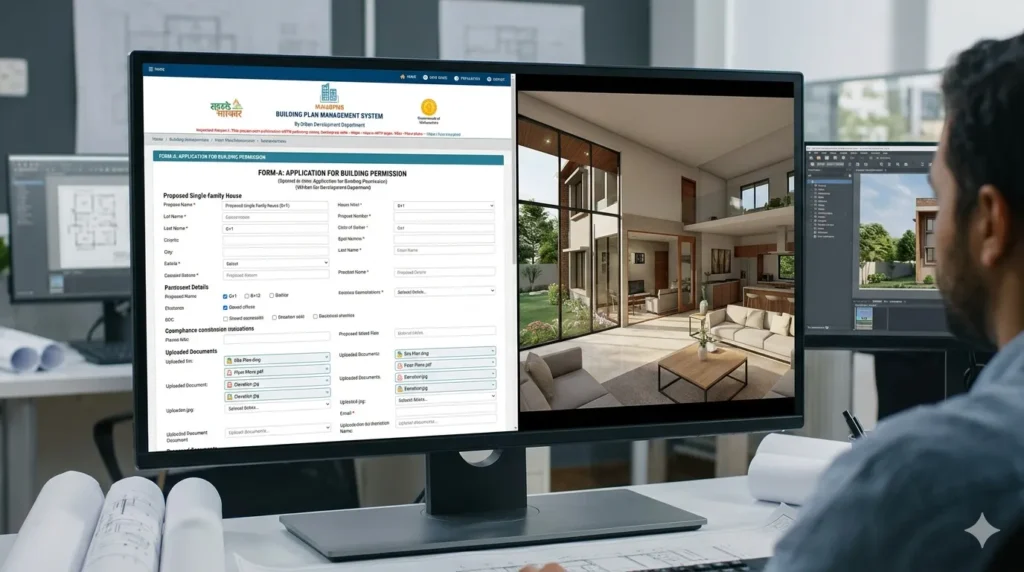
Ask about their specific knowledge of Arni’s municipal approval process — the documentation requirements, the local body’s processing timelines, the people in the system who need to be worked with competently. An architect who navigates this process fluently saves you months compared to one who’s learning it on your project.
Construction Costs and Fees in Arni
Construction costs in Arni in 2025-26 range from approximately ₹1,700 to ₹2,500 per square foot at mid to good specification. Architectural fees typically run 5 to 9 percent of construction cost. For a 2,000 square foot home at ₹2,000 per square foot — ₹40 lakh construction cost — the architectural fee is approximately ₹2 to ₹3.6 lakhs. This is a small percentage of the total investment and arguably the most consequential decision in it.
FAQs: Top Architects for Homes in Arni
Q1. Is an architect legally required for home construction in Arni? Yes. Maharashtra’s building regulations require that drawings submitted for municipal plan sanction carry the signature of a Council of Architecture registered architect. Construction without approved plans creates legal complications for registration and resale.
Q2. What’s the difference between an architect and a civil engineer for residential work in Arni? A licensed architect is trained in spatial and building design — how the home is organised, oriented, and experienced. A structural engineer is trained in structural design — columns, beams, slabs, foundations. A well-designed home typically needs both. The architect leads the design; the structural engineer ensures the structure is safe and correctly specified.
Q3. How long does plan approval take in Arni’s local body? Typically four to eight weeks for straightforward residential proposals that comply with applicable regulations. An architect familiar with the Arni approval process moves through it more efficiently than one approaching it for the first time.
Q4. Can I make my own layout choices and just have an architect draw them up? Yes, and many Arni families approach it this way. A good architect, however, will engage with your layout choices critically — pointing out where they create problems and suggesting alternatives that you may not have considered. The value of the architectural engagement isn’t just in the drawing. It’s in the thinking behind it.
Q5. Should I hire a local Arni architect or someone from Yavatmal or Nagpur? Relevant regional experience matters more than location. An architect from Yavatmal or Nagpur who has completed residential projects in Arni or similar Vidarbha towns — and understands the local climate, approval process, and contractor ecosystem — will serve you better than one without this regional context regardless of where their office is.
Built Strong. Designed Smart.
Building a duplex house in Arni is not limited to just building walls; you need to build it that sustains extreme summers and heavy monsoons while you maintain its comfort and elegance.
At QC Interiors we inspire smart design and durability while blending refined aesthetics with intimate experience of the area. It does not just provide a polished appearance, this is an investment in the long term durability and sustainability of your spaces.
Choose not to compromise; create the home your family truly deserves, a home built on precision, quality craftsmanship and design.
QC Interiors
Serving: Arni, Yavatmal
Expertise — Complete Home Interior Design | Designing Architecture | Turnkey Constructions
📞 +91 7798153303
Schedule your consultation now and take a virtual tour of your future home down to every last detail in 3D—before the first beam is laid.
