
Residential Interior Designers in Wardha — How to Find the Right Person and Get the Result Your Home Deserves
Every Wardha family that undertakes a serious home renovation or interior fit-out project has to navigate the same fundamental question: who should design this, and how do I know whether they’re genuinely capable of delivering what I’m imagining?
In a city of Wardha’s scale, this navigation is more personal and more manually intensive than in a larger city where market scale does some of the filtering work. The interior design market in Wardha is developing — it has more genuine capability than it did five years ago, and the standard of what families are expecting has risen correspondingly — but the range between excellent and adequate within what presents itself as “interior design services” is wide. The marketing quality of a practice, the attractiveness of their Instagram profile, or the confidence of their self-presentation tells you relatively little about whether they will produce the result you’re hoping for.
What does tell you, reliably, is their completed work — visited in person, assessed with specific physical attention, and confirmed through conversations with the families who commissioned it. This article gives you the framework for doing that assessment properly and for structuring the engagement in a way that protects your investment and your expectations.
Residential Interior Designers in Wardha
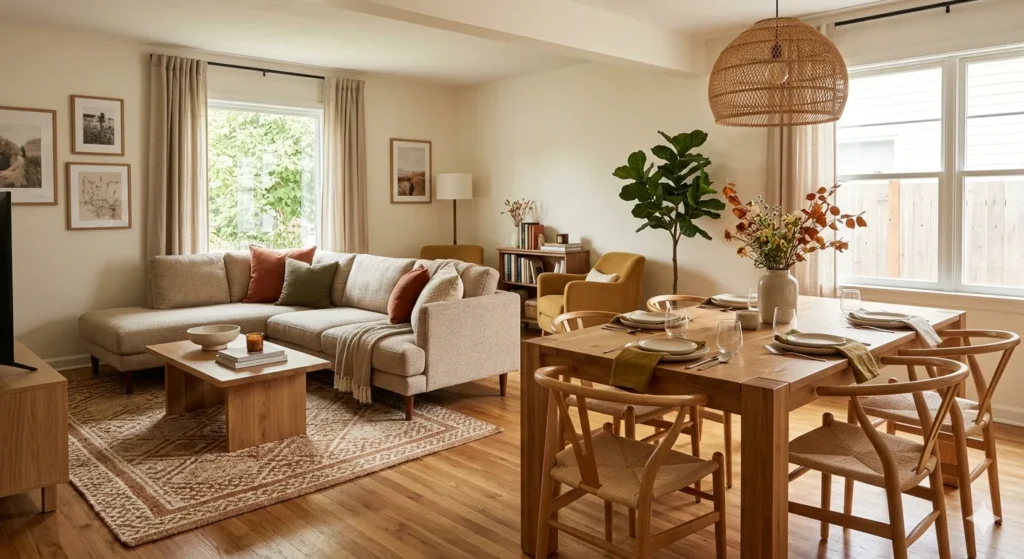
What Wardha’s Residential Interior Design Market Offers
The residential interior design services available to Wardha families span a range that’s worth understanding before engaging anyone.
At the comprehensive end: design practices — some Wardha-based, some from Nagpur who service the Wardha market — that provide a complete design service from thorough brief through complete design proposal to supervised execution management. These practices produce homes that are genuinely designed — where every material choice, every spatial decision, every lighting element was made deliberately as part of a coherent vision. For whole-home projects with budgets above ₹12 to ₹15 lakhs, this level of engagement is the appropriate choice.
In the middle: practitioners who bring good design direction and material guidance but leave more execution management to the family or the contractor. The design quality can be high, but the execution quality depends significantly on contractor capability and the family’s own involvement in the project.
At the basic end: contractors who have incorporated “interior design” into their service description, furniture sellers who offer free design with purchase, and hardware suppliers who provide room layouts as part of their sales process. These services have legitimate uses at limited budget levels but don’t constitute interior design in the sense that produces homes of lasting quality at significant investment levels.
Knowing which category you’re engaging — and whether that category is the right fit for your specific project — is the first practical decision.
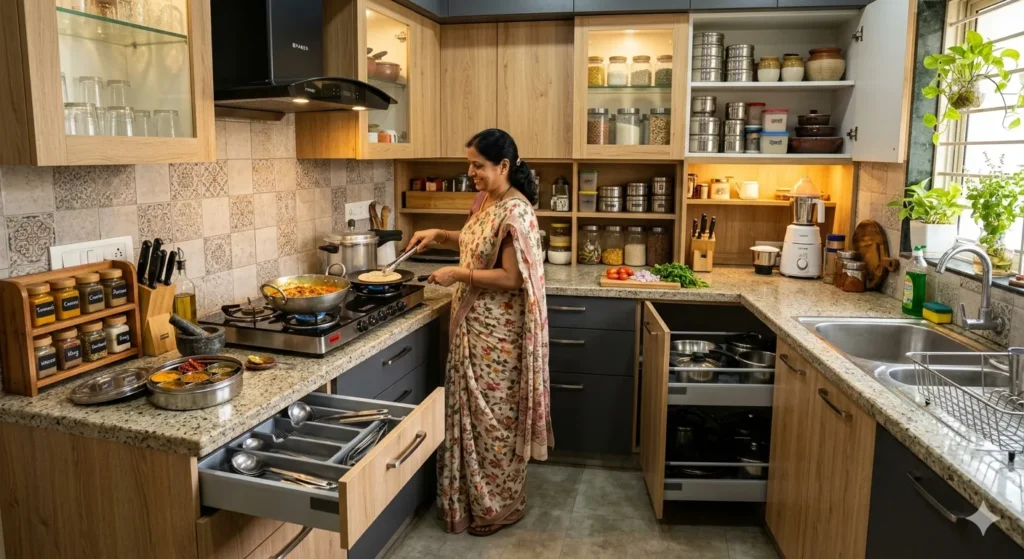
The Design Brief: Why It Matters More Than Most Wardha Families Realise
The brief — the document or conversation that establishes exactly what your family needs from the home and why — is the foundation that determines the quality of everything that follows. Most interior design projects that disappoint their clients can trace the disappointment back to an inadequate brief. Either the family didn’t communicate clearly, or the designer didn’t ask deeply enough, or both.
A complete brief for a Wardha residential interior project covers several dimensions that families sometimes underestimate.
The family’s genuine daily life patterns — not the aspirational version but the real one. How the kitchen is actually used, by whom, at what scale, with what specific cooking requirements. Where the family gathers in the evening — in the drawing room, around the dining table, in the kitchen — because this determines the room’s actual design priorities. How guests come and in what numbers and for what occasions. What specific things about the current home cause daily friction that the renovation should solve.
The aesthetic preferences that the family genuinely holds — communicated honestly through images, through homes they’ve visited and responded to, through the material quality they value physically. A family that is drawn to warm natural materials and earthy colours should say so clearly, not present a reference image of a cool minimal white interior because it seemed more sophisticated to the designer.
The budget — honestly stated, with a genuine contingency included. The family that states a budget 30 percent below their actual capacity in an attempt to keep costs down will get a design that either requires painful scope reductions or that compromises quality in ways that show up in daily use for years.
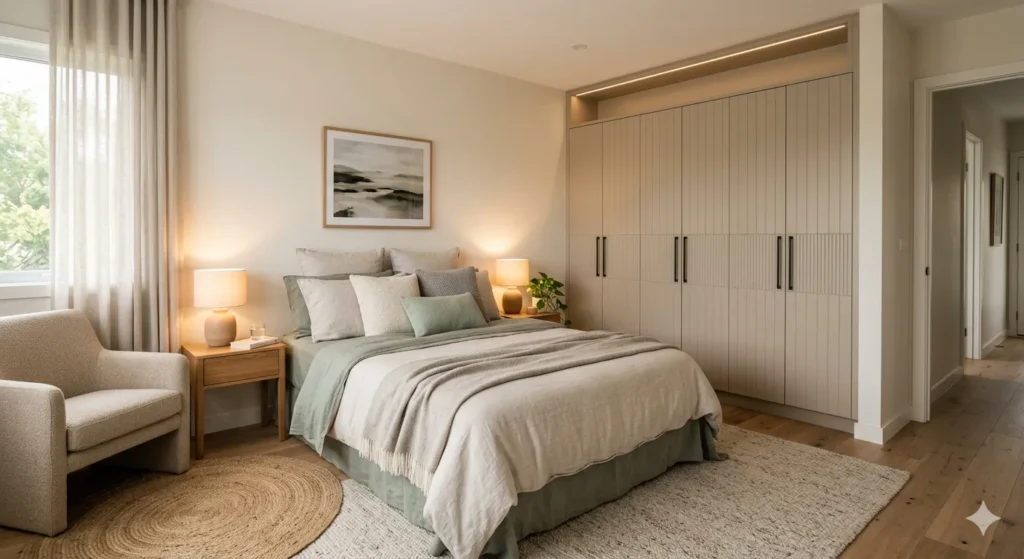
How to Evaluate Residential Interior Designers in Wardha
The word-of-mouth referral network in Wardha is the most reliable starting point. Ask families whose homes you’ve visited and found genuinely impressive who designed their interior, and ask specifically whether they would hire the same designer again without hesitation. The word “without hesitation” matters — it accounts for the full experience, including how the designer communicated, how they handled problems, and whether the project came in within the stated timeline and budget, not just whether the visual result was satisfying.
Visit completed projects in person. This is the evaluation step that produces the most honest information and the one that most Wardha families shortcut. A project visit — not a site visit during construction, but a visit to a completed home that has been lived in for at least a year — reveals things that photographs never show. Open the kitchen cabinets and check the drawer runners. Look at the false ceiling joints at the wall junctions. Inspect the bathroom tile work at corners and base junctions. These details reveal execution quality honestly and tell you whether the contractor this designer uses actually builds to the specified standard.
In the first meeting with any designer you’re considering, pay close attention to how they begin. A designer who asks careful questions about your family’s life, your specific needs from each room, and your specific aesthetic preferences before showing you any of their previous work is demonstrating a client-centred approach. A designer who leads with their portfolio and asks which elements appeal to you is proposing to produce a variation on their previous work rather than a response to your specific brief.
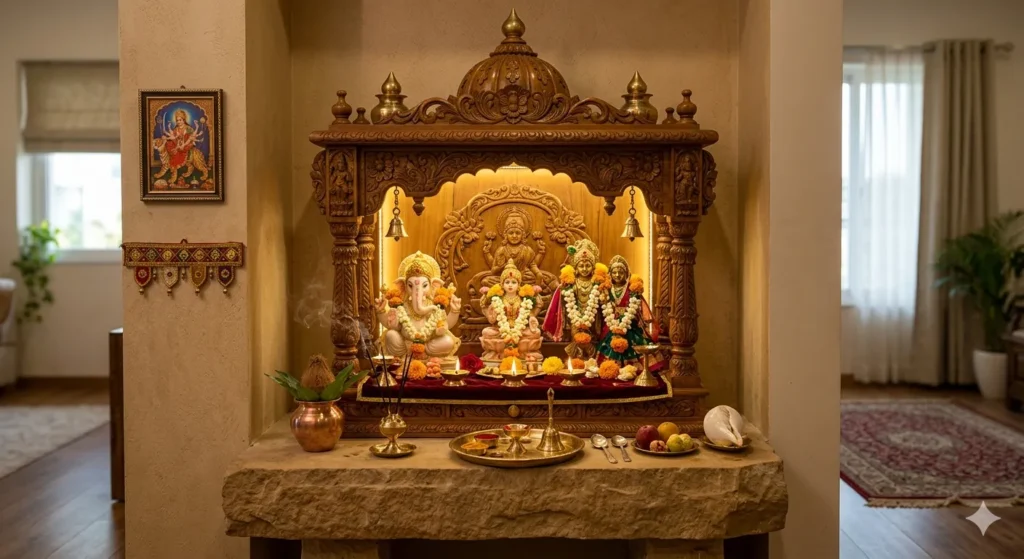
The Pooja Space: Getting Wardha’s Most Significant Interior Element Right
In most city interior design conversations, the pooja room is a standard element mentioned in passing. In Wardha, it deserves specific emphasis.
Wardha is a city where the daily spiritual life of its families is genuine, consistent, and important. The puja space — whether a dedicated room in a larger home or a carefully designed alcove in an apartment or smaller house — is used every morning, every evening, and on every significant occasion. It is the room or space that the family’s daily routine is anchored to, and in Wardha’s cultural context, its design quality communicates something specific about the family’s values.
Getting the puja space right in a Wardha home means natural stone or marble for the platform — not a laminate shelf, not a standard joinery unit, but a material that has weight and significance and that handles daily ritual use without deteriorating. Warm, soft lighting from within the alcove or from concealed LED above the idol level — not harsh overhead light that makes the space feel clinical. Storage for ritual materials — the agarbatti, the oil, the flower offerings, the puja vessels — that keeps the space ordered without cluttering its visual quality. A door treatment for a dedicated puja room that allows the space to be closed appropriately while remaining a beautiful element of the home when open.
This is not a complex design challenge. It requires genuine attention and an understanding of what the space is for. An interior designer who treats it as a checkbox on the room list has not understood the Wardha brief.
Budget and Timeline Benchmarks for Wardha
2BHK home, mid-range specification: ₹8 to ₹13 lakhs. 3BHK, mid-range specification: ₹11 to ₹18 lakhs. 3BHK at premium specification with flooring upgrade, all bathrooms, architectural lighting: ₹20 to ₹34 lakhs. Large independent bungalow, comprehensive renovation at premium specification: ₹32 to ₹60 lakhs. Interior design fee: 8 to 13 percent of fit-out cost.
Timeline for complete 3BHK renovation: three to five months from design finalisation. Design and planning phase: four to six weeks before work begins. Total process from brief to occupying the renovated home: five to seven months.
FAQs: Residential Interior Designers in Wardha
Q1. What is the single question that best reveals whether a Wardha interior designer is genuinely capable? Ask them to describe their process for developing a colour palette for a specific Wardha home — how they account for the room’s orientation, the time of day the room is most used, and the quality of Wardha’s summer light. A designer with genuine Vidarbha residential experience gives a specific, knowledgeable answer. A designer without it gives a generic answer about warm and cool tones. The specificity of the answer tells you whether they’ve actually solved this problem in completed Wardha projects.
Q2. What is the most common execution quality failure in Wardha interior renovations? Material substitution by contractors after project commencement — replacing specified materials with cheaper alternatives, often without the family’s knowledge, between the specification agreement and the installation. The prevention is materials specified in writing by brand and product code, deliveries inspected on site before installation, and a designer managing the project who has the authority and the habit of requiring compliance with the specification.
Q3. How do I handle a situation where my interior renovation in Wardha is running significantly over the contractor’s stated timeline? Establish a revised timeline with specific stage completion dates and connect the payment schedule to stage completions rather than to dates. A contractor who isn’t meeting stage completion dates doesn’t receive the next payment until the stage is complete. This payment-for-performance structure is the most effective practical lever available to the family and the designer.
Q4. Is it worth the additional cost to include natural stone flooring in a mid-range Wardha interior renovation? Yes, for the principal social areas. The additional cost of Kota stone over standard vitrified tile in the drawing room and dining area — typically ₹80 to ₹150 per square foot for material and installation — is recovered in the material’s longevity, its daily physical quality underfoot, and the quality register it sets for the home’s entire interior. It’s one of the most cost-effective upgrades available within a renovation budget.
Q5. What should I do if I’m midway through an interior renovation in Wardha and dissatisfied with the quality of work being done? Stop the next payment. Request a formal quality review meeting with the contractor and the designer present. Identify every specific deficiency in writing with photographs. Set a specific timeline for corrections before work continues. If the contractor is unwilling to correct deficiencies before proceeding, this is the signal to reassess the contractor engagement before more money and more work compounds the problem. Acting early on quality concerns is significantly less costly than discovering and addressing them at project completion.
Strong Foundations. Smart Living.
Building a duplex in Wardha is more than construction—it’s about creating a home that withstands harsh summers and heavy rains while staying comfortable year-round.
QC Interiors combines smart planning, durable construction, and modern design to deliver homes that last and impress.
Build with confidence. Build with QC Interiors.
Serving: Wardha
📞 +91 7798153303
