
Modern Duplex Plans in Pandharkawada — How Two-Storey Home Design Works and What Separates Good Plans From Generic Ones
The duplex home has become the preferred residential typology for a growing number of families in Pandharkawada, and the reasons are straightforward. As the town has grown and residential land in established areas has become more expensive, the arithmetic of building upward has become more compelling. A family that previously might have built a large single-storey home on a 200 square metre plot now often builds a duplex on the same footprint — achieving considerably more livable area with a modest additional construction cost, and typically ending up with a home that feels more contemporary and better organised than the sprawling single-level alternative.
But the word duplex covers a very wide range of outcomes in Pandharkawada’s residential market. At one end is the thoughtfully designed two-storey home where the vertical organisation of space has been genuinely considered — where the staircase is an architectural element, where the distribution of rooms between floors reflects a clear spatial logic, and where the building performs well in Vidarbha’s climate on both floors. At the other end is the building that is simply two floors of identical space stacked one on top of the other with a staircase wedged into a corner. Both are called duplexes. They are not the same thing to live in.
Modern Duplex Plans in Pandharkawada
The Staircase Problem — and Why It Is Actually a Design Opportunity
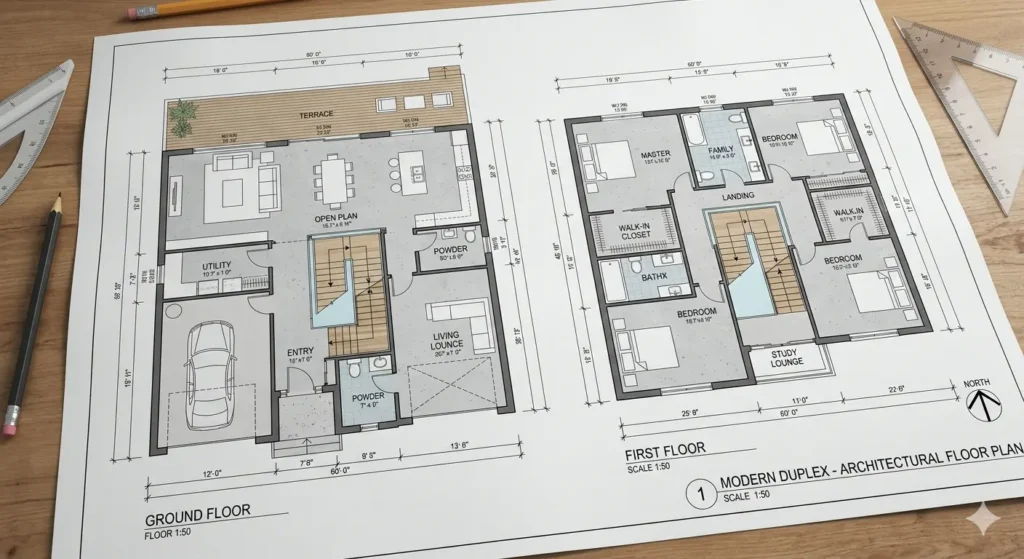
The staircase is where duplex design succeeds or fails most visibly. In a poorly considered plan, the staircase is placed wherever it fits after the rooms have been arranged — usually in a corner, often adjacent to the entrance, consuming floor area in an awkward shape and creating zones on both floors that don’t comfortably belong to the rooms around them. The experience of moving between floors in a staircase like this is functional and nothing more.
In a well-designed duplex, the staircase is planned first, not last. It is the element around which the floor plan is organised, because it is the element that connects the two halves of the building and whose position determines how both floors feel. A staircase placed at the centre of the plan creates a natural organisational spine — rooms on both floors relate to it and to each other in a way that gives the home spatial clarity. A staircase with adequate width — not the minimum permitted width, but a width that is generous enough to feel like a proper part of the home rather than a service passage — transforms the experience of moving through a two-storey building.
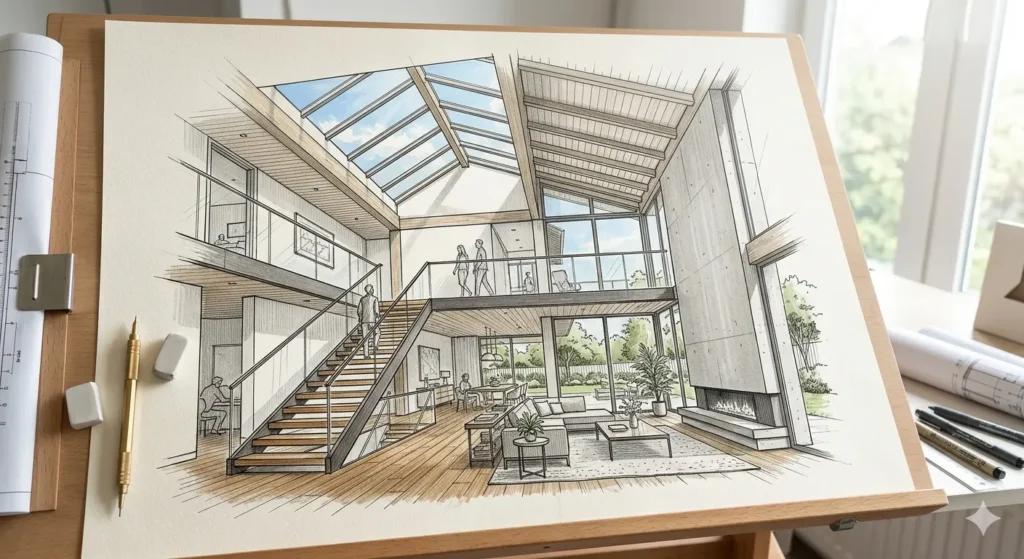
In some duplex designs appropriate for Pandharkawada’s climate, an open staircase that allows light to travel between floors is a powerful design element. A well-placed skylight above the staircase can bring natural light deep into the centre of the building, illuminating spaces that would otherwise be dark and creating a visual connection between the two floors that makes the home feel larger and more coherent than its footprint suggests.
Distributing Rooms Between Floors
The conventional logic of living areas on the ground floor and bedrooms above works for most families, but it needs to be applied with specific thought about the household. Extended family arrangements are common in Pandharkawada, and the distribution of space between floors needs to reflect these arrangements. If elderly parents are part of the household, their bedroom should be on the ground floor — with easy access to the bathroom and to the veranda, without the need to manage a staircase in the night. If the home needs to serve a home-based business or receive clients, the ground floor circulation should allow for this without routing clients through the family’s private spaces.
The puja space in a Pandharkawada home deserves specific consideration in a duplex layout. In many Vidarbha households, this is not a small corner but a room of its own — sometimes the room that anchors the main circulation of the ground floor and that is the first significant space encountered after entering. Its position in the duplex plan, its relationship to the entry and the living areas, and the design qualities that give it the spatial dignity it deserves are all decisions that a thoughtful architect makes deliberately.
Climate Performance in a Pandharkawada Duplex
The upper floor of a duplex in Vidarbha’s climate poses a specific challenge. The roof is the primary source of heat gain in any building, and in a single-storey home the roof directly heats every room below it. In a duplex, the ground floor benefits from having a concrete slab ceiling rather than a roof, which moderates its temperature considerably during summer. The upper floor, however, sits directly under the roof and is exposed to the full force of Pandharkawda’s summer heat.
A flat roof on the upper floor is the worst outcome for thermal performance. A concrete slab with no insulation in direct sun at 44 degrees transfers heat into the rooms below it with little resistance. The right answer for a Pandharkawada duplex is a sloped roof with adequate pitch — enough to create a ventilated air cavity between the slab ceiling and the outer roof surface, or enough pitch to allow proper insulation to be installed — combined with generous overhangs that shade the upper-floor walls from direct sun.
First-floor balconies are the veranda equivalent for the upper level, and they deserve as much design thought. A balcony on the appropriate face of the building — oriented to receive the evening breeze rather than the afternoon sun, with adequate overhead shading from the roof overhang — creates an outdoor space for the upper floor that is genuinely usable for most of the year. In Pandharkawda’s domestic culture, where outdoor living is a significant part of daily life for much of the year, this is not a luxury addition. It is a fundamental part of what makes a duplex livable.
The Elevation of a Pandharkawada Duplex
The exterior of a duplex is an opportunity to create a home with genuine visual presence in its neighbourhood. The two-storey height gives the building a prominence that a single-storey building on the same plot doesn’t have, and a well-designed facade uses this prominence thoughtfully.
The duplex home has become the preferred residential typology for a growing number of families in Pandharkawada, and the reasons are straightforward. As the town has grown and residential land in established areas has become more expensive, the arithmetic of building upward has become more compelling. A family that previously might have built a large single-storey home on a 200 square metre plot now often builds a duplex on the same footprint — achieving considerably more livable area with a modest additional construction cost, and typically ending up with a home that feels more contemporary and better organised than the sprawling single-level alternative.
But the word duplex covers a very wide range of outcomes in Pandharkawada’s residential market. At one end is the thoughtfully designed two-storey home where the vertical organisation of space has been genuinely considered — where the staircase is an architectural element, where the distribution of rooms between floors reflects a clear spatial logic, and where the building performs well in Vidarbha’s climate on both floors. At the other end is the building that is simply two floors of identical space stacked one on top of the other with a staircase wedged into a corner. Both are called duplexes. They are not the same thing to live in.
The Staircase Problem — and Why It Is Actually a Design Opportunity
The staircase is where duplex design succeeds or fails most visibly. In a poorly considered plan, the staircase is placed wherever it fits after the rooms have been arranged — usually in a corner, often adjacent to the entrance, consuming floor area in an awkward shape and creating zones on both floors that don’t comfortably belong to the rooms around them. The experience of moving between floors in a staircase like this is functional and nothing more.
In a well-designed duplex, the staircase is planned first, not last. It is the element around which the floor plan is organised, because it is the element that connects the two halves of the building and whose position determines how both floors feel. A staircase placed at the centre of the plan creates a natural organisational spine — rooms on both floors relate to it and to each other in a way that gives the home spatial clarity. A staircase with adequate width — not the minimum permitted width, but a width that is generous enough to feel like a proper part of the home rather than a service passage — transforms the experience of moving through a two-storey building.
In some duplex designs appropriate for Pandharkawada’s climate, an open staircase that allows light to travel between floors is a powerful design element. A well-placed skylight above the staircase can bring natural light deep into the centre of the building, illuminating spaces that would otherwise be dark and creating a visual connection between the two floors that makes the home feel larger and more coherent than its footprint suggests.
Distributing Rooms Between Floors
The conventional logic of living areas on the ground floor and bedrooms above works for most families, but it needs to be applied with specific thought about the household. Extended family arrangements are common in Pandharkawada, and the distribution of space between floors needs to reflect these arrangements. If elderly parents are part of the household, their bedroom should be on the ground floor — with easy access to the bathroom and to the veranda, without the need to manage a staircase in the night. If the home needs to serve a home-based business or receive clients, the ground floor circulation should allow for this without routing clients through the family’s private spaces.
The puja space in a Pandharkawada home deserves specific consideration in a duplex layout. In many Vidarbha households, this is not a small corner but a room of its own — sometimes the room that anchors the main circulation of the ground floor and that is the first significant space encountered after entering. Its position in the duplex plan, its relationship to the entry and the living areas, and the design qualities that give it the spatial dignity it deserves are all decisions that a thoughtful architect makes deliberately.
Climate Performance in a Pandharkawada Duplex
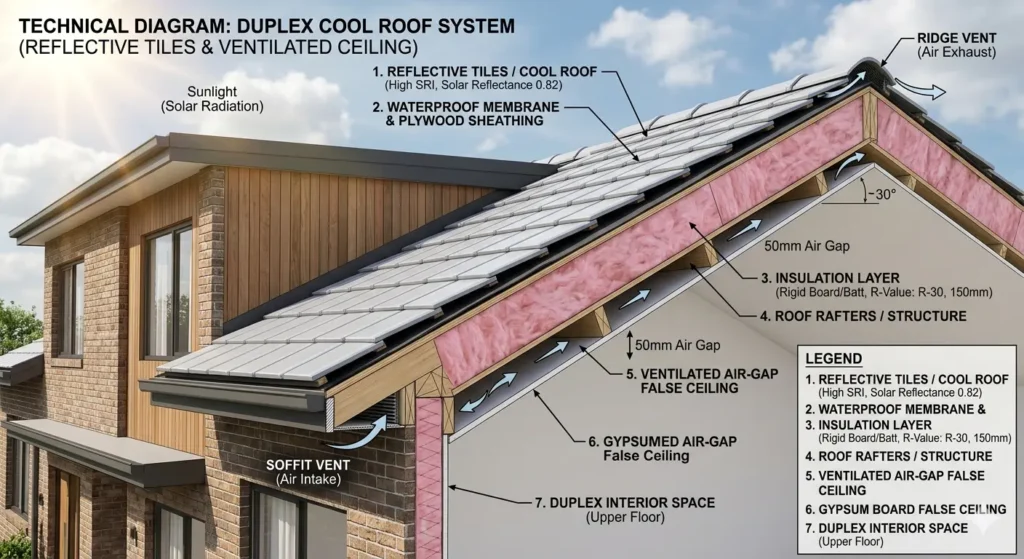
The upper floor of a duplex in Vidarbha’s climate poses a specific challenge. The roof is the primary source of heat gain in any building, and in a single-storey home the roof directly heats every room below it. In a duplex, the ground floor benefits from having a concrete slab ceiling rather than a roof, which moderates its temperature considerably during summer. The upper floor, however, sits directly under the roof and is exposed to the full force of Pandharkawda’s summer heat.
A flat roof on the upper floor is the worst outcome for thermal performance. A concrete slab with no insulation in direct sun at 44 degrees transfers heat into the rooms below it with little resistance. The right answer for a Pandharkawada duplex is a sloped roof with adequate pitch — enough to create a ventilated air cavity between the slab ceiling and the outer roof surface, or enough pitch to allow proper insulation to be installed — combined with generous overhangs that shade the upper-floor walls from direct sun.
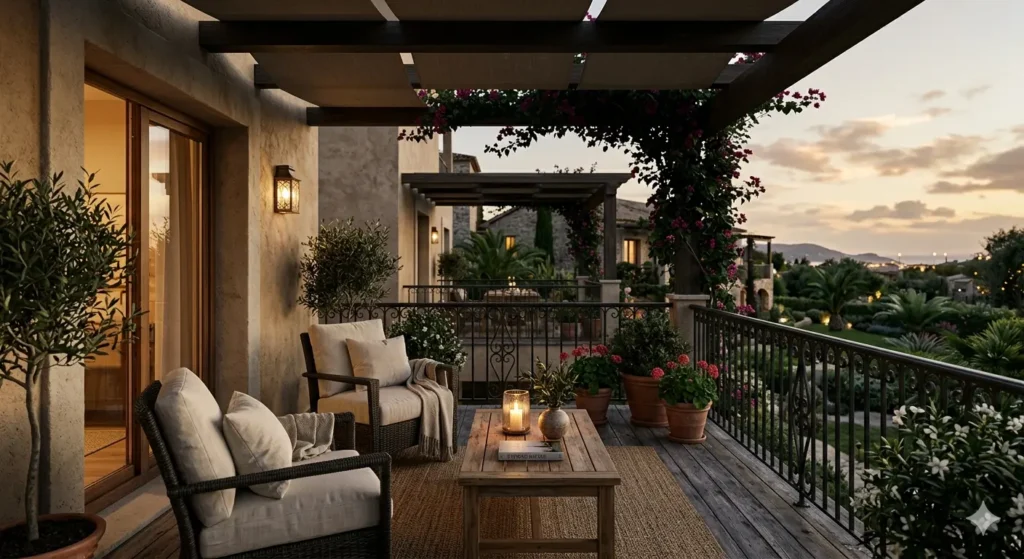
First-floor balconies are the veranda equivalent for the upper level, and they deserve as much design thought. A balcony on the appropriate face of the building — oriented to receive the evening breeze rather than the afternoon sun, with adequate overhead shading from the roof overhang — creates an outdoor space for the upper floor that is genuinely usable for most of the year. In Pandharkawda’s domestic culture, where outdoor living is a significant part of daily life for much of the year, this is not a luxury addition. It is a fundamental part of what makes a duplex livable.
The Elevation of a Pandharkawada Duplex
The exterior of a duplex is an opportunity to create a home with genuine visual presence in its neighbourhood. The two-storey height gives the building a prominence that a single-storey building on the same plot doesn’t have, and a well-designed facade uses this prominence thoughtfully.
Constructing a duplex house in Pandharkawada is not merely a process of building; it involves forming an environment that endures extreme summers and torrential monsoons. We take smart design, durability and elegance and marry it with deep local expertise to protect your investment for decades at QC Interiors.
Skip the compromise—develop perfectly precise and quality your family should have.
QC Interiors
Serving: Pandharkawada, Yavatmal
Specialisation: Comprehensive Home Interior Design | Architectural Planning | Turnkey Renovations
📞 (+91) 7798153303
Book your consultation now and walk through with our 3D walkthrough of your home before a hammer is lifted!
