
Modern Duplex House Designs in Wani — Getting the Two-Floor Home Right in Vidarbha’s Climate
The duplex house has become the residential ambition that many Wani families are building toward. It represents a specific set of values — the desire for more space than a single-floor home typically provides, the aspiration for a home with visual presence and architectural character, the practical desire to have the private family spaces on an upper floor separated from the public social spaces below. These are real and legitimate aspirations, and the duplex typology serves them well when it’s designed properly.
The question that matters in Wani’s context is what “designed properly” actually means for a two-floor home in a Vidarbha town with extreme summers, significant monsoon rainfall, and a residential culture that centres on large family gatherings and daily hospitality. The answer involves specific design principles that are different from what a standard duplex design in a more temperate city would require — and families in Wani who understand these principles before they start building will get homes they’re genuinely happy in, rather than homes that look right from the outside and disappoint from the inside.
Modern Duplex House Designs in Wani
The Wani Duplex: Typical Configuration and Starting Points
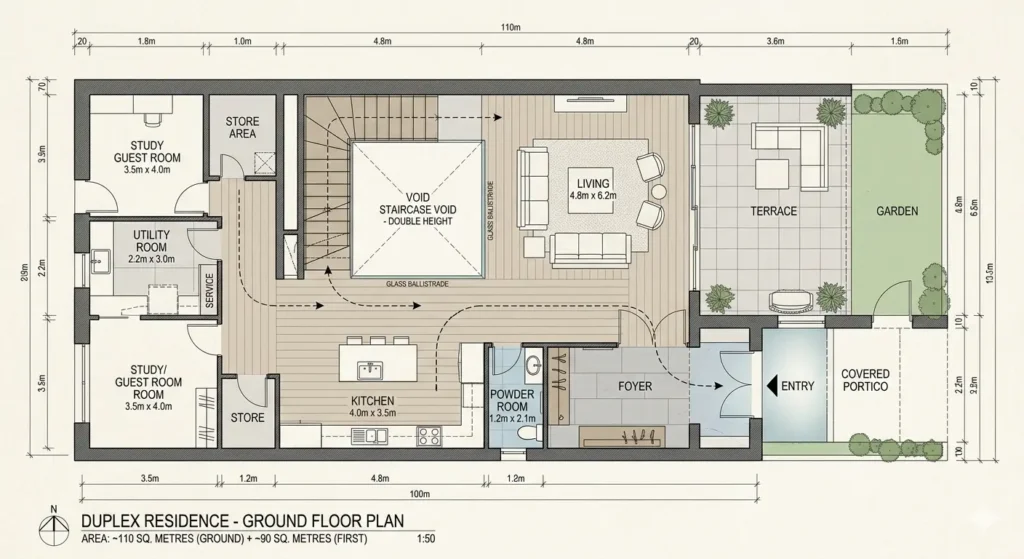
A duplex in Wani is almost always an independent house on a private plot — not a duplex apartment within a larger building. Typical plot sizes for Wani duplex projects range from 150 to 350 square metres, with total built areas across both floors typically between 2,000 and 4,500 square feet.
The ground floor carries the public life of the home: drawing room, dining area, kitchen, a puja room, a guest toilet, and in larger homes a ground-floor bedroom for elderly family members who can’t manage stairs. The upper floor carries the private life: master bedroom with attached bathroom, children’s bedrooms, and the additional bathrooms and storage that the family needs.
The staircase connects these two worlds, and in a well-designed Wani duplex it does so in a way that is architecturally significant rather than merely functional. The staircase is the first thing a visitor sees from the drawing room entry and the element the family uses dozens of times daily. Investing in its design — the tread material, the balustrade, the wall treatment alongside it — is one of the highest-impact investments available in a duplex project.
Climate Considerations Specific to Wani Duplexes
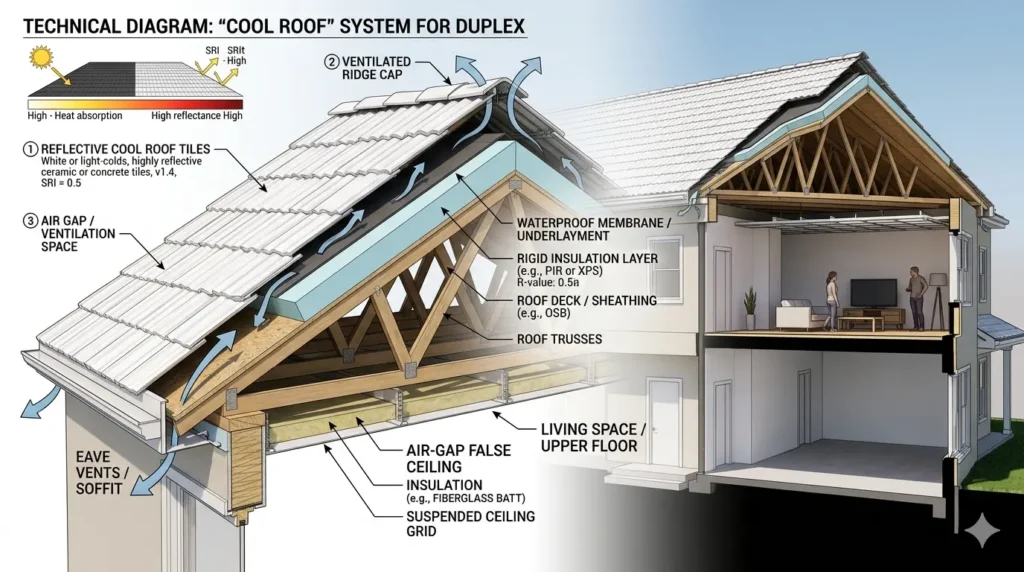
The upper floor heat problem is the most significant design challenge specific to duplex houses in Wani’s climate, and it deserves honest treatment in the design brief rather than being discovered after the house is occupied.
Wani’s summer roof surface temperatures are extreme — a dark concrete flat roof in full sun in May can reach 70 degrees, transferring heat into the rooms below through the roof slab by radiation and conduction. An upper floor bedroom with an inadequately insulated ceiling in a Wani duplex becomes genuinely uncomfortable — hot even with air conditioning running — during the peak summer months.
The solutions are architectural, and they need to be incorporated in the design phase rather than the finishing phase. A properly pitched roof with light-coloured or reflective roofing material reduces solar absorption significantly. An insulated false ceiling in the upper floor rooms — with adequate air gap between the false ceiling and the structural ceiling to allow hot air to ventilate — prevents the heat transfer from becoming a problem in the occupied rooms. Cross-ventilation provision in the upper floor — windows or ventilation openings on opposite walls that allow hot air to move through and out — supplements the insulation strategy.
The monsoon consideration is equally important. A properly pitched roof with adequate overhang and designed drainage — gutters, downpipes, and drainage connections that handle peak Wani monsoon rainfall — prevents the waterproofing failures that flat-roof duplexes in this region consistently develop.
The Staircase and Double-Height Space
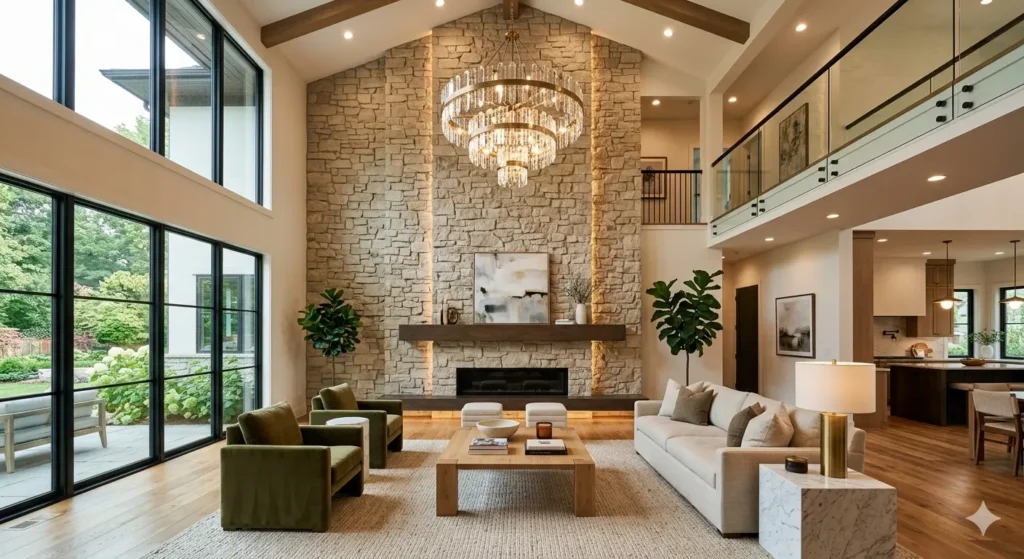
In a Wani duplex with a double-height entry — a void above the entry foyer that creates a ceiling of 18 to 22 feet — the staircase and its surrounding space is the home’s architectural centre. The design of this space determines whether the duplex feels like a genuinely impressive home or like two floors that happen to be connected.
The feature wall that rises through the double-height space — typically the wall the staircase runs alongside — is the canvas for the home’s primary material statement. Natural stone cladding in a warm local variety. Vertical teak veneer panels. A textured plaster in a rich warm tone. Any of these, properly executed and running the full height of the double-height space, creates the architectural presence that this space can carry and that no amount of furniture selection substitutes for.
The pendant or chandelier hung in the double-height void anchors the vertical dimension of the space. A sculptural fitting in the ₹35,000 to ₹1 lakh range, chosen for its visual quality as much as its light output, makes the entry an architectural experience rather than a functional threshold.
Ground Floor Interior Design
The drawing room in a Wani duplex typically benefits from the larger floor area that a two-floor plan allows — when the bedroom accommodation is on the upper floor, the ground floor can be more generously planned for social functions. A drawing room of 300 to 400 square feet in a well-planned Wani duplex allows for a proper sofa group at the right scale, a dining area that seats eight to ten, and the circulation between them that makes the space feel generous rather than compressed.
The false ceiling design for the ground floor drawing room: gypsum with cove LED and positioned downlights, coordinated with the air conditioning layout from the beginning. The TV wall treatment: full-height composition in warm materials that sets the interior’s material language.
For the kitchen on the ground floor: if the duplex has an L-shaped or U-shaped kitchen with adequate floor area, the island counter becomes a real possibility — a feature that suits Wani family kitchens well given the social cooking culture where family members gather in the kitchen space during meal preparation.
Upper Floor Design and the Master Suite
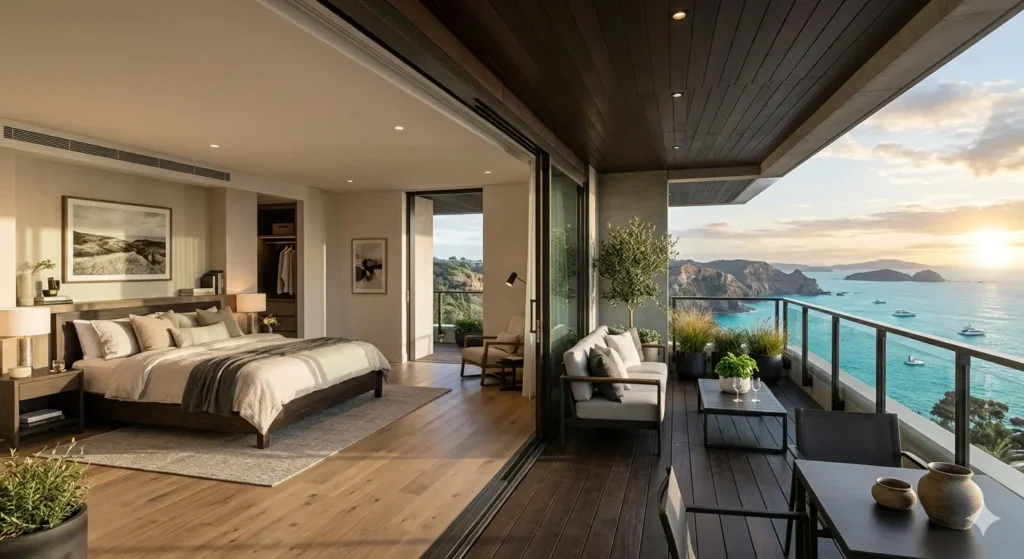
The master bedroom suite on the upper floor of a Wani duplex is the home’s most private and most personal space. The bedroom, the attached dressing area or wardrobe room, the attached bathroom — these three elements together create the private retreat quality that a master suite should have.
The balcony off the master bedroom is the upper floor’s outdoor gift — the private outdoor space that the bedroom opens onto, usable for most of the year from the cool Wani October through to March. This space, properly designed with good flooring, a comfortable outdoor chair, and some privacy screening from the neighbouring building, adds a daily quality to the master bedroom suite that the floor plan area alone doesn’t capture.
Complete modern duplex design and build in Wani, excluding land: ₹55 to ₹95 lakhs depending on specification. Interior design and fit-out on top of construction: ₹12 to ₹22 lakhs.
FAQs: Modern Duplex House Designs in Wani
Q1. Is a duplex more expensive to maintain than a single-floor home in Wani? The running cost difference is primarily the additional air conditioning load on the upper floor, which can be significant if the roof and ceiling design don’t address the heat load properly. A well-insulated duplex costs only marginally more to cool than a single-floor home of equivalent area.
Q2. What is the minimum plot size for a meaningful duplex in Wani? 150 square metres is the practical minimum for a duplex that has adequate room sizes on both floors with a veranda and approach. Plots of 200 square metres or more give the designer more room to create a home with genuine spatial quality.
Q3. Should the staircase be open or enclosed in a Wani duplex? An open staircase with a glass or cable balustrade creates lightness and visual openness in the double-height space. An enclosed staircase with a solid wall offers more privacy and a stronger material statement opportunity. The choice depends on the family’s preference and the overall design language of the home.
Q4. How do I prevent the upper floor from getting too hot in Wani’s summers? Pitched or semi-pitched roof with light-coloured roofing material. Insulated false ceiling in upper floor rooms with adequate air gap. Cross-ventilation provision. These are architectural measures that need to be in the design from the beginning.
Q5. What is a realistic timeline for building a duplex in Wani from design to occupation? Fourteen to twenty months from architectural brief to occupation — four to six weeks for design and approvals, twelve to fourteen months for construction, and two to three months for interior fit-out. Families should plan around the upper end of this range.
Constructing a duplex house in Wani is not merely a process of building; it involves forming an environment that endures extreme summers and torrential monsoons. We take smart design, durability and elegance and marry it with deep local expertise to protect your investment for decades at QC Interiors.
Skip the compromise—develop perfectly precise and quality your family should have.
QC Interiors
Serving: Wani, Yavatmal
Specialisation: Comprehensive Home Interior Design | Architectural Planning | Turnkey Renovations
📞 (+91) 7798153303
Book your consultation now and walk through with our 3D walkthrough of your home before a hammer is lifted!
