
Modern Duplex House Designer in Arni — Getting Two Floors Right in Vidarbha
The duplex aspiration has arrived in Arni’s residential landscape with genuine momentum. Families who’ve watched two-floor homes go up in the new layouts on the edges of town, who’ve visited relatives in Nagpur or Yavatmal who live in duplexes, who’ve been collecting ideas on their phones for two or three years — these families are ready to build, and they’re ready to build seriously.
What they sometimes lack is the design framework to ensure that the duplex they build actually delivers what they’re imagining. A two-floor home that looks impressive from the street but has an upper floor that becomes a heat trap in May, a staircase positioned awkwardly in the floor plan, and a double-height space that was included but never properly designed — this is a common outcome in contractor-led duplex construction in Vidarbha towns. The visual aspiration is achieved. The lived experience disappoints.
Getting a modern duplex house right in Arni requires specific design knowledge. This article covers what that knowledge looks like in practice.
Modern Duplex House Designer in Arni
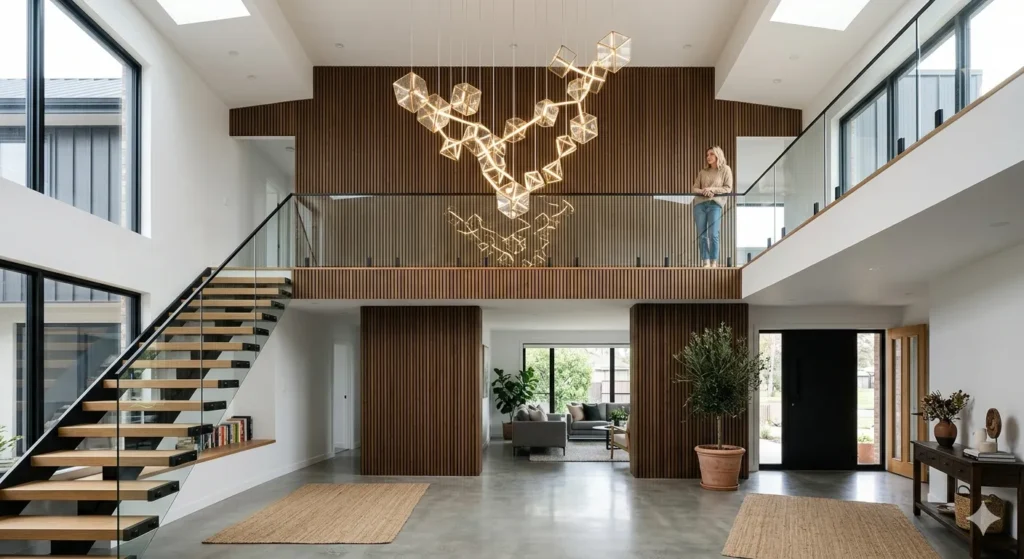
The Arni Duplex Configuration That Works
In Arni’s residential context, the duplex is almost always an independent house on a private plot — not an apartment within a larger building. Plot sizes typically range from 150 to 300 square metres, with total built areas across both floors between 2,000 and 4,000 square feet.
The configuration that serves Arni families well puts the public social life of the home on the ground floor — drawing room, dining area, kitchen, puja room, guest toilet — and the private sleeping life on the upper floor — master bedroom suite, children’s bedrooms, family bathroom. This separation is both practical and culturally appropriate: guests can be received on the ground floor without the upper floor’s privacy being compromised, and the bedroom noise and activity of the upper floor doesn’t intrude on the ground floor’s social function.
The staircase is the element that connects these worlds and that signals most immediately whether the home has been designed or merely constructed. A staircase that’s been treated as a genuine architectural element — with care given to the tread material, the balustrade design, the wall treatment alongside it, and the way it relates to the double-height space it may create — makes a statement that the family lives with and appreciates every day. A staircase that was positioned to fit the remaining floor plan and built with standard contractor detail is a missed opportunity that also gets used every day.
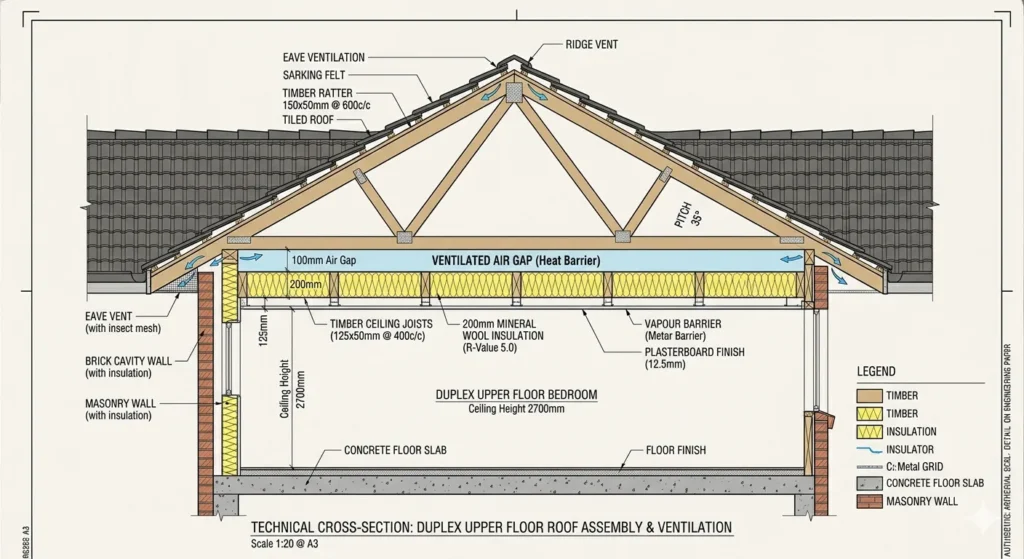
Climate Design: The Non-Negotiable Requirements
Arni’s summer is Vidarbha’s summer — 44 to 45 degrees in April and May, direct sun that creates extreme surface temperatures on roofs and walls, a heat load that transfers into upper-floor rooms through the structural ceiling if the design doesn’t address it. Three design measures together solve this problem properly.
First, the roof. A pitched roof with light-coloured or reflective roofing material reduces the solar heat absorbed by the roof surface. The difference in upper-floor room temperature between a well-designed pitched roof with reflective finish and a standard flat concrete roof painted dark is measurable and significant — potentially 6 to 8 degrees in the room beneath at peak summer conditions. That’s the difference between a room that’s uncomfortable with AC and one that’s comfortable.
Second, the ceiling insulation. An insulated false ceiling in the upper floor rooms — with an adequate air gap between the false ceiling and the structural ceiling, and cross-ventilation provision to allow hot air in the cavity to escape — prevents the heat transfer from the roof into the occupied space. This requires design coordination between the architect, the false ceiling contractor, and the AC contractor, and it needs to happen in the design phase rather than being discovered as a problem after occupation.
Third, the window design. Upper floor windows positioned for cross-ventilation, with roof overhang above them that shades the glass from direct summer sun while allowing the lower-angle winter sun to enter, create the natural ventilation and thermal management that supplement mechanical cooling effectively.
These three measures are not expensive relative to the total project budget. They are architectural decisions that need to be made deliberately.
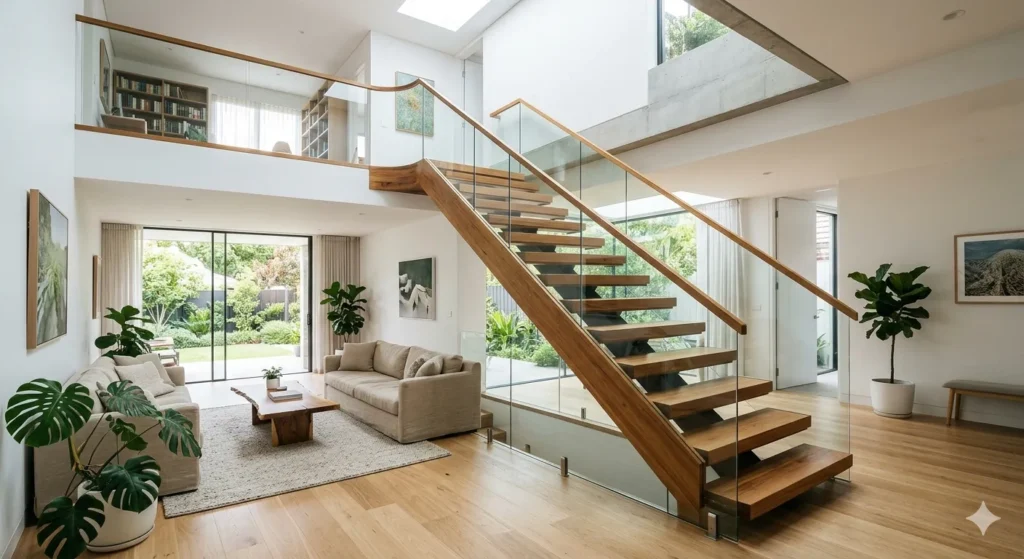
The Staircase and Double-Height Space in an Arni Duplex
If a double-height void above the entry foyer or staircase is included in the Arni duplex design — and it should be, where the floor plan allows — this space is the home’s architectural centrepiece. The 18 to 20-foot ceiling height that the void creates is the feature that most dramatically distinguishes a well-designed duplex from a standard single-floor home. How it’s designed determines whether it fulfils this potential.
The wall that rises through the double-height space — typically the wall alongside the staircase — is the canvas for the home’s primary material statement. Natural stone cladding in a warm local variety, running the full height from ground floor to the upper landing. Vertical teak veneer panels with a consistent rhythm. Textured hand-applied plaster in a warm, deep tone. Any of these, executed properly, creates a visual quality that anchors the home’s design language.
The pendant or chandelier hung in the void is the lighting element that anchors the vertical dimension. A sculptural fitting in the ₹30,000 to ₹90,000 range, chosen for visual quality as much as light output, makes the space an architectural experience. Combined with the feature wall treatment, it creates the entry impression that a well-designed Arni duplex should make.
Ground and Upper Floor Interior Design
Ground floor: drawing room with architectural false ceiling and focal wall treatment. Kitchen designed for Indian cooking at Arni household scale. Dining area at the size of the family’s actual gatherings. Puja room or alcove with proper platform, warm lighting, and storage for ritual materials.
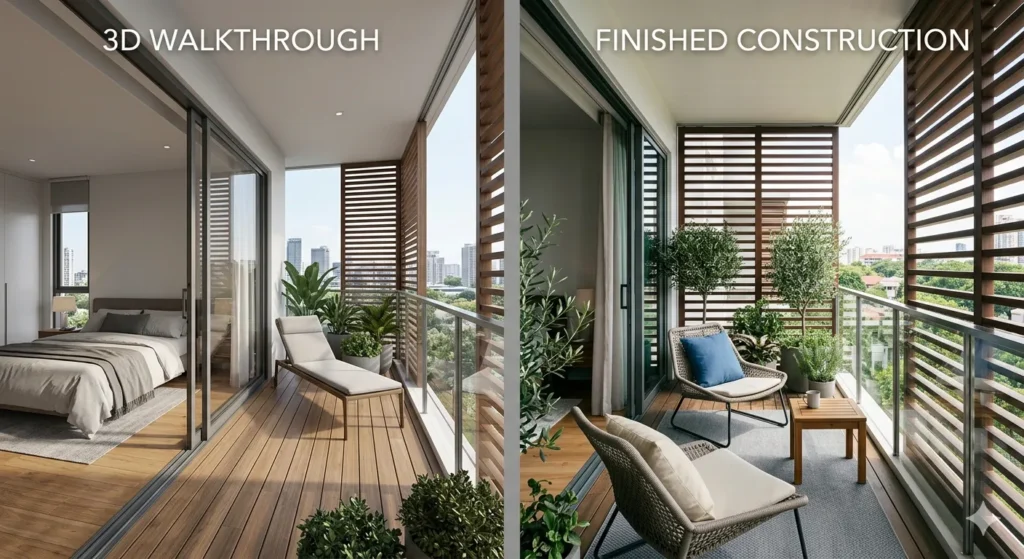
Upper floor: master bedroom suite with attached dressing provision and bathroom. Children’s bedrooms designed for adaptability across the childhood years. Balcony off the master bedroom — covered, properly floored, with privacy screening — usable from September through February.
Complete duplex construction and interior fit-out in Arni: ₹52 to ₹88 lakhs for 2,500 to 3,500 square feet at mid to premium specification. Interior design and fit-out above construction: ₹10 to ₹20 lakhs.
FAQs: Modern Duplex House Designer in Arni
Q1. What is the minimum plot size for a meaningful duplex in Arni? 150 square metres is the practical minimum for adequate room sizes on both floors with a veranda and approach space. Plots of 200 square metres or more give the designer enough room to create a duplex with genuine spatial quality and a double-height entry feature.
Q2. How do I prevent upper floor overheating in an Arni duplex? Pitched roof with reflective finish. Insulated false ceiling with adequate air gap and cross-ventilation provision. Properly shaded upper floor windows. These three measures together — designed in from the beginning — solve the problem.
Q3. Should the staircase be open or enclosed in an Arni duplex? Open-riser with glass or cable balustrade creates lightness and visual openness in the double-height space. Enclosed staircase with solid wall offers a stronger material statement opportunity. The choice depends on design language preference — both work well when executed properly.
Q4. Is a lift practical in an Arni duplex for elderly family members? A small residential lift — shaft dimensions of approximately 1.2 by 1.2 metres — can be incorporated in a duplex design for families with elderly members who cannot manage stairs. The shaft needs to be designed in from the architectural phase. Retrofitting a lift into a built duplex is expensive and structurally disruptive.
Q5. What is the realistic total cost of building a duplex in Arni including all finishes and interior fit-out? For a 2,800 square foot duplex at mid to premium specification, the total cost including construction, interior fit-out, architectural and structural fees, and external landscape work is approximately ₹65 to ₹95 lakhs. Land cost and furniture are separate.
Built Strong. Designed Smart.
Looking for Modern Duplex House Designer in Arni is not limited to just building walls; you need to build it that sustains extreme summers and heavy monsoons while you maintain its comfort and elegance.
At QC Interiors we inspire smart design and durability while blending refined aesthetics with intimate experience of the area. It does not just provide a polished appearance, this is an investment in the long term durability and sustainability of your spaces.
Choose not to compromise; create the home your family truly deserves, a home built on precision, quality craftsmanship and design.
QC Interiors
Serving: Arni, Yavatmal
Expertise — Complete Home Interior Design | Designing Architecture | Turnkey Constructions
📞 +91 7798153303
Schedule your consultation now and take a virtual tour of your future home down to every last detail in 3D—before the first beam is laid.
