
Modern Duplex Designers in Ghatanji — What Two-Storey Home Design Requires in This Climate and Context
The duplex has become the home type of choice for a growing number of families in Ghatanji, and the logic behind this is not hard to follow. Land prices in the town’s established residential areas have risen as available plots have been absorbed by construction. The remaining plots tend to be smaller or more expensive than the ones on which the previous generation built their single-storey homes. Building upward — adding a second floor to double the living area on the same footprint — has become the sensible response to this reality.
The challenge is that two-storey construction in Ghatanji, as in most smaller Vidarbha towns, is understood primarily in structural rather than design terms. The family decides they want two floors. The contractor builds two floors. A staircase connects them. The rooms are distributed between the two levels in whatever arrangement fills the plan. The result is a building with two storeys. What it often isn’t is a duplex that has been designed — where the spatial organisation across two floors has been genuinely thought through, where the staircase is an architectural decision rather than a functional afterthought, and where the upper floor has been addressed for the specific thermal challenges that Ghatanji’s summers create at roof level.
The difference between a designed two-storey home and one that is merely two storeys is not academic. It is felt every day in how the house works, how it feels to move through it, and how comfortable it is in the months when comfort is hardest to achieve.
Modern Duplex Designers in Ghatanji
What Modern Duplex Design Means Here
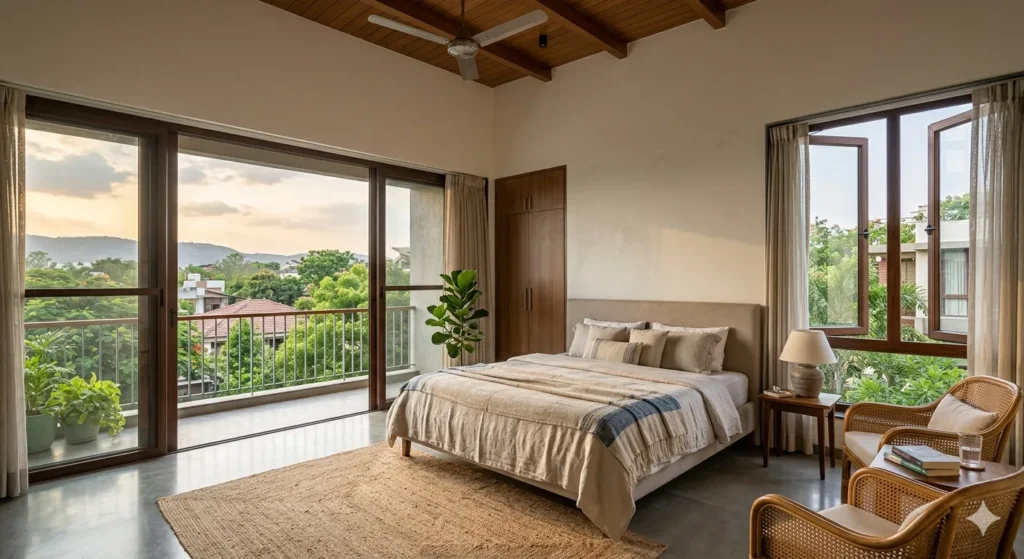
Modern duplex design in the context of a town like Ghatanji is not about importing architectural vocabularies from climates and cultures where those vocabularies make sense. It is about applying thoughtful design intelligence to the specific conditions of this place.
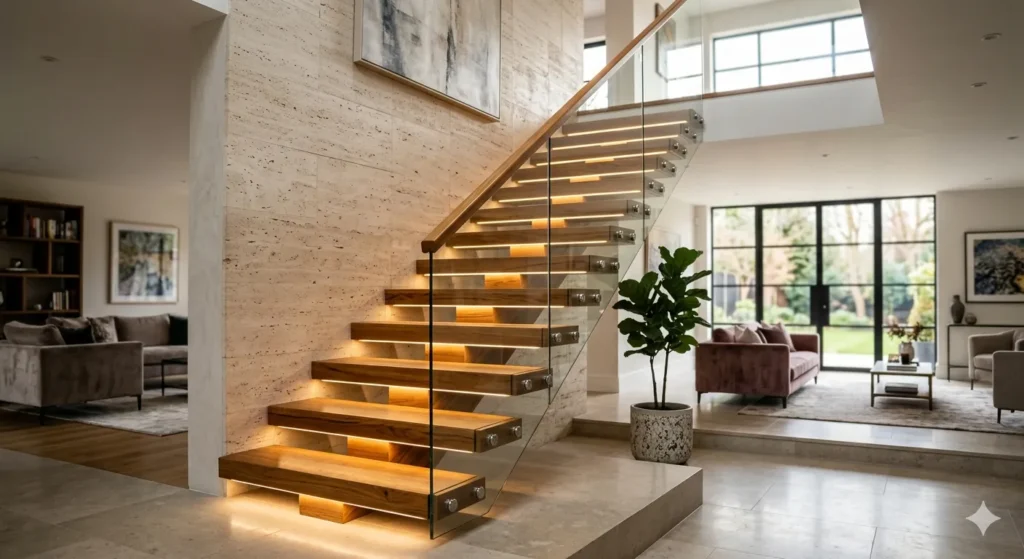
The staircase is the first and most consequential design decision in any duplex. In most contractor-built duplexes in Ghatanji, the staircase is placed wherever it fits after the rooms have been arranged — tucked into a corner, positioned adjacent to the entrance because that’s where it doesn’t take up useful space in either of the main floor areas. The experience of moving between floors in such a staircase is functional and forgettable. It is not an architectural experience.
In a designed duplex, the staircase is placed first. Its position organises both floor plans around it, because it is the element that connects the two halves of the building and determines how each half can be arranged. A staircase that arrives at a logical point on both floors — one that doesn’t require you to walk through a bedroom to get to the bathroom or pass through the dining area to reach the study — creates a floor plan with spatial logic. A staircase that was placed as an afterthought creates the spatial confusion that residents of poorly planned duplexes know well.
The staircase in a well-designed Ghatanji duplex is also an element with its own architectural character. The balustrade design, the tread material, the headroom clearance, the natural light reaching the staircase itself — these details are part of the overall design of the home, not afterthoughts applied when everything else was done.
Thermal Performance: The Upper Floor Challenge
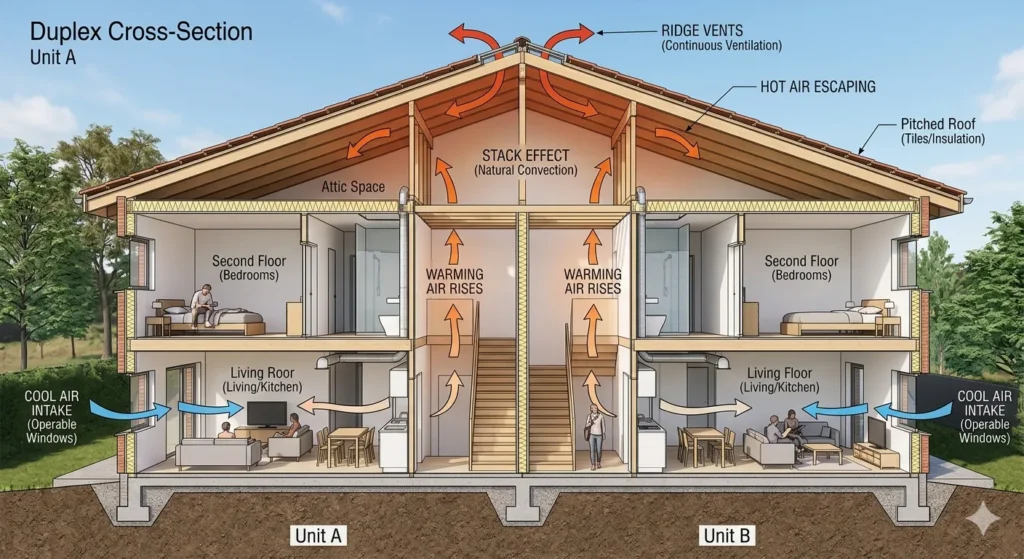
Designing the upper floor of a duplex for Ghatanji’s climate is the most specific technical challenge the project presents. The ground floor of a duplex has a natural thermal advantage — instead of a roof directly overhead, it has a concrete slab ceiling with the upper floor above it, which moderates temperature significantly during summer. The upper floor has no such advantage. It sits directly under the roof, exposed to the full solar heat gain of Ghatanji’s summer sun.
This problem has architectural solutions that work without relying entirely on mechanical cooling. The most effective is the roof design. A flat concrete roof in Ghatanji’s summer becomes a heat sink — it absorbs solar radiation throughout the day and radiates that heat downward into the rooms below it for hours after sunset. A sloped roof with a ventilated cavity between the roof surface and the ceiling below dramatically reduces this heat transfer. Hot air trapped in the cavity rises and escapes through ridge vents rather than pressing down through the ceiling into the occupied rooms.
Roof insulation is another solution that works in combination with slope. A properly insulated roof — whether through an insulation layer above the slab, a false ceiling with a trapped air gap, or purpose-made insulated roofing panels — reduces heat gain into upper-floor rooms by a meaningful and measurable amount.
Overhangs matter on the upper floor just as they do on the ground floor. Upper-floor windows on south-facing walls need to be protected from direct summer sun by adequate roof overhangs or deep window reveals. Balconies on appropriate faces serve as both shading devices for the windows behind them and usable outdoor spaces — the upper-floor equivalent of the ground-floor veranda that is so central to Ghatanji’s residential design logic.
Cross-ventilation in upper-floor bedrooms requires windows on at least two walls. In Ghatanji, where the prevailing breeze direction through the valuable September-to-March season is consistent, positioning bedroom windows to receive that breeze directly reduces the temperature in those rooms without any mechanical assistance. A designer who knows the local wind patterns will orient the bedroom openings accordingly.
The Ground Floor for Ghatanji’s Extended Families
The distribution of functions between floors in a Ghatanji duplex needs to reflect the structure of the household that will live in it, not a generic convention. In most Ghatanji extended family households, having at least one bedroom on the ground floor is not a design preference — it is a genuine daily need. Elderly parents or grandparents who are part of the household need to be able to access their sleeping space, their bathroom, and the main veranda without navigating a staircase. A duplex design that places all bedrooms on the upper floor has not considered this.
The puja space in a Ghatanji home is a room that deserves specific placement consideration in the duplex floor plan. In many households in this part of Vidarbha, the puja room is one of the most important spaces in the house — functionally, emotionally, and in terms of how the home presents itself to visitors. It typically faces east or north, and its relationship to the entry and the main circulation of the ground floor should be a deliberate design decision rather than whatever space happens to be left after everything else is placed.
What Duplex Design Costs in Ghatanji
Duplex construction in Ghatanji in 2025-26 ranges from ₹1,900 to ₹2,700 per square foot depending on specification. For a duplex of 3,000 square feet at ₹2,200 per square foot — ₹66 lakhs construction — architectural fees at five to nine percent are ₹3.3 to ₹6 lakhs. The design decisions made at the outset are largely irreversible once construction begins. The staircase position, the roof design, the structural system, the orientation — these are fixed early and lived with forever. Getting them right with professional design guidance is the highest-return investment in the project.
FAQs
Q1. What ceiling height works best for the upper floor of a Ghatanji duplex?
A minimum of 3.2 metres, with 3.5 metres substantially better. Higher ceilings allow hot air to rise away from the occupied zone, improve natural ventilation, and create a quality of space that standard-height rooms in this climate cannot match. The additional construction cost is modest relative to the comfort improvement.
Q2. Is it better to build both floors at once or phase the construction?
Building both floors simultaneously is more economical and produces better results. Phased construction disrupts the completed ground floor, creates structural inefficiencies, and makes it difficult to achieve the design integration between floors that a designed duplex requires. If budget requires phasing, have the complete structural design done from the start so the ground floor is properly prepared for the second floor’s loads.
Q3. How do I ensure the staircase doesn’t dominate the ground floor plan in our Ghatanji duplex?
This is a design problem that a skilled architect solves through early and deliberate staircase placement — finding a position that is accessible from both floors without consuming prime floor area on either. The wrong approach is to arrange all the rooms first and then find a leftover corner for the stairs. The right approach is to treat the staircase as a design element that the plan is organised around.
Built Strong. Designed Smart.
In Ghatanji, building a duplex home goes beyond construction; it’s about crafting a space that performs wonderfully under extreme heat and heavy monsoons, while making you feel at ease for the long haul.
QC Interiors brings together a perfect mix of smart planner, sturdy structure and organized modern design with solid local know-how. Every measure is taken to ensure your home stands strong, looks polished and serves your family for many happy years.
Why settle? Build with clarity, build great, build well.
QC Interiors
Serving: Ghatanji, Yavatmal
Qualification: Interior Design | Architectual Planing | Turnkey Renovation
📞 +91 7798153303
Book your appointment now, and experience your house in realistic 3D walkthrough—before construction.
