
Luxury Bungalow Designers in Ghatanji — What Genuine Luxury Means Here and How to Commission Someone Who Can Deliver It
In Ghatanji’s residential conversations, the phrase luxury bungalow carries weight. It signals something about a family’s standing, their resources, and their aspirations for the home they are about to build. But if you press for what luxury actually means in terms of the building itself, the answers tend to converge on the same few markers: a large plot, expensive tiles, a big modular kitchen with branded appliances, bathroom fittings from national premium brands, perhaps a gate that announces the home’s status before you reach the door.
These are markers of expenditure. They are not, in themselves, markers of design quality. And the distinction matters enormously, because a home built with expensive materials and no design intelligence is an expensive building. A home built with considered materials and genuine design intelligence — where every spatial and material decision was made deliberately, in response to how the family lives and where the building is situated — is a home that earns the word luxury without relying on price tags to do so.
The families in Ghatanji who are building at this level deserve to understand the difference. And they deserve access to designers who can deliver the real thing.
Luxury Bungalow Designers in Ghatanji
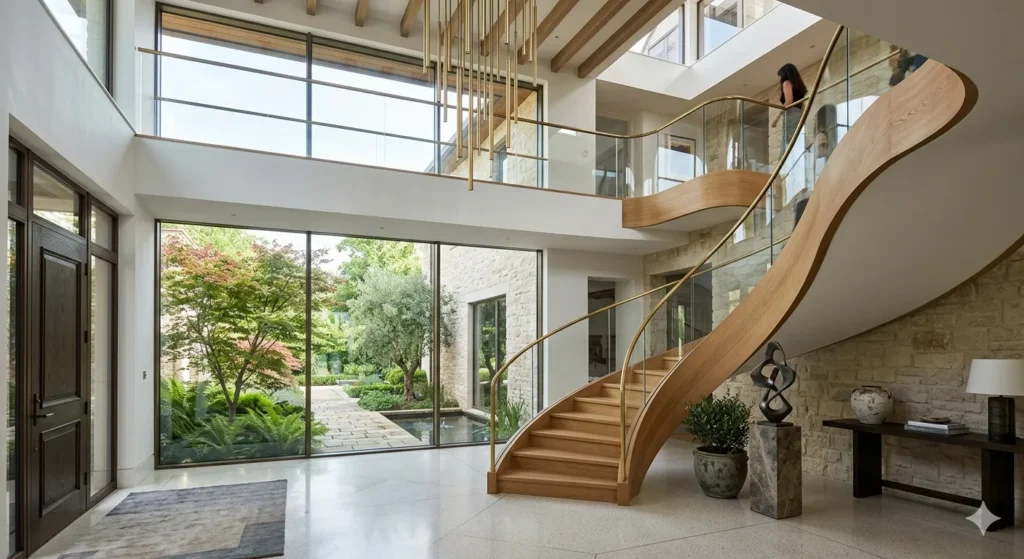
What Luxury Design Actually Requires
A designer capable of delivering a genuine luxury bungalow in Ghatanji has a specific set of capabilities that go beyond what standard residential design requires.
The first is the ability to create spaces with genuine spatial presence. This is different from making spaces large, though generous dimensions help. Spatial presence is about proportion — the relationship between a room’s length, width, and ceiling height that makes it feel exactly right. The main reception room of a luxury bungalow in Ghatanji should have a ceiling height that marks it as the primary social space of the house — not through any obvious decoration, but through the physical experience of being in a room whose vertical dimension is generous enough to feel significant. This kind of spatial quality is designed in; it cannot be added after construction.
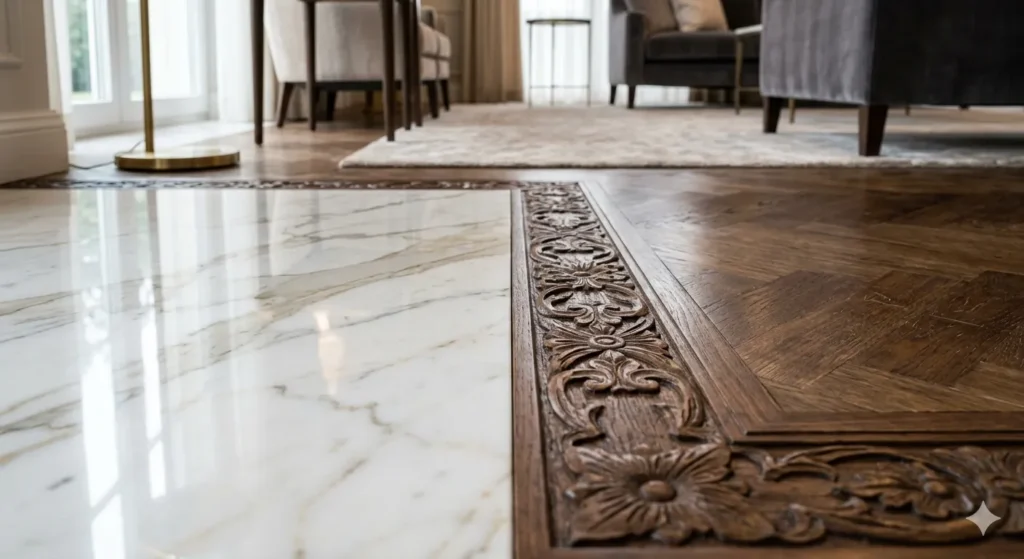
The second capability is material intelligence. Selecting and combining materials in a luxury project is a design skill, not a procurement task. The choice of the entry hall floor material — how it relates to the veranda floor outside it and the living room floor beyond it, how it reads in Ghatanji’s particular quality of natural light, how it will perform and age through decades of use — is a design decision that requires knowledge of materials and their behaviour in this specific climate. The same applies to wall surfaces, ceiling treatments, joinery, and hardware. An experienced designer makes these choices in relation to each other and in relation to the specific conditions of the building.
The third is detail design. In a genuinely well-designed luxury bungalow, the junctions and transitions — the points where one material meets another, where a room transitions to the veranda, where the staircase balustrade meets the treads, where the window reveal is expressed on the exterior wall — are all designed rather than left to contractor convention. These details are individually small. Collectively they are what gives a luxury interior its sense of having been made with care, rather than assembled from standard components.
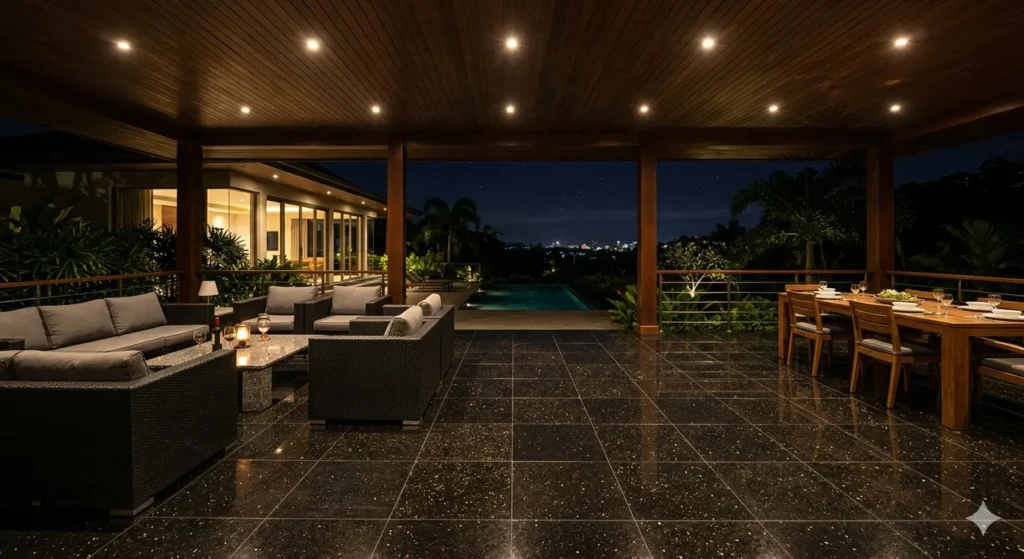
The Veranda and Outdoor Spaces of a Ghatanji Luxury Bungalow
In the context of Ghatanji’s climate and domestic culture, the outdoor and semi-outdoor spaces of a luxury bungalow are at least as important as the interior rooms. A covered veranda of genuine scale — four or five metres in depth, running along the main face of the house — is not a decorative addition to a Ghatanji luxury home. It is one of the primary living spaces, particularly through the months from September to March when Ghatanji’s evenings are at their best.
The design of this veranda in a luxury context should match the quality of the interior design. The ceiling of the veranda — its height, its surface treatment, the light fittings it carries — should be designed, not default plastered concrete. The floor material should relate to the indoor flooring while being appropriate for a semi-outdoor space exposed to weather. The structural columns or piers that support the veranda roof should be expressed architecturally — their proportions, their profile, their relationship to the facade of the house — rather than being standard round columns that happen to be there.
Where the plot allows it, a designed garden extends the luxury bungalow’s quality out into the site. The approach from the gate, the entry forecourt, the landscape visible from the main veranda — these elements of the outdoor environment are part of the total designed experience of the home. In a town where the home’s presentation communicates something about the family to every visitor, the landscape design is not peripheral. It is part of what the home says.
The Entry Sequence
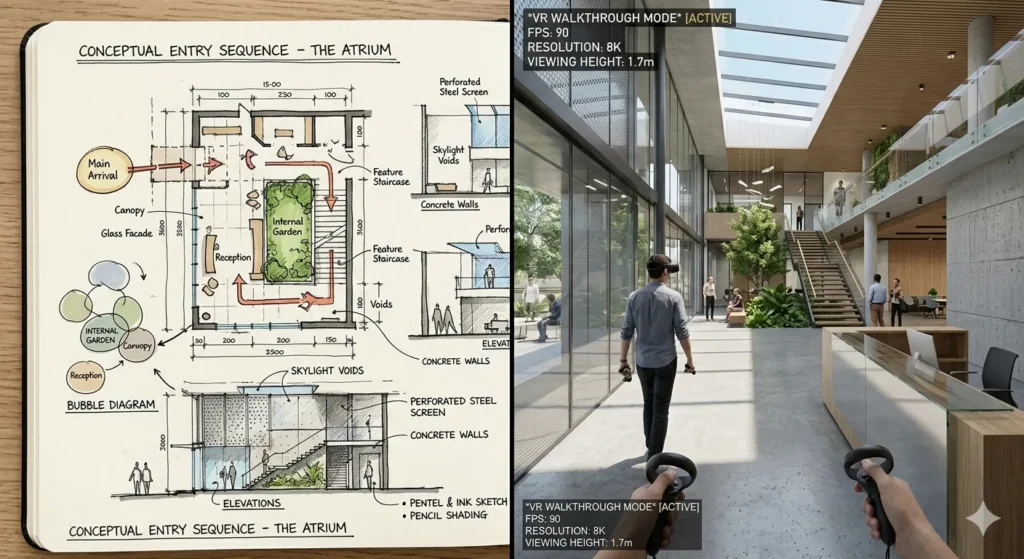
Nowhere in a luxury bungalow is design quality more immediately legible than in the entry sequence. The gate, the approach path or driveway, the entry forecourt, the veranda, the front door, the entry hall — this sequence is the first spatial experience any visitor has of the home, and in Ghatanji’s social context, that experience communicates something important.
A luxury bungalow with a designed entry sequence communicates quality before any interior room is seen. The gate material and its proportions, the surface of the approach, the planting and paving of the forecourt, the scale and detailing of the front door, the experience of the entry hall — all of these elements, designed as a sequence rather than as individual decisions, create the experience of arriving at a home of genuine quality. A designer who thinks in sequences rather than in individual rooms or elements is the designer capable of creating this.
Finding Luxury Bungalow Designers for a Ghatanji Project
The honest reality is that the pool of designers in Ghatanji itself who regularly deliver at genuine luxury specification is limited. This is not a reflection of local design ability so much as a reflection of market size — luxury residential projects at this level require a depth of experience that a small-town market doesn’t generate in large volume.
For families in Ghatanji building at luxury specification, engaging an architect and interior designer from Yavatmal or Nagpur — one with a proven track record of luxury residential projects in Vidarbha’s climate — is often the right decision. The key conditions are that the designer makes adequate site visits during construction, that they have working relationships with quality contractors in the region, and that they have genuine experience with the materials and climate conditions specific to this part of Maharashtra.
The evaluation should be rigorous. Visit completed luxury projects. Look specifically for evidence of spatial quality, material intelligence, and detail design — not just for expensive-looking finishes. Ask the designer to describe a specific design challenge they encountered on a luxury project and how they resolved it. The answer will tell you more about their design capability than any portfolio photograph.
What Luxury Bungalow Construction Costs in Ghatanji
A genuine luxury bungalow in Ghatanji in 2025-26 — built to the specification level the word deserves — costs between ₹2,800 and ₹4,200 per square foot for construction, with custom elements pushing beyond this. For a 4,000 square foot bungalow at ₹3,200 per square foot, the construction cost is ₹1.28 crores. Interior fitout at luxury specification might add ₹25 to ₹45 lakhs. Architectural and design fees at eight to ten percent of construction cost are ₹10 to ₹13 lakhs. Landscape and garden design might add ₹5 to ₹12 lakhs depending on plot size and ambition.
These numbers are significant. They are also proportionate to an asset that will serve as the family’s primary residence, primary social venue, and most visible statement of standing for the next thirty to forty years.
FAQs
Q1. What plot size is needed for a genuine luxury bungalow in Ghatanji?
A plot of at least 450 to 500 square metres allows for a generous building footprint, a proper veranda, an entry forecourt, and some garden space. Larger plots — 700 square metres and above — allow for the full spatial programme of a luxury bungalow to be realised with genuine generosity.
Q2. Is it possible to achieve genuine luxury with regional and local materials in Ghatanji?
Not only possible but often preferable. Kota stone, Indian granite, local timber species, and regional craft elements have proven quality in this climate and create interiors with authentic character. Luxury built from materials that belong to this place is more convincing than luxury assembled from imported elements without design logic.
Q3. How involved should I be in the design process for a luxury bungalow?
Actively involved in the brief — the conversations about how you live, what you want the house to do, what your aspirations are. Present at key design review milestones. Less involved in the day-to-day design development, where the designer’s expertise should lead. A good luxury bungalow designer will structure the engagement so your time and energy is focused where your input genuinely shapes the outcome.
Built Strong. Designed Smart.
In Ghatanji, building a duplex home goes beyond construction; it’s about crafting a space that performs wonderfully under extreme heat and heavy monsoons, while making you feel at ease for the long haul.
QC Interiors brings together a perfect mix of smart planner, sturdy structure and organized modern design with solid local know-how. Every measure is taken to ensure your home stands strong, looks polished and serves your family for many happy years.
Why settle? Build with clarity, build great, build well.
QC Interiors
Serving: Ghatanji, Yavatmal
Qualification: Interior Design | Architectual Planing | Turnkey Renovation
📞 +91 7798153303
Book your appointment now, and experience your house in realistic 3D walkthrough—before construction.
