
Expert civil work & home renovation in Nagpur provides expert construction, structural repairs, and premium interior remodelling services tailored to transform your living space.
Civil work is the part of home renovation that nobody photographs. It doesn’t appear in portfolio presentations. It doesn’t generate the before-and-after imagery that circulates on renovation social media. There are no dramatically lit photographs of correctly applied waterproofing membrane or properly executed conduit chasing or a roof slab repair done with the right grade of polymer-modified mortar. The visual language of renovation content is entirely surface — the gleaming kitchen, the styled bathroom, the living room at golden-hour light.
Civil work is underneath all of that. And in Nagpur, where the climate tests every construction decision with seasonal extremes that expose every weakness, civil work is the thing that determines whether the gleaming surface stays gleaming or starts to peel, stain, crack, and seep within two or three years of the renovation’s completion.
Understanding what civil work involves in the context of home renovation in Nagpur, and why its quality is the single most important determinant of renovation longevity, is the most useful thing a homeowner can know before committing to any renovation project — whether they are in Dharampeth, Ramdaspeth, Nandanvan, Besa, Mankapur, Trimurti Nagar, Wathoda, Ajni, or anywhere else across this city’s wide residential geography.
Expert civil work & home renovation in Nagpur
What Civil Work in Home Renovation Actually Covers
The civil scope in a home renovation is the sum of all the structural, substrate, and services work that precedes the visible finish work. It is the category that includes everything that will be hidden behind or beneath the materials that the family will eventually see and touch. Because it is hidden, it is the category that is most susceptible to corner-cutting by contractors who know that the consequences of inadequate civil work are not immediately visible, and that by the time they become visible the contractor’s payment has long since been collected.
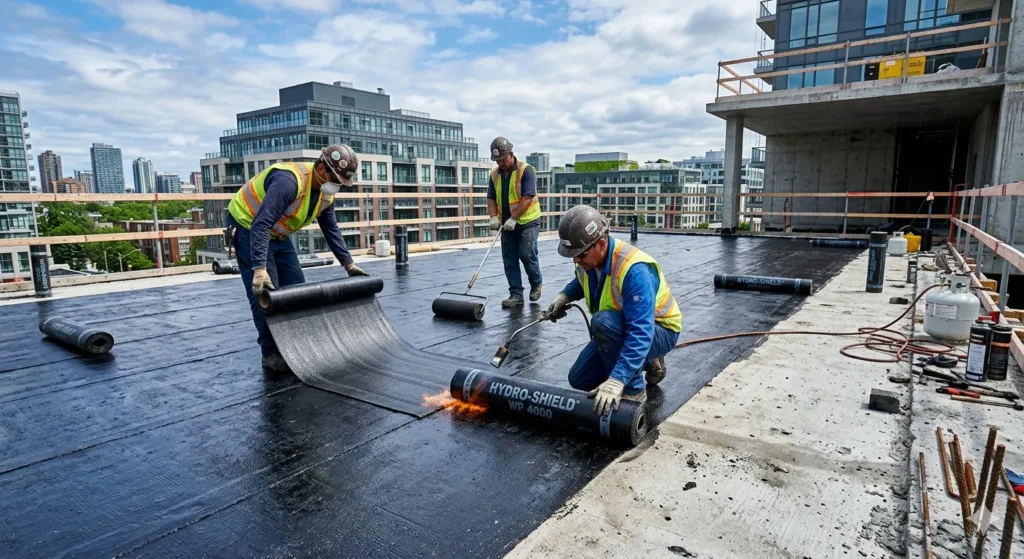
Waterproofing is the most important civil work item in any Nagpur renovation and the one where the gap between correct specification and inadequate execution has the most durable consequences. In a bathroom renovation, this means a full tanking membrane system — applied to the floor and all walls, continuous and without gaps — before any tile work begins. In a terrace or roof slab renovation, this means a proper flexible waterproofing system over a screeded substrate, with correctly detailed upturns at parapets and proper drainage falls to prevent ponding. In a kitchen, this means waterproof treatment to the walls behind the cooking area and behind the sink, where water exposure is a daily reality. None of this is visible in the finished renovation. All of it determines whether the renovation holds up or fails.
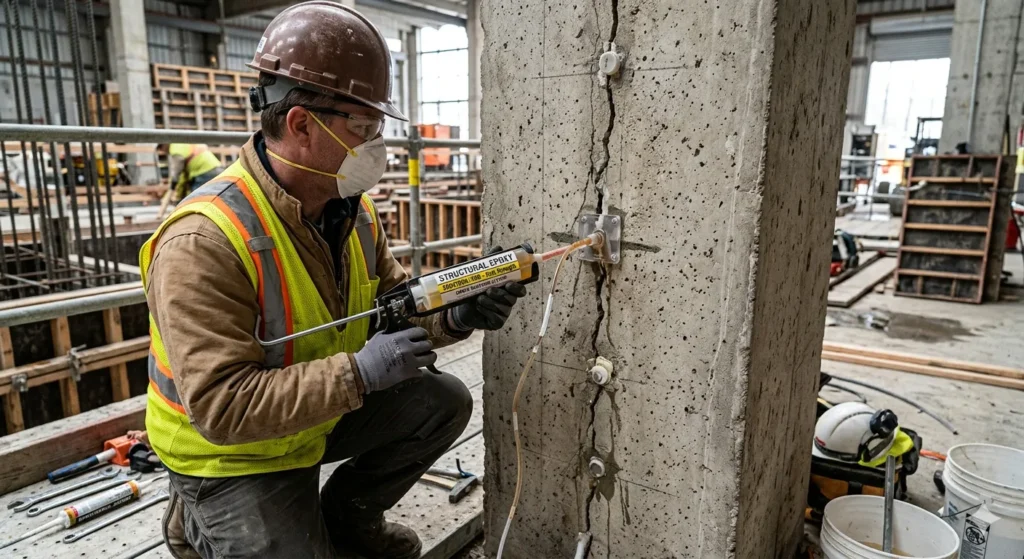
Structural remediation covers the repair of any cracks, settlement damage, or material deterioration in the existing structure before renovation work begins. In Nagpur’s older residential stock — the bungalows and independent homes of Civil Lines, Seminary Hills, Sadar, Dharampeth, and the dozens of established localities that fill the city’s map — this often includes repair of diagonal cracks at door and window corners from differential settlement, treatment of corroded reinforcement in concrete elements that has caused spalling, and repair of deteriorated masonry where water penetration over years has weakened the mortar. Covering these with paint and plaster without remediation produces a renovation that looks correct for one season and reveals its underlying problems in the next.
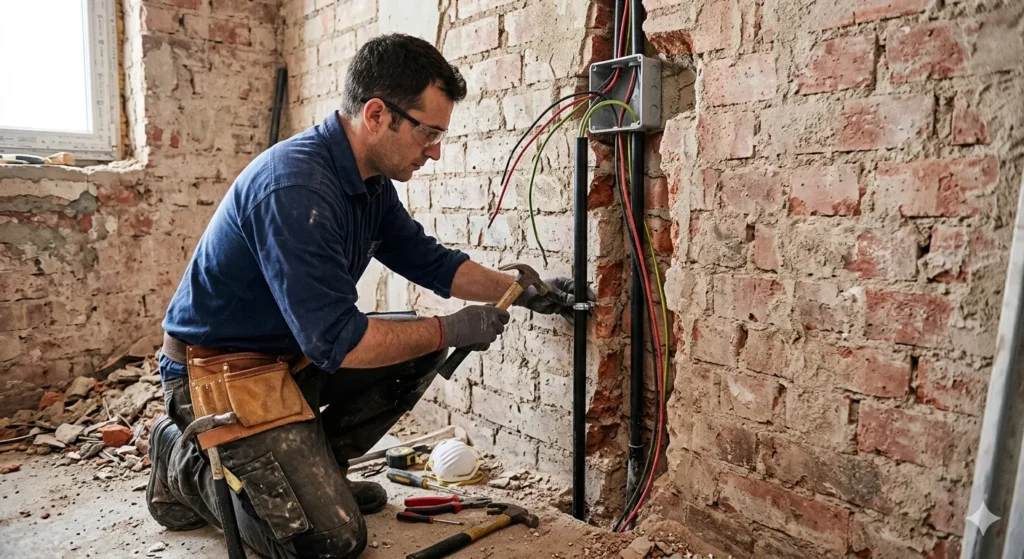
Electrical civil work includes the complete re-routing of concealed wiring where the existing system is inadequate, the installation of conduit in wall chases to protect new wiring, the provision of adequate circuit capacity for the home’s current electrical load, and correct earthing. In older Nagpur homes, the wiring system is often still running on conductor gauges and circuit arrangements that predate the household’s current electrical demand. Running a new set of surface-mounted wiring without replacing the concealed system is a common shortcut that is both inadequate and, in some configurations, a fire risk.
Why Nagpur’s Climate Makes Civil Work So Consequential
Nagpur sits in a part of India where the seasonal climate variation is extreme by any standard. The summers — genuinely hot, running from March through June with peak temperatures above 42 degrees Celsius for extended periods — expand and contract building materials through thermal cycling on a daily basis during the worst months. The monsoon — typically June through September — brings substantial rainfall that tests every waterproofing detail in the building fabric. The winter — dry, with low humidity, and cool enough at night to be genuinely pleasant — completes the cycle that every material in the building has to survive, repeatedly, for the life of the renovation.
Materials and joints that were installed correctly will survive this cycle indefinitely. Materials installed without proper cure time, joints that were sealed with inadequate products, waterproofing that was applied too thin or without continuous coverage, paint systems that were applied to inadequately prepared substrates — all of these will be exposed by the climate within two to four seasonal cycles. This is not a failure of the climate. It is a quality test that the climate provides for free, and it is why the two-to-three-year portfolio visit is the most reliable evaluation tool available to Nagpur families assessing renovation firms.
The monsoon is particularly significant as a quality test for civil work. A bathroom with correctly applied waterproofing produces zero moisture movement to adjacent structures through every monsoon. One with inadequate waterproofing — whether through incorrect product specification, insufficient coverage, or missed details at junctions and upturns — allows moisture to travel laterally through the slab and wall, producing the characteristic damp staining that appears on ceilings and walls adjacent to and below bathrooms in poorly renovated Nagpur homes. The appearance of this staining is not a sign that something unexpected happened. It is a sign that the waterproofing was inadequate from the beginning, and that the renovation was not executed to the standard it should have been.
The Correct Sequence of Civil and Renovation Work
One of the most consequential decisions in any home renovation is the sequence in which different types of work are executed. Civil and structural work first. Services — electrical, plumbing — second, running in their concealed positions before any surface treatment begins. Waterproofing third, applied to the substrate before tile work begins. Tile work and surface finishes fourth. Joinery and built-in work fifth. Painting sixth. Finishing, accessories, and loose furniture last.
When this sequence is followed, each trade’s work is complete and inspected before the subsequent trade covers it. The electrical conduits are in position and the wiring is pulled before the walls are plastered over them. The waterproofing is applied and tested before the tiles are laid over it. The tile work is complete before the joinery is installed on top of it. This sequence protects the quality of each element and prevents the kind of rework — breaking open completed surfaces to correct underlying problems — that drives cost overruns and schedule extensions in renovation projects where the sequence was wrong.
When the sequence is wrong — when tiles are laid before the electrical is complete and the floor has to be broken up for conduit chases, when joinery is installed before waterproofing is checked and has to be removed when a leak appears — the cost of rework typically exceeds the cost of the original work. More significantly, rework almost never restores the original quality. A tile floor that was broken up and re-laid has visible repairs at the break points. A wall surface that was opened for conduit addition and re-plastered has joints that are visible in raking light. The only way to protect against these outcomes is to get the sequence right before work begins.
Finding Pro Civil Work Specialists in Nagpur
The civil work component of a home renovation in Nagpur is where the difference between competent and incompetent execution is most difficult for the family to assess and most consequential for the renovation’s long-term performance. The visual checks that reveal poor quality in surface finishes — uneven paint, misaligned tiles, poorly finished joinery joints — are not available for civil work that is concealed within the building fabric.
The evaluation criteria for civil work quality are therefore process-based rather than observation-based. Ask specifically about the waterproofing specification the firm uses for bathroom renovations — what product, what system, how many coats, what the upturn height is at walls, how the continuity is tested before tiling begins. A firm that can answer these questions specifically and accurately understands what they are doing. One that gives vague answers about “good waterproofing” does not.
Ask about the firm’s approach to electrical assessment in older Nagpur homes — whether they assess the adequacy of the existing system before beginning renovation work, whether they replace concealed wiring that doesn’t meet current load requirements, and how they handle the earthing verification. These are not aggressive or unusual questions. They are the natural questions of a family that wants to understand whether the civil work component of their renovation will be executed competently.
Ask for references specifically from renovation projects that involved significant civil work — bathroom waterproofing, roof slab repairs, structural crack remediation — and ask those references specifically about how the work has held up through subsequent monsoon seasons. This is the evidence that matters.
Civil work and home renovation across Nagpur’s full residential geography — from Ajni and Trimurti Nagar in the south to Nari Road and Bhandewadi in the east, from the established old-city localities of Mahal and Itwari through the CIDCO and MHADA developments of Wathoda, Mankapur, and Besa — all share the same fundamental requirement for quality civil work. The building type varies. The budget varies. The scope varies. The need for structural honesty and technical precision in the civil work component does not.
Plumbing Civil Work: The System Nobody Thinks About Until It Fails
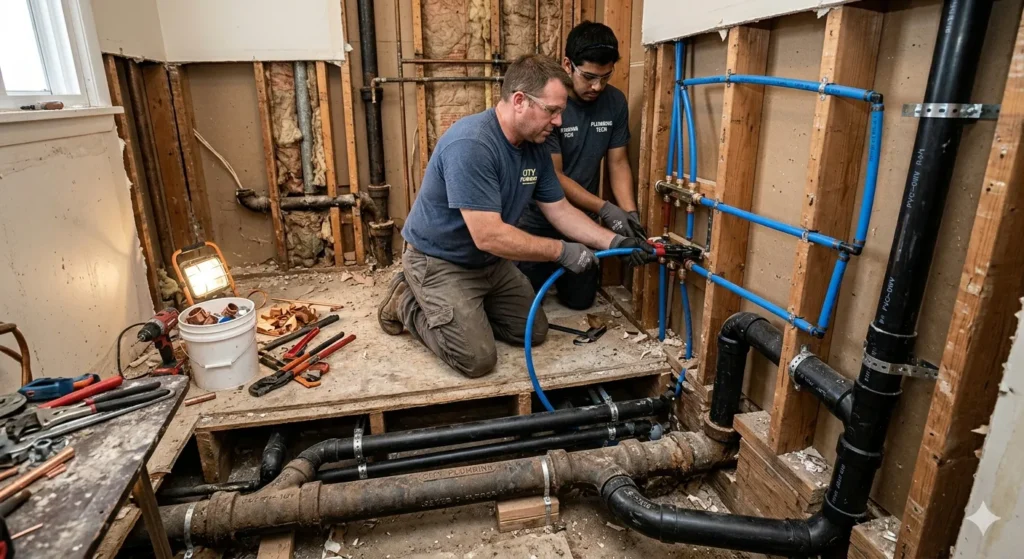
Of all the civil work components in a home renovation, plumbing receives the least pre-renovation attention and causes the most post-renovation disruption when it fails. The typical approach in a Nagpur renovation is to replace the visible elements — new tap fittings, a new WC, a new shower fitting — while leaving the concealed supply and waste pipes in place. In a home where the plumbing is less than fifteen years old and correctly installed, this is reasonable. In an older home where the concealed pipes are galvanised iron that has been rusting from the inside for two decades, this is an expensive mistake.
Galvanised iron water supply pipes in older Nagpur homes fail in specific ways. They develop internal scale build-up that progressively restricts flow until the household notices insufficient pressure at the taps. They develop pinhole corrosion that eventually becomes a leak, usually concealed within a wall or floor. And when they fail — as they do, predictably, in the heat expansion cycles of Nagpur summers — the repair requires opening up the surface finish that the renovation installed over them, doing the plumbing work, and reinstating the finish. The cost of this repair in a renovated home is significantly higher than the cost of replacing the pipes during the renovation, because the finish that was carefully installed has to be demolished and replaced.
The correct civil work approach to plumbing in an older Nagpur renovation is to assess the condition of the concealed supply network before finalising the renovation scope. If the pipes are galvanised iron older than twenty years, replace them during the renovation — running CPVC or cross-linked polyethylene as part of the civil work phase, before any surface finish work begins. This is plumbing civil work that is invisible in the finished renovation and irreplaceable in terms of the protection it provides to everything installed above it.
Terrace and Roof Civil Work: The Renovation Item That Protects Everything Else
The terrace and roof of a Nagpur home represents the single most consequential civil work item in any comprehensive renovation, because its condition determines the integrity of every room beneath it. A terrace slab with failing waterproofing is not merely an outdoor space with a maintenance problem. It is a source of chronic moisture infiltration that will stain, crack, and deteriorate the ceilings, wall plaster, and surface finishes of the rooms below — regardless of how well those finishes were applied and what they cost.
Terrace waterproofing in Nagpur needs to address both the waterproofing membrane and the drainage geometry. The membrane must be continuous — applied over the entire slab surface without gaps, turned up at parapets and any penetrations, and sealed at every junction where the horizontal surface meets a vertical element. The drainage geometry must ensure that water flows to the outlet rather than ponding — because ponded water creates a persistent hydrostatic pressure against the membrane that will find any weakness and exploit it. In older Nagpur homes where the terrace screed has developed a negative slope over years of settlement, re-screeding to correct falls before applying the waterproofing is a civil work item that cannot be skipped.
The parapet copings — the capping elements on top of the parapet walls — are a frequently overlooked water ingress source. Copings that have cracked or separated from their mortar bed allow rainwater to penetrate the parapet core and migrate downward into the building. Repointing or replacing these during terrace civil work is modest in cost and eliminates a significant infiltration path.
A roof slab and terrace correctly assessed, properly repaired, and waterproofed to the right specification before the renovation’s interior work begins will protect every rupee invested in the renovation beneath it.
Work With QC Interiors
QC Interiors brings professional civil work expertise and comprehensive home renovation services to Nagpur’s full residential landscape — from Civil Lines bungalows and Dharampeth independent homes to flats across Wardha Road, Bajaj Nagar, Besa, Wathoda, Trimurti Nagar, and the developing areas on the city’s edge. Their civil work is executed to specifications that perform through Nagpur’s climate rather than just looking right at handover.
Ready to begin with a renovation team that gets the civil work right?
Book a site visit with QC Interiors. A site visit fee of ₹2,500 is charged, which is fully adjustable against your booking amount — the consultation costs you nothing if you choose to proceed. Contact QC Interiors today to schedule your visit.
Frequently Asked Questions
Q1. How do I verify that the waterproofing in my bathroom renovation was done correctly before the tiles go over it?
Request a flood test before tiling begins — fill the floor area with water to a depth of 50mm and leave it for 24 hours, inspecting the ceiling and walls of the room below for any evidence of moisture transmission. A correctly applied waterproofing system will produce zero evidence of moisture movement. Any damp evidence before tiles are laid is an instruction to re-do the waterproofing.
Q2. How do I know if my Nagpur home’s electrical system needs full replacement or just upgrading?
Signs that suggest full replacement rather than upgrading include wiring in cotton or rubber insulation rather than PVC, fuse wires rather than MCBs in the distribution board, conductor gauges that are inadequate for the home’s current appliance load, and the absence of a proper earth connection. A licensed electrical contractor can assess these conditions and advise specifically.
Q3. Is civil work something I need a specialist for, or can it be handled by the general renovation contractor?
A competent general renovation contractor should be capable of managing the civil work component — including waterproofing, structural repairs, and electrical — to the correct standard. The question to ask is whether they have specific experience with these work types and whether they use correctly specified products for each application. Civil work done by a contractor who treats it as a generic task rather than a technical specialty is a risk.
Q4. What structural problems are most common in older Nagpur homes that need to be addressed before renovation?
Diagonal cracking at door and window corners from differential settlement, spalling of concrete elements where corroded reinforcement has expanded, moisture damage to masonry and plaster from historical waterproofing failures, and deteriorated or absent DPC (damp proof course) at foundation level allowing rising damp. Each of these is a specific condition that needs specific treatment, not generic repair.
Q5. How much of a renovation budget should be allocated to civil and services work?
For a comprehensive renovation of an older Nagpur home, twenty to thirty percent of the total project cost is a reasonable allocation for civil, structural, waterproofing, electrical, and plumbing work. The temptation to reduce this in favour of visible finishes is one of the most common and consequential mistakes in residential renovation budgeting.
