
Best Residential Architects in Yavatmal — What Families in the District’s Largest Town Should Understand Before They Build
Yavatmal is the kind of town that earns its own description. As the district headquarters for one of Vidarbha’s most productive agricultural regions — cotton country, soybean country, the pulse of a rural economy that feeds into this city’s markets, trading houses, and now increasingly its residential neighbourhoods — Yavatmal carries a seriousness about itself that shows up in how families here approach the decision to build a home. This isn’t a city of casual investments. When a Yavatmal family decides to build, the land is usually land that has been in the family for years, the budget is usually the accumulation of years of careful earnings, and the building that goes up is expected to serve three generations before anyone calls it time.
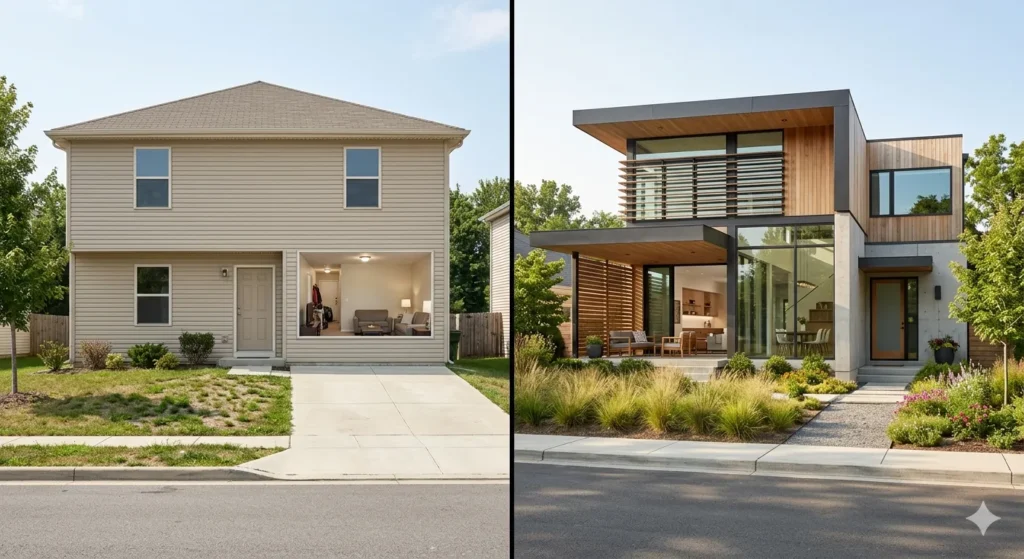
That weight of expectation is precisely where most Yavatmal families and their construction projects part ways with the design quality the investment deserves. The contractor who’s built forty similar homes in the same layout gets hired because he’s familiar and available. The draftsman who traces the standard two-bedroom-hall-kitchen plan for the twenty-eighth time produces the twenty-ninth. The result is solid, functional, and utterly generic — a building that could have been constructed anywhere in Maharashtra by anyone who knows how to mix concrete and stack bricks. A home that was never really designed for the specific family, the specific plot, the specific orientation, or the specific climate demands of this part of Vidarbha.
There is a better way. And in Yavatmal — a town large enough to have genuine architectural talent within reach, with a district-wide market of residential construction that has supported the growth of real professional practice — the better way is accessible to families willing to seek it out and ask the right questions.
Best Residential Architects in Yavatmal
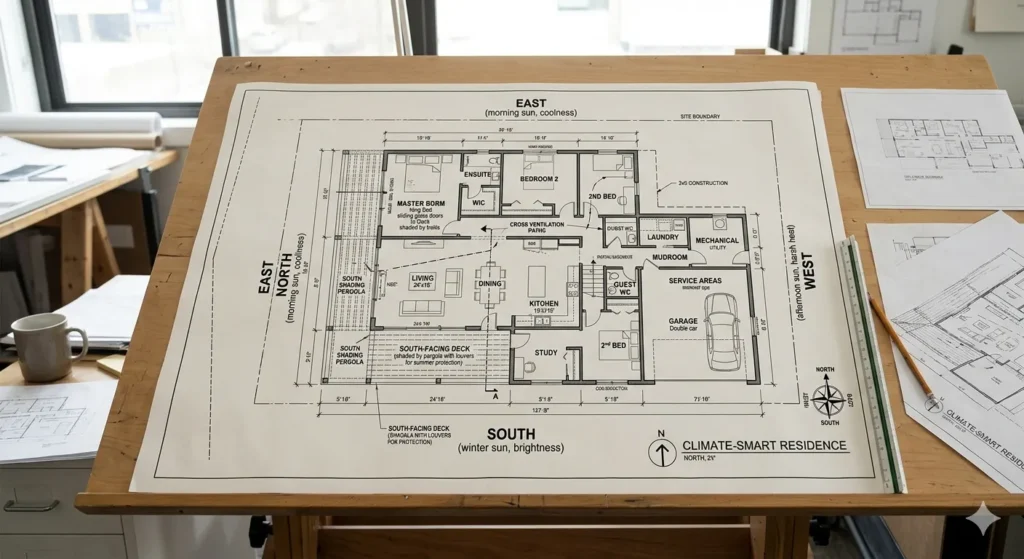
What Makes Yavatmal’s Residential Context Distinct
Yavatmal’s residential landscape has changed meaningfully in the past fifteen years. The town has grown outward along the Pusad Road, the Wardha Road, and into the newer layouts that have emerged on its eastern and northern flanks. The older parts of the city, the areas around the civil lines, the market districts, the established mohallas, still carry the architectural character of mid-century Vidarbha construction: wide compounds, covered verandas, rooms designed for families that sat together in the evenings. The newer layouts are more mixed, with contractor-built structures of variable quality sitting alongside a smaller number of genuinely designed homes that stand out precisely because they’re the exception rather than the rule.
The residential ambition in Yavatmal has also changed. There’s a segment of families here, professionals, businesspeople, the agricultural families who have converted decades of cotton and soybean prosperity into urban residential investment — who are building at a specification level and with an aspiration for quality that simply wasn’t common twenty years ago. What they’re building deserves better design engagement than the standard contractor-draftsman model offers. And increasingly, the architectural talent to serve that ambition is available here if you know how to identify and engage it.
Yavatmal also has the regulatory infrastructure that formalises the architectural requirement: the Yavatmal Municipal Council’s building permission process requires COA-registered architect signatures on submitted drawings. This is a floor, not a ceiling, but it means that every building going up in Yavatmal’s municipal area is at minimum going through a process that involves a registered professional. The question is whether that professional’s involvement extends to genuine design engagement or stops at drawing production for approval purposes.
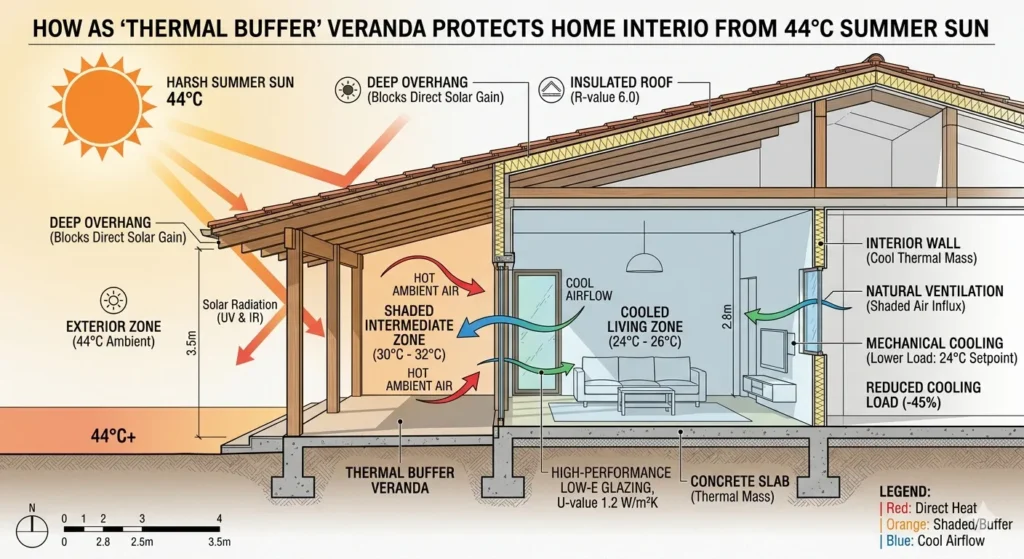
Yavatmal’s Climate and the Architecture It Demands
Yavatmal sits in Vidarbha’s interior in a way that makes its climate one of the most demanding design contexts in Maharashtra. Summers here are genuinely extreme — April and May temperatures that push past 44 degrees Celsius regularly, a solar radiation load that makes west-facing rooms nearly uninhabitable in the afternoon without deliberate shading design, and a heat load on roof surfaces that translates directly into upper-floor room temperatures unless the building has been designed with thermal performance as a primary consideration rather than an afterthought.
The monsoon arrives with force in June and delivers its rainfall in a concentrated window. Buildings in Yavatmal that weren’t designed with roof pitch, parapet detailing, site drainage, and waterproofing as explicit design priorities develop the leakage and damp problems that are expensive to address after construction is complete. A contractor who builds fast and moves on to the next project has little incentive to design for monsoon resilience. An architect engaged for the full duration of the project has every incentive to get these details right, because their name is on the drawings and their reputation is in the building.
The winter months in Yavatmal — December, January, and into February — are genuinely cool, cool enough that thermal comfort in the cold direction matters. A home that was designed only for summer cooling can feel drafty and uncomfortable in these months. The best residential architects in Yavatmal design for the full year’s climate cycle, not just for the season that feels most urgent when the design decisions are being made.
What this means practically is: a roof with pitch and adequate overhang; principal rooms facing east and south rather than west and north; a veranda that shades the building’s most exposed face; cross-ventilation designed into every bedroom; and insulation in the roof assembly that reduces the heat transfer from the hot roof surface to the room below. None of these is complicated. All of them require deliberate design thinking.
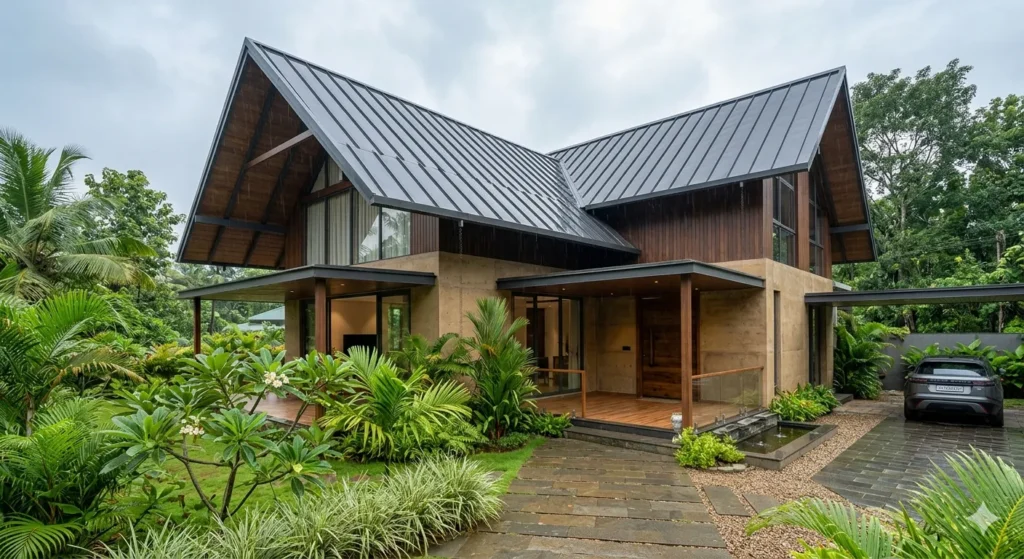
The Veranda in a Yavatmal Home — Why It Remains Non-Negotiable
There is a certain kind of newer construction in Yavatmal — and in many growing towns across Maharashtra — that has abandoned the veranda entirely in the pursuit of maximised built area on a constrained plot. The covered outdoor space that every previous generation of Vidarbha home included as a matter of course has been reduced to a token strip, or omitted completely, in the name of squeezing an extra bedroom or extending the drawing room by two feet.
This is a mistake that families tend to feel rather than immediately name. The home looks complete from the outside. The rooms are all accounted for. And yet something is missing — the transitional space that gave the home its social dimension, the shade that made the facade liveable in April, the place where the evening actually happened rather than everyone retreating behind closed doors.
A properly designed veranda in a Yavatmal home is not decorative. It is functional in a specific and measurable sense. Running along the south or east face of the building, a veranda with adequate depth — eight feet minimum to be genuinely usable rather than merely present — shades the wall and windows behind it from direct summer sun, reducing the interior heat load. It creates an outdoor-but-covered space that is comfortable from October through March, encompassing the most socially active months of Yavatmal’s calendar. And it provides the transition between the public street and the private home that makes a house feel like it belongs in this place.
An architect who designs Yavatmal homes with this understanding — treating the veranda as an element that earns its space in the building rather than giving it space only when the plot is large enough to accommodate waste — is designing for the reality of how life here works. That’s the standard to hold any residential architect in Yavatmal to.
How to Identify the Right Residential Architect in Yavatmal
Yavatmal has a larger and more developed architectural ecosystem than the smaller talukas in its district, which means both more choice and more need for careful evaluation. The city has COA-registered architects, draftsmen presenting as architects, design-build firms that bundle architecture and construction, and contractors who handle drawings as part of their package. These categories produce very different outcomes.
Council of Architecture registration is the starting point. Ask for the registration number. Verify it at the COA website. This takes five minutes. It confirms a minimum credential.
Then go see completed work in person. Not photographs — buildings. Walk through homes the architect has designed in Yavatmal and pay attention to the things photographs don’t capture: the thermal comfort of the rooms, the functional logic of the kitchen, the quality of light in the living room at the time of day when it’s typically used, the sense of privacy in the bedrooms. These experiential qualities reveal design thinking in a way that no portfolio conversation does.
Ask specifically about experience with the Yavatmal Municipal Council’s building permission process. How do they handle the documentation requirements? What are the typical timelines? What are the coverage and setback regulations for the specific zone your plot is in? An architect who answers fluently has navigated this system repeatedly. One who answers vaguely hasn’t.
Ask about their approach to site supervision. The design process produces drawings; the supervision process ensures those drawings are executed correctly. These are two different things, and both matter. An architect who designs carefully and then hands off to the contractor without sustained oversight will produce good drawings and variable buildings.
Construction Costs and Architectural Fees in Yavatmal
Residential construction in Yavatmal in 2025-26 runs approximately ₹1,800 to ₹2,600 per square foot at mid to good specification. At premium specification — quality stone floors, fitted kitchen, high-specification bathrooms and exterior finishes — costs can reach ₹3,000 per square foot and above.
Architectural fees in Yavatmal typically fall between 5 and 9 percent of construction cost, varying by scope, specification level, and the degree of site supervision included. For a 2,200 square foot home at ₹2,200 per square foot — a ₹48.4 lakh construction cost — the architectural fee would be approximately ₹2.4 to ₹4.4 lakhs. This is the fee for the professional engagement that determines how well the remaining ₹48 lakhs is spent.
The common mistake is treating the architectural fee as a cost to be minimised rather than an investment in the quality of the outcome. A family that spends ₹50 lakhs building a home and saves ₹1.5 lakhs by hiring a cheaper draftsman instead of an engaged architect hasn’t saved anything if the result is a home that doesn’t perform well in Yavatmal’s climate, doesn’t function efficiently for how the family lives, and needs expensive modifications within five years.
FAQs: Best Residential Architects in Yavatmal
Q1. Is an architect legally required for home construction in Yavatmal?
Yes. The Yavatmal Municipal Council requires that drawings submitted for building plan sanction carry the signature of a COA-registered architect. Construction without approved plans creates complications for property registration and future resale.
Q2. What does a residential architect in Yavatmal actually do beyond producing drawings?
A residential architect develops the design — the spatial organisation of the home, its orientation, its response to the climate, its functional logic for the family’s daily life — and then documents that design in drawings detailed enough for a contractor to build from. They also supervise construction to ensure the building matches the drawings. The drawings are the output of the design process; the supervision is what ensures the drawings become the building.
Q3. How long does plan approval take at the Yavatmal Municipal Council?
For straightforward residential proposals that comply with applicable FSI, setback, and height regulations, typically six to ten weeks. An architect who files regularly with the Yavatmal Municipal Council will have the documentation requirements right the first time, reducing the back-and-forth that extends timelines.
Q4. Can I use a draftsman for a small house in Yavatmal?
A draftsman can produce drawings. Only a COA-registered architect can sign drawings for municipal submission. And only a trained architect brings the design thinking that makes the difference between a building and a home. For any residential project that will be lived in for decades, the architect engagement is worth what it costs.
Q5. What should I expect the design process to feel like?
It should begin with a conversation — several conversations — about how your family lives, what you need the home to do, what matters most and what you’re flexible on. The architect should be asking questions, not just receiving instructions. The design should develop through multiple iterations before anything is finalised. If the architect is producing finished drawings at the first meeting, they’re not designing — they’re just documenting assumptions.
Strong Foundations. Smart Living.
Looking for an architect in Yavatmal is more than construction—it’s about creating a home that withstands harsh summers and heavy rains while staying comfortable year-round.
QC Interiors combines smart planning, durable construction, and modern design to deliver homes that last and impress.
Build with confidence. Build with QC Interiors.
Serving: Yavatmal, Yavatmal
📞 +91 7798153303
