
Best Residential Architects in Mahagaon, Yavatmal — What Every Family Should Know Before They Break Ground
Mahagaon is a town that doesn’t announce itself loudly. It sits in Yavatmal district doing what it has always done — holding a community together through agriculture, through the cotton trade, through the kind of long-rooted family life that characterises the smaller towns of Vidarbha. People here don’t move around the way city people do. They build once. They build seriously. And then they live in what they’ve built for the rest of their lives, and their children live in it after them.
This is exactly the context in which the choice of a residential architect matters more than most Mahagaon families currently give it credit for. Not because architecture is some luxury concern for people with money to spare, but because a home built on a permanent plot of land that a family intends to occupy for generations deserves the kind of considered design thinking that ensures it actually works — climatically, spatially, functionally, and in the specific rhythms of how a Vidarbha family lives.
The problem is that most residential construction in Mahagaon still happens without a proper architect in the picture. The contractor handles the drawings. The draftsman produces something serviceable. The home gets built and it is solid and functional and almost right in ways that the family accepts because they don’t have a clear reference point for what more deliberate design would have produced. But the rooms run hot in May because nobody thought carefully about orientation. The kitchen is placed where it fitted on the floor plan rather than where it makes sense for how cooking happens in an Indian household. The entry is abrupt. The social spaces don’t flow into each other the way they should. These aren’t catastrophic failures. They’re the accumulated result of design that wasn’t really design at all.
Best Residential Architects in Mahagaon

What Mahagaon’s Climate Asks of Its Buildings
Mahagaon shares the Vidarbha climate in full — which means the building problem here is primarily thermal. April and May are genuinely brutal. Temperatures that push past 43 and 44 degrees are not unusual, and the combination of direct sun, low humidity, and heat-radiating soil makes upper-floor rooms in poorly oriented homes almost uninhabitable in the afternoon hours during peak summer.
A residential architect who is serious about Mahagaon conditions starts from orientation. The principal rooms of the home — living room, master bedroom, the spaces where the family spends most of its waking hours — face east or north wherever the plot allows, catching morning light without the crushing exposure of the western afternoon sun. West-facing rooms get minimal openings or are assigned to secondary functions — storage, bathrooms, the spaces where occupancy is brief and the heat exposure doesn’t disrupt daily life.
The roof is the second major consideration. Flat concrete roofs without proper insulation absorb heat through the day and release it into the floor below through the afternoon and evening. An architect working in Mahagaon should be thinking about roof insulation, about adequate overhang at the eaves, about the slope and pitch that helps rain drain properly and prevents the waterproofing failures that plague the monsoon months. These are not exotic architectural concerns. They are basic thermal and weather performance questions that every Mahagaon home deserves to have answered properly.
Ventilation matters in a specific way in this climate. Cross-ventilation — the arrangement of openings on opposite faces of a room so that prevailing breezes can move air through — reduces the felt temperature in a room even when the thermometer reading is unchanged. An architect who understands how wind moves in this part of Yavatmal district designs windows, doors, and the relationship between rooms with this in mind.
The Covered Veranda and Why No Mahagaon Home Should Be Without One
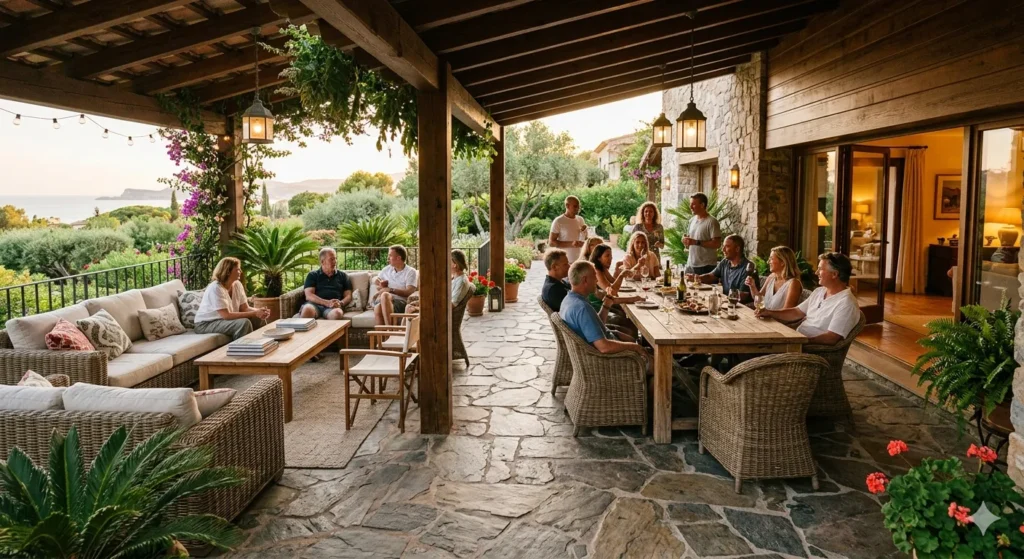
If there is one design element that separates a Mahagaon home designed with genuine regional understanding from one that was simply drafted to fill a plot, it is the covered veranda. This is not a decorative element. In Mahagaon’s climate and social context, it is the most functional space in the house.
The physics are straightforward. A veranda running along the south or east face of the home shades the wall and windows behind it from direct summer sun. It reduces the heat gain through the building envelope in precisely the season when heat gain is the biggest problem. But its functional value goes far beyond passive thermal performance.
From October through February, Mahagaon evenings are genuinely pleasant — cool enough to want to be outside, warm enough that a covered outdoor space is comfortable. This is when the veranda becomes the centre of household social life. It’s where the family gathers after dinner. Where guests are received in the informal register that drawing rooms are too formal for. Where the children do homework with adult supervision without being fully inside. Where the morning chai happens before the day begins. An architect who understands how families actually live in this town designs the veranda as a primary social space — properly dimensioned, correctly oriented, connected directly to the main living spaces so that moving between inside and outside feels natural rather than like an expedition.
A contractor-led design process typically treats the veranda as a concession — a narrow strip along the front of the house that provides shade but not space. A proper architect treats it as the home’s most important outdoor room.
How the Approval Process Works in Mahagaon
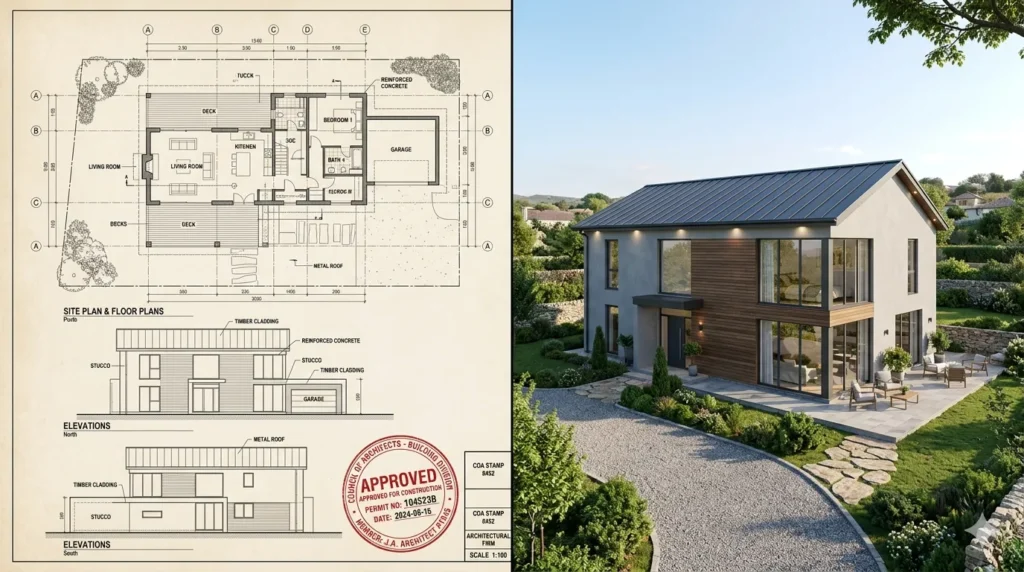
Mahagaon falls under the jurisdiction of its local municipal authority, and residential construction requires an approved plan before work begins. This is not a formality that can be addressed after the fact — buildings constructed without plan sanction face real problems at the point of registration and any future sale.
The documentation required for approval includes architectural drawings prepared and signed by a Council of Architecture registered architect, structural drawings from a licensed engineer, site plans, and the various ownership and land use documents that the local body requires. An architect who has worked in Mahagaon’s approval process knows what this package looks like, knows the documentation standards that the local body expects, and knows how to move the application through the process without the delays that come from incomplete submissions or drawings that don’t meet local requirements.
For a family approaching construction for the first time, this process can seem opaque and intimidating. A good local architect demystifies it — not by cutting corners but by knowing the system well enough to navigate it efficiently. The difference between four weeks to approval and four months to approval is often simply whether the architect preparing the drawings has done it before in this specific local body.
What to Ask When You Meet an Architect
Most Mahagaon families don’t have a framework for evaluating an architect because they haven’t hired one before. The contractor comes recommended by a cousin. The draftsman has done several houses in the same neighbourhood. The default choice gets made by social network rather than by any assessment of professional quality.
Here is the framework that actually works. First, ask for Council of Architecture registration and verify it. This takes five minutes and confirms the minimum professional credential. Anyone who cannot produce a COA registration number is not an architect in the licensed sense, regardless of what they call themselves.
Second, visit completed work. Not a portfolio on a phone screen — actual buildings. Walk through homes the architect has designed and pay attention to the experience from the inside. How does the main living space feel in the afternoon? How does the kitchen work? Is the relationship between the indoor social space and the outdoor veranda natural? Does the home feel organised or does it feel like a collection of rooms that happened to end up next to each other?
Third, ask specifically about their experience with Mahagaon or Yavatmal district construction — the local material supply chain, the contractor ecosystem, the approval process. An architect who can speak specifically about these things has worked here. One who gives general answers probably hasn’t.
What Architectural Fees Look Like in Mahagaon
Construction costs in Mahagaon for mid to good quality residential work in 2025-26 run approximately ₹1,700 to ₹2,400 per square foot. Architectural fees in this context are typically 5 to 8 percent of the construction cost. For a 2,000 square foot home at ₹2,000 per square foot — a ₹40 lakh construction cost — the architectural fee is ₹2 to ₹3.2 lakhs across the full project, from design through construction supervision.
This number is worth holding against the total investment. The architectural fee is the cost of ensuring the other ₹40 lakhs gets spent well. A home that is properly oriented, properly climate-designed, properly organised for the family’s actual life, and properly detailed for this specific climate will outperform a contractor-designed home on every dimension that matters for the forty or fifty years the family occupies it.
FAQs: Best Residential Architects in Mahagaon
Q1. Is a registered architect legally required for construction in Mahagaon?
Yes. Maharashtra’s building regulations require that plans submitted for municipal sanction carry the signature and seal of a COA-registered architect. Construction without sanctioned plans creates complications for property registration and resale.
Q2. What’s the real difference between hiring an architect and hiring a good contractor?
A contractor builds what is specified. An architect is responsible for determining what should be built, how it should be organised, and how the building should perform. The contractor’s skill is execution. The architect’s skill is design. For a permanent family home, both matter — but the design comes first.
Q3. Can I give the architect my own room layout and have them work from it?
Absolutely, and many families do. A good architect will engage critically with your layout rather than simply drawing it — pointing out where it creates problems and suggesting alternatives you may not have considered.
Q4. How long does approval typically take for a residential plot in Mahagaon?
For straightforward residential proposals that comply with applicable setback and FSI regulations, four to eight weeks is a reasonable expectation with a well-prepared application.
Q5. Should I hire someone based in Mahagaon specifically, or is regional experience more important?
Regional Vidarbha experience matters more than a Mahagaon address. An architect from Yavatmal city who has completed multiple residential projects in similar towns will understand the climate, the approval context, and the local contractor ecosystem well enough to serve you effectively.
Built Strong. Designed Smart.
In Mahagaon, looking for the architect for your dream home goes beyond construction; it’s about crafting a space that performs wonderfully under extreme heat and heavy monsoons, while making you feel at ease for the long haul.
QC Interiors brings together a perfect mix of smart planner, sturdy structure and organized modern design with solid local know-how. Every measure is taken to ensure your home stands strong, looks polished and serves your family for many happy years.
Why settle? Build with clarity, build great, build well.
QC Interiors
Serving: Mahagaon, Yavatmal
Qualification: Interior Design | Architectual Planing | Turnkey Renovation
📞 +91 7798153303
Book your appointment now, and experience your house in realistic 3D walkthrough—before construction.
