
Best House Architects in Umarkhed — And What to Actually Look For Before You Hire One
Umarkhed has been quietly transforming. Anyone who has moved through this town in the Yavatmal district over the past several years will have noticed it — the residential layouts on the periphery have filled in faster than most people predicted, the aspirations of families building new homes have risen noticeably, and the quality of design thinking that informed homeowners now demand from the professionals they engage has shifted in ways that would have seemed out of reach a decade ago.
This is a town with deep commercial roots. Umarkhed sits in the heart of Vidarbha’s cotton belt, and the agricultural economy of Yavatmal district has historically channelled money into residential construction in visible ways. Families here don’t build homes casually. A house in Umarkhed carries weight — social weight, familial weight, the weight of generations who will live under its roof and the ceremonies that will unfold within its walls. The marriage processions, the festivals, the daily rhythm of an extended family’s life — all of it happens inside a structure that was either thoughtfully designed or was not. The difference shows, and it shows for decades.
Which is why choosing the right architect for a home in Umarkhed is one of the most consequential decisions a family can make. It deserves far more careful thought than most families give it before construction begins. This article is an attempt to help you think through that decision properly.
Best House Architects in Umarkhed
What a Residential Architect in Umarkhed Actually Does — And the Confusion That Surrounds It
The confusion between an architect and a civil contractor is a persistent reality across smaller towns in Maharashtra, and Umarkhed is no different. A great many families proceed to build their homes through a contractor arrangement in which the contractor either handles the layout himself or engages a draftsman to produce drawings. The drawings carry an architect’s name for approval purposes, but the design thinking behind them — if any exists at all — belongs to neither.
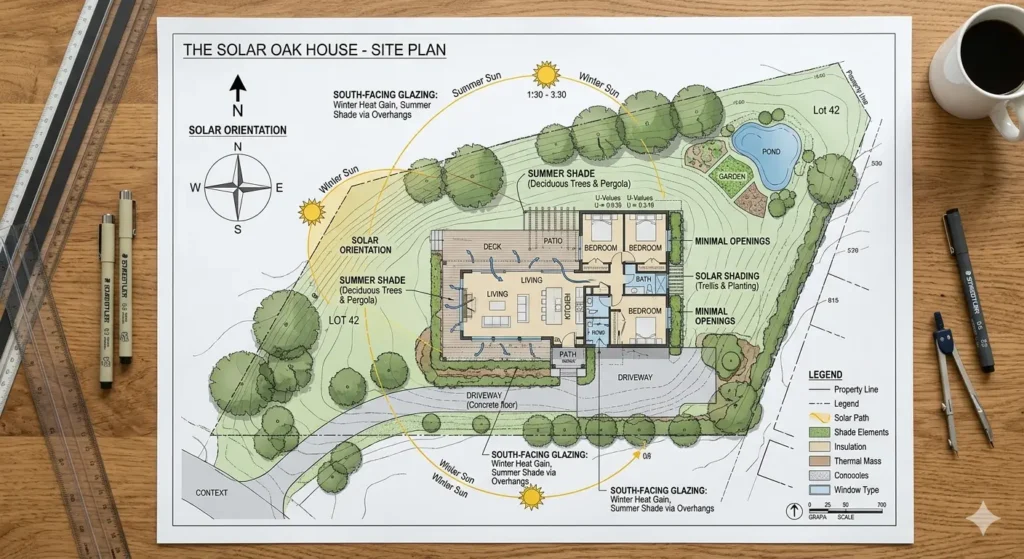
A proper residential architect is someone whose primary skill is spatial thinking. This means understanding how rooms relate to each other, how a family moves through a house over the course of a day, how the building’s orientation on its plot affects the quality of light in every room throughout the year, and how the exterior of the building communicates the character and standing of the family that lives in it. This kind of thinking is what separates a house that has been planned from a house that has been designed. The difference between these two things is not visible in any single photograph. It is felt in the daily experience of living inside the structure, over twenty or thirty years of occupancy.
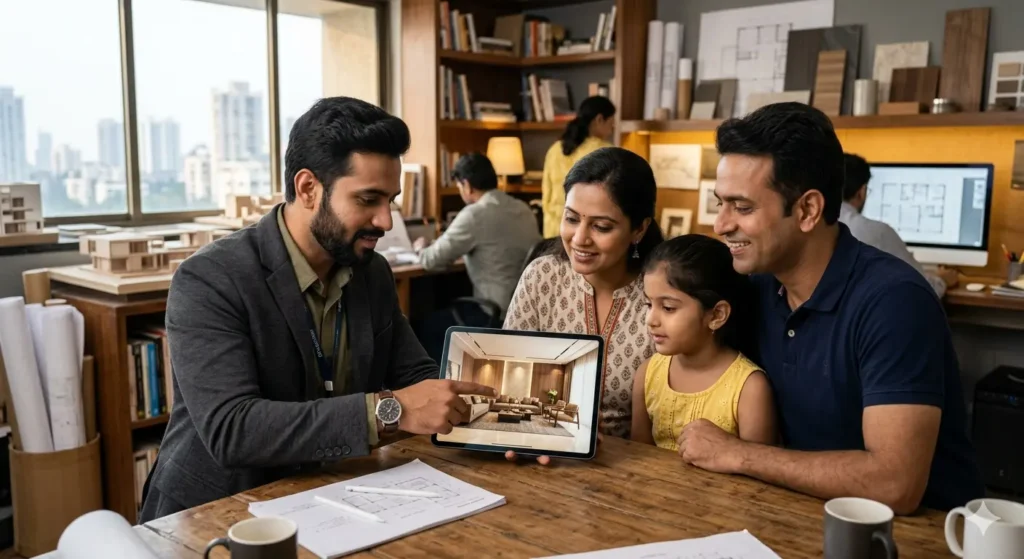
What a good architect does that a contractor-and-draftsman combination typically does not: they begin their process with your family, not with your plot. Before a single line is drawn, a skilled architect will want to understand how many people will live in the house, what age groups are represented, whether grandparents or elderly parents need ground-floor access, whether there is a home-based business that requires a specific space, how much cooking happens and whether the kitchen needs to support two or three people working simultaneously, how formally the family receives guests, and what the family’s aspirations for the home are beyond mere functionality. This understanding becomes the brief that the design responds to — specifically and directly — rather than a generic template applied to a plot.
They also think about Umarkhed’s climate in ways that have direct consequences for how comfortable the finished house will be. Vidarbha’s summers are severe. Temperatures in Umarkhed regularly climb past 44 degrees through April and May, and a building that has not been designed with this reality in mind becomes a genuinely difficult place to live during those months, regardless of how many air conditioning units are installed after the fact. Building orientation, window size and placement, roof design, wall thickness, and the relationship between covered outdoor spaces and interior rooms are all design decisions that a skilled architect makes deliberately and in response to the climate. A contractor working from a generic template makes none of these decisions deliberately.
What Makes Umarkhed’s Residential Architecture Specific
Umarkhed is a Vidarbha town, and its residential architecture has historically reflected the particular demands of this region — the severe summer heat, the concentrated monsoon rainfall, the cultural emphasis on hospitality and the reception of guests, and the spatial logic of homes designed for extended families rather than nuclear units. The vernacular building traditions of this area developed practical wisdom about how to build for these conditions, and the best contemporary architects working in Umarkhed today draw on this tradition consciously.
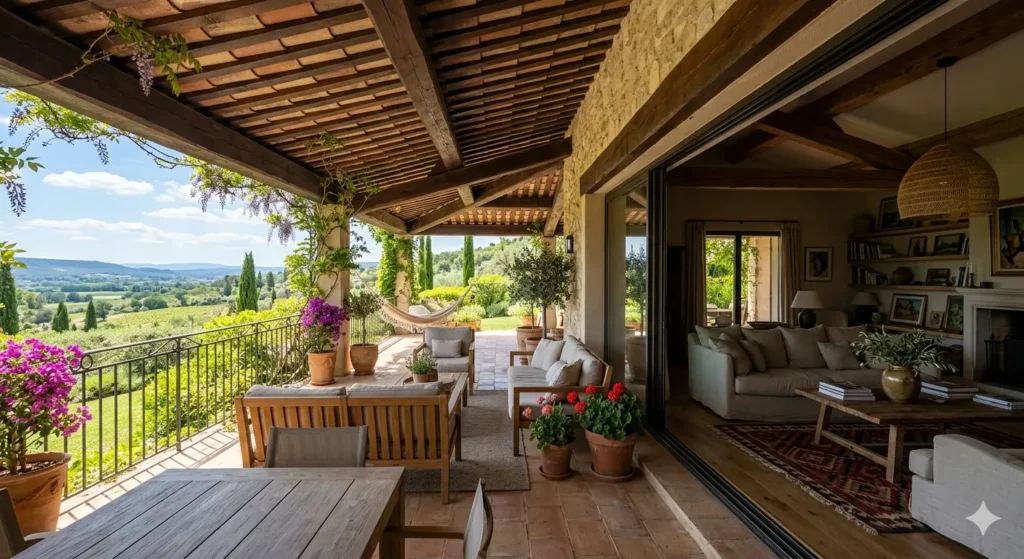
The covered veranda is the most visible expression of this regional intelligence. In Umarkhed’s climate, a generous veranda running along the south or west face of the house is not decorative — it is functional in a fundamental sense. It shades the main living spaces from direct afternoon sun during the months when that sun is most damaging. It creates a semi-outdoor space that is pleasant for seven or eight months of the year and that effectively extends the usable area of the home without the cost of fully enclosed construction. And it provides the transitional zone between the public street and the private interior that good residential architecture in this cultural context has always required.
The worst outcome in Umarkhed residential design is the wholesale import of a design vocabulary that belongs somewhere else. Glass facades that dramatically increase solar heat gain. Flat roofs without the waterproofing rigour that Vidarbha’s monsoon demands. Interior layouts borrowed from Mumbai or Pune apartment typologies that do not serve a Umarkhed family’s actual domestic life — the large family kitchen, the puja room with its own spatial dignity, the guest room that needs to be accessible without giving access to the family’s private areas. A good local architect prevents these mismatches by designing for where the building actually is and for the family that will actually live in it.
How to Evaluate Residential Architects in Umarkhed
The pool of architectural practices working in Umarkhed is smaller than it would be in a large city, but the principles of good evaluation are identical. The most important single step is to visit completed projects in person rather than relying on photographs. Walk through a house the architect has designed and pay careful attention to how it feels to move through the spaces. How does the light enter the main living area at different times of day? Does the kitchen layout make sense for the way a Umarkhed household actually cooks?
Does the master bedroom have the quality of privacy and quiet that a bedroom needs? Is the veranda usable during the hot months, or does it face the wrong direction? These are experiential qualities that photographs simply cannot capture, and they tell you more about the architect’s design thinking than any portfolio presentation.
Ask specifically and directly about the design process. A good architect will describe a process that begins with understanding your family’s specific life and ends with a design that responds to that specific brief. An architect who moves immediately to showing you elevation options and floor plan templates — before asking a single question about how you live — is revealing their process. Their process starts with the building. It should start with the family.
Ask about their familiarity with the local municipal approval process. In Umarkhed, the Nagar Parishad has its own specific documentation requirements and timeline realities, and an architect who knows this process thoroughly — who knows what is needed for complete first-submission documents and which approvals can be pursued in parallel — will save you significant time and money compared to one who is navigating it for the first time alongside you.
Ask about their working relationships with local construction contractors. In a town of Umarkhed’s size, the pool of genuinely reliable construction contractors is limited, and an architect who has established working relationships with the better ones — whose construction drawings are detailed enough that those contractors can build accurately from them without constant clarification calls — is going to deliver a better-built result than one whose documentation is generic or incomplete.
The Design Elements That Matter Most in a Umarkhed Home
The veranda has been mentioned already, but its importance warrants emphasis. In Umarkhed’s climate, a home without a well-designed veranda is a home that will be uncomfortably hot for four months of every year and that will have sacrificed a space that would otherwise be the most-used room in the house for the remaining eight. An architect who omits this element without a specific reason is missing something fundamental about what this climate and this culture require.
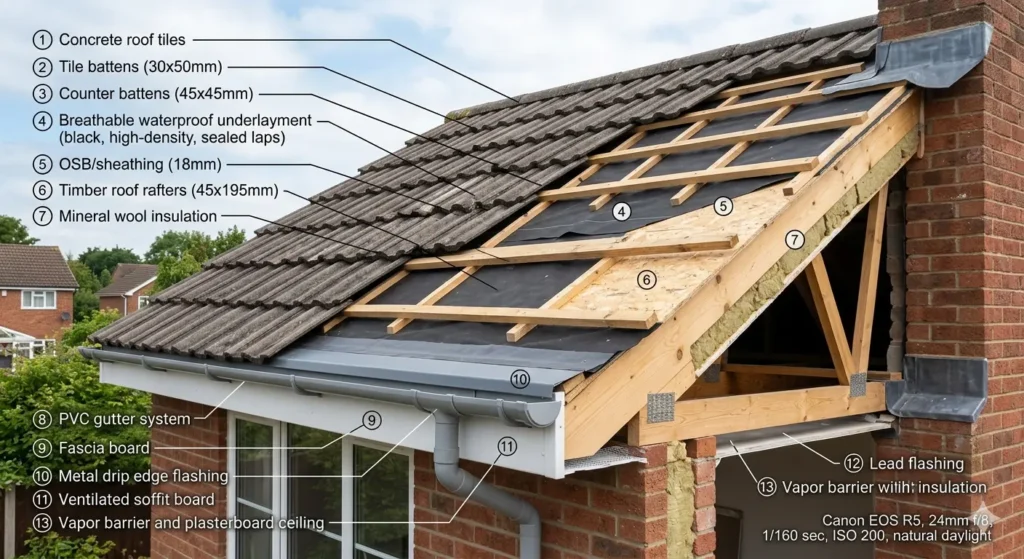
The roof is another element where design decisions have consequences that compound over years. Umarkhed receives significant rainfall during the monsoon months, and a roof designed without adequate pitch, proper overhang, and rigorous waterproofing specification will begin to cause problems within the first few monsoon seasons. A sloped roof with adequate fall and generous overhangs is significantly more appropriate for this region than a flat roof, which demands exceptional waterproofing execution to perform reliably over time.
Room orientation in Umarkhed should be deliberate. Main living areas oriented south or east receive the most useful natural light during the cooler months and can be shaded from the high summer sun by an adequate roof overhang. Bedrooms oriented east receive the morning light that makes waking pleasant. The kitchen placed to receive good through-ventilation — and deliberately not placed on the west face where it will accumulate afternoon heat through the summer — makes the difference between a kitchen that is functional during the hottest months and one that is not.
The entry sequence deserves more thought than it typically receives. The way a family and its guests arrive at a Umarkhed home — the gate, the approach, the entry court or veranda, the moment of transition from the public world into the private interior — sets the register for the entire home. In a cultural context where a home’s presentation to visitors communicates the family’s standing and hospitality, this sequence is not incidental. It is part of the design.
What Residential Architecture in Umarkhed Costs
Architectural fees for residential projects in Umarkhed typically fall between five and ten percent of the total construction cost, varying with the scope of services, project scale, and the architect’s experience and reputation. For a home of 2,500 square feet at a construction cost of ₹2,200 per square foot — a total construction cost of approximately ₹55 lakhs — the architectural fee would typically fall in the range of ₹2.75 to ₹5.5 lakhs.
This fee covers the complete design service — the floor plans, the elevations, the coordination with a structural engineer on the structural drawings, the working drawings from which the contractor builds, and typically a series of site supervision visits at the critical construction stages. It is one of the smallest proportionate costs in the entire project budget and one of the most consequential. A Umarkhed family that saves on the architectural fee and builds from contractor templates will live for thirty years in a home that was never really designed for them. A family that makes the investment in proper design thinking will live for thirty years in a home that was.
FAQs: Residential Architects in Umarkhed
Q1. Is it legally required to hire a licensed architect for home construction in Umarkhed?
Yes. Maharashtra’s building bylaws require that any residential construction in a Municipal Council or Nagar Parishad area must have architectural drawings prepared and signed by a Council of Architecture-registered architect. In Umarkhed, the local body approval process requires these drawings for plan sanction. Building without approved plans creates legal complications that affect property registration and resale value.
Q2. How long does plan approval take in Umarkhed?
For straightforward residential proposals that comply with applicable building regulations, the approval timeline through Umarkhed’s Nagar Parishad typically runs four to eight weeks. Projects with special zoning considerations or those requiring multiple clearances may take longer. Working with an architect who knows the local process well and prepares complete documentation on first submission significantly reduces delays.
Q3. What do construction costs look like in Umarkhed currently?
Construction costs in Umarkhed in 2025–26 typically range from ₹1,800 to ₹2,800 per square foot depending on specification level, design complexity, and contractor quality. Basic specification sits toward the lower end of this range. Premium specification — natural stone flooring, quality bathroom fittings, a fitted kitchen, exterior cladding — approaches or exceeds the upper end. These figures cover construction only and exclude architectural fees, interior design, furniture, and landscaping.
Q4. Are there architects based in Umarkhed itself, or should I look to Yavatmal or Nagpur?
There are a small number of design professionals based in Umarkhed, along with draftsmen and local contractors who handle drawing preparation. Families with more demanding design requirements often engage architects from Yavatmal or Nagpur who have experience with Vidarbha’s residential typologies and climate conditions. The most important criterion is not where the architect is based but whether they have a proven track record designing homes in this region that actually perform well. Ask to visit completed projects regardless of where the practice is headquartered.
Constructing a residence in Umarkhed is not merely a process of building; it involves forming an environment that endures extreme summers and torrential monsoons. We take smart design, durability and elegance and marry it with deep local expertise to protect your investment for decades at QC Interiors.
Skip the compromise—develop perfectly precise and quality your family should have.
QC Interiors
Serving: Umarkhed, Yavatmal
Specialisation: Comprehensive Home Interior Design | Architectural Planning | Turnkey Renovations
📞 (+91) 7798153303
Sign up for your consultation now and walk through with our 3D walkthrough of your home before a hammer is lifted!
