
Best Residential Interior Designer in Yavatmal — A Complete Guide for Families Who Want Their Home to Finally Feel Right
There’s a particular kind of dissatisfaction that’s hard to name but instantly recognisable. You’ve built or bought a home in Yavatmal. The construction is solid. The rooms are all there. The family has moved in. And yet something isn’t right — a drawing room that never feels welcoming no matter how many pieces of furniture you rearrange in it, a kitchen that fights you every time you cook, bedrooms that feel like they were designed by someone who didn’t think about what a bedroom actually needs to do. The home is adequate. It’s just not right.
This is the problem that residential interior design solves. Not by making homes look like the pages of a design magazine but by making rooms work the way rooms are supposed to work — by understanding how your specific family lives in its specific home, in Yavatmal’s specific climate, and making the design decisions that translate that understanding into spaces that feel as right as they look.
Yavatmal’s interior design market has matured significantly over the past decade. There are genuine practitioners here now — designers with formal training, real portfolios of completed residential work in this city and across the district, and the regional knowledge to make material and design choices that are appropriate for this context rather than transplanted from somewhere else. This article is a guide to finding them, engaging them correctly, and getting the outcome your home deserves.
Best Residential Interior Designer in Yavatmal
The Rooms in a Yavatmal Home That Most Need Design Attention
Not every room in a home needs equal design investment. Understanding where design thinking creates the most direct daily return helps Yavatmal families prioritise their engagement with a designer, especially when they’re working with a budget that doesn’t stretch to a comprehensive whole-home brief.
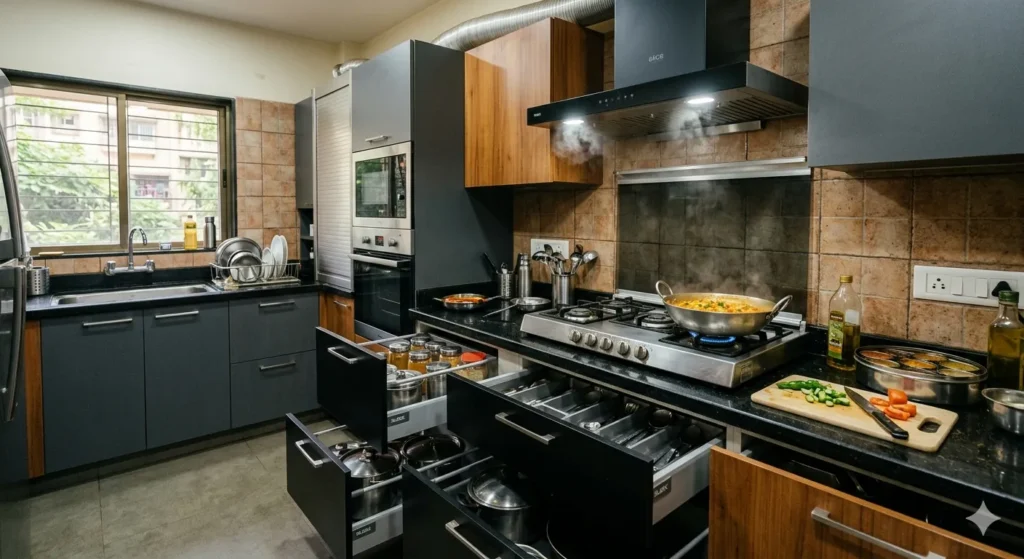
The kitchen is, without question, the room where design quality has the most measurable daily impact. This is a space where the person who cooks — typically spending two or more hours a day at the counters and stove — either works in a layout that makes cooking efficient and relatively effortless, or fights a layout that makes every task harder than it needs to be. The height of the counters, the position of the stove relative to the preparation area, the depth and organisation of the storage, the provision of task lighting — all of these are design decisions, and getting them right or wrong determines the daily quality of the cooking experience for as long as the kitchen is in place.
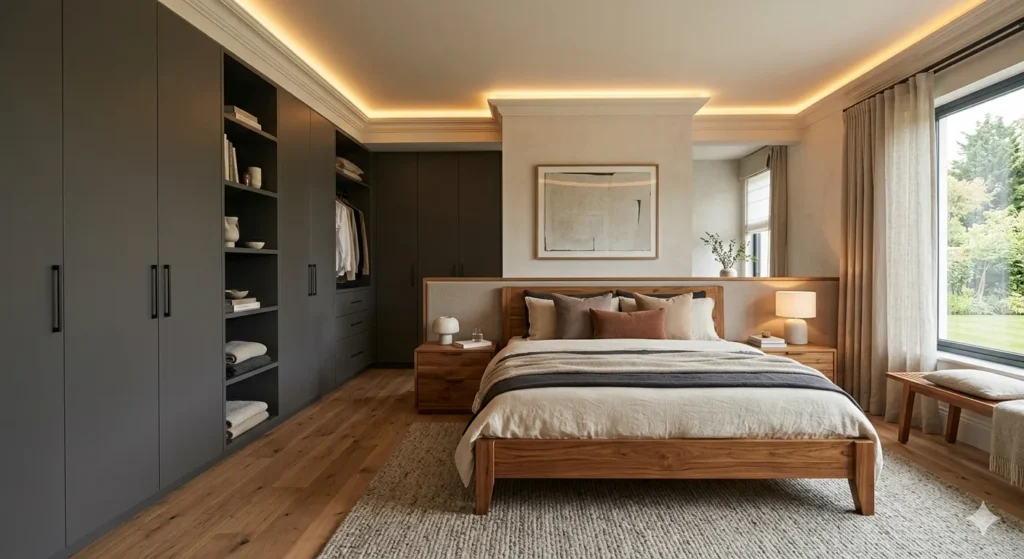
The master bedroom is the room where design quality most directly affects the physical wellbeing of the adults who sleep in it. A master bedroom in Yavatmal that is correctly oriented to avoid western afternoon heat, that has adequate cross-ventilation for the months when air conditioning isn’t running, that has storage sufficient for two people’s belongings without feeling cluttered, and that has the kind of low-key visual calm that encourages rest rather than stimulation — this is a bedroom that contributes to daily quality of life in a tangible way. One that lacks any of these qualities accumulates subtle daily dissatisfactions.
The drawing room is the room that determines how the family presents itself to its community, and in Yavatmal’s social culture, this matters in ways that go beyond aesthetics. A drawing room that receives guests with visual coherence, comfortable seating, appropriate lighting, and the general sense that it was thought about and designed for the purpose — this room makes the family’s guests feel welcomed and reflects well on the household. A room full of individually decent pieces that don’t relate to each other, with lighting that makes everyone look tired, doesn’t.
Why Regional Knowledge Matters More Than Design Awards
One of the patterns visible in Yavatmal’s interior design market is that the designers who produce the most consistently satisfying results for the city’s families are not always the ones with the most impressive-sounding credentials or the most photogenic portfolio. They are the ones who have worked in this city long enough and with enough different families to have genuinely absorbed the context — the climate’s specific material demands, the social codes that shape how homes are used, the contractor and supplier ecosystem that determines what can actually be built to what standard.
Regional knowledge in interior design means several specific things. It means knowing that the marble supplier in Nagpur who delivers reliably to Yavatmal site at honest prices is a better partner than the one who quotes lower and delivers late. It means knowing which local carpenters have the skill to execute detailed cabinetry and which ones are excellent at straightforward work but will struggle with complex joinery. It means knowing that the flooring choice that works beautifully in a cooler climate will be a mistake in Yavatmal’s summer. It means knowing the social nuances of the joint family brief — the puja room’s requirements, the distinction between the formal drawing room and the informal family space, the storage implications of three generations living under one roof.
None of this knowledge appears in a designer’s formal credentials. It appears in the quality of their completed work in this city, in the specificity of their answers to regional questions, and in the confidence with which they navigate the local supplier and contractor ecosystem. It’s the knowledge that separates a designer who can work here from one who is working here for the first time.
Material and Finish Choices That Last in Yavatmal
Yavatmal families are building homes to last, and the interior design choices that serve them best are ones that were made with long-term performance in mind rather than short-term visual impact. Here is a practical guide to the material choices that hold up best in this city’s residential context.
For flooring: granite, marble, and quality ceramic tile are the clear long-term choices. Stone floors installed correctly last decades without replacement, feel cool underfoot in summer, and clean easily. Any adhesive-bonded layered product — luxury vinyl tile, laminate, engineered wood — performs adequately in the short term and degrades in conditions of long-term humidity cycling and heat exposure. For a floor that will be walked on for twenty-five years in Yavatmal’s climate, stone is the only choice that makes sense.
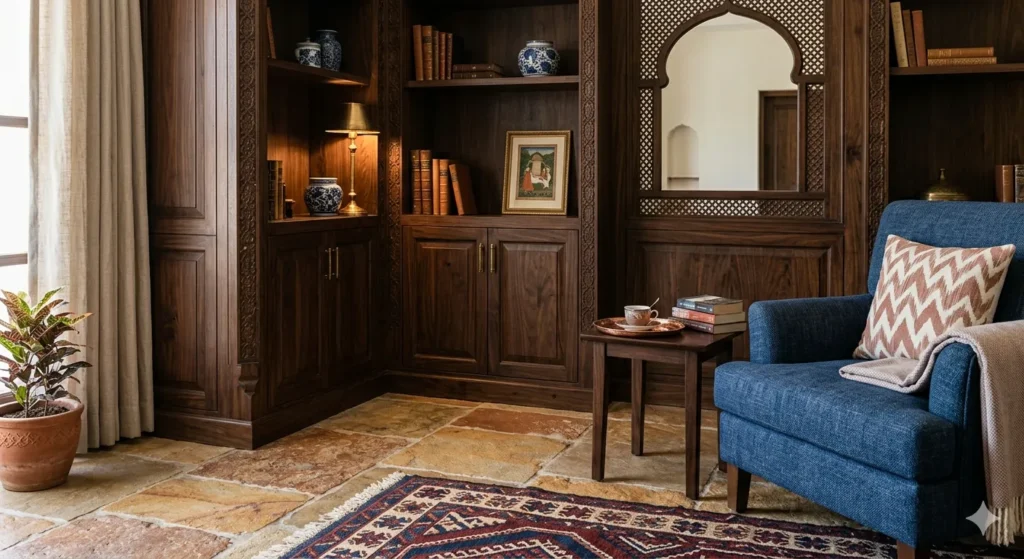
For fitted furniture: solid wood in quality species — sheesham, teak, mango wood — handles Vidarbha’s humidity cycling with dignity. The joints move slightly with seasonal moisture changes but recover. MDF and particle board products swell progressively with each humidity cycle and produce the joint failures and delamination that are visible in low-quality modular furniture after four or five years in this climate. For kitchen cabinetry and wardrobes that will be in place for fifteen or twenty years, the material choice at installation determines the condition they’ll be in a decade from now.
For wall finishes: smooth, washable finishes — eggshell or satin paint — are more practical than heavily textured finishes in rooms where cooking, dust, and daily household activity make surface cleaning a regular necessity. Matt finishes are appropriate for bedrooms, where the visual calm they create justifies the reduction in cleanability. Exterior-facing interior walls painted in light, high-reflectance colours absorb less heat from the wall’s exterior temperature than darker tones.
For window treatments: external chajja combined with light internal curtains is more effective than internal treatments alone at excluding direct summer sun while maintaining the diffused natural light that makes rooms feel alive rather than shuttered.
How to Start and Run a Residential Interior Design Project in Yavatmal
The practical process of engaging a residential interior designer in Yavatmal follows a sequence that, when executed correctly, produces results that match the intention. When executed in the wrong order, it produces the assembly-line results that most families are trying to avoid.
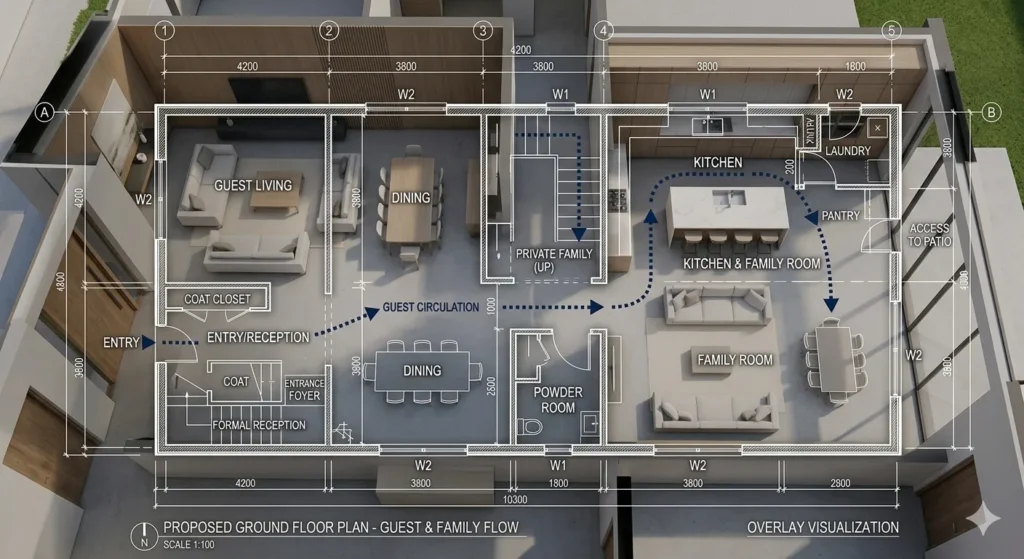
Start with a design conversation before any purchasing decisions are made. The mistake that extends projects and dilutes outcomes is going to furniture showrooms before a designer has developed a spatial plan — then finding that the pieces bought don’t fit the dimensions of the space or conflict with each other visually. A designer who has developed a spatial plan for each room, with dimensions and placement mapped, gives every subsequent purchasing decision a reference point.
Engage the designer before the finishing construction work is complete. The electrical points, plumbing rough-ins, ceiling heights, and floor transition positions that are fixed during the construction finishing phase all need to be decided in coordination with the interior design. A designer engaged after these are fixed will work around constraints that could have been avoided with earlier involvement.
Confirm supervision is included in the scope before the engagement starts. Design work that isn’t supervised through execution tends to be compromised by the deviations that happen in construction — the carpenter who substitutes a different joint because the specified one is harder to execute, the tile supplier who doesn’t have the specified size and suggests an alternative. These deviations accumulate into a result that resembles but doesn’t match the design. Supervision catches them before they’re permanent.
Plan for the project to take the time it needs. Rushing a kitchen installation because the family wants to move in by a specific date produces a kitchen with compromised quality that will be lived with for fifteen years. The time investment in doing it correctly once is smaller than the ongoing daily frustration of living with a result that wasn’t right.
FAQs: Best Residential Interior Designers in Yavatmal
Q1. How much does a residential interior designer charge in Yavatmal?
For full-service residential design covering spatial planning, material and finish specification, fitted furniture design, and supervision, fees typically range from ₹150 to ₹320 per square foot of designed area. For specific room engagements — kitchen and wardrobes only, for example — fees are negotiated as a project-specific quote.
Q2. How do I evaluate whether a designer’s portfolio is genuinely good?
Visit completed projects in person rather than reviewing photographs. Look at the execution quality: joint consistency in the tiling, finish quality in the fitted furniture, paint surface quality. Look at how the spaces function — does the kitchen layout make sense? Does the storage work? Ask the homeowners how the design has performed over time.
Q3. What should I be wary of when engaging an interior designer in Yavatmal?
Be wary of designers who produce finished designs at the first meeting — this means they’re applying a template rather than designing for your brief. Be wary of designers who don’t ask detailed questions about how your family lives. Be wary of fee structures that don’t include supervision, because designs without supervision tend not to be built correctly. And be wary of material recommendations that don’t account for Yavatmal’s specific climate.
Q4. Can I run an interior design project in phases over a few years?
Yes, and it’s a very practical approach for families managing budget constraints. The key is to begin with a whole-home concept before executing any phase — so that the choices made in the first phase are compatible with the choices that will be made in the second and third. A designer who develops a whole-home framework at the start, then helps you execute it phase by phase, will produce a coherent final result rather than a home that looks like it was designed by different people at different times.
Q5. Is interior design in Yavatmal appropriate for older homes that need updating?
Absolutely. Some of the most valuable interior design work happens in homes that have been lived in for fifteen or twenty years and need reconsidering — where the original layout decisions no longer serve the family’s current life, where the material choices have aged and need replacing, or where individual rooms need to be redesigned to be genuinely functional. An existing home with its character and proportions intact is often a better canvas for good interior design than a newly built shell.
Strong Foundations. Smart Living.
Designing your dream home interiors in Yavatmal is more than construction—it’s about creating a home that withstands harsh summers and heavy rains while staying comfortable year-round.
QC Interiors combines smart planning, durable construction, and modern design to deliver homes that last and impress.
Build with confidence. Build with QC Interiors.
Serving: Yavatmal, Yavatmal
📞 +91 7798153303
