
Best Residential Architects in Wani — What Families Here Need to Know Before They Build
Wani sits in Yavatmal district in a way that feels both connected and self-contained. It’s a town with genuine commercial life — the agricultural trading activity that characterises this part of Vidarbha, the local businesses that serve a population with real purchasing power, the families who’ve been building here across generations and whose homes tell the story of how the town has grown and changed. Drive through Wani’s residential areas today and you’ll see construction happening at a pace that reflects genuine confidence in the town’s future — new homes going up in the layouts on the outskirts, older homes being renovated in the established mohallas, families investing seriously in the places they intend to live for the rest of their lives.
That investment deserves a proper architect. Not a draftsman. Not a contractor who offers to “handle the drawings.” A qualified professional who thinks about how your family’s life translates into the organisation of a building, and who designs that building to perform well in Wani’s specific climate and context for the thirty or forty years it’s going to stand.
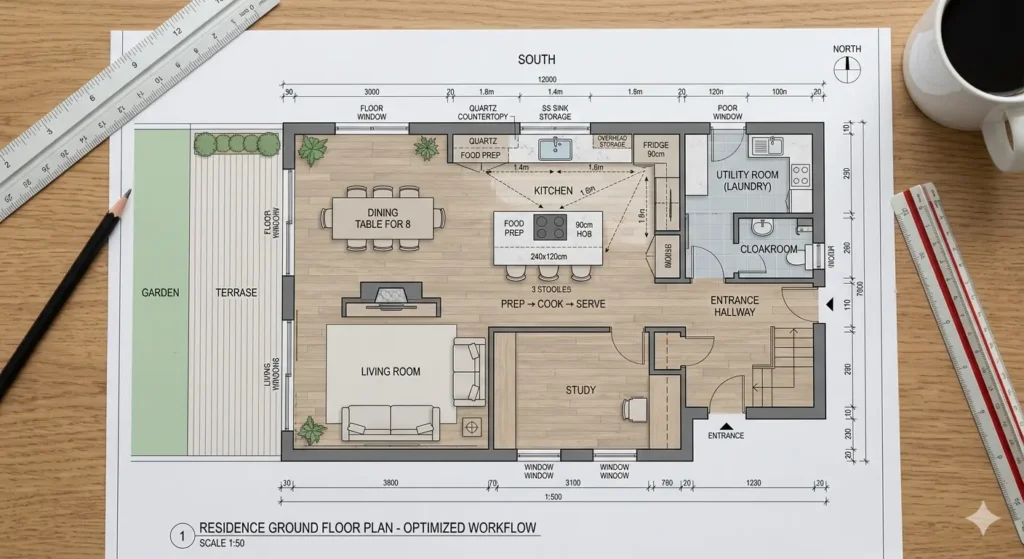
The difference between a home designed by a real architect and a home built from contractor drawings shows up in ways that are sometimes obvious and sometimes subtle, but that are felt every single day. The room that’s always too hot in the afternoon because nobody thought about the window placement relative to the summer sun. The kitchen that makes cooking uncomfortable because the workflow between the preparation and cooking zones was never considered. The entry to the home that feels awkward because the relationship between the gate, the approach, and the main door was designed around fitting the footprint rather than creating a welcoming arrival sequence. These aren’t small things. They’re the fabric of daily life in the home.
Best Residential Architects in Wani
Wani’s Residential Architecture: What the Town Needs
Wani’s climate is demanding in the way that most of Vidarbha is demanding — summers that push 44 to 46 degrees, a monsoon that arrives with force and requires buildings to handle significant rainfall reliably, and winters that are cool enough that thermal comfort in both directions is a genuine design consideration.
The residential architecture that has served Wani families well historically reflects this climate — homes with thick masonry walls that moderate the diurnal temperature swing, covered verandas that shade the main rooms from direct afternoon sun while extending the usable living area outdoors for six months of the year, roof designs with adequate pitch and overhang that handle Vidarbha’s monsoon rainfall without the waterproofing failures that flat roofs generate in this rainfall context.
Contemporary Wani home construction sometimes abandons these climatic sensibilities in favour of a visual vocabulary borrowed from cities with different conditions — flat roofs that become problematic in the monsoon, large west-facing glazing that makes afternoon rooms uninhabitable in May, layouts that prioritise FSI optimisation over the orientation logic that makes a home comfortable. A good architect in Wani resists this borrowing and designs buildings that work for where they actually are.
What to Look for When Evaluating Architects in Wani
The architectural practice in Wani and the surrounding Yavatmal district is a small ecosystem — there are a limited number of qualified practitioners, and the informal market of draftsmen and contractors offering design services is considerably larger. Navigating this market well requires knowing what to look for.
Licensing is the first checkpoint. Any architect signing drawings for municipal submission in Wani must be registered with the Council of Architecture. Ask for their CA registration number and verify it. This isn’t a bureaucratic nicety — it’s a signal of the minimum professional standard that the person you’re engaging has met.
Completed residential projects are the second checkpoint, and the more important one. Ask to visit homes the architect has designed — not the photographs, the actual buildings. Walk through them. Notice whether the rooms are well-proportioned, whether the natural light enters in a way that makes the room pleasant to be in, whether the circulation through the home flows logically, whether the external appearance has genuine character or whether it looks like a contractor elevation that was given a superficial treatment. These observations will tell you more about the architect’s design quality than any conversation can.
Ask specifically about their experience with Wani’s municipal approval process — the local body documentation requirements, the processing timelines, the people in the system who need to be worked with. An architect who knows this process well saves you months compared to one who’s learning it on your project.
The Design Elements That Define a Good Wani Home
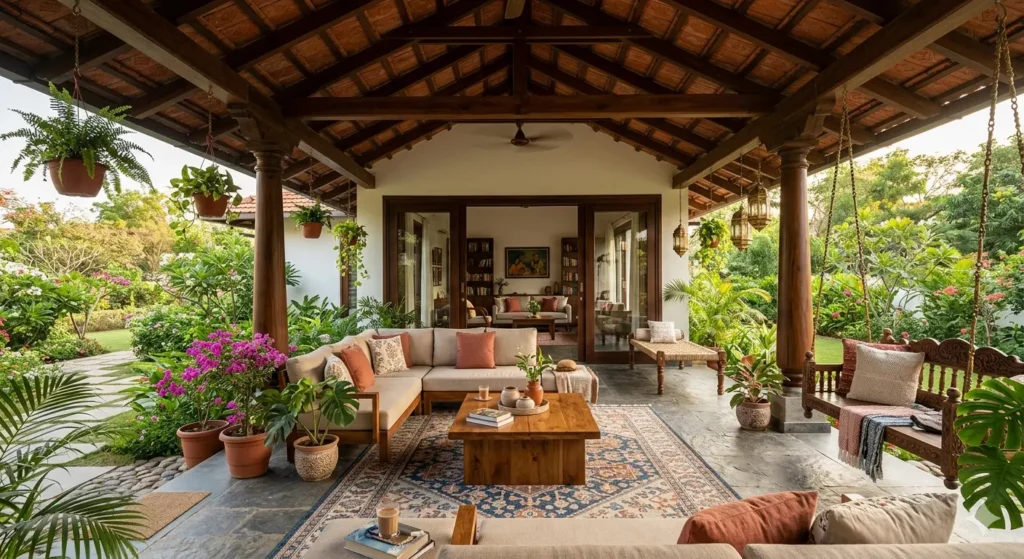
The veranda is probably the single most important element in a Wani home design. In this climate, a well-oriented covered veranda that runs along the main facade — south or east-facing — does several things at once. It shades the principal rooms from direct summer sun. It creates a semi-outdoor space that’s usable for more than half the year. It establishes the transitional zone between the public road and the private interior that gives a home its sense of arrival and separation. A Wani home without a proper veranda is a home that has discarded one of its most important practical and social assets.
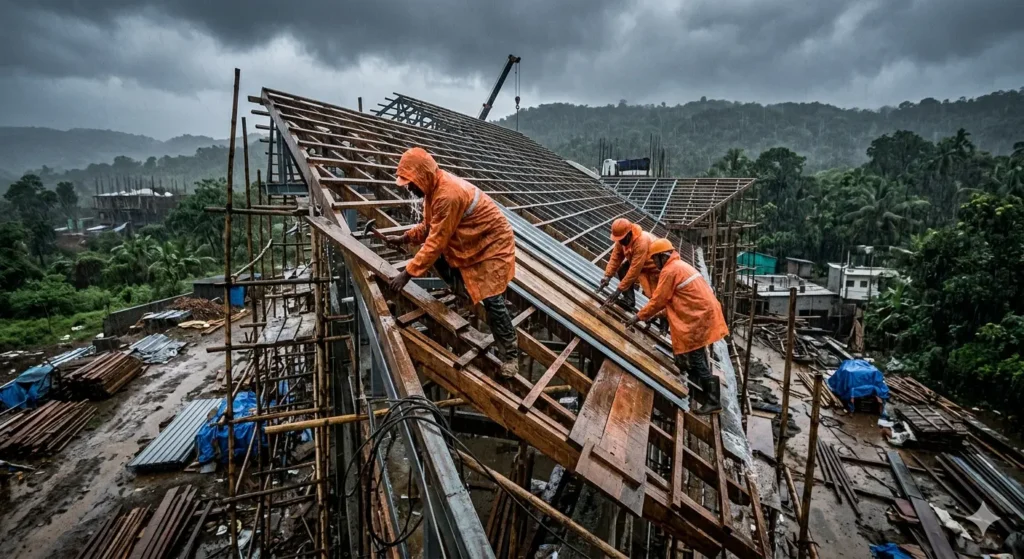
The roof is the second non-negotiable. Wani’s monsoon is real, and a properly pitched roof with adequate overhang and proper drainage is a long-term investment in a building that doesn’t develop the leakage, damp, and structural degradation that flat roofs in this rainfall context consistently produce over time.
Room orientation — placing the main living rooms where they receive the most useful light at the most useful times, and placing the bedrooms where they receive morning light and afternoon shade — is the climate-responsive design decision that a good architect makes deliberately. In a standard contractor-built Wani home, this decision is typically not made at all. The rooms are arranged to fit the plot efficiently, and the orientation consequences are accepted without question.
Construction Costs and Architectural Fees in Wani
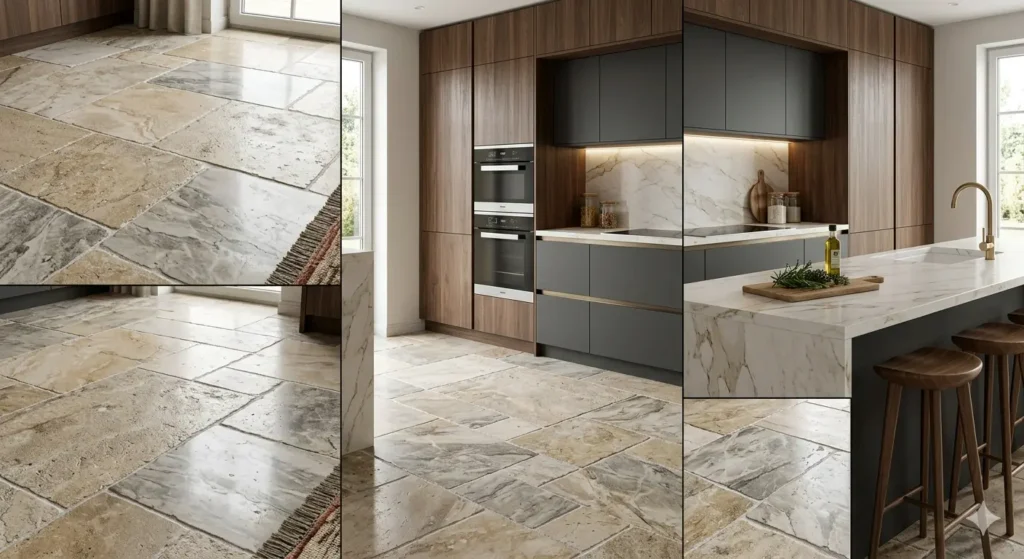
Construction costs in Wani in 2025-26 range from approximately ₹1,700 to ₹2,600 per square foot depending on specification level. A basic specification — standard tile flooring, painted walls, standard sanitary fittings — sits at the lower end. A premium specification — natural stone flooring in main areas, quality kitchen, premium bathroom fittings, quality external finish — approaches the upper end.
Architectural fees in Wani typically run between 5 and 9 percent of construction cost. For a 2,400 square foot home at ₹2,000 per square foot construction cost — total construction cost ₹48 lakhs — the architectural fee would be approximately ₹2.4 to ₹4.3 lakhs. This is one of the most consequential investments in the entire project, and it’s among the smallest as a percentage.
FAQs: Residential Architects in Wani
Q1. Do I legally need a licensed architect for my home construction in Wani? Yes. Maharashtra’s building bylaws require that drawings submitted for municipal approval carry the signature of a Council of Architecture registered architect. Constructions without approved plans face complications during registration and resale.
Q2. How long does building plan approval take in Wani’s local body? Typically four to eight weeks for straightforward residential proposals. Projects in specific zoning areas or those needing special clearances may take longer. An architect familiar with the local process significantly reduces delays.
Q3. Can an architect also help me choose materials and finishes, or is that a separate interior designer’s job? Most residential architects in Wani and the region are involved in material selection at least at the level of external finishes and principal interior materials. For comprehensive interior design — false ceilings, modular kitchens, wardrobes, lighting design — a dedicated interior designer is usually the right engagement.
Q4. What is the biggest architectural mistake made in Wani homes? Building flat roofs without adequate waterproofing and drainage provision. Wani’s monsoon rainfall is significant, and flat roofs that aren’t designed and waterproofed with genuine rigour develop leakage problems that are costly and disruptive to fix after construction. A properly pitched roof is the more resilient solution.
Q5. Should I hire an architect from Yavatmal or Nagpur for a Wani home project? An architect who has completed residential projects specifically in Wani or the Yavatmal district — and understands the local municipal process, the local climate requirements, and the local contractor ecosystem — will serve you better than one approaching the project from a different regional context. Geography matters less than relevant local project experience.
Constructing a residence in Wani is not merely a process of building; it involves forming an environment that endures extreme summers and torrential monsoons. We take smart design, durability and elegance and marry it with deep local expertise to protect your investment for decades at QC Interiors.
Skip the compromise—develop perfectly precise and quality your family should have.
QC Interiors
Serving: Wani, Yavatmal
Specialisation: Comprehensive Home Interior Design | Architectural Planning | Turnkey Renovations
📞 (+91) 7798153303
Sign up for your consultation now and walk through with our 3D walkthrough of your home before a hammer is lifted!
